
Hi, How Can We Help You?
  • Planning for all of life's "What Ifs".

Category Archives: Deferred Compensation


They say that people don’t leave companies; they leave managers. But in the rarefied air of executive leadership, the truth is often more pragmatic: People leave where they feel they have reached a ceiling: both in their impact and their long-term financial security.


If you are leading a successful corporation or partnership today, you already know that your "key talent" is your most valuable, yet most volatile, asset. You’ve likely asked yourself the haunting "What If" questions that keep many founders and CEOs up at night: What if my top talent leaves for a competitor? What if my senior executive's retirement costs become an efficiency drain on the business?


At Schiff Executive Benefits, we specialize in Restoring Alignment and Retention. Restoring Alignment and Retention is more than a tagline. It is the goal. When it comes to rewarding the people who move the needle for your organization, standard benefits packages often fall short. This is where nonqualified deferred compensation plans come into play. Two of the most common heavy hitters in this space are the Supplemental Executive Retirement Plan (SERP) and the NQDC "401(k) Mirror."


The question isn’t just which one is "better," but which one fits your specific goals for growth, legacy, and security.


The Foundation: Why Standard Benefits Aren’t Enough


There is a universal truth in the world of executive compensation: The more you earn, the less your traditional 401(k) does for you. Because of IRS contribution limits and nondiscrimination testing, your highest earners are often restricted from saving a percentage of their income that actually moves the needle for their retirement.


While a mid-level manager might be able to replace 70-80% of their income through a 401(k) and Social Security, a top-tier executive might find themselves replacing only 20-30%. This is the "retirement gap," and if you don't help them bridge it, someone else will.


To solve this, we look to the world of nonqualified plans. Unlike qualified plans (like 401(k)s), these are exempt from most ERISA requirements, allowing you to be "discriminatory" in a good way: choosing exactly who participates and how much they receive.


The NQDC "401(k) Mirror": Empowering the Individual


A Nonqualified Deferred Compensation (NQDC) plan, often referred to as a "401(k) Mirror," is designed to look and feel familiar to your executives.


How It Works


In an NQDC plan, the executive elects to defer a portion of their current salary or bonus into the plan before taxes are applied. This money is then "invested" (typically in a menu of funds that mirrors your 401(k) options) and grows tax-deferred until it is distributed, usually at retirement or a specified date.


Pros for the Employee


  • Tax Efficiency: They are deferring income at today’s high tax brackets and (ideally) taking it out later when they may be in a lower bracket.

  • Wealth Accumulation: It allows them to save far beyond the $23,000 or $30,500 limits of a traditional 401(k).

  • Flexibility: Many NQDC plans allow for "in-service" distributions, meaning they can save for a child’s college tuition or a second home, not just retirement.


Pros for the Employer


  • Low Direct Cost: Since the plan is primarily funded by the employee’s own salary deferrals, the direct cash outlay for the company is minimal compared to a fully funded pension.

  • Retention through "Stickiness": While it’s the employee's money, the company can add matching contributions with a vesting schedule. This creates a powerful reason for the executive to stay until they are fully vested.


The SERP: The Ultimate "Golden Handcuffs"


While an NQDC is often employee-funded, a Supplemental Executive Retirement Plan (SERP) is typically 100% employer-funded. It is a promise from the company to pay the executive a specific benefit in the future.


How It Works


A SERP is essentially a "Defined Benefit" plan for a select group. The company agrees to pay the executive a certain amount: either a lump sum or an annuity: starting at retirement. This is often tied to a long vesting schedule (e.g., 10 years or age 65).


Pros for the Employee


  • Pure Reward: It is "found money." They don’t have to take a pay cut today to secure a windfall tomorrow.

  • Security: It provides a predictable, guaranteed income stream that acts as the foundation for their retirement lifestyle.


Pros for the Employer


  • Maximum Retention: This is the ultimate tool for preventing top talent from leaving. If an executive stands to lose $1 million in SERP benefits by leaving two years early, they are highly unlikely to walk across the street to a competitor.

  • Succession Control: It allows you to stabilize the timing of a senior leader’s retirement, ensuring you have a smooth transition plan in place.

  • Tax Benefits: Through Corporate Owned Life Insurance (COLI), the company can often fund these obligations in a way that is highly tax-efficient and eventually cost-neutral.


SERP vs. NQDC: The Head-to-Head Comparison


When deciding which path to take within The Perfect Plan®, it helps to look at the strategic differences:


Feature NQDC (401(k) Mirror) SERP (Defined Benefit Style)
Primary Funding Employee (Salary/Bonus Deferral) Employer (Company Contributions)
Complexity Moderate High
Retention Strength Moderate (Based on company match) High (The "Golden Handcuffs")
Risk Market risk usually sits with employee Funding risk sits with employer
Best For Broader executive groups Targeted, mission-critical leaders

Are you looking to provide a flexible tax-savings tool for your entire C-suite, or are you trying to ensure your CEO and COO don't retire a day before your five-year growth plan is complete? This is the heart of the decision.


The Role of COLI in Funding the Promise


One thing that keeps business owners up at night is the "unfunded liability." Both SERPs and NQDC plans are essentially IOUs from the company to the executive. If you haven't set aside assets to pay those IOUs, you are creating a massive future debt on your balance sheet.


This is where Corporate Owned Life Insurance (COLI) comes in. For corporations and partnerships, COLI is the gold standard for funding these executive benefits. The company owns the policy, pays the premiums, and is the beneficiary. The cash value grows tax-deferred and can be used to pay the benefits when they come due.


When structured correctly as part of The Perfect Plan®, COLI can make the entire executive benefit program cost-neutral or even cash-flow positive over the long term. This addresses the "What If" regarding senior executive retirement cost efficiency: turning a potential liability into a strategic asset.


Navigating the 409A Minefield


We cannot talk about these plans without mentioning Section 409A of the Internal Revenue Code. Ever since 2004, the IRS has been incredibly strict about how and when deferred compensation is elected and paid out. A single mistake in the timing of a deferral election or the wording of a distribution event can lead to immediate taxation for the executive, plus a 20% penalty and interest.


This is why you don't do this alone. You need a team that understands the intersection of tax law, insurance architecture, and executive psychology.


Which One is Right for Your Team?


Choosing between a SERP and an NQDC isn't about finding a "product" off a shelf. It’s about design. At Schiff Executive Benefits, we believe in a consultative approach that starts with your vision for the company.


  • Choose NQDC if: You want to offer a competitive, high-value tax planning tool to a larger group of managers and executives without significantly increasing company overhead.

  • Choose SERP if: You have 1-3 "key" people whose departure would be catastrophic to the business and you need to provide a massive incentive for them to stay until the finish line.


In many cases, the most effective version of The Perfect Plan® actually combines elements of both.


Restoring Alignment and Retention


At the end of the day, your business exists to create value: for your customers, your shareholders, and your family. But you cannot create that value if your focus is constantly diverted by the fear of losing your best people or the anxiety of an unmanaged retirement liability.


The most successful leaders we work with understand that executive benefits are not just "perks." They are strategic investments in the stability of the enterprise. By bridging the retirement gap and aligning the interests of the executive with the long-term health of the company, you aren't just paying people: you are building a partnership.


Are you ready to stop worrying about "What If" and start building a guarantee? Whether you are interested in Corporate Owned Life Insurance (COLI), a custom SERP, or a 409A-compliant NQDC plan, our team is here to guide you through the fog.


Sit back, grab your coffee, and let’s look at your current roster. Who are the people you can’t afford to lose? Let’s make sure they feel the same way about you.


Visit our latest insights and strategies here to see how we are helping firms across the country secure their legacies.


Learn more: our complete guide to NQDC plans and executive retention programs.



It is often said that the only two certainties in life are death and taxes. In the world of high-level business, we might add a third: the constant effort of your competitors to recruit your most talented leaders. You have spent years building your company, refining your culture, and hand-picking a team that executes your vision. But as tax brackets climb and the cost of replacing a key executive continues to skyrocket, you may find yourself asking: Is there a way to reward my best people without the tax man taking half, and while ensuring they stay for the long haul?


At Schiff Executive Benefits, we believe the answer shouldn't be a compromise. You shouldn't have to choose between corporate tax efficiency and meaningful executive rewards. We have spent two decades refining a strategy that addresses these exact anxieties. We call it The Perfect Plan®.


The Great Tax Chokepoint


Most successful business owners operate within a system that penalizes success. You pay your executives a high salary, and they are immediately pushed into the highest possible tax bracket. You offer a bonus, and nearly half of it vanishes before it ever hits their bank account. Meanwhile, qualified plans like 401(k)s have strict contribution limits that barely scratch the surface of what a high-earning executive needs for a secure retirement.


This creates a "tax chokepoint" that limits the effectiveness of your compensation strategy. When your rewards are inefficient, your executive retention suffers. Executives start looking for the next big "sign-on bonus" elsewhere because their current "take-home" pay feels stagnant relative to their contribution.


The Perfect Plan® was designed to shatter this chokepoint. It is built on a specific economic architecture: Contributions go in Pre-Tax, the Benefits grow Tax-Deferred, and the Benefits are eventually paid out Tax-Free.


![Executive team discussing retention strategy in a modern office]


The Three Pillars of The Perfect Plan®


To understand why The Perfect Plan® is a game-changer for executive benefits, you have to look at the three pillars of its financial structure.


1. Contributions are Pre-Tax


In a traditional compensation model, every dollar you pay an executive is taxed immediately at the corporate level (if it’s not a deductible expense) or at the individual level (as income). The Perfect Plan® utilizes sophisticated deferred compensation structures and COLI (Corporate Owned Life Insurance) strategies to ensure that the money being set aside for the future isn't eroded by current taxes. This allows more capital to work for the executive from day one.


2. Benefits Grow Tax-Deferred


Compound interest is the eighth wonder of the world, but taxes are its greatest enemy. When your executive's retirement or retention fund is growing in a taxable environment, a portion of that growth is shaved off every single year. In The Perfect Plan®, the assets grow within a tax-advantaged shell. This means the growth is reinvested in its entirety, accelerating the wealth-building process significantly compared to traditional investments.


3. Benefits are Paid Tax-Free


This is the "Holy Grail" of financial planning. Most retirement plans (like a traditional IRA or 401(k)) are simply "tax-deferred," meaning the IRS is just waiting for the executive to retire so they can take their cut of the much larger pie. The Perfect Plan® aims for a tax-free distribution. This provides the executive with maximum purchasing power during their retirement years and provides the company with a highly efficient way to fulfill its promises.


![Senior executive reviewing long-term retirement planning with an advisor]


Restoring Alignment and Retention


A common problem we see is a "misalignment" between what the business owner wants and what the executive needs. The owner wants the executive to think like an owner: to focus on the long-term health of the company. The executive, however, is often focused on the short-term: their annual salary and their immediate tax bill.


We use the tagline Restoring Alignment and Retention because The Perfect Plan® bridges this gap.
By using NQDC (Non-Qualified Deferred Compensation) and Restricted Bonus Arrangements, we create "Golden Handcuffs" that are actually made of gold, not just iron. We align the executive's future wealth with the company's future success.


Have you ever wondered what would happen if your top talent walked out the door tomorrow? This is one of our core "What If" questions. The cost to replace a high-level executive is often 2x to 3x their annual salary when you factor in search fees, lost productivity, and the "knowledge drain." The Perfect Plan® provides a structured, secure way to make sure they stay.


![Business owner and leadership team discussing succession and retention]


The 9 Considerations of The Perfect Plan®


Designing The Perfect Plan® isn't about picking a product off a shelf. It is a consultative process where we evaluate nine critical considerations tailored to your specific business:


  1. Deduction Timing: We analyze when the tax deduction is most valuable to your corporation.

  2. Employee Deferrals: We determine how much of their own pay the executive should be able to set aside.

  3. Employee Retention: We build vesting schedules that ensure long-term loyalty.

  4. Design Flexibility: Unlike rigid 401(k) plans, The Perfect Plan® is highly customizable.

  5. Ownership-Style Benefits: We can simulate the benefits of ownership (like phantom stock) without actually diluting your equity.

  6. Discretionary Deferrals: The company maintains control over the level of contributions.

  7. Defined Benefits: We create clear, predictable outcomes for the executive’s retirement.

  8. Asset and Income Control: You maintain control over the assets and the timing of distributions.

  9. Company Value and Succession: We ensure the plan supports your eventual exit strategy or business succession.


Why This Matters Now


We are living in an era of unprecedented economic volatility. Market shifts, changing tax laws, and the rising national debt all point toward one thing: taxes are unlikely to go down in the long run. If you are relying on traditional methods to reward your key people, you are leaving your most important assets: your people and your capital: vulnerable to these external forces.


Using The Perfect Plan® is about taking control. It’s about moving from a reactive stance ("How do I stop my VP from leaving?") to a proactive one ("I have built a platform where my VP would be crazy to leave"). It is about intellectual credibility and external validation. When an executive sees a plan this well-structured, they don't just see a bonus; they see a company that is serious about its future and theirs.


A Legacy of Security


At the end of the day, your business is your legacy. But that legacy is only as strong as the people who support it. Are you protecting that legacy with the most efficient tools available? Or are you operating on "standard" advice that was designed for the average company, not yours?


As we celebrate our 20th anniversary at Schiff Executive Benefits, our mission remains the same: to act as your guide through these unstable financial environments. We don't just sell plans; we build security.


If you’ve been losing sleep over the "What Ifs": what if taxes rise, what if your top talent leaves, or what if you run out of retirement money: it’s time for a different approach. You've worked too hard to let inefficiency drain your success.


We invite you to learn more about how we can help you realize your dream value. Sit back, grab your coffee, and join us for an episode of The Perfect Plan® Podcast. Let’s start a conversation about restoring alignment in your business.


Building it your way isn't just a goal; it's a possibility. Let's make it a reality with The Perfect Plan®.


Come join us.


A business is only as strong as the promises it keeps to its key people. In the world of high-growth, mid-cap companies: the "stocks under rocks" often highlighted in the Burkenroad Reports: talent is the primary engine of value. When we look at companies like Pool Corp (POOL), Haverty Furniture (HVT), Powell Industries (POWL), and Cal-Maine Foods (CALM), or financial institutions like First Bancshares (FBMS) and First Guaranty Bancshares (FGBI), we see organizations that have built incredible legacies.


But here is the universal truth: Your most valuable assets walk out the door every night. Whether they come back the next morning: and whether they stay for the next decade: depends on more than just a competitive salary. It depends on "Benefit Security."


At Schiff Executive Benefits, we specialize in Restoring Alignment and Retention. We’ve analyzed the public structures of these Burkenroad-profile companies to identify where executive benefits are performing at a high level and where "Operational Drift" might be putting the company: and the executive: at risk.


The "What If" That Keeps Presidents Up at Night


When I sit down with a President or a CEO, I often start with one of our core "What If" questions: What if your top talent leaves?


Think about the replacement cost. It’s not just the recruiter fee. It’s the lost institutional knowledge, the client relationships that follow the executive, and the momentum that stalls during a transition. For companies in the Burkenroad universe, where lean management teams often drive outsized results, the departure of a key leader isn't just a hurdle: it’s a headwind.


The solution isn't simply "more pay." It is about creating an Ownership Feel for those who don’t actually own shares, and providing a level of security that makes it impossible for them to look elsewhere.


Executive desk and collaborating business team symbolizing strategic leadership retention and benefit security.


Creating an "Ownership Feel" for Non-Owners


For corporations like Powell Industries or Cal-Maine Foods, retaining key managers requires a strategy that mirrors the rewards of ownership without the dilution of equity. This is where Phantom Stock or sophisticated Non-Qualified Deferred Compensation (NQDC) plans come into play.


By structuring a plan that tracks company performance or specific growth metrics, you give the executive a stake in the outcome. They begin to think like an owner because their long-term wealth is tied to the firm’s trajectory. However, a plan on paper is only as good as the funding behind it.


Many companies fall into the trap of "unfunded liabilities." They promise a benefit 15 years down the road but leave the bill for a future management team to pay. This creates a lack of security for the executive. They find themselves asking: Will the money actually be there when I’m ready to exit?


Benefit Security and the Power of Full Cost Recovery


This is where the conversation shifts from a human resources discussion to a balance sheet discussion. For the companies we’ve analyzed, such as First Bancshares and First Guaranty Bancshares, the use of Bank-Owned Life Insurance (BOLI) is a standard tool. For our corporate friends like Pool Corp and Haverty Furniture, the equivalent is Corporate-Owned Life Insurance (COLI).


The goal is Full Cost Recovery.


Most benefit plans are an expense. We view them as a strategic reallocation of assets. By using COLI or BOLI as an informal funding vehicle, the employer can recover:


  1. The original premium paid into the plan.

  2. The cost of the benefits paid to the executive.

  3. The "opportunity cost" of the money (the interest the company could have earned elsewhere).


When structured correctly, the plan becomes "cost-neutral" or even "cost-positive" to the corporation while providing 100% protection to the employee's family and 100% of the promised income in retirement.


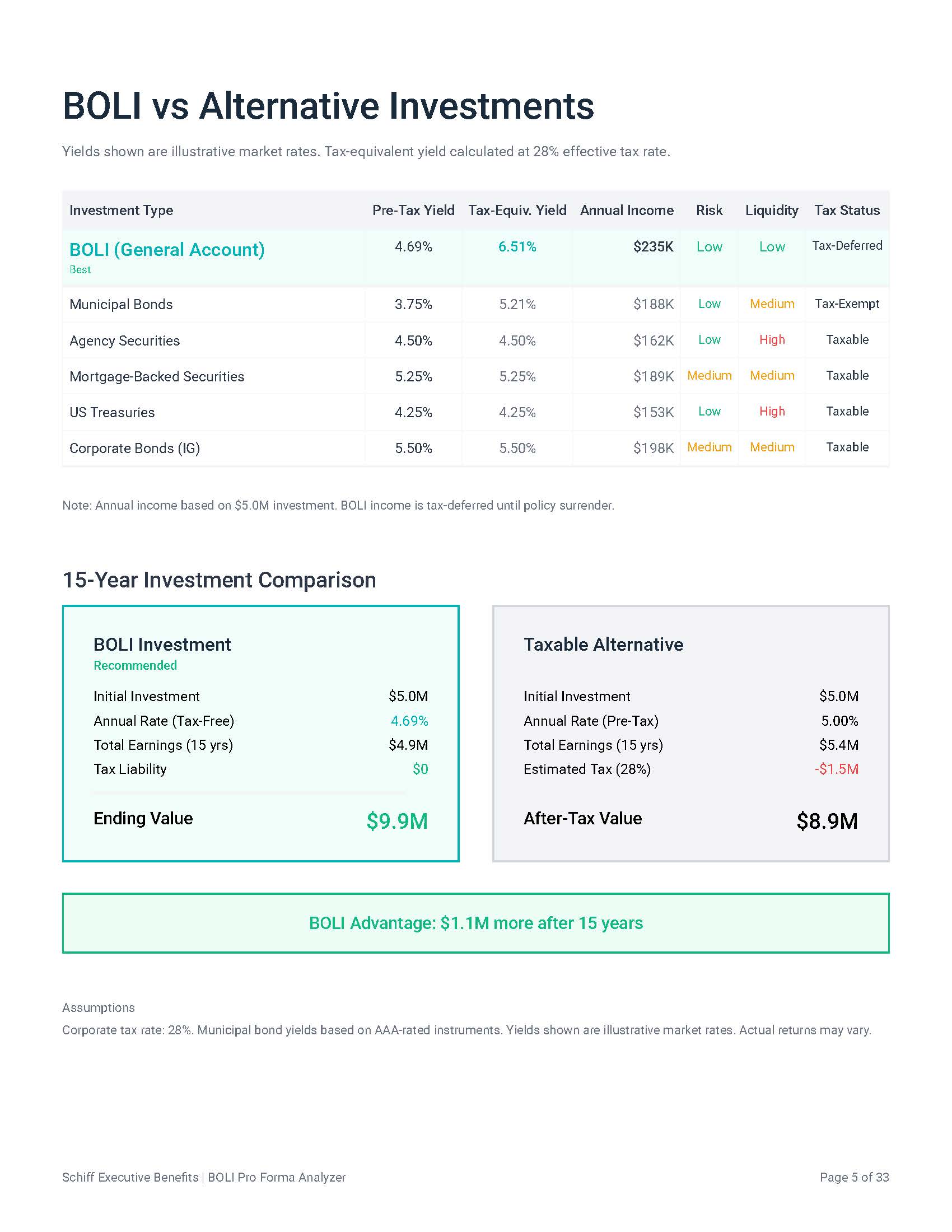
BOLI vs Fixed Income Investments Comparison Chart


Retirement Made Simple: The Four Pillars


In my experience, executive benefit plans often become overly complex, leading to confusion and, ultimately, a lack of perceived value. We advocate for Retirement Made Simple. If an executive at Haverty’s or Powell Industries can’t explain their retirement plan to their spouse in two minutes, the plan is failing as a retention tool.


The Perfect Plan® (as we call our optimized approach) focuses on four fixed pillars:


  • Fixed Dollar Amount: The executive knows exactly what they will receive.

  • Fixed Period: The duration of the payments is defined and guaranteed.

  • Fixed Rate of Return: No market volatility keeping the retiree awake at night.

  • Fixed Cash Flow: A predictable stream of income that supplements the 401(k) limits.


When you offer "Retirement Made Simple," you remove the anxiety of "running out of money," which is one of our primary "What If" anchors. You can learn more about how we frame these outcomes by visiting our The Perfect Plan®.


Technical Compliance: Avoiding "Operational Drift"


One of the biggest risks we see in the Burkenroad companies is Operational Drift. A plan that was compliant and efficient in 2010 may be a ticking time bomb today due to changes in IRC 409A and IRC 101(j).


IRC 409A: The Safe Harbor Update


IRC 409A governs how and when deferred compensation is paid. The penalties for non-compliance are draconian: immediate taxation of all deferred amounts plus a 20% penalty tax on the employee. We often find that companies haven't updated their "Safe Harbor" language to reflect modern IRS guidance. If you haven't audited your NQDC plan in the last three years, you are likely drifting. You can watch a short overview of 409A compliance here.


IRC 101(j): The Notice and Consent Rule


For companies using COLI (Corporate-Owned Life Insurance) to fund these plans, compliance with IRC 101(j) is non-negotiable. If you do not obtain written consent from the executive before the policy is issued, the death benefit: which is supposed to be tax-free: becomes taxable income to the corporation.


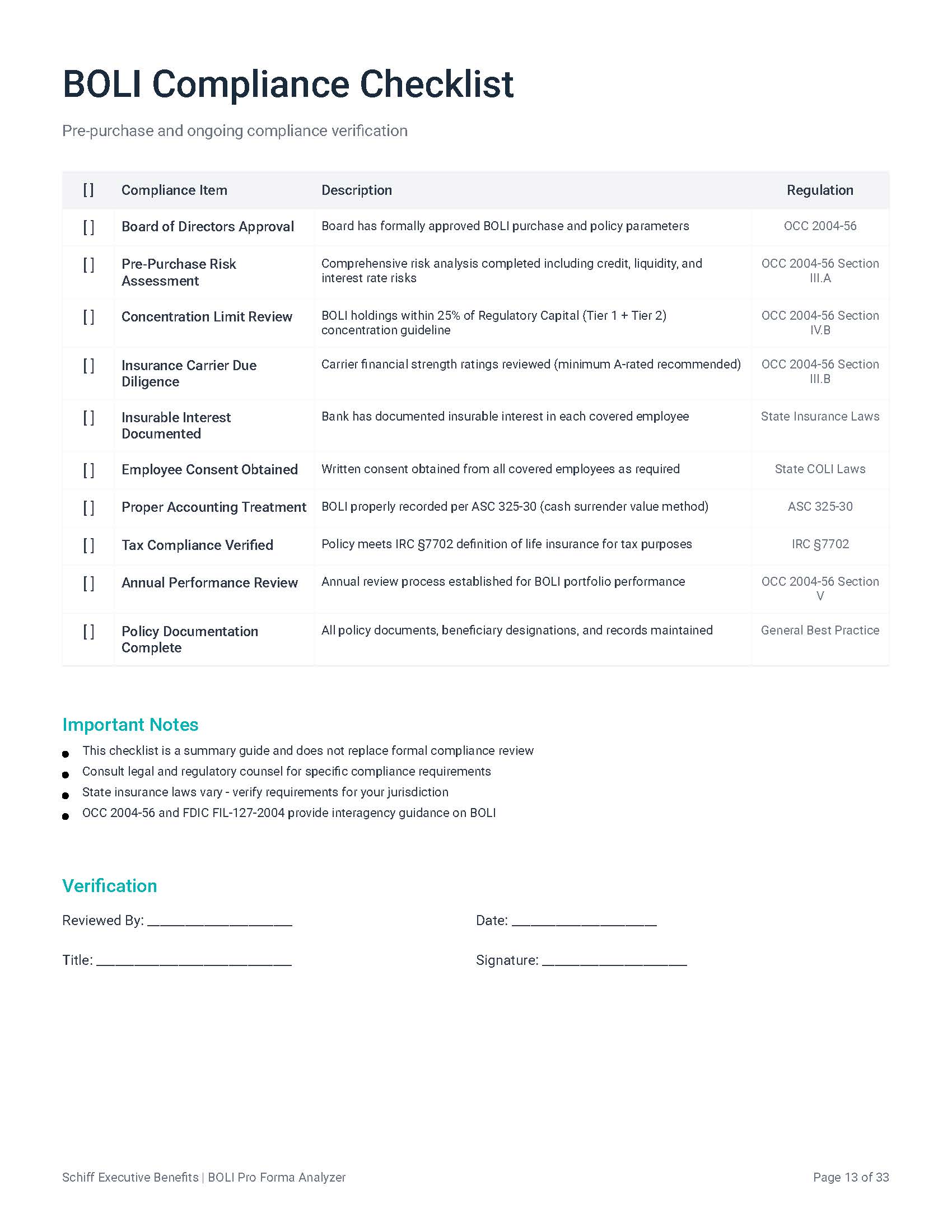
BOLI Compliance Checklist


Benchmarking the Burkenroad Peer Groups


When we look at the specific companies in this analysis, we see a range of maturity in their executive benefit structures.


  • Financial Institutions (FBMS, FGBI): These banks generally understand BOLI but often lack a post-purchase analysis to ensure their peer group benchmarking is up to date. Are you holding too much cash in the plan? Is your BOLI/Capital ratio optimized?

  • Retail and Industrial (POOL, HVT, POWL, CALM): These corporations often have "Legacy Plans" that are either under-funded or using outdated insurance products that don't offer the flexibility required for today’s executive.


The question isn't just "Do you have a plan?" The question is "Is your plan still doing its job?"


Restoring Alignment


The goal of any executive benefit strategy should be to align the interests of the shareholder, the company, and the key executive. When an executive at a company like Cal-Maine Foods knows that their family is 100% protected and their retirement is 100% secure, their focus remains on driving the business forward.


They aren't looking at the "next big offer" because they are already participating in The Perfect Plan®.


If you are a Center of Influence (COI) advising these companies, or an executive within one of these organizations, it’s time to move past the "set it and forget it" mentality. The economic environment has shifted, and your retention strategies must shift with it.


We invite you to retain your key people with ownership-like benefits and ensure your organization is protected against the "What Ifs" that matter most.


Sit back, grab your coffee, and let’s look at your plan together. We’re here to act as your guide through the complexities of executive security, ensuring your legacy: and the legacies of your top talent: are built on a foundation that lasts.


Come join us for Part 2, where we will dive deeper into the specific financial impact of "Full Cost Recovery" for the Burkenroad industrial sector.


Matt Schiff
President, Schiff Executive Benefits
Restoring Alignment and Retention


Learn more: executive retention programs.


Common sense wins. Strong balance sheets do not happen by accident. And in this business, the future belongs to the institutions that fund tomorrow’s promises before those promises come due.

When you review the top U.S. life insurance carriers, one truth stands out quickly: the strongest players do not treat Insurance Company Owned Life Insurance (ICOLI) as an afterthought. They use it as a strategic balance-sheet asset. At Schiff Executive Benefits, that is exactly the lens we bring to every review. We reverse engineer goals, measure available capacity, and help leadership teams make decisions that restore alignment and retention.

Executive Summary


Analysis of Insurance Company Owned Life Insurance (ICOLI) holdings for the top 50 U.S. life insurance carriers. Focus: comparing admitted ICOLI assets against statutory surplus to identify industry benchmarks and individual carrier purchase capacity.

This report is designed for a peer review setting. It is formal in structure, practical in tone, and built to support executive discussion. The central question is simple: how are leading carriers using ICOLI to support long-term executive liabilities and non-qualified plan obligations while maintaining strong capital positions?

The answer matters. If the institutions that manufacture and distribute life insurance are also deploying it as a strategic internal asset, that is not coincidence. That is a benchmark.

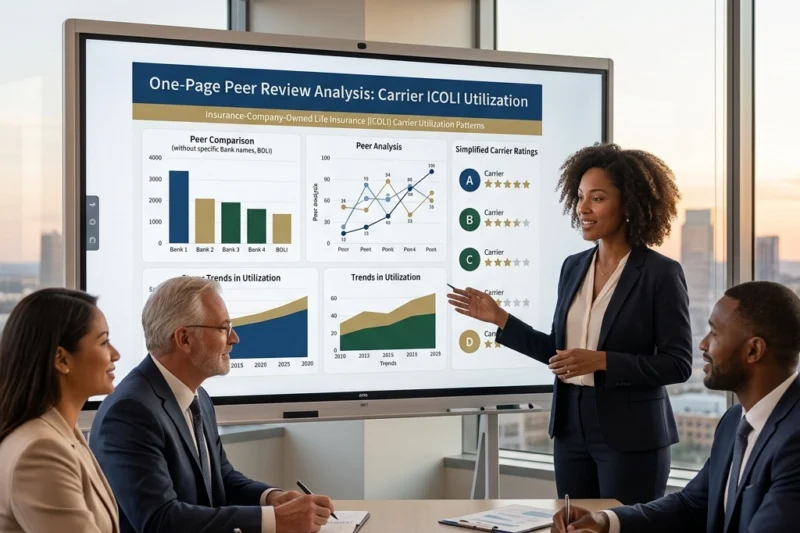
Professional executive desk with financial reports illustrating strategic ICOLI utilization and corporate benefit planning.

Report Scope and Benchmark Framework


This analysis compares admitted ICOLI assets to statutory surplus across the top 50 U.S. life insurance carriers. The purpose is twofold:

  • Identify where leading carriers currently sit on the ICOLI utilization curve

  • Highlight potential additional purchase capacity based on peer positioning

  • Provide a practical reference point for executive benefit funding discussions

  • Frame ICOLI as a strategic tool rather than a passive holding


In plain English, this is about more than rankings. It is about capacity. It is about solvency. And it is about whether a carrier is using one of the most efficient balance-sheet tools available to support long-duration obligations.

Full Comparison Data Table: Top 50 U.S. Life Insurance Carriers


Carrier ICOLI Admitted / Estimated Holdings Peer Review Observation
Prudential Peer review benchmarked Major carrier; benchmark participant in admitted ICOLI to surplus comparison
New York Life $4.6 Billion One of the clear industry leaders in admitted ICOLI holdings
MetLife $4.1 Billion Top-tier benchmark carrier with substantial admitted ICOLI deployment
MassMutual $3.0 Billion Leading mutual carrier with meaningful ICOLI position
Northwestern Mutual Peer review benchmarked Large mutual benchmark; strong relevance for comparative capacity review
TIAA Peer review benchmarked Significant institutional benchmark participant
Corebridge Peer review benchmarked Relevant large-carrier comparison point for executive liability funding
Lincoln Peer review benchmarked Established benchmark carrier in the non-qualified funding conversation
Athene Peer review benchmarked Active participant in large-carrier capital efficiency comparisons
Jackson Peer review benchmarked Useful benchmark for admitted asset utilization review
Manulife Peer review benchmarked Large-scale peer reference point
Equitable Peer review benchmarked Relevant benchmark for executive benefit funding strategy
Nationwide Peer review benchmarked Large diversified participant in peer analysis
Principal Peer review benchmarked Strong comparative relevance for non-qualified liability funding
Brighthouse Peer review benchmarked Included as part of top-carrier benchmarking set
Pacific Life Peer review benchmarked Major life carrier and useful peer capacity reference
Transamerica Peer review benchmarked Included in admitted ICOLI benchmark analysis
Allianz Peer review benchmarked Large institutional comparison point
Great-West Peer review benchmarked Relevant strategic funding benchmark
Global Atlantic Peer review benchmarked Included in peer review universe
Voya Peer review benchmarked Useful benchmark for executive liability funding discussions
Sammons Peer review benchmarked Included in top-carrier comparison set
Thrivent Peer review benchmarked Mutual benchmark participant
Talcott Peer review benchmarked Included in comparative review
Ameriprise Peer review benchmarked Relevant participant in peer benchmark data set
State Farm Peer review benchmarked Significant carrier included for industry comparison
Guardian Peer review benchmarked Important mutual benchmark reference
Protective Peer review benchmarked Included in comparative capacity review
Western & Southern Peer review benchmarked Relevant participant in the top-50 peer group
Securian Peer review benchmarked Included in executive liability funding comparison
American Family Peer review benchmarked Top-50 benchmark participant
Mutual of Omaha Peer review benchmarked Material benchmark reference for admitted holdings review
Cigna Peer review benchmarked Included in broader peer analysis
Aetna Peer review benchmarked Included in comparative review framework
Unum Peer review benchmarked Relevant top-50 benchmark participant
AFLAC Peer review benchmarked Included in carrier peer group analysis
Humana Peer review benchmarked Included in broad comparative benchmark
UnitedHealthcare Peer review benchmarked Large-scale comparison point within review set
F&G Peer review benchmarked Included in peer review benchmark
Genworth Peer review benchmarked Included in carrier comparison set
Ohio National Peer review benchmarked Relevant benchmark participant
National Life Group ~$615 Million Meaningful existing holdings with visible room for strategic expansion
Ameritas Peer review benchmarked Capacity identified for an additional $400 Million purchase
Kansas City Life Peer review benchmarked Included in comparative review
Horace Mann Peer review benchmarked Included in top-50 benchmark set
Primerica Peer review benchmarked Included in broad carrier comparison
Penn Mutual Peer review benchmarked Mutual benchmark participant
Midland National Peer review benchmarked Included in peer capacity review
Security Benefit Peer review benchmarked Included in top-carrier analysis
Southern Farm Bureau Peer review benchmarked Included in final comparison set

Strategic Insights


The market leaders are not using ICOLI casually. They are using it deliberately to fund long-term executive liabilities, support deferred compensation obligations, and create a more efficient funding mechanism for non-qualified plans. That matters because executive benefit promises are easy to make in a good year. Funding them responsibly over time is the real discipline.

What makes ICOLI especially attractive in the carrier environment?

  • Balance-sheet efficiency: ICOLI can help offset long-duration executive obligations with a purpose-built asset.

  • 0% RBC charge: Under applicable treatment, ICOLI can offer highly favorable capital treatment, which is a major reason sophisticated carriers continue to use it.

  • Tax-advantaged growth: Policy cash value growth improves internal asset efficiency versus many taxable alternatives.

  • Death benefit recovery: The life insurance chassis provides long-term cost recovery that supports employer economics.

  • Plan funding flexibility: ICOLI works especially well when paired with non-qualified deferred compensation, supplemental executive retirement plans, and other targeted retention designs.


This is where the Schiff Method matters. We do not start with a product. We start with the goal. Then we reverse engineer the structure around the liability, the timeline, the culture, and the economics. That is how you build a plan that is not only technically sound, but also practical inside a real company with real people and real constraints.

If you are reviewing admitted ICOLI relative to surplus, you are really asking a sharper question: how much strategic capacity remains before a carrier reaches its own comfort threshold? That is the kind of question that keeps a peer review meeting productive.

Selected Carrier Commentary


New York Life


At $4.6 Billion in admitted ICOLI, New York Life stands out as one of the clearest industry benchmarks. Size alone does not tell the story. What matters is what that size signals: long-term confidence in ICOLI as a funding vehicle for executive liabilities and institutional promises.

MetLife


At $4.1 Billion, MetLife reflects the same disciplined use of ICOLI as a strategic balance-sheet asset. This is not window dressing. This is infrastructure.

MassMutual


At $3.0 Billion, MassMutual remains firmly in the top tier. The carrier’s position reinforces the broader takeaway that large, well-capitalized institutions continue to rely on ICOLI where efficiency and long-term liability management matter.

National Life Group


With approximately $615 Million in holdings, National Life Group shows meaningful participation while still leaving visible room for expansion relative to likely peer capacity bands.

Ameritas


Ameritas is especially notable from a peer review standpoint because our analysis indicates capacity for an additional $400 Million purchase. That does not mean a carrier should buy simply because it can. It means there is room to evaluate whether strategic underutilization is leaving value on the table.

Why This Matters Beyond the Carrier Space


Even though this report focuses on insurance carriers, the lesson travels well. The same core logic applies when corporations and partnerships use COLI to attract, retain, and reward key talent, fund non-qualified obligations, and prepare for the business “What Ifs” that can hit without warning.

That is why the peer review process is valuable. It turns abstract strategy into measurable comparison. It helps answer questions like:

  • Are we underutilizing a highly efficient funding tool?

  • Are we carrying long-term executive liabilities without a matching asset?

  • Are we solving retention problems in a cost-effective way?

  • Are we planning for replacement cost, retirement income, or ownership transition before the point of no return?


For leaders thinking bigger about non-qualified benefit design, The Perfect Plan® conversation is always about alignment first. Strategy second. Product last.

Conclusion


ICOLI continues to be a primary strategic vehicle for cost-effectively managing executive benefits and non-qualified liabilities across the life insurance sector.

That is the big takeaway from this peer review analysis. The strongest carriers continue to use ICOLI because it works. It supports long-term promises. It helps preserve capital efficiency. And it gives leadership teams a disciplined way to fund obligations before those obligations become pressure points.

If you want to evaluate how these same planning principles translate into executive benefit strategy, non-qualified design, or COLI implementation, we would be glad to walk through it with you. You can also explore more insights on our posts page or join us at The Perfect Plan®.

Restoring Alignment and Retention.


Time has a funny way of moving both slowly and at breakneck speed. They say the only constant in life is change, but in the world of executive benefits, the only constant is complexity. Today, as I sit in my office on this Wednesday, April 15, 2026, I’m reflecting on a journey that started exactly two decades ago.


In 2006, I made a choice that felt both terrifying and inevitable. I walked away from a comfortable role as Managing Director at NYLEX Benefits. I was managing a massive operation, hitting high-stakes premium goals, and overseeing regional directors. But I felt a pull toward something more personal, more technical, and frankly, more innovative. I wanted to build a firm where the "chief bottle washer" (that was me) was also the creative mind behind the most sophisticated plan designs in the industry.


Schiff Executive Benefits was born from that desire. And twenty years later, our mission remains the same: Restoring Alignment and Retention.


The Universal Truth of Growth


There is a universal truth in business: Growth without a plan is just a slow-motion collision with reality.


When we started SEB, the landscape was different. 409A regulations were the "new kid on the block" causing headaches for every C-suite in America. Fast forward to today, and while the regulations have evolved, the underlying anxiety for business owners hasn't changed. You still worry about the same things at 2:00 AM.


You worry about your legacy. You worry about your people. And you worry about the "What Ifs."


At Schiff Executive Benefits, we built our technical legacy by answering those "What Ifs" before they become "What Nows."


That legacy was built through a series of very real milestones:


  • The Perfect Plan® PRESENTED BY MATT SCHIFF, CLU, CHFC, WMCP

  • Schiff Executive Benefits (SEB)'s story

  • Established Schiff Benefits Group May 2006 (after leaving NYLEX Benefits as Managing Director)

    • Managing Director NYLEX Benefits 1998-2006

    • Member Firm of NFP (Partners) 2006-2008

    • Valmark Member Firm 2009-2012 (Top 20 of 150 firms)

    • 12 Year MassMutual Executive Benefits Specialist (in MMEPA and MMGP)

    • Was a Member Firm of Lion Street in 2020 to 2022

    • Top Ten Firm with AgencyOne in 2024

    • Helped draft 409A and 101(j) in 2003 and 2005 as a ranking member of AALU's NQDC Committee with Michael Goldstein


The Five "What Ifs" That Keep You Up


Over the last twenty years, I’ve sat across the table from hundreds of CEOs, partners, and founders. Whether it’s a high-growth tech firm or a multi-generational manufacturing company, the questions are remarkably consistent. We frame our entire philosophy around these five what-if anchors:


  1. What if you end up in business with your partner’s widow or widower? (The Succession Crisis)

  2. What if you need to buy out a partner, but the cash isn’t there? (The Buy-Out Dilemma)

  3. What if your top talent walks across the street to your biggest competitor? (The Retention Risk)

  4. What if a senior executive retires, and the cost to replace them sinks your EBITDA? (The Replacement Cost)

  5. What if you: the person who built it all: run out of money in retirement? (The Personal Risk)


If you haven't asked yourself these questions lately, now is the time. We call this the process of building The Perfect Plan®. It’s not just a catchy name; it’s a registered methodology designed to ensure that your business remains an asset, not a liability, to your family and your future.


A Technical Legacy: Beyond the 401(k)


Twenty years ago, many companies thought a robust 401(k) was enough to keep top-tier talent. We knew better. We’ve spent two decades educating the market on why a 401(k) is often a "math problem" for high earners. When you’re dealing with contribution limits, your most valuable people are often the most underserved.


Our technical legacy is rooted in the "Golden Handcuffs": strategies that actually work. We’ve specialized in:


  • Non-Qualified Deferred Compensation (NQDC): Helping executives save significantly more than the standard $23,000 annual limit.

  • Corporate Owned Life Insurance (COLI): Using institutional-grade insurance to fund future liabilities while providing tax-efficient growth.

  • Split Dollar Arrangements: Creating sophisticated ways to provide life insurance benefits while retaining corporate control of the cash value.

  • ESOPs and Buy/Sell Funding: Ensuring that when a transition happens, it’s funded with "discounted dollars" rather than current cash flow.


Innovation through Partnership: The Ridgeback Era


You can’t stay at the top of your game for twenty years by standing still. Sixteen months ago we took a massive leap forward by joining The Ridgeback Group as a founding firm.


Why? Because the technical demands of our clients were outpacing traditional consulting. By integrating AI-powered modeling systems, we’ve been able to automate plan management and maintain ongoing client tracking. One of the biggest mistakes I see in this industry is the "set it and forget it" mentality. A plan designed in 2018 might be completely irrelevant by 2026 if tax laws or interest rates shift. And we must practice whaat do for our client. 


Our partnership with Ridgeback ensures that The Perfect Plan® stays aligned with real-world change. It’s about using data to predict where the "Executive Sandwich" might squeeze your leadership team: the decade where they are simultaneously supporting aging parents and funding their children’s education. It’s the riskiest decade of their careers, and we have the technical tools to protect them through it.


More Than Just Numbers


While I love the technical side: the IRC 101(j) compliance, the 409A structuring, the complex math of 401(k) excess plans: this anniversary isn't just about spreadsheets. It’s about people.


I also can’t look back on twenty years without thinking about the milestone relationships that helped shape our path. Along the way, we’ve had the privilege of working with and alongside organizations like NFP, Valmark, MassMutual, Lion Street, and AgencyOne. Each chapter sharpened our perspective. Each relationship expanded our technical depth. And each one reinforced a lesson that still guides us today: no firm builds a lasting legacy alone.


I remember a client from about ten years ago: a founder of a major construction firm. He was terrified of what would happen if his son wasn't ready to take over. We sat down and walked through the "What Ifs." We implemented a COLI-funded buy/sell agreement and a deferred compensation plan that kept his key foremen on board for the transition.


Last year, he sent me a photo from his boat in Florida. He’s retired. His son is thriving. His foremen are still there. That is what I mean by Restoring Alignment and Retention.


A Dedication to Education: The American College of Financial Services


Jayne and Matt at the Solomon Huebner Award ceremony honoring Albert J. “Bud” Schiff.


Jayne and Matt at the Solomon Huebner Award ceremony honoring Albert J. “Bud” Schiff.


Our commitment to technical mastery is rooted in a deep respect for education and the professional standards of our industry. This is perhaps best exemplified by our family’s long-standing relationship with The American College of Financial Services.


Founded in 1927 by Dr. Solomon S. Huebner—often called the "father of insurance education"—The American College is the nation’s largest non-profit educational institution dedicated to the financial services profession. For nearly a century, it has set the benchmark for excellence through its rigorous designations, including the CLU®, ChFC®, and MSFS. Huebner was also one of the first to champion holistic planning through rigorous fact-finding: the discipline of asking deeper questions before recommending any solution. Today, that approach is widely recognized as the gold standard for fiduciaries, but it is a principle designees of The American College have practiced since the institution’s inception.


It was a profound honor for our family when my father, Albert J. “Bud” Schiff, CLU, ChFC, AEP, was recognized with the Solomon Huebner Award in November 2013. This award is the College’s highest honor, presented to individuals who have made significant, lifelong contributions to the industry and the College’s mission. Here, my mother, Jayne, and I are pictured at the ceremony celebrating his legacy of leadership and his unwavering dedication to the advancement of professional knowledge in insurance services. In 2018, Jayne Schiff was also named a distinguished alum of The American College for Financial Services. That legacy of disciplined inquiry still shapes how we work today. It is why we begin with deep questions, not quick answers, and why our planning process is built around understanding the full picture before designing a path forward.


Celebration Photos


Celebrating 20 years of professional achievement and the trusted relationships that helped define our technical legacy.


Matt Schiff - Restaurant Group Shot: marking the 20-year milestone with warm conversation, shared memories, and the relationships that have shaped Schiff Executive Benefits.


Twenty years in, and the strongest milestones are still built around people, partnership, and time well spent together.


Matt Schiff - Elegant Restaurant Camaraderie: honoring two decades of leadership, trust, and the personal relationships behind long-term success.


An elegant moment that reflects what twenty years in this business has always been about: trust earned, relationships maintained, and a legacy built the right way.


NYC Event Networking 1: celebrating the 20-year milestone through connection, collaboration, and the professional community that helped shape the journey.


Great work rarely happens alone. This milestone is also a celebration of the network, conversations, and shared momentum behind the last twenty years.


Warm Restaurant Social Shot: commemorating 20 years of meaningful relationships, shared success, and the human side of a technical business.


Even in a highly technical field, relationships still matter most. That truth has carried Schiff Executive Benefits through every chapter of the last twenty years.


The Next 20 Years


As we celebrate this milestone, I’m often asked, "What’s next, Matt?"


The answer is simple: More innovation. The national debt is rising, tax rates are a moving target, and the competition for talent has never been more global. Whether you are a bank, a massive C-Corp, or a growing partnership, the need for sophisticated, technically sound executive benefits is only going to grow.


We are continuing to expand our video library to help demystify these complex topics. We are refining The Perfect Plan® to account for new economic shifts. And we are continuing to ask the hard questions that other consultants avoid.


A Note of Gratitude


To our clients: Thank you for trusting us with your legacy. To our partners: Thank you for your collaboration. To my team: Thank you for being the engine that drives this technical legacy forward.


I started this firm as the "chief bottle washer." Today, I’m proud to lead a team that sets the standard for the entire executive benefits industry.


If you’ve been wondering if your current plan is actually doing what it’s supposed to do: if it’s truly rewarding your best people while protecting your bottom line: let’s talk. No high pressure, no complex jargon without context. Just a conversation about your business and your future.


Sit back, grab your coffee, and when you're ready, come join us for the next chapter.


Here’s to twenty years of innovation, and to many more.


Matt Schiff
President, Schiff Executive Benefits


Want to see how we tackle these issues in real-time? Check out The Perfect Plan® Podcast for deep dives into the strategies that keep businesses thriving.


A business is only as good as the people who keep it running.


This is a universal truth that applies whether you are operating out of a garage with a $5 million revenue target or overseeing a multi-state enterprise crossing the $500 million mark. In the world of executive benefits, there is a lingering myth that sophisticated retention tools: the kind that create "golden handcuffs": are reserved exclusively for the Fortune 500.


The reality? The systems required to protect your most valuable assets don't care about the number of zeros on your balance sheet. They care about alignment.


At Schiff Executive Benefits, we’ve spent two decades proving that the "Schiff Method": a philosophy built on goal-oriented reverse engineering: scales perfectly. Whether you are a mid-market firm or a massive corporation, the technical depth required to attract and retain key talent remains the same. The only thing that changes is the scale of the solution.


The Myth of the "Too Small" Organization


Many leaders of $5M to $20M companies look at tools like Non-Qualified Deferred Compensation (NQDC) or Phantom Stock and think, "That’s for the giants. We aren't there yet."


But let’s ask a hard question: Is your "top talent" any less vital to your survival than a CEO is to a global conglomerate? If your key rainmaker or your operations mastermind walked out the door tomorrow, would the impact be any less devastating?


In many ways, the mid-market company is more vulnerable. A $500 million firm can often absorb the loss of a key executive through layers of redundancy. A $10 million firm might find itself in an existential crisis.


The systems we build: The Perfect Plan®: are designed to prevent that crisis. We don’t start with a product; we start with the "What If."


Reverse Engineering the Outcome


Most benefit brokers work forward. They look at what you have, add a percentage, and see where you land. We do the opposite. We reverse engineer from the finish line.


What does "realizing your dream value" look like for you? What keeps you up at night when you think about your professional legacy?


When we work with a $5 million company, we ask the same fundamental questions we ask a $500 million firm:


  1. What happens if your top talent leaves for a competitor?

  2. How do we ensure your senior executives have a cost-efficient retirement?

  3. How do we create a buy-out structure that doesn't cripple the company?


By identifying the goal first, the technical solution: whether it’s a SERP (Supplemental Executive Retirement Plan), a split-dollar arrangement, or a COLI-funded NQDC: becomes the bridge to get there. The systems are the same. The math is just scaled to your specific revenue and headcount.


Professional business environment with growth-focused visual representing the Schiff Method scaling from $5M to $500M.


Enterprise-Grade Tools for the Corporate World


When we move away from the bank channel and look strictly at the corporate side, the flexibility of these systems is staggering. You don't need FDIC-regulated structures to build a world-class executive suite. You need technical depth.


1. Non-Qualified Deferred Compensation (NQDC)


For the $500 million firm, an NQDC plan might cover dozens of executives, allowing them to defer a portion of their compensation into a tax-advantaged environment. For the $5 million firm, this same system can be tailored for just two or three "must-keep" employees. It allows them to build wealth beyond the limits of a traditional 404(k) while keeping them aligned with the company’s long-term growth.


2. Phantom Stock and Equity Alignment


One of the biggest anxieties for mid-market owners is giving up actual equity. You’ve built this business from the ground up; you shouldn't have to slice up the pie just to keep people happy. Phantom Stock systems allow you to reward key players based on the increase in the company's value without ever handing over a single share of voting stock. It scales from the smallest partnership to the largest private corporation.


3. Corporate Owned Life Insurance (COLI)


To make these promises "stick," they need to be funded. This is where many plans fail. A $500M company understands that an unfunded liability is a ticking time bomb. We bring that same enterprise-level discipline to smaller firms through COLI. By using COLI to informally fund these obligations, the company creates a tax-efficient asset that can offset the costs of the benefits provided. It provides the "security" and "guarantee" that top-tier talent demands before they commit their next ten years to your vision.


Addressing the "5 What Ifs"


Regardless of revenue, every business owner faces the same five fundamental anxieties. At Schiff Executive Benefits, these are our primary anchors:


  • Business with a widow: What happens to your succession plan if a partner passes away?

  • Business buy-out: Do you have the liquidity to handle a transition without selling the farm?

  • Top talent leaving: Have you built a "moat" around your most important people?

  • Senior exec retirement: Are your replacement cost efficiencies optimized?

  • Running out of money: Is your personal retirement as secure as your business’s future?


When you look at your company through the lens of these questions, the size of your revenue becomes secondary to the stability of your infrastructure. Our job is Restoring Alignment and Retention by ensuring that your corporate goals and your executives' personal goals are moving in the exact same direction.


Why Technical Depth Matters


In an unstable economic environment, "good enough" benefits don't cut it anymore. High-performers are looking for sophisticated, structured, and legally sound plans. They want to know that their 409A plans and buy/sell arrangements have been vetted by experts who understand the nuances of the tax code and corporate law.


This is where the "Schiff Method" shines. We don't just hand you a folder and wish you luck. We provide the technical depth to ensure your plan remains compliant and effective as you scale. If you grow from $5M to $50 million, your plan should grow with you: not become a liability that needs to be torn down and rebuilt.


Executive desk with financial reports highlighting technical compliance for scalable corporate benefit plans.


Building It Your Way


You’ve worked too hard to settle for "off-the-shelf" benefit packages that don't fit your culture or your cash flow. Whether you are managing a small team of elite specialists or a massive workforce across the country, your retention strategy should be as unique as your business.


Are you worried that you're "too small" for high-end executive benefits? Or are you a large firm wondering if your current systems are actually as efficient as they could be?


It’s time to move past the guesswork. It’s time to apply enterprise-grade logic to your retention challenges.


Come Join Us


If you’re ready to see how these systems can be tailored to your specific scale, I invite you to sit back, grab your coffee, and let’s have a real conversation about your legacy.


You can explore more about our approach through The Perfect Plan® Podcast or dive into our specific services to see how we’ve helped companies across the revenue spectrum secure their future.


Your people are your greatest asset. Isn't it time you treated them like it?


Schiff Executive Benefits: Restoring Alignment and Retention.


A professional consultation session focused on executive retention systems and corporate financial security.


For more information on how we scale sophisticated corporate benefits, visit our posts feed or contact our team directly to discuss your specific needs.


They say that the only constant in life is change, but in the world of high-stakes banking and executive leadership, the only constant is the relentless need for top-tier talent. Without the right people in the right seats, even the most storied financial institutions are just buildings with impressive vaults.

We’ve all felt the shift. The landscape of executive benefits is evolving faster than a New Orleans jazz solo. Tax codes shift, regulatory scrutiny tightens, and the "Great Reshuffle" has turned the hunt for executive retention into a strategic arms race.

If you are an advisor to the banking industry’s elite, or a leader responsible for the long-term health of your institution, you know that standing still is the same as moving backward. That is why we are thrilled to announce that registration is officially live for the 2026 Independent Bank Corporate (IBC) Owned Life Insurance Study Group.

From November 1–3, 2026, we are returning to our spiritual home at the Hotel Monteleone in New Orleans. This isn't just another industry conference where you sit in a windowless ballroom and trade business cards over lukewarm coffee. This is an exclusive gathering designed for top-tier advisors who are serious about Restoring Alignment and Retention.

Why New Orleans? Why Now?


There is a reason we keep coming back to the French Quarter. Beyond the history and the atmosphere, New Orleans represents a blend of tradition and innovation: much like the strategies we discuss.

What keeps you up at night? For many of our attendees, it’s the "What Ifs" that haunt the boardroom.

  • What if your top talent leaves for a competitor tomorrow?

  • What if a senior executive retires and the replacement cost exceeds your projections?

  • What if a sudden tragedy leaves the business dealing with a widow or a complex succession crisis?


These aren't just hypothetical anxieties; they are the fault lines that can crack a bank’s foundation. At the 2026 IBC Study Group, we don’t just identify these problems; we build the solutions. We focus on the mechanics of Bank-Owned Life Insurance (BOLI) and Corporate-Owned Life Insurance (COLI) not as mere products, but as the engine for The Perfect Plan®.

The Technical Heart: BOLI and Beyond


While the surroundings are legendary, the core of this study group is deeply technical. We dive into the weeds of cost-recovery strategies and the nuances of Bank-Owned Life Insurance (BOLI).

In today’s volatile market, banks are looking for ways to offset the rising costs of employee benefits without taking on undue risk. BOLI remains one of the most effective tools for institutional capital management, offering tax-deferred growth and tax-free death benefits that can be used to fund non-qualified deferred compensation (NQDC) plans or supplemental executive retirement plans (SERPs).

Our sessions will cover:

  • Advanced Cost-Recovery Models: How to structure BOLI to ensure that the bank is made whole for the costs of executive benefits.

  • Executive Retention Strategies: Moving beyond standard bonuses to create "Golden Handcuffs" that actually work.

  • Regulatory Compliance: Navigating the latest updates to ensuring your plans remain "Gospel-compliant" with current tax and banking laws.

  • Succession Planning: Solving the "Business with a Widow" scenario through structured buy-sell arrangements and key-person coverage.


We understand that you are navigating an unstable financial environment. You need a guide who has been through the cycles. Our team at Schiff Executive Benefits acts as that guide, helping you realize your institution’s dream value while protecting your most valuable assets: your people.

Food, Fun, and Friendship: The Monday Night Highlight


We have always believed that the best business happens when the formal ties are loosened. The IBC Study Group has built a reputation on the "Three Fs": Food, Fun, and Friendship. This year, we are taking that to a new level.

On Monday night, we are hosting a Mardi Gras Theme Jazz Reception and Dinner in the brand-new Courtyard at the Hotel Monteleone. Imagine the sound of a brass band echoing off the brick walls, the scent of authentic Creole cuisine in the air, and the chance to network with the brightest minds in the industry in a setting that is uniquely New Orleans.

This isn't just a dinner; it’s an experience designed to foster the kind of deep professional relationships that last decades. It’s where the real "Study Group" happens: sharing stories of what worked, what didn't, and how we are all navigating the complexities of the modern financial world.

Is This Group Right for You?


The IBC Study Group is an exclusive circle. We intentionally keep the numbers focused to ensure that every participant can engage in the high-level dialogue that makes this meeting so valuable.

If you are an advisor who deals with:

  • Institutional BOLI portfolios.

  • Corporate-Owned Life Insurance (COLI) for non-bank entities.

  • Executive benefit plan design and 409A compliance.

  • ESOPs and partnership buy-outs.


...then you belong in the room. This is your opportunity to step away from the day-to-day grind and look at the big picture. Are you building a legacy, or just managing a spreadsheet? Are you offering your clients The Perfect Plan®, or just a standard off-the-shelf solution?

Secure Your Spot


The 2025 Study Group was a complete sell-out, and we expect 2026 to follow suit. The combination of the Monteleone’s charm, the technical depth of our sessions, and the new Monday night Jazz Reception makes this a "must-attend" event on the calendar.

Don't let the "What Ifs" stay unanswered.

  • What if you miss out on the specific tax-efficiency strategies that could save your client millions?

  • What if your competitors are in New Orleans while you’re at your desk?


Registration is now live for the meeting, and hotel reservations are now available through the Hotel Monteleone room block. Important: meeting registration does not cover your hotel booking. They are separate, and you will need to complete both.

Meeting Registration: Register for the 2026 IBC Study Group Here

Hotel Reservation Link: Book your room at Hotel Monteleone

Block Code: IBC30J

If you prefer to call in your reservation, contact 504-523-3341 or 800-535-9595 between 9:00 a.m. and 5:00 p.m. CDT and reference the block code IBC30J.

Sit back, grab your coffee, and mark your calendar. We are heading back to the Big Easy to restore alignment, ensure retention, and celebrate the profession we love.

We can't wait to see you in the Courtyard.


Schiff Executive Benefits is dedicated to helping businesses and banks navigate the complexities of executive retention and cost recovery. Through The Perfect Plan®, we provide the security and guarantees needed in an uncertain world.

For more information on our services or to view our latest insights, visit our posts feed.


They say that to know where you are going, you first have to know where you came from. In the world of executive benefits and financial architecture, many people lead with spreadsheets, tax codes, and actuarial tables. But if you sit down with me for more than five minutes, you’ll realize that while I live and breathe the technicalities of IRC 409A and the complexities of deferred compensation, my "why" isn’t found in a ledger. It’s found in a legacy.


I’ve always viewed myself as an architect. Not of buildings, but of security. This mindset wasn’t something I picked up in a textbook; it was woven into the fabric of my life long before I founded Schiff Executive Benefits. It’s a mindset rooted in family, a passion for protection, and a deep respect for the hard work required to build a business that lasts.


The Multi-Generational Foundation


My journey in this industry isn’t just a career path; it’s a family tradition. Between my parents and myself, we represent nearly 150 years of collective experience in the financial services and insurance world.


Growing up, I watched my parents, Jayne and Bud Schiff, navigate the complexities of this business with a single-minded focus: taking care of people. They didn’t see clients as policy numbers; they saw them as families and businesses whose futures depended on the quality of our advice. That sense of responsibility stayed with me. It’s why I don’t just "sell" a plan: I architect a solution.


Jayne and Bud built more than a career legacy. They built a standard. Their example taught me that when you help protect a family, a business, or a future, you are doing deeply personal work. That legacy still shapes the way I serve clients today.


Today, that legacy continues with the unwavering support of my wife, Nancy, our CMO, The Ridgeback Group, our support team, and family legacy in our five children (Courtney and Jason, Alex, Ty, and Gavin).  They are the daily reminder that every decision has a human side. When we talk about protecting a business, we are really talking about protecting the people behind it and the families counting on them.


Bud, Jayne, Nancy, and Matt


Caption: The foundation of everything we do: the Schiff family legacy, built on protection, care, and continuity across generations.


The 2006 Pivot: Building Something Better


By the mid-2000s, I had achieved what many would consider the pinnacle of corporate success. As a Managing Director at NYLEX Benefits, I had helped grow a team from five to thirty-five people and was deeply entrenched in the high-level world of Executive benefits, Bank Owned Life Insurance (BOLI) and other corporate-owned strategies.


But I felt a pull toward something more personal, as well as a work/life balance. I wanted to build a firm where technical innovation met human-centric service: where we could be nimble enough to solve the most complex executive retention issues while remaining deeply connected to our clients' personal missions, and still be connected to my family. 


In May of 2006, I made the leap and founded Schiff Benefits Group. It was a pivotal moment. I wasn't just starting a company; I was creating a platform to implement the strategies that would eventually evolve into The Perfect Plan®.


Looking back, the timing was critical. The world was about to face the 2008 financial crisis, and the regulatory environment was shifting rapidly. My experience in the "big corporate" world gave me the technical expertise to navigate IRC 409A and other compliance minefields, but it was my passion for individual business owners that drove the firm forward.


Matt Schiff - Grand Staircase Wisdom Inscription


A Passion Beyond the Spreadsheets


If you follow me on social media or listen to The Perfect Plan® Podcast, you know that my life isn't just about Corporate Owned Life Insurance (COLI) and ESOPs.


I am a lover of music, particularly the soulful, grounded sounds of "The Immediate Family." There is a rhythm to great music, a harmony where every instrument must be in sync to create a masterpiece. I see business planning the same way. If your estate plan isn't in harmony with your buy/sell agreement, or if your deferred compensation plan isn't aligned with your retention goals, the "music" of your business falls flat.


Matt Schiff at the Helm


Away from work, I stay busy with a few lifelong passions that have always kept me grounded: sailing, soccer, and golf. Sailing has long been a personal passion of mine. It teaches patience, awareness, adjustment, and respect for conditions you cannot control. Soccer brings energy, teamwork, and constant movement. Golf demands discipline, focus, and humility. Different games. Same lesson. You need a plan, and you need to stay aligned when conditions change.


Matt Schiff and soccer team


Caption: Fifteen years of friendship, teamwork, and shared passion for the game, reflecting Matt’s lifelong love of soccer and the bonds he builds along the way.


My goal is to bring that harmony to your professional and personal life. I want to help you solve what I call the "5 What Ifs" that keep business owners awake at night:


  1. What if you end up in business with a widow or widower? (Succession planning)

  2. What if a business buy-out is forced upon you at the worst time?

  3. What if your top talent walks across the street to a competitor?

  4. What if the cost of replacing a senior executive breaks the bank?

  5. What if you run out of money in retirement because you were too busy building the business?


Restoring alignment and retention isn't just our tagline; it's the rhythm we live by. We solve these "What Ifs" through technical mastery, but we frame them through the lens of protection for the families and legacies depending on you.


The Architect and The Perfect Plan®


When I call myself the "Architect of The Perfect Plan®," it’s not because I believe in a one-size-fits-all solution. Quite the opposite. Every architect knows that while the laws of physics (or tax codes) remain constant, the house must be built for the family living inside it.


The Perfect Plan® is a philosophy. It is a commitment to ensuring that every piece of your executive benefits package: from Executive Deferral Plans to Split Dollar arrangements to estate planning: is working toward a singular goal: your security.


We explore these concepts in depth on The Perfect Plan® Podcast, where we bridge the gap between technical strategies and real-world application. Whether we are discussing portable peace of mind or the nuances of business succession, the focus is always on the human element.


Matt Schiff - Podcast Setup


Why Experience Matters Now More Than Ever


We are currently navigating an era of "The 63% Exit Wave," where a massive generation of business owners is looking toward the horizon. At the same time, tax laws are in flux, and the competition for talent is fiercer than ever.


In this "unstable" environment, you don't just need a consultant; you need a guide who has seen the cycles before. Having been in this seat since 1992, and having lead Schiff Executive Benefits through two decades of economic shifts, I’ve learned that the best defense is a well-architected offense.


Whether we are working with a closely held family business on family wealth transfer and executive retention, a community bank on BOLI strategies or a global corporation on restoring executive alignment, the mission remains the same: Aligning a plan that fits the culture and legacy of the company tax efficiently, as well as is flexible for future needs.


Come Join Us


I often tell my clients to "sit back and grab your coffee" because these conversations shouldn't be stressful: they should be empowering. When you have a plan that addresses the technical "haunts" of the past and the "what ifs" of the future, you gain the freedom to focus on what you love: whether that’s growing your company, sailing, playing soccer or golf, or spending time with family.


My family legacy is one of protection. I’d love to help you secure yours.


If you’re ready to see how the "Architect" mindset can transform your business, I invite you to explore our latest insights or join the conversation over on The Perfect Plan® Podcast.


Let’s build something that lasts, together.


Matthew E. Schiff, CLU, ChFC, WMCP
President, Schiff Executive Benefits


Change is the only constant in life, yet we spend the majority of our professional careers trying to build a fortress of stability. We work late, we climb the ladder, and we take comfort in the "benefits package" listed in our employment contracts. But here is an undeniable truth that many executives realize too late: If you don't own it, you don't control it.


Most corporate benefits aren't actually yours. They are "leased" from your employer. And just like a leased car or a rented apartment, those benefits can be taken back the moment the lease is up, whether that’s through a job change, a layoff, or your eventual retirement.


At Schiff Executive Benefits, as we celebrate our 20th anniversary of Restoring Alignment and Retention, we’ve seen too many high-performers discover that their family’s financial safety net was tied to a desk they no longer sit at. If your peace of mind is contingent on your current HR department, you don't have peace of mind. You have a temporary arrangement.


The Illusion of the Corporate Safety Net


Let’s be real: when you look at your total compensation, the "group" benefits, life insurance, disability, and health coverage, look great on paper. They are often low-cost or even "free" to you. But in the world of high-stakes financial planning, free can be the most expensive price you’ll ever pay.


The problem with "leased" benefits is the lack of portability. We call these "weakest links" because they fail exactly when you need them most. Think about the Executive Sandwich: that decade where you are at your career peak, but also the "riskiest" decade for your family. You’re supporting aging parents and children’s tuition, all while maintaining a lifestyle that requires a high, steady income.


![Portable executive benefits and family security illustration]


What happens if you leave that role?


  • Your Group Term Life Insurance: Usually vanishes or offers a "conversion" option that is so prohibitively expensive it’s practically useless.

  • Your Group Disability: Gone. And if your health has changed during your tenure, you may find yourself uninsurable on the private market.

  • Your Retirement Gap: You might be hitting the 401(k) cap, leaving a massive void between your current lifestyle and what your "leased" plan will actually provide.


The Five "What Ifs" of Executive Security


In our two decades of consulting, we’ve narrowed the risks down to five core "What If" questions. If you can’t answer these with a definitive "I’m covered regardless of my employer," then your plan is in jeopardy.


  1. What if there’s a business buyout? If your company is sold, the new owners may not value the same benefit structures. Your "leased" security could disappear overnight in a merger.

  2. What if you are the top talent leaving? Whether you’re moving to a competitor or starting your own firm, you shouldn’t have to leave your family’s protection behind.

  3. What if you run out of money in retirement? Most leased benefits end at age 65. If you live to 95, who is covering the risk for those final 30 years?

  4. What if your successor costs more than expected? For the business owner, not having portable, owned benefits (like COLI) means the cost of replacing talent can skyrocket.

  5. What if you have to deal with a widow/widower (succession)? Without portable, owned life insurance structures like TOLI (Trust Owned Life Insurance), the transition of a business can be catastrophic for the surviving family.


Moving from "Leased" to "Owned" with The Perfect Plan®


![The five what-ifs of executive security planning]


So, how do we move from the fragility of "leased" benefits to the "Portable Peace of Mind" that ownership provides? It starts with a shift in philosophy. You need to treat your executive benefits with the same rigor you apply to your personal investment portfolio.


This is where The Perfect Plan® comes into play.


The Perfect Plan® isn't a single product; it’s a strategic framework designed to align the interests of the corporation and the executive. By utilizing structures like Corporate Owned Life Insurance (COLI) and Non-Qualified Deferred Compensation (NQDC), we can create benefits that are:


  • Portable: They stay with you, providing a continuous "security blanket" regardless of your employment status.

  • Tax-Efficient: They leverage the power of tax-deferred growth to solve the retirement gap created by 401(k) limits.

  • Discriminatory (In a good way): Unlike group plans, these can be customized specifically for the key leaders who drive the company’s success.


When we design The Perfect Plan®, we look at the "What Ifs" and solve them one by one. We ensure that the death benefit is there to protect your family, the cash value is there to supplement your retirement, and the disability coverage is own-occupation and portable.


The Corporate Perspective: Alignment and Retention


If you are a business owner or a board member, you might be wondering: "Why would I want my executives’ benefits to be portable? Doesn’t that make it easier for them to leave?"


It’s a fair question. But the reality is the opposite. Our tagline, Restoring Alignment and Retention exists because we know that top talent stays where they feel truly secure and valued.


When you provide a "leased" benefit, the executive knows it’s a temporary hook. When you facilitate "ownership" through a properly structured executive benefit plan, you are providing a sophisticated wealth-building tool that demonstrates a long-term commitment to that leader’s family. You aren't just giving them a job; you are helping them build a legacy.


Furthermore, using COLI (Corporate Owned Life Insurance) to fund these obligations allows the corporation to recover the costs of the benefits over time. It’s a win-win that "leased" group plans simply cannot match.


![Corporate alignment retention and family security meeting]


Why Now? The Point of No Return


We are currently in a shifting economic landscape. National debt is rising, tax laws are perpetually on the chopping block, and the "war for talent" has never been more intense.


If you wait until you are 60 to realize your life insurance is "leased," you may find that your health or the sheer cost of private coverage makes it impossible to pivot. There is a "point of no return" in financial planning where the math simply stops working in your favor.


Don't let your family’s security be the weakest link in your professional life. You’ve worked too hard to leave your peace of mind in someone else's hands.


Join the Conversation


As we celebrate 20 years at Schiff Executive Benefits, we invite you to take a closer look at what you actually own. Are your benefits a permanent foundation, or are they just a temporary arrangement?


Sit back, grab your coffee, and think about the five "What Ifs." If the answers make you a little uneasy, it’s time to start a different conversation. You can explore our video library to see how these strategies work in practice, or browse our latest insights to stay ahead of the curve.


Your career is about more than just a paycheck; it’s about the legacy you leave for those you love. Make sure that legacy is built on ownership, not a lease.


Come join us, and let’s build The Perfect Plan® for your future.