
Schiff Executive Benefits designs, finances and administers nonqualified benefit plans for closely held companies, banks and tax‑exempt employers — the plans that keep the handful of people a business cannot afford to lose.
Qualified plans are built for everyone. They cap out precisely where your most valuable people need them most. Nonqualified plans start where those caps end: you choose who participates, you choose the benefit, and you choose what they have to do to earn it. That freedom is the whole point, and it is also why these plans have to be built carefully. There is no prototype document and no safe harbor to hide behind.
We have been doing this work for more than twenty years, and our founder has been in the industry for over thirty. In that time the technical rules have changed repeatedly — 409A arrived, the Interagency Statement reshaped bank‑owned life insurance, accounting treatment moved. What has not changed is the failure mode: a plan that reads well on the day it is signed and falls apart the day someone tries to use it.
How a plan actually comes together
Most plans that go wrong go wrong in the gaps between these four stages — the design nobody funded, the funding nobody documented, the document nobody administered. We do all four, which is the only reliable way to keep the seams closed.
Who we work with
What we build
There is no single right structure. The right one depends on who is asking, who pays for it, how long you need someone to stay, and whether you are willing to share the value of the company. The plans we design most often:
- Supplemental Executive Retirement Plans — a defined benefit the company promises to named people, payable if they are still here at an agreed date.
- Phantom stock — sharing what the company becomes worth, in cash, without issuing a share.
- Restricted Executive Bonus Arrangements — a bonus the executive owns, with a restriction that keeps it out of reach until earned.
- 401(k) mirror plans — letting highly paid people defer their own pay above the qualified limits.
- Split dollar arrangements — the company and the executive sharing the cost and the benefit of a policy under written agreement.
- Bank-owned life insurance and corporate-owned life insurance — financing the benefits an institution already provides.
- 457(b) and 457(f) plans — deferred compensation for tax-exempt employers, where vesting and taxation work differently.
Not sure which one fits
Six questions, and we will point you to the structure that suits your situation — and tell you plainly what to watch out for.
Fifty years in one discipline
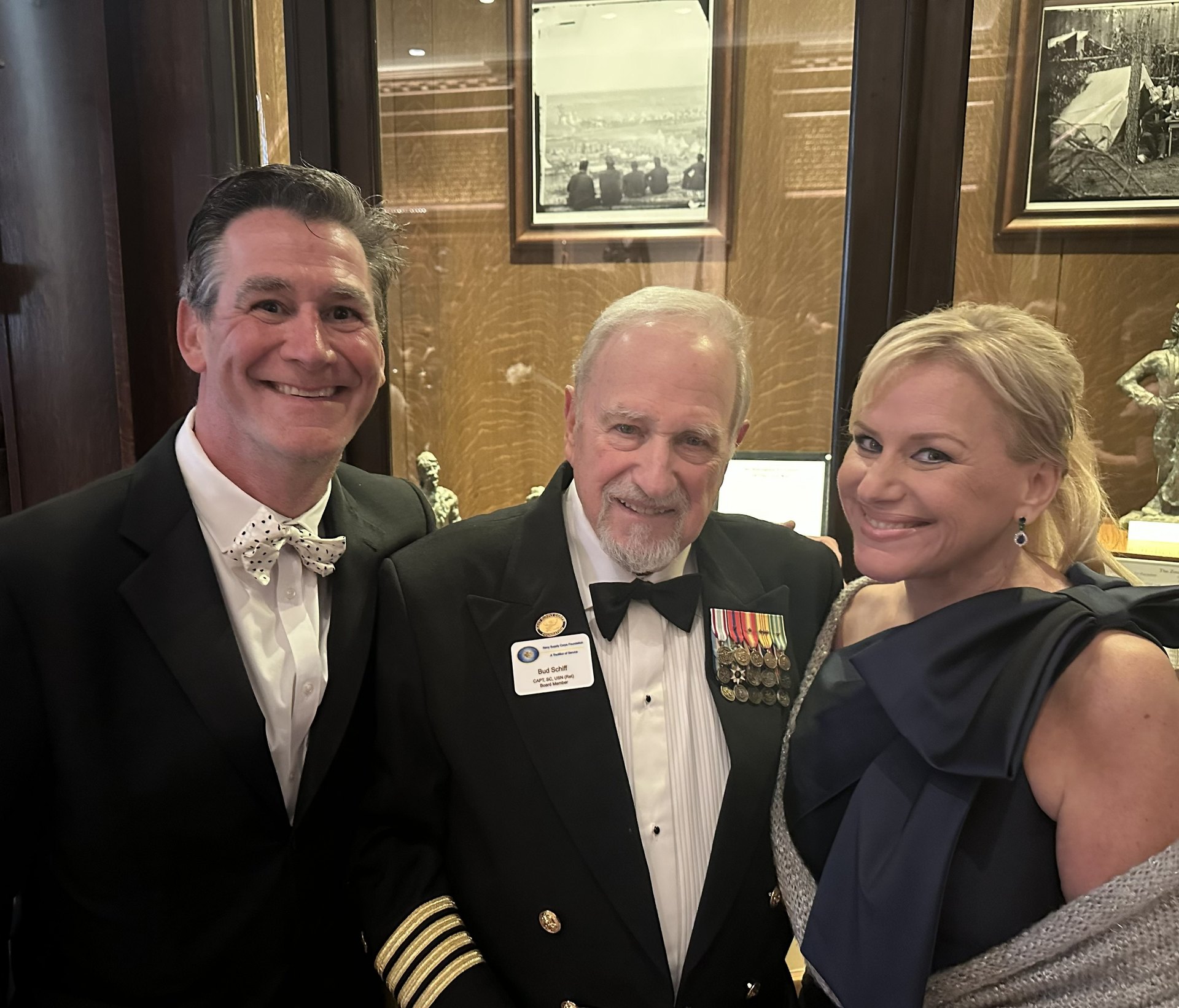
In 1974, Bud Schiff designed the second nonqualified deferred compensation plan written in the United States. The first was PepsiCo’s. The second was W.R. Grace’s, and he built it at Mutual of New York, founded in 1856, where he spent twenty years as one of the company’s leading agents before serving as Senior Vice President.
When the board moved to take the company public, he left rather than do it — he believed the mutual structure served policyholders better. He founded Insurance Alliance Group, which became Clark/Bardes Partners and then NYLEX Benefits, a New York Life subsidiary.
Matt Schiff worked at each of those firms alongside him. Jayne Schiff, MSFS, CLU, ChFC, REBC, CAP, built her own practice in parallel and remains the person who taught him the work.
In 2006 he founded Schiff Benefits Group, now Schiff Executive Benefits. It is an independent firm, not a continuation of any of those companies. What carried across was the discipline itself: fifty years of designing plans meant to hold a company together, in a field that barely existed when the first one was written.
The people behind the work
This is a small firm by design. The person who designs your plan is the person who answers the phone about it in year seven.
- Matthew E. Schiff — founder and president, and past chair of AALU’s nonqualified deferred compensation committee.
- Jayne N. Schiff, MSFS, CLU, ChFC, REBC, CAP
- Nancy Joy Schiff — chief marketing and relationship officer.
Who we work alongside
Nonqualified benefit plans touch tax counsel, ERISA counsel, accounting and recordkeeping. Rather than pretend to do all of it, we have built a bench so a client gets one coordinated team instead of four vendors who have never spoken:
- The Ridgeback Group — securities offered through Ridgeback Securities, Ltd., Member FINRA/SIPC.
- The Pangburn Group — independent plan recordkeeping and administration.
- Level Up Dental Advisors — Dental Practice Consulting and executive benefit work for dentists, dental practices and DSOs.
- Attorneys and accounting firms around the country who handle the drafting and the tax opinions we do not.
If you are weighing whether a plan is worth building, or you have one you are no longer sure about, tell us what you are trying to solve. We read every note, and a person answers.