
Hi, How Can We Help You?
  • Planning for all of life's "What Ifs".

Category Archives: Estate Planning

Business owner reviewing a five-year exit planning checklist with advisors

If you are five years away from retiring or selling your business, you are standing in the only window that still gives you real leverage. Not the twelve months before a letter of intent — by then the buyer sets the terms, the tax structure is largely locked, and your key people have already figured out that something is happening. Five years out, almost everything is still adjustable. The exit planning checklist below is built for exactly that window.

The owners who capture the highest multiples and keep the most after tax are not the ones who negotiate hardest at the closing table. They are the ones who spent five years quietly engineering the business so the closing table was a formality. Here is what that looks like.

The Five-Year Exit Planning Checklist


Years 5 to 4: Establish a Baseline You Can Actually Defend


  • Get a real valuation, not a rule of thumb. "Three times EBITDA" is not a plan. You need a defensible number built from normalized earnings — adjusted for owner compensation, personal expenses running through the company, one-time items, and related-party rent.

  • Clean up the financials. Buyers pay a premium for three years of consistent, reviewed or audited statements. Start the clock now.

  • Identify your value killers. Customer concentration above 20 percent, a single key supplier, expiring leases, missing contracts, deferred capital expenditures, and — the big one — owner dependency.

  • Answer the honest question: can this business run for 90 days without you? If the answer is no, you do not own a business. You own a job that will be discounted at sale.

  • Set the target number. Work backward from the after-tax proceeds you need to fund the rest of your life. That number, not the market, defines whether you are ready.


Years 4 to 3: Build the Retention Architecture


Nothing destroys deal value faster than a key executive walking during due diligence. Buyers pay for a management team that stays.

Key executives reviewing company performance ahead of a business sale

  • Name your critical few. Usually three to six people. Not the org chart — the people whose departure would change the purchase price.

  • Put a plan in place that pays for staying through the transaction. A nonqualified deferred compensation plan or SERP with vesting tied to a change in control aligns your executives' payday with yours.

  • Consider equity-feel without equity. Phantom stock lets a key executive share in the growth in enterprise value — and get paid at the sale — without diluting your ownership, complicating your cap table, or handing a minority holder consent rights over your own deal.

  • Or make it simple and portable. A Restricted Executive Bonus Arrangement gives the executive a benefit they can see and touch, funded with employer dollars, with a restriction that keeps them in the seat.

  • Mind the 409A trap. Deferred compensation that accelerates on a sale must fit within the change-in-control rules of Section 409A. Get the definition of "change in control" and the payment triggers right in the document — not in a side letter three weeks before closing. A 20 percent penalty tax on your best executive is a terrible closing gift.

  • If you fund with company-owned life insurance, satisfy 101(j) first. Employer-owned life insurance requires written notice and consent before the policy is issued. Miss it, and the death benefit that was supposed to be tax-free becomes taxable income. This is not fixable after the fact.


Years 3 to 2: Engineer the Tax Structure


Tax return and calculator representing tax structuring before a business sale

  • Revisit your entity choice while you still can. S corporation, C corporation, and partnership each produce a very different after-tax result on the same headline price.

  • Look hard at qualified small business stock. For C corporation stock, Section 1202 can exclude a substantial share of your gain from federal tax. Under the 2025 changes, stock issued after July 4, 2025 gets a 50 percent exclusion at three years, 75 percent at four, and 100 percent at five — with a per-taxpayer cap of $15 million and a $75 million gross asset ceiling at issuance. Note the symmetry: a five-year runway is exactly the holding period for the full exclusion. Miss the window by a quarter and the cost is measured in millions.

  • Front-load deductions in your highest-income years. A cash balance plan can generate six-figure annual deductions for an owner in the final high-earning years before a sale, moving money out of the corporate wrapper and into a protected retirement bucket at a discount.

  • Model asset sale versus stock sale versus installment sale. Buyers want an asset sale for the step-up; you usually want stock. That gap is negotiable — but only if you know what it is worth to each side before the LOI.

  • Evaluate personal goodwill. In the right facts, a portion of the purchase price allocated to personal goodwill is taxed once, not twice.


Years 2 to 1: Residency and Estate Tax Positioning


This is the step most owners skip, and it is frequently the most expensive one.

Business owner signing estate planning documents before a sale

  • Understand where you are domiciled — and what it costs. The federal estate tax exemption in 2026 is $15 million per person, $30 million for a married couple, at a 40 percent top rate. That leads a lot of owners to assume estate tax is someone else's problem. Then they look at the state.

  • The state thresholds are dramatically lower. Massachusetts starts at $2 million. Oregon at $1 million. Illinois at $4 million. Washington near $3 million. New York sits at roughly $7.35 million with a "cliff" that eliminates the entire exemption if you exceed it by more than 5 percent.

  • Inheritance taxes are a separate problem. Pennsylvania taxes transfers to adult children at 4.5 percent, siblings at 12 percent, and others at 15 percent — with no meaningful exemption. New Jersey, Kentucky, Nebraska, and Maryland have their own versions.

  • If you plan to move, move early. Changing domicile is a facts-and-circumstances test, and high-tax states audit it aggressively. Establishing residency two years before a sale is a plan. Establishing it two months before is an invitation.

  • Do your gifting before the business is worth what it is about to be worth. Transferring non-voting interests to a trust while the valuation is lower — and while discounts for lack of control and marketability still apply — moves future appreciation out of your estate at a fraction of the eventual cost. Once a letter of intent is signed, that window closes.

  • Fund the liquidity. An irrevocable life insurance trust holding a properly structured policy keeps the death benefit outside the taxable estate and gives your heirs cash to pay the tax without a fire sale.


The Final Year: Stress-Test the "What Ifs"


Every plan above assumes the sale happens as designed, on schedule, with you alive and healthy. Run the other scenarios: you die before closing, you become disabled, your co-owner dies, your buyer walks, your key executive leaves, the multiple compresses by two turns. Confirm your buy-sell agreement is funded, current, and consistent with your estate plan. A twelve-year-old buy-sell with a fixed price on the first page is a lawsuit waiting to happen.

Where RISR Fits


Most of this work stalls at the same place: the owner does not have a current, credible number for what the business is worth today, so every downstream decision — how much to gift, whether the retention plan is sized right, whether the after-tax proceeds actually fund retirement — rests on a guess.

We use RISR to close that gap. RISR pulls directly from tax returns and accounting data, normalizes earnings for owner compensation and one-time items, and produces an equity value using capitalization of earnings, EBITDA multiples, and revenue multiples. From there it becomes a planning instrument rather than a report:

  • What does this business need to be worth for me to walk away and never worry about money?

  • How much of my net worth is trapped in one illiquid asset — and what happens to my family if that asset stops working?

  • What is the gap between today's value and my target, and which specific levers close it in five years?

  • What is at risk if I die, become disabled, or lose a partner before the exit?


That last set of questions is the whole point. Planning for all of life's "What Ifs" is not a slogan — it is the difference between a valuation that sits in a drawer and a plan that survives contact with reality. Once the number is real, the retention plan, the tax structure, the gifting strategy, and the estate liquidity all get sized correctly instead of approximately.

Start the Clock


Five years is enough time to do all of this well. Two years is enough time to do some of it badly. If you are inside that window, the most useful thing you can do this month is work through this exit planning checklist and get a defensible baseline valuation and a written list of what stands between that number and the one you need.

Schedule a five-year readiness review and we will build your RISR valuation and What-If analysis together. You can also download our executive benefits planning guides or listen to The Perfect Plan® Podcast, where we walk through how these structures get reverse-engineered for real companies.

Schiff Executive Benefits has spent nearly two decades designing nonqualified deferred compensation, SERP, split dollar, phantom stock, and COLI-funded retention structures for closely held businesses. This article is for general education and is not legal, tax, or investment advice. Consult your own advisors before acting.

They say that the only constant in life is change, but in the world of high-stakes banking and executive leadership, the only constant is the relentless need for top-tier talent. Without the right people in the right seats, even the most storied financial institutions are just buildings with impressive vaults.



We’ve all felt the shift. The landscape of executive benefits is evolving faster than a New Orleans jazz solo. Tax codes shift, regulatory scrutiny tightens, and the "Great Reshuffle" has turned the hunt for executive retention into a strategic arms race.

If you are an advisor to the banking industry’s elite, or a leader responsible for the long-term health of your institution, you know that standing still is the same as moving backward. That is why we are thrilled to announce that registration is officially live for the 2026 Independent Bank Corporate (IBC) Owned Life Insurance Study Group.

From November 1–3, 2026, we are returning to our spiritual home at the Hotel Monteleone in New Orleans. This isn't just another industry conference where you sit in a windowless ballroom and trade business cards over lukewarm coffee. This is an exclusive gathering designed for top-tier advisors who are serious about Restoring Alignment and Retention.

Why New Orleans? Why Now?


There is a reason we keep coming back to the French Quarter. Beyond the history and the atmosphere, New Orleans represents a blend of tradition and innovation: much like the strategies we discuss.

What keeps you up at night? For many of our attendees, it’s the "What Ifs" that haunt the boardroom.

  • What if your top talent leaves for a competitor tomorrow?

  • What if a senior executive retires and the replacement cost exceeds your projections?

  • What if a sudden tragedy leaves the business dealing with a widow or a complex succession crisis?


These aren't just hypothetical anxieties; they are the fault lines that can crack a bank’s foundation. At the 2026 IBC Study Group, we don’t just identify these problems; we build the solutions. We focus on the mechanics of Bank-Owned Life Insurance (BOLI) and Corporate-Owned Life Insurance (COLI) not as mere products, but as the engine for The Perfect Plan®.

The Technical Heart: BOLI and Beyond


While the surroundings are legendary, the core of this study group is deeply technical. We dive into the weeds of cost-recovery strategies and the nuances of Bank-Owned Life Insurance (BOLI).

In today’s volatile market, banks are looking for ways to offset the rising costs of employee benefits without taking on undue risk. BOLI remains one of the most effective tools for institutional capital management, offering tax-deferred growth and tax-free death benefits that can be used to fund non-qualified deferred compensation (NQDC) plans or supplemental executive retirement plans (SERPs).

Our sessions will cover:

  • Advanced Cost-Recovery Models: How to structure BOLI to ensure that the bank is made whole for the costs of executive benefits.

  • Executive Retention Strategies: Moving beyond standard bonuses to create "Golden Handcuffs" that actually work.

  • Regulatory Compliance: Navigating the latest updates to ensuring your plans remain "Gospel-compliant" with current tax and banking laws.

  • Succession Planning: Solving the "Business with a Widow" scenario through structured buy-sell arrangements and key-person coverage.


We understand that you are navigating an unstable financial environment. You need a guide who has been through the cycles. Our team at Schiff Executive Benefits acts as that guide, helping you realize your institution’s dream value while protecting your most valuable assets: your people.

Food, Fun, and Friendship: The Monday Night Highlight


We have always believed that the best business happens when the formal ties are loosened. The IBC Study Group has built a reputation on the "Three Fs": Food, Fun, and Friendship. This year, we are taking that to a new level.

On Monday night, we are hosting a Mardi Gras Theme Jazz Reception and Dinner in the brand-new Courtyard at the Hotel Monteleone. Imagine the sound of a brass band echoing off the brick walls, the scent of authentic Creole cuisine in the air, and the chance to network with the brightest minds in the industry in a setting that is uniquely New Orleans.

This isn't just a dinner; it’s an experience designed to foster the kind of deep professional relationships that last decades. It’s where the real "Study Group" happens: sharing stories of what worked, what didn't, and how we are all navigating the complexities of the modern financial world.

Is This Group Right for You?


The IBC Study Group is an exclusive circle. We intentionally keep the numbers focused to ensure that every participant can engage in the high-level dialogue that makes this meeting so valuable.

If you are an advisor who deals with:

  • Institutional BOLI portfolios.

  • Corporate-Owned Life Insurance (COLI) for non-bank entities.

  • Executive benefit plan design and 409A compliance.

  • ESOPs and partnership buy-outs.


...then you belong in the room. This is your opportunity to step away from the day-to-day grind and look at the big picture. Are you building a legacy, or just managing a spreadsheet? Are you offering your clients The Perfect Plan®, or just a standard off-the-shelf solution?

Secure Your Spot


The 2025 Study Group was a complete sell-out, and we expect 2026 to follow suit. The combination of the Monteleone’s charm, the technical depth of our sessions, and the new Monday night Jazz Reception makes this a "must-attend" event on the calendar.

Don't let the "What Ifs" stay unanswered.

  • What if you miss out on the specific tax-efficiency strategies that could save your client millions?

  • What if your competitors are in New Orleans while you’re at your desk?


Registration is now live for the meeting, and hotel reservations are now available through the Hotel Monteleone room block. Important: meeting registration does not cover your hotel booking. They are separate, and you will need to complete both.

Meeting Registration: Register for the 2026 IBC Study Group Here

Hotel Reservation Link: Book your room at Hotel Monteleone

Block Code: IBC30J

If you prefer to call in your reservation, contact 504-523-3341 or 800-535-9595 between 9:00 a.m. and 5:00 p.m. CDT and reference the block code IBC30J.

Sit back, grab your coffee, and mark your calendar. We are heading back to the Big Easy to restore alignment, ensure retention, and celebrate the profession we love.

We can't wait to see you in the Courtyard.


Schiff Executive Benefits is dedicated to helping businesses and banks navigate the complexities of executive retention and cost recovery. Through The Perfect Plan®, we provide the security and guarantees needed in an uncertain world.

For more information on our services or to view our latest insights, visit our posts feed.


A business partnership is a lot like a marriage, but with more paperwork and significantly higher financial stakes. You spend more time with your partners than your family. you build a legacy together, and you trust each other with your professional lives. But there is a universal truth that every business owner eventually has to face: every partnership will end.


The question isn’t if it will end, but how. Will it end with a smooth transition and a handshake, or will it end in a tax-fueled legal nightmare that leaves your family: and your partner’s family: scrambling for liquidity?


Most business owners have a Buy/Sell agreement tucked away in a dusty drawer. They signed it years ago, checked the box, and moved on. But the world has changed. Tax laws have shifted. Court cases have redefined how the IRS looks at your business value. If your agreement hasn’t been touched in three years, it’s not just outdated: it’s a ticking time bomb.


The Problem: When Protection Becomes a Tax Trap


For decades, the standard play was the "Entity Purchase" or "Redemption" agreement. The business owns a life insurance policy on each owner. If an owner passes away, the business gets the cash and uses it to buy back the shares from the deceased owner's estate. Simple, right?


Not anymore.


A recent, massive shift in the tax landscape: specifically the Connelly v. United States decision: has turned this "simple" strategy into a potential catastrophe. The Supreme Court essentially ruled that if the company receives life insurance proceeds to fund a buyout, those proceeds can be included in the company’s total valuation for estate tax purposes.


Imagine this: Your business is worth $10 million. You have a $5 million life insurance policy to buy out your partner. If you pass away, the IRS could argue the business is now worth $15 million because of that insurance cash. Your estate is taxed on a $7.5 million valuation (your half), but your family only receives the $5 million you originally agreed upon.


You’re paying taxes on money your family never sees. Does that sound like "protection" to you?


100% Protection for the Families Who Built the Business


When we talk about Buy/Sell agreements at Schiff Executive Benefits, we focus on the human element. Your spouse and your children shouldn't have to become "accidental business partners" with your co-founder. Likewise, your surviving partner shouldn't have to report to your heirs who might not know the difference between a P&L and a balance sheet.


The goal is 100% Protection.


This means the family of the deceased receives the full, fair market value of the business interest immediately, in cash, with zero tax friction. It also means the surviving owner gets 100% control of the company without taking on massive debt or draining the corporate coffers.


Financial Blueprint Analysis


The Solution: Modernizing via the Cross-Purchase Strategy


To avoid the "Connelly Trap," many savvy owners are moving toward a Cross-Purchase or a Trusteed Cross-Purchase structure.


In a traditional cross-purchase, the owners own policies on each other. Because the business doesn't own the money, it doesn't inflate the business's value in the eyes of the IRS. But the real magic happens with something called the "step-up in basis."


When you use insurance proceeds to buy your partner’s shares personally, your tax basis in the company increases. If you ever decide to sell the business later, that "step-up" could save you millions in capital gains taxes. It is the definition of tax efficiency.


However, if you have three or four partners, owning individual policies on everyone gets messy. That’s where we modernize. We often implement an LLC Insurance Ownership structure. You create a separate entity (taxed as a partnership) specifically to hold the life insurance. It provides the creditor protection of a corporation, the tax benefits of a cross-purchase, and the administrative ease of a single plan.


Golden tree inside a secure glass case representing protected business growth and executive legacy planning.


Is Your Agreement Part of The Perfect Plan®?


At Schiff Executive Benefits, we don't look at insurance in a vacuum. We look at how it fits into your broader financial legacy: what we call The Perfect Plan®.


A modern Buy/Sell agreement isn't just a legal document; it’s a wealth-transfer vehicle. It’s part of a strategy that uses corporate dollars tax-efficiently to build personal security.


Ask yourself these three questions:


  1. How is the value determined? If your agreement uses a "fixed price" from five years ago, you are either overpaying or cheating a family out of their legacy.

  2. Where does the tax go? If your plan triggers a massive estate tax bill or a capital gains nightmare, it’s a failure.

  3. Is it funded? A legal obligation to buy shares is worthless if the company doesn't have the liquidity to write the check.


If you can’t answer these with 100% certainty, you are leaving your business and your family's future to chance.


The ROI of Getting it Right


We often hear owners say, "I'll get to it next year." But the cost of waiting is higher than you think. A well-structured, modern agreement doesn't just protect you upon death; it sets the stage for a healthy exit, a smooth retirement transition, and even better terms with lenders who want to see a solid succession plan.


Think of it as the ultimate insurance for your life's work. You’ve spent decades building this company. You’ve survived market crashes, hiring woes, and global shifts. Why let a preventable tax headache dismantle it all at the finish line?


Executive Expertise in Action


Stop Worrying and Start Planning


You shouldn't have to stay up at night wondering if your partner’s spouse will end up sitting in your boardroom or if the IRS will take a 40% bite out of your family’s inheritance.


Modernizing your Buy/Sell agreement is about more than just "insurance." It’s about clarity. It’s about ensuring that the value you’ve built stays where it belongs: with the people who built it and the families who supported them.


We help business owners navigate these complexities every day. We coordinate with your legal team and your CPA to ensure the math, the law, and the logic all point in the same direction: your success.


Let’s get your plan off the "to-do" list and into the "done" column.


Grab a coffee, take a breath, and let’s look at the numbers together. You can visit our website to learn more about our approach or schedule a quick discovery call via my Calendly to see if your current agreement is helping you or hurting you.


Your legacy is too important to leave to an outdated contract. Let's make sure it's protected: 100%.


Perfect Plan Podcast Banner


Learn more: planning your business succession.


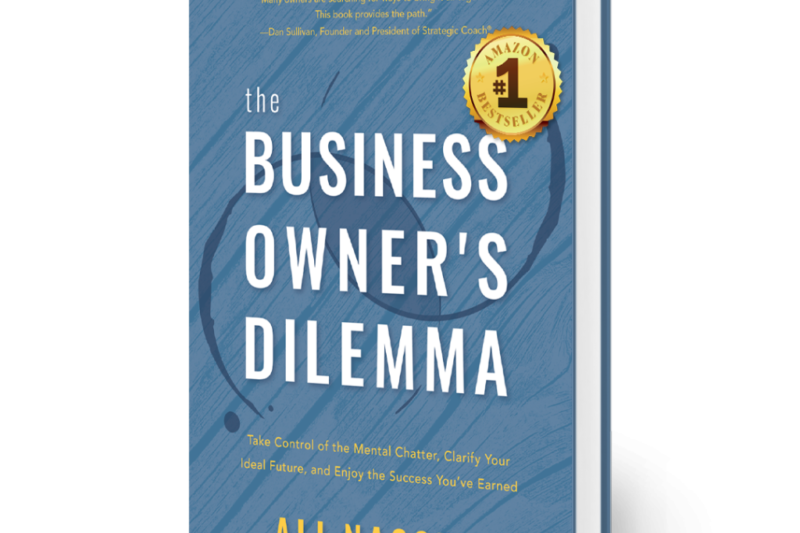
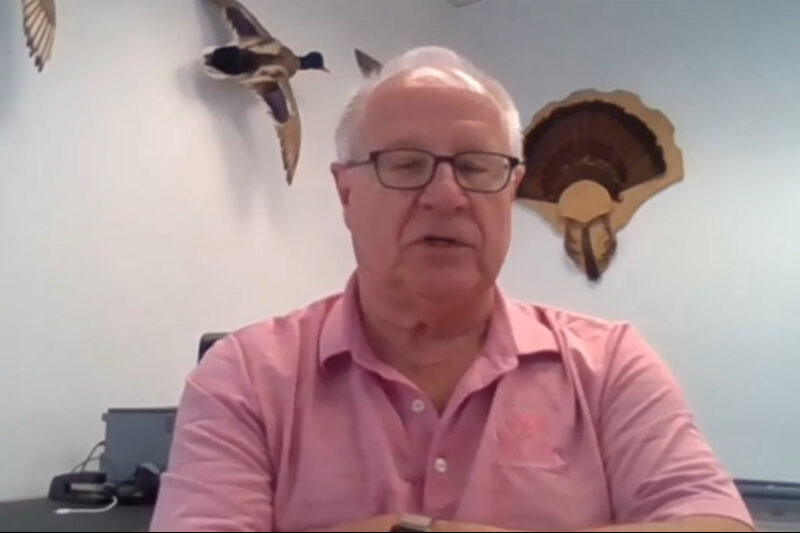
In my latest interview with key people in the financial services world, I had the pleasure to hear from my friend Ali Nasser as he explained his history of working with business owners and their "dilemmas". We chatted about our friendship, history, and how he decided to write his book where you'll learn that you aren't alone in how you run your business, what you prioritize, and what you think about. He has spoken nationwide about this topic, and you can learn more by accessing his book through this link:

If you'd like to purchase his book, please use the following link:

https://www.amazon.com/Business-Owners-Dilemma-Control-Chatter/dp/1544501463

Through his stories, he'll help you gain clarity of what is most important to you, and help you lay out a plan for your "ideal" situation.

Start your own valuation here:

P.S. SEB does not make any money on the sales of this book, and 100% of the proceeds from his book go to Charity (Water). We hope that you enjoy what it offers you, and that if you find value, we would be happy to help you Clarify your ideal Future.

https://youtu.be/VUsv8NaXsrc

Are you a business owner? Have you ever thought about selling your business?  How much is it worth? Do you have other shareholders, or family that own part of the business?

Well, in this, the Sixth episode of The Perfect Plan, Dan Zugell, my friend and colleague of 25 plus years goes into the wonder of an Employee Stock Ownership Plan (ESOP). In this qualified retirement plan solution for a business owner, you have a ready and willing buyer, that will buy your business, for a set dollar amount, at a set triggering event. If done correctly, you as the business owner can still run it, control it, and participate in the future growth of your company.

Dan goes into the benefits, tax advantages, and rules of how to design "the perfect" exit strategy for the closely held business owner. Take a few minutes and hear what he has to say, then contact us on how we can help you monetize your largest asset.

Ps. You can schedule a direct call with Dan at https://dantheesopman.com/ or with SEB at  Calendly - Matthew E Schiff

Learn more: Read our complete guide on how an ESOP lets you monetize your largest asset for a full overview of Employee Stock Ownership Plans.


https://youtu.be/mXFv0Cp3zAo?si=STHkIxZZqru-m5L4

In this episode, the 5th Episode of the "The Perfect Plan", Jamie Hopkins Esq., LLM, CFP®, ChFC®, CLU®, RICP® CEO Bryn Mawr Capital Management, LLC joins us to discuss investments, wealth accumulation, the Department of Labor, and Retirement Planning.  Check out his insight into how to create your "Perfect Plan".

Are you an Attorney, Accountant, TPA, Trust Officer, Insurance Agent, Property and Casualty agent? If you work with Business Owners, and their families, then you want to be at this meeting where you will hear about how to COLLABERATE with other professionals who work with your client.

We will spend the day on Thursday, May 16th at the Fitler's Club in Philadelphia sharing a case study that is VERY relevant in today's world. How do you handle the intricacies of the family while bringing together all needed advisors to work seamlessly?

Well, we will have 20-25 attendees from different professions, coming together to discuss the challenges that they are facing with their clients in 2024. Come join us, and network with some of the best in their fields.

P.S. The night before, we have a Box at Citizens Bank Park for the game between the NY Mets and the Philadelphia Phillies (@6:40pm).

Sign up below to save your spot.