
Hi, How Can We Help You?
  • Planning for all of life's "What Ifs".

Category Archives: Deferred Compensation


title: "The 5 'What Ifs' That Keep Business Owners Awake at Night"
meta_title: "The 5 What Ifs for Business Owners | Schiff Executive Benefits"
description: "The 5 What Ifs every business owner should address: succession, buy/sell planning, executive retention strategies, COLI funding, and retirement income certainty."
meta_description: "The 5 What Ifs every business owner should address: succession, buy/sell planning, executive retention strategies, COLI funding, and retirement income certainty."
keywords:
- executive retention strategies
- business succession planning
- buy sell agreement funding
- COLI
- deferred compensation
- retirement income planning


"Success is a lousy teacher; it seduces smart people into thinking they can't lose." This observation, often attributed to Bill Gates, captures the precarious nature of business ownership. You have spent years, perhaps decades, building an engine of growth. You have weathered economic cycles, navigated hiring crises, and outmaneuvered competitors. Yet, in the quiet hours of the night, when the emails stop and the house is still, a different kind of tension takes hold. It isn't the tension of what happened today, but the anxiety of what could happen tomorrow.


At Schiff Executive Benefits, we believe that the foundation of any great enterprise isn't just its current balance sheet: it’s the strength of its contingencies. We call these the "What Ifs." Our mission is simple: Helping Business Owners, Executives, and their families plan for all of life’s "What Ifs."


By addressing these five core scenarios, we focus on Restoring Alignment and Retention, ensuring that your legacy is protected and your future is guaranteed.


Quick next step: Start your own Business Valuation here: https://schiffbenefits.com/articles-and-forms/business-valuation/


1. What if you ended up in business with your partner’s widow or widower?


It is an uncomfortable thought, but a necessary one. Most business partnerships are built on a foundation of mutual skill and shared vision. You and your partner "click." But what happens if that partner passes away unexpectedly? Without a robust, funded buy/sell agreement, their shares of the company typically pass to their heirs.


Suddenly, your new 50% business partner might be a grieving spouse who has never stepped foot in your warehouse or attended a board meeting. They may want to be involved in operations they don't understand, or more likely, they may demand dividend distributions to replace the deceased partner's income: distributions the company might not be able to afford while trying to replace a key leader.


Effective business succession isn’t just a legal document in a drawer; it is a financial strategy. Are you using Split Dollar Life Insurance to fund the buyout? Does your agreement have a clear valuation formula that prevents a legal battle during an already emotional time?


Business partners discussing succession strategies and legacy planning in a professional office.


2. What if someone came to you today and said they wanted to buy your business?


Every owner has a "number": that figure that would make all the years of sacrifice worth it. But an unexpected buyout offer is a double-edged sword. If an offer arrived tomorrow, would your business be "exit-ready"?


Potential buyers don't just look at your EBITDA; they look at the stability of your leadership team. If the value of your company is entirely tied to you, the buyer will likely discount the price or insist on a long, grueling earn-out period. To realize your dream value, you need to prove that the business can thrive without you.


This is where exit strategies and incentives like Phantom Stock come into play. By giving your key executives a "stake in the outcome" without giving away actual voting equity, you align their interests with yours. When a buyer sees a motivated management team with "Golden Handcuffs" in place, your valuation skyrockets. You move from selling a job to selling a high-performing machine.


Want to pressure-test what your business is worth before an unsolicited offer lands on your desk? Start here: https://schiffbenefits.com/articles-and-forms/business-valuation/


3. What if your top salesperson or manager left for any reason?


Imagine your top revenue generator walks into your office on a Monday morning and hands you a resignation letter. They aren’t just leaving; they are heading to a competitor for a 20% raise and a "better" benefits package.


The cost of losing a key executive is often calculated at 200% to 300% of their annual salary when you factor in lost momentum, recruitment costs, and the "brain drain" of institutional knowledge. In today’s talent-starved market, standard 401(k) plans and basic health insurance are no longer enough to win the war for talent.


To keep your "MVPs," you need executive retention strategies that actually resonate. We specialize in Non-Qualified Deferred Compensation (NQDC) and Executive Bonus Plans that create a powerful incentive for leaders to stay. We ask the hard question: What is the cost of doing nothing? If you aren't providing a Perfect Plan® for their future, your competitor will.


Confident executive in a modern office, representing effective retention and talent management strategies.


4. What if you could incent senior execs to retire while also retaining their replacement cost-efficiently?


There comes a point in every organization’s lifecycle where a transition is necessary. You have a loyal, senior executive who has been with you for twenty years. They are ready to slow down, but the cost of funding their retirement "promise" while simultaneously paying a high salary to recruit their successor can put a massive strain on company cash flow.


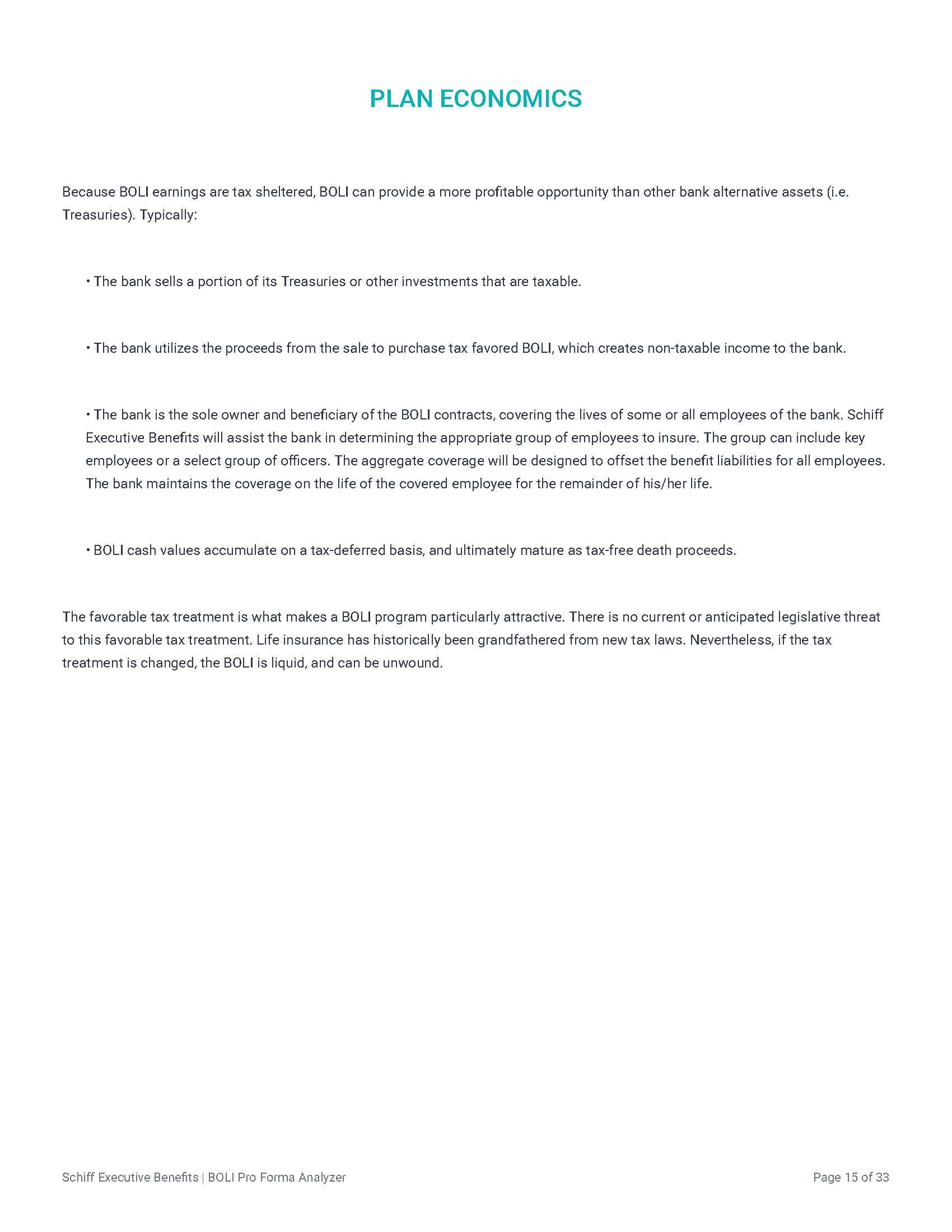
This is a common friction point in corporate and bank leadership. The solution lies in Corporate Owned Life Insurance (COLI). This is not just an insurance policy; it is a sophisticated financial asset that can provide tax-deferred growth to help offset the liabilities of executive benefits.
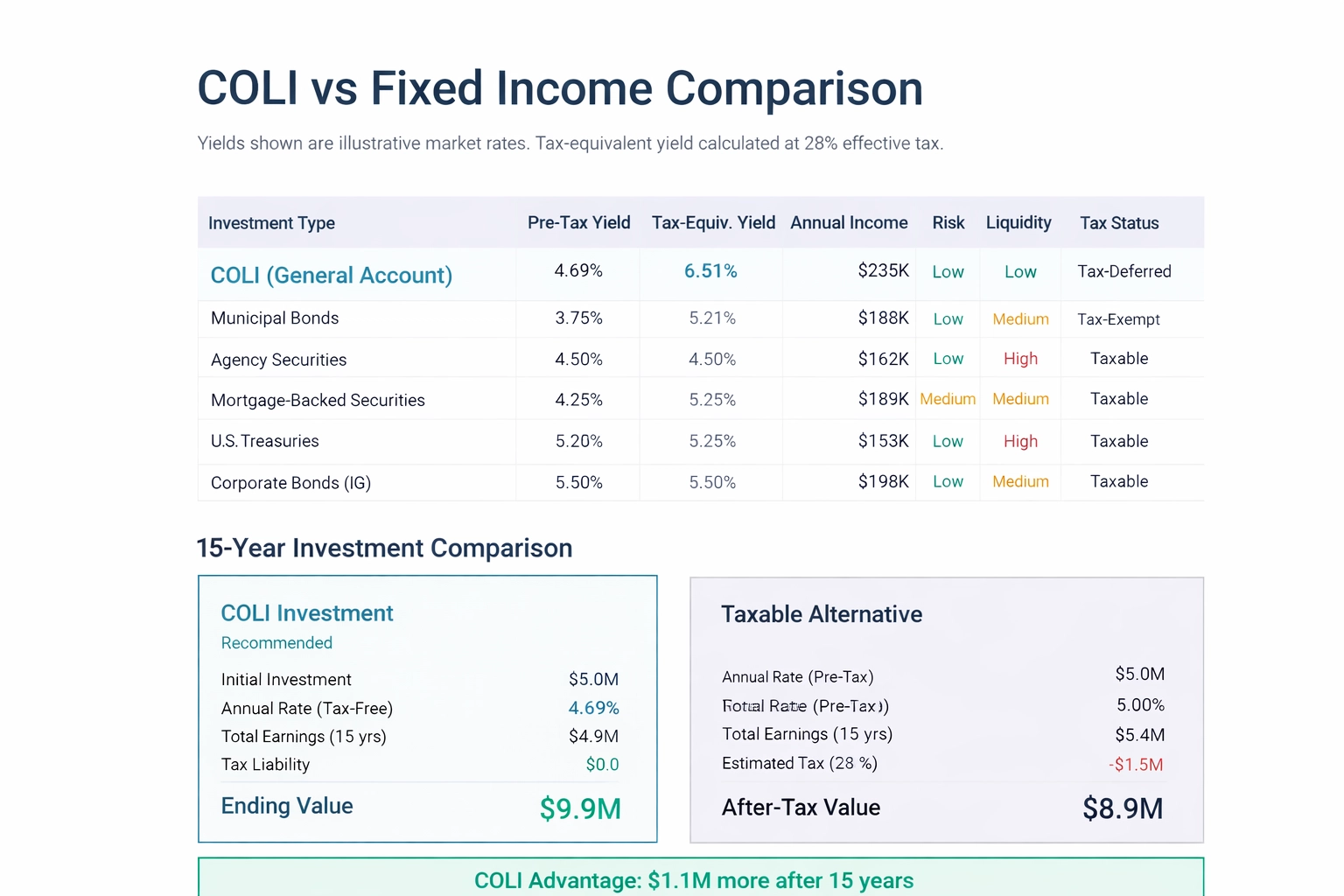

COLI vs Fixed Income Comparison


As shown in the chart above, strategies like COLI can significantly outperform traditional fixed-income investments, providing the liquidity and yield necessary to fund retirement obligations without depleting the company’s operating capital. It allows the senior executive to retire with dignity while giving the company the financial "breathing room" to hire the next generation of leadership. You can learn more about how we structure these for corporations on our COLI information page.


5. Lastly, when I retire, what if I run out of money?


This is the ultimate "What If." You have spent your life managing risk for your company, your employees, and your customers. But who is managing the risk for you?


Many high-net-worth business owners are surprised to find that their standard of living in retirement requires a cash flow that their traditional investments might not guarantee, especially in a volatile market or a high-tax environment. The fear isn't just about "having enough"; it's about the "sequence of returns" and the impact of taxes on your distributions.


This is why we developed The Perfect Plan®.


The Perfect Plan® is designed to provide a fixed rate and a fixed flow of income, removing the guesswork from your post-career life. It is about moving from "accumulation" to "distribution" with absolute certainty. We focus on tax-efficient strategies that ensure your wealth lasts as long as you do, protecting your family’s lifestyle and your professional legacy.


Moving from Anxiety to Authority


These five questions are not meant to cause alarm; they are meant to spark action. In the world of executive benefits, silence is the greatest risk. The longer you wait to address these "What Ifs," the fewer options you have when the crisis finally hits.


Are you ready to stop reacting to the market and start leading your legacy?


At Schiff Executive Benefits, we don't just sell products; we architect security. We work alongside your existing team of advisors: your CPAs and attorneys: to ensure that every piece of your financial puzzle fits together. Whether you are a corporation looking to optimize your COLI strategy or a private business owner looking to secure your family's future, we are here to guide you through the "unstable" and into the "guaranteed."


Succession, retention, and retirement are not separate silos; they are the three pillars of a healthy business. When they are aligned, you sleep better. When they are funded, you lead better. If you are evaluating broader executive retention strategies, the right structure can help you attract, retain, and reward key people without forcing a one-size-fits-all approach.


Sit back, grab your coffee, and let’s start a conversation.


You’ve built something incredible. Now, let’s make sure it’s built to last. Come join us at Schiff Executive Benefits and discover how we can help you plan for all of life's "What Ifs."


To dive deeper into these strategies, listen to our latest episodes on The Perfect Plan® Podcast, where we break down the technicalities of 409A compliance, exit planning, and the macro-economic trends affecting business owners today.


Additional resources (go deeper, stay in one place):


The Perfect Plan® Podcast Banner


Ready to address your "What Ifs"? Contact us today for a confidential consultation.


Ready to talk?


If you’re thinking about deferred compensation, executive retention, or how to structure a plan that fits your goals, let’s talk it through.



Schedule an initial meeting


They say that building a business is like raising a child: it takes years of sleepless nights, total devotion, and a fair amount of luck. But here is the undeniable truth that most entrepreneurs ignore until it is too late: it is much easier to build a business than it is to keep one together when life goes sideways.


As business owners, we spend 99% of our time focused on growth, culture, and the bottom line. We rarely want to talk about the "What Ifs." But those "What Ifs" are the very things that can dismantle a lifetime of work in a single afternoon. At Schiff Executive Benefits, we focus on Restoring Alignment and Retention, and nowhere is that alignment more critical than in your Buy/Sell arrangement.


If you don’t have a plan, or if your plan is a dusty document sitting in a drawer from ten years ago, you aren't just taking a risk: you are gambling with your legacy.


The Emotional Reality: Who Is Sitting in That Chair?


Let’s skip the legal jargon for a second and talk about the real world. Imagine it’s Monday morning. You walk into the office, grab your coffee, and head to your partner’s office. But your partner isn't there. Instead, sitting in that chair is your partner’s spouse.


They are grieving, they are overwhelmed, and they have just inherited 50% of your company.


Now, you love your partner, and you probably like their spouse. But do you want to be in business with them? Do they understand the nuances of your industry? Do they share your vision for the next five years? Most importantly, they likely need liquidity: they need the income your partner used to bring home. But the business needs that cash to stay afloat and grow.


Suddenly, your best friend’s spouse has become your most difficult board member. This is the first of our "Five What Ifs," and it is the one that keeps most owners up at night.


Or consider a different "What If": An unsolicited buyout from a competitor. Your partner decides they want out, and instead of selling back to you, they find a "strategic buyer": the very person you’ve been competing with for a decade. Now, your greatest rival has a seat at your table and access to your trade secrets.


How does that feel? It feels like a loss of control. And in business, control is everything.


Business partners discussing legacy planning and their Buy/Sell agreement in a modern office.


The Trap of the "Generic" Buy/Sell Agreement


Most business owners believe they are covered because they have a Buy/Sell agreement tucked away in a file. But let me ask you: When was the last time you looked at it? Does it reflect the actual value of your business today?


Many agreements are "form" documents provided by a lawyer years ago. They often lack a clear valuation methodology or, worse, they aren't funded. A Buy/Sell agreement without a funding mechanism is just a polite piece of paper. It tells you that you have to buy out your partner, but it doesn't tell you where the millions of dollars are going to come from to make that happen.


Without proper funding, you are forced to choose between three bad options:


  1. Draining Company Cash: Killing your working capital and stalling growth.

  2. Taking on Debt: Going to the bank at a time of crisis to borrow money for a buyout.

  3. Selling Assets: Fire-selling parts of the business to cover the cost.


The Technical Edge: Reverse-Engineering the Solution


At Schiff Executive Benefits, we don't start with products. We start with your intent. We look at your company culture and the specific goals of the owners. We use a process we call The Perfect Plan® to ensure that every piece of the puzzle fits together.


The SEB Executive Benefits Design Checklist (a.k.a. “Let’s Stop Guessing”)


Here’s a universal truth: most benefit and succession plans don’t fail because the math is wrong. They fail because the motivations are misaligned.


So before we talk about funding mechanisms and legal language, we run what we call the SEB Executive Benefits Design checklist. It’s a diagnostic. Not a sales pitch. Think of it like a pre-flight checklist—because “we’ll figure it out on the way down” is not a strategy.


We put two columns on the table:


What the employer typically needs:


  • Deductions / cost efficiency (or at least a clear path to cost recovery)

  • Retention (handcuffs… but the friendly, culture-approved kind)

  • Control (who’s in, who’s out, and what happens when life happens)


What the employee typically wants:


  • Tax-free income (especially when it matters most)

  • Long Term Care (LTC) benefits (because aging is undefeated)

  • No caps (because top performers don’t love being told “that’s the limit”)


Then we ask the questions that actually move the needle:


  • If you’re paying for this, what behavior are you buying?

  • If they’re staying for this, what promise are they counting on?

  • If the “What Ifs” show up early, does this plan still do what it said it would do?


When those two columns line up—employer needs and employee wants—you don’t just get a plan that looks good on paper. You get The Perfect Plan®. And yes, it’s as rare (and valuable) as it sounds.


1. The Valuation Piece


You cannot protect what you haven't valued. Most owners have a "gut feeling" about what their business is worth, but that doesn't hold up in court or with the IRS. To get started, you need an objective baseline. I encourage you to use our tool to start your own Business Valuation right now. Knowing your number is the first step toward security.


2. Trigger Events


A good agreement covers more than just death. It needs to address disability, retirement, divorce, and even personal bankruptcy. What happens if a partner is permanently disabled? Who decides when they are "disabled enough" to trigger a buyout? We help you define these terms so there is no ambiguity when emotions are running high.


3. Funding with COLI (Corporate Owned Life Insurance)


This is where technical expertise meets practical execution. One of the most efficient ways to fund a Buy/Sell arrangement is through Corporate Owned Life Insurance (COLI).


COLI allows the company to own policies on the lives of the owners. If a "What If" occurs, the death benefit provides immediate, tax-free liquidity to the company. The company then uses that cash to buy out the heirs. The family gets the money they need, and you get 100% control of the business back.


But it goes deeper than that. Properly structured COLI can provide cost recovery. The cash value growth within the policy can help offset the costs of the premiums over time, and in some cases, even provide a way to fund an owner's retirement if they don't pass away while active in the business. It’s about making the company's balance sheet work harder for you.


Expanding the Horizon: ESOPs and The Dilemma


Sometimes, the best exit strategy isn't a simple partner buyout. We often talk about "The Business Owner's Dilemma," a concept popularized by Ali Nasser. In our discussions on The Perfect Plan® Podcast, we dive deep into the tension between business wealth and personal freedom. Are you building a business that owns you, or a business that fuels your life?


For some companies, an Employee Stock Ownership Plan (ESOP) is a powerful alternative. I recently had a great conversation with Dan Zugell on ESOPs, which you can find in our podcast channel and on our YouTube channel. An ESOP can provide a market for your shares, incredible tax advantages, and a way to reward the people who helped you build the company: all while you maintain a level of control during the transition.


Whether it’s a standard Buy/Sell or a more complex ESOP structure, the goal remains the same: ensuring that the transition happens on your terms, not because of a crisis.


Why "Wait and See" Is Not a Strategy


I’ve sat across the table from many owners who say, "Matt, we’ll figure it out when the time comes. We’re all healthy, and we’re all friends."


That is a dangerous sentiment. Business is unstable enough as it is. Why leave the most important transaction of your life to chance? The national debt is rising, tax laws are in constant flux, and market trends can shift overnight. You need a "security" that acts as a guarantee against these external forces.


By implementing a properly designed Buy/Sell arrangement funded by COLI, you are effectively "de-risking" your legacy. You are ensuring that if the unthinkable happens, the business stays intact, the employees stay employed, and the families are taken care of.


A business owner and advisors collaborating on a de-risked corporate succession strategy.


Your Next Steps: Building Your Way


So, where do you go from here?


First, sit back, grab a coffee, and think about those "What Ifs." If your partner wasn't there tomorrow, what happens to your desk? What happens to your bank line of credit?


Second, get a real number. Go to our Business Valuation tool and start the process. It’s confidential and provides the clarity you need to move from anxiety to action.


Third, let’s talk. At Schiff Executive Benefits, we aren't just selling insurance policies; we are architects of The Perfect Plan®. We work alongside your team of advisors: your CPAs and attorneys: to make sure the technical design of your Buy/Sell matches the emotional intent of your heart.


Your professional legacy is too important to be left to a "standard" agreement. Let's make sure your plan is as unique as the business you’ve built. Come join us in the process of Restoring Alignment and Retention for your company.


Are you ready to realize your dream value and build it your way? Let’s get started.


Learn more: planning your business succession.


Efficiency is not just a goal in the insurance industry; it is a prerequisite for survival. There is an old adage in our business that "capital follows the path of least resistance and greatest efficiency." Yet, for many insurance carriers, significant portions of their surplus capital remain trapped in traditional, tax-inefficient investment vehicles that barely keep pace with inflation after the tax man takes his cut.

If you are leading an insurance company, you know the pressure: the constant tug-of-war between maintaining robust Risk-Based Capital (RBC) ratios and the need to generate yields that can actually offset the rising costs of attracting and retaining elite executive talent. You might find yourself asking: What if our surplus capital could work twice as hard without increasing our regulatory burden? Or more pointedly: What if we could fund our executive retirement obligations with the very same dollars we use to optimize our balance sheet?

This is where Insurance Company Owned Life Insurance, or iCOLI, enters the conversation. It is a specialized application of COLI tailored specifically for the unique regulatory and tax environment of insurance carriers.

The Problem: The Hidden Drag on Surplus Capital


Insurance companies are often their own worst enemies when it comes to asset allocation. Because of stringent regulatory requirements, a large portion of surplus is typically parked in high-grade corporate bonds or Treasuries. While safe, these assets are fully taxable, and their "drag" on the bottom line is often underestimated.

Consider a carrier holding $100 million in a taxable investment account. If that account earns an average of 8% over 20 years, it grows to approximately $466 million. However, at a 21% corporate tax rate, that carrier will hand over roughly $76.9 million in taxes.

Beyond the tax burden, there is the issue of executive benefits. In an industry where the competition for top-tier underwriting and actuarial talent is fierce, the cost of funding Supplemental Executive Retirement Plans (SERPs) and deferred compensation arrangements continues to climb. How do you cover these liabilities without eroding the capital you need for growth and claims-paying ability?

The Solution: iCOLI as a Strategic Engine


iCOLI is not just an insurance product; it is a corporate financing tool. At its core, iCOLI involves the insurance company purchasing life insurance policies on a select group of senior executives. The company is the owner and beneficiary, and the internal cash value of the policy grows on a tax-deferred basis.

By shifting a portion of surplus capital into an iCOLI program, carriers can achieve three primary objectives:

  1. Capital Optimization: Significantly reducing RBC charges.

  2. Yield Enhancement: Accessing alternative investment classes with tax-free growth.

  3. Cost Recovery: Creating a dedicated asset to offset executive benefit liabilities.


Insurance executives discussing iCOLI strategies for capital optimization and yield enhancement in a boardroom.

1. Optimizing Capital through RBC Advantages


For an insurance carrier, the Risk-Based Capital ratio is the ultimate scorecard. Traditional investments carry varying degrees of capital charges that can tie up your "free" capital.

One of the most compelling reasons carriers adopt iCOLI is the favorable regulatory treatment. For Life and Health (L&H) insurance companies, iCOLI typically receives a 0% RBC charge. For Property and Casualty (P&C) insurers, the charge is often as low as 5%.

When you compare this to the much higher charges associated with equities or even certain lower-rated bond portfolios, the math becomes clear. By utilizing iCOLI, you are essentially freeing up capital that can be deployed elsewhere in your business, whether that’s for acquisitions, technology upgrades, or expanding your book of business. It is a way of building it your way, ensuring your balance sheet reflects your long-term strategic goals rather than just regulatory necessity.

2. Improving Investment Yields


iCOLI programs offer access to specialized investment vehicles that are often unavailable through traditional corporate accounts. Through Insurance-Dedicated Funds (IDFs) and Separately Managed Accounts (SMAs), carriers can diversify into:

  • Private Equity and Hedge Funds

  • Private Credit

  • Real Estate

  • Alternative Credit Strategies


Because these investments are held within the iCOLI "wrapper," the earnings grow tax-deferred. Furthermore, the carrier can reallocate assets within the policy without triggering a taxable event. This flexibility allows for a more aggressive or diverse investment posture without the usual tax friction that hampers traditional surplus accounts.

3. Offsetting Executive Benefit Costs: Addressing the "What Ifs"


At Schiff Executive Benefits, we often talk about the five "What Ifs" that keep leaders up at night. For insurance executives, two of those questions are particularly relevant:

  • What if our top talent leaves for a competitor?

  • What if the cost of replacing or retiring a senior executive becomes prohibitively expensive?


Executive retention is about Restoring Alignment and Retention. When you offer a robust deferred compensation plan or a SERP, you are creating a "golden handcuff" that aligns the executive's long-term interests with the company's success. However, these plans create a liability on the balance sheet.

iCOLI provides the perfect "match." The tax-advantaged growth within the iCOLI policies generates monthly bookable income that can directly offset the accrual of these benefit liabilities. In many cases, the death benefit eventually received by the company provides a full recovery of all costs associated with the benefit plan, including the "cost of money."

Visual display of leading insurance and financial carriers Schiff Executive Benefits works with

The Importance of a Carrier-Agnostic Approach


If you are an insurance company, you might be tempted to "buy from yourself." While internalizing the business seems logical, it often leads to concentration risk and potential conflict of interest from a fiduciary and regulatory perspective.

This is where the Schiff Executive Benefits team provides unique value. We believe in providing carrier-agnostic solutions. We work with an extensive list of top-tier carriers, from John Hancock and MetLife to Pacific Life and Prudential, to ensure that the iCOLI program is structured with the best possible pricing, transparency, and investment options.

Our process is part of The Perfect Plan®, a comprehensive framework designed to ensure that every executive benefit and capital optimization strategy is integrated, compliant, and performing at peak efficiency. We don't just "sell a policy"; we help you design a strategic asset that fits into your broader financial ecosystem.

Regulatory and Accounting Considerations


Implementing an iCOLI program is not a "set it and forget it" endeavor. It requires rigorous pre-purchase analysis and ongoing administration to meet NAIC and state-specific regulatory standards.

  • Insurable Interest: You must ensure that the executives being insured meet the criteria for insurable interest in your specific jurisdiction.

  • IRC 101(j) Compliance: This is a critical technical standard for iCOLI programs. To preserve the income-tax-free treatment of death benefits, the employer must satisfy the notice and consent requirements before policy issue and confirm the insured falls within an eligible employee class under the statute. Ongoing documentation and coordination with your legal, tax, and HR advisors are essential.

  • FASB/GAAP Compliance: The accounting for iCOLI can be complex, involving the reporting of the Cash Surrender Value (CSV) as an asset and the changes in CSV as other operating income.

  • Transparency: As with any institutional program, transparency in fees, mortality costs, and investment management is paramount.


In practice, that means the compliance work cannot be an afterthought. If notice, consent, and recordkeeping are mishandled, the tax advantages that make iCOLI so attractive can be materially compromised.

We often guide our clients through a ten-step pre-purchase assessment, which includes employee benefit liability calculations, 101(j) review, and financial modeling to ensure the program is right-sized for the organization’s needs.

Why Now? The Point of No Return


The economic environment of 2026 is one of rapid change. With shifting tax policies and a volatile market, the cost of "waiting" is higher than ever. Every year surplus capital sits in a tax-inefficient environment is a year of lost compounding that can never be recovered.

We are seeing more U.S. insurance companies: over 350 at the last count: utilizing iCOLI assets to bolster their financial positions. Some major carriers now hold iCOLI assets exceeding $1 billion. They have recognized that in an unstable financial environment, having a secure, tax-advantaged capital engine is not a luxury: it’s a necessity.

Closing Thoughts: Sit Back, Grab Your Coffee


Navigating the intersection of capital optimization and executive retention doesn't have to be a source of anxiety. It should be a source of confidence. When you align your capital strategy with your people strategy, you aren't just managing a business; you are securing a legacy.

Are you maximizing the potential of your surplus capital? Are your executive benefits structured to withstand the next decade of market shifts?

If these questions are on your mind, we invite you to explore our video library or listen to The Perfect Plan® Podcast for deeper insights into these strategies. Better yet, let’s have a conversation.

Come join us for a consultative review of your current holdings. We’ll help you determine if an iCOLI program is the missing piece in your capital puzzle.

Schiff Executive Benefits contact information and commitment statement

Restoring Alignment and Retention. It’s what we do. It’s what The Perfect Plan® is built for.

Sit back, grab your coffee, and let’s talk about how to make your capital work as hard as you do.


It has often been said that a man who has his health has a thousand dreams, but a man who does not has only one. For the high-achieving executive, the transition from a storied career into a hard-earned retirement is the ultimate "dream value." You have spent decades navigating market volatility, managing complex teams, and securing the future of your organization. But there is one variable that remains stubbornly outside of any spreadsheet: the unpredictable nature of long-term health.


The reality is that traditional retirement strategies often overlook the "What If" that keeps many leaders up at night: What if I run out of retirement money because of a long-term care event?


At Schiff Executive Benefits, we believe in Restoring Alignment and Retention. When it comes to protecting your most valuable human capital: and your own personal legacy: the choice between Long-Term Care (LTC) riders and standalone coverage isn't just a technical insurance decision. It is a strategic move to safeguard a lifetime of work.


The "What If" Problem: Why Long-Term Care is the Missing Piece


Most executive benefit packages are robust when it comes to life insurance, disability, and deferred compensation. However, the gap between "wealthy" and "secure" is often defined by long-term care coverage. A private room in an assisted living facility or 24-hour home care can easily exceed $150,000 a year in today's market: and those costs are only rising.


For the corporation, the question is equally pressing: How do you attract and retain senior talent when the competition is offering "The Perfect Plan®"? If your senior executives are worried about their personal solvency in the face of a health crisis, they aren't focused on the long-term vision of your company.


Secure executive at home reflecting on a legacy protected by a comprehensive executive LTC strategy.


Standalone LTC Policies: The Traditional Specialist


Standalone long-term care insurance was once the gold standard. These policies are dedicated instruments designed for one thing: paying for care.


The Pros:


  • Customization: You can often dial in specific elimination periods, inflation protection percentages, and benefit durations.

  • Pure Focus: Every dollar of premium is directed toward the LTC benefit.


The Cons:


  • The "Use It or Lose It" Trap: This is the primary anxiety for many executives. If you pay premiums for twenty years and then pass away peacefully in your sleep without ever needing care, the insurance company keeps the premiums. For a high-net-worth individual, this feels like an inefficient use of capital.

  • Volatile Premiums: Many older standalone policies saw significant rate increases over the years, creating uncertainty in retirement budgeting.

  • Stringent Underwriting: Getting approved for a standalone policy can be a gauntlet of medical exams and history checks.


LTC Riders on Life Insurance: The Integrated Alternative


In recent years, we have seen a massive shift toward "linked-benefit" or "hybrid" strategies. This usually involves adding an LTC rider to a permanent life insurance policy, often structured as Corporate Owned Life Insurance (COLI).


How It Works


Instead of a separate policy, the LTC benefit is "accelerated" from the death benefit. If you need care, you tap into the life insurance policy's face value. If you don't need care, your beneficiaries receive the full death benefit.


The Benefits of the Rider Approach:


  • Efficiency: Your premium is never "wasted." It either pays for care or it pays a death benefit.

  • Simplified Underwriting: When these plans are implemented as part of a deferred compensation or executive benefit program, we can often negotiate simplified or "guaranteed issue" underwriting for a group of executives. This is a massive win for senior leaders who might have minor health hiccups that would disqualify them from standalone coverage.

  • Cost Recovery: This is where the strategy becomes a powerful executive retention strategy.


Visual display of leading insurance and financial carriers Schiff Executive Benefits works with


Why Riders Are More Cost-Effective for Employers


When we sit down with a board of directors or a business owner, the conversation usually turns to the bottom line. How can the company afford to provide such a high-tier benefit?


The answer lies in the structure of the COLI. If structured correctly, the employer can achieve full cost recovery. The company pays the premiums and remains the beneficiary of the policy. The executive receives the long-term care protection as a benefit of their employment. When the executive eventually passes away (long after they have retired), the company receives the death benefit tax-free, which can reimburse the company for every dollar of premium paid, plus a rate of return.


This transforms an "expense" into an "informal funding vehicle." It allows the company to offer a world-class benefit that helps attract and retain top talent without permanently depleting the balance sheet.


Senior executive and partner collaborating on executive benefit plans to improve retention and alignment.


Comparing the Strategies: At a Glance


Feature Standalone LTC LTC Rider (Hybrid/COLI)
Primary Purpose Long-term care only Death benefit + Long-term care
Premium ROI None if care is never needed Guaranteed (either care or death benefit)
Underwriting Strict/Medical Often Simplified for Executive Groups
Cost Recovery None for employer Possible full recovery for employer
Flexibility High customization of care Integrated into broader financial plan

Compliance and Company Culture


Choosing the right strategy isn't just about the math; it’s about alignment. Does the plan reflect your company culture? If you pride yourself on being a "family-first" or "legacy-focused" organization, providing a benefit that ensures an executive won't be a burden to their family is a powerful message.


However, you must ensure compliance. Whether you are dealing with 409A plans or complex buy/sell arrangements, the integration of LTC coverage must be handled by experts.


At Schiff Executive Benefits, we guide you through the regulatory environment, ensuring that the consent forms are in order and that the plan is communicated clearly to the participants.


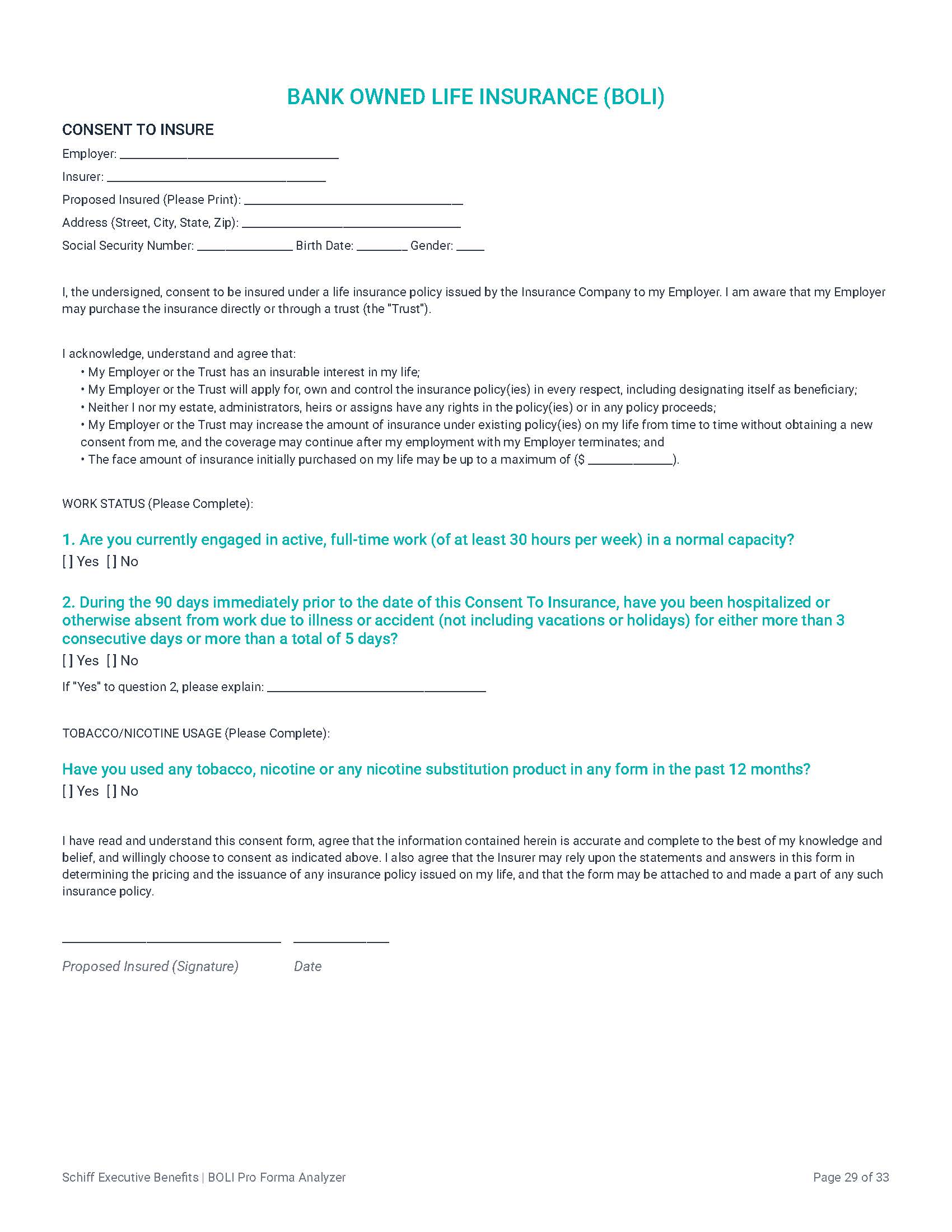
Sample Bank Owned Life Insurance (BOLI) consent form, used to ensure compliance in executive benefit structures


The Path Forward: Which is Best for You?


So, how do you choose?


If you are a solo practitioner or a small business owner with no interest in permanent life insurance, a standalone policy might still hold some appeal for its pure-play simplicity.


However, for the majority of corporations and partnerships looking to solve for the "5 What Ifs," the LTC Rider/Hybrid approach is usually the superior choice. It addresses the senior executive retirement/replacement cost efficiency, provides a guaranteed return on premium, and serves as a formidable tool for retention.


Are you worried that your current retirement strategy is one health crisis away from collapse? Are you concerned that your top talent might be lured away by a competitor offering more security?


These are the questions that define your professional legacy. You don't have to navigate these "unstable" financial environments alone. Building it your way means having a team of advisors who understand that your business and your personal life are inextricably linked.


We invite you to take a breath, sit back, grab your coffee, and let’s look at your current plan. Is it truly The Perfect Plan®? If not, we are here to help you find the alignment you deserve.


Come join us at Schiff Executive Benefits. Let’s make sure your "thousand dreams" remain intact, no matter what the future holds.


Contact us today to explore executive LTC strategies tailored to your firm.


It is often said that a business is only as strong as the foundation upon which it is built. You have spent decades pouring your sweat, late nights, and creative energy into your company. You have survived market crashes, global shifts, and the daily grind of management. But here is an undeniable truth: building a business is a labor of love, yet leaving one should not be a labor of grief.


For many business owners, the "exit" feels like a distant shore. However, the reality of business succession is that it often happens when we least expect it. Whether it is a sudden health crisis or a partner deciding to walk away, the stability of your legacy depends entirely on a document that is likely sitting in a dusty drawer: your buy-sell agreement.


Are you certain that document will protect your family? Does it guarantee that you won't end up in business with a widow? Or worse, does it inadvertently hand over your hard-earned equity to the IRS?


At Schiff Executive Benefits, our mission is Restoring Alignment and Retention. We believe that a plan is only as good as its execution. Today, let’s walk through the common pitfalls that keep business owners up at night and how you can secure your professional legacy.


The "What If" Reality Check


We often ask our clients five core "What If" questions. Two of them are particularly relevant here:


  1. What if you end up in business with your partner’s spouse?

  2. What if you need a business buy-out tomorrow but don’t have the cash?


If you don't have a properly structured and funded agreement, these aren't just hypothetical scenarios: they are impending financial disasters. A buy-sell agreement is essentially a "business will." It dictates who can buy the departing owner's share, at what price, and where the money will come from. Without it, or with a flawed one, you are inviting litigation and chaos into your boardroom.


Business partners discussing a buy-sell agreement and succession planning in a modern office.


Mistake #1: The Ownership Trap (Redemption vs. Cross-Purchase)


One of the most frequent business owner issues we see involves the choice between an Entity-Purchase (Redemption) agreement and a Cross-Purchase agreement. While both aim to solve the same problem, their tax and legal implications are worlds apart.


The Redemption Model


In a redemption or entity-purchase agreement, the business itself buys the life insurance policy on each owner. When an owner passes away, the company receives the death benefit and uses it to buy back the shares.


  • The Pro: It is simple. Only one policy per owner is needed.

  • The Con: The surviving owners do not receive a "step-up" in tax basis. If you eventually sell the company, your tax bill could be significantly higher because your cost basis in the shares remained the same, even though you now own a larger percentage of the company.


The Cross-Purchase Model


In a cross-purchase agreement, the owners buy policies on each other.


  • The Pro: When a partner dies, you receive the insurance proceeds personally (tax-free) and use them to buy the deceased partner’s shares. This gives you a "step-up" in basis, potentially saving you millions in future capital gains taxes.

  • The Con: It can become administratively complex if there are many partners. If you have four partners, you might need 12 separate policies to cover everyone.


Which is right for you? There is no one-size-fits-all answer. Often, we utilize a cross-purchase partnership or a "Trusteed" cross-purchase to simplify the administration while retaining the tax benefits. Failing to analyze this choice is a mistake that often isn't discovered until it's too late to fix.


Mistake #2: The IRC 101(j) Compliance Trap


This is the "Life Insurance Warning" that many generalist advisors miss. Under Internal Revenue Code Section 101(j), if a business owns a life insurance policy on an employee (including owner-employees), specific notice and consent requirements must be met before the policy is issued.


If you fail to comply with 101(j), the death benefit: which you expected to be tax-free: could be treated as taxable income. Imagine needing $5 million to buy out a partner, receiving the check, and then realizing the IRS wants 37% of it.


This is what we call the "Employer-Owned Life Insurance" trap. Compliance requires:


  • Informing the insured in writing that the employer intends to insure their life.

  • Disclosing the maximum face amount for which the employee could be insured.

  • Obtaining written consent from the employee.


At Schiff Executive Benefits, we specialize in navigating these regulatory waters to ensure your COLI (Corporate Owned Life Insurance) strategies remain a source of security, not a tax liability.


Mistake #3: Using a Stale Valuation


When was the last time you valued your company? If your buy-sell agreement uses a fixed dollar amount from 2018, you are playing a dangerous game.


If the business has grown, the surviving partners may be getting a "steal," leaving the deceased partner’s family under-compensated and likely to sue. If the value has dropped, the company might be forced to overpay, potentially bankrupting the business.


We recommend a dynamic valuation formula or a requirement for an annual appraisal. Your legacy deserves an accurate price tag. Business values fluctuate; your agreement must be agile enough to keep pace.


Legal documents and business valuation papers on an executive desk for a buy-sell agreement review.


Mistake #4: The Funding Gap


A buy-sell agreement without funding is just a piece of paper with good intentions. How will you come up with the cash to buy out a partner?


  • Cash on hand? Most businesses don't keep millions in idle cash.

  • A bank loan? Banks are often hesitant to lend to a company that just lost a key partner.

  • Installment payments? This puts a massive strain on future cash flow and leaves the departing family at risk if the business fails.


This is where life insurance buy/sell agreements shine. Life insurance provides immediate, tax-free liquidity at the exact moment it is needed. It creates the "certainty" in an uncertain time. By using COLI or personal policies, you ensure that the surviving partners keep the business and the departing family gets their fair value immediately.


The Power of The Perfect Plan®


Navigating these complexities requires more than just an insurance agent; it requires a team of advisors who understand the intersection of law, tax, and corporate finance. This is the philosophy behind The Perfect Plan®.


We don't just sell policies; we help you engineer a succession strategy that stands the test of time. We look at the "point of no return": the moment when a triggering event occurs: and we work backward to ensure every piece of the puzzle is in place today.


Have you considered what happens if a partner becomes disabled rather than passing away? Most buy-sell agreements are silent on disability, yet the statistical likelihood of long-term disability is far higher than premature death. Our team at Schiff Executive Benefits looks at the holistic picture to ensure no "What If" goes unanswered.


Take the Next Step


The unstable nature of today's economic environment means that waiting "until next year" to review your succession plan is a risk you cannot afford. Economic shifts and tax law changes are happening at an accelerated pace.


Are you making these common mistakes?


  • Is your agreement funded?

  • Is it 101(j) compliant?

  • Does it offer a step-up in basis?

  • Is the valuation current?


If you aren't 100% sure of the answers, it's time for a professional review.


Financial advisors reviewing business succession and executive benefits plans in a boardroom.


Sit back, grab your coffee, and let’s have a conversation about your professional legacy. We invite you to join us for a consultative review where we can explore how to bring your buy-sell agreement into alignment with your current goals.


Don't let the foundation you've built crumble because of a technicality. Let's work together to ensure your business continues to thrive, your partners stay protected, and your family is provided for: exactly the way you intended.


Restoring Alignment and Retention. It’s not just our tagline; it’s our promise to you.


Ready to secure your future? Contact us today to learn more about how we can help you implement The Perfect Plan®.


Learn more: planning your business succession.


There is a universal truth in the world of commerce that every seasoned entrepreneur eventually realizes: It is not what you make; it is what you keep. You have spent years, perhaps decades, pouring your sweat, late nights, and capital into building a successful enterprise. You’ve navigated market volatility, managed complex teams, and scaled your vision into a reality. Yet, when you look at your personal balance sheet compared to the company’s revenue, a frustrating disconnect often appears.


Why is it that the business can afford top-tier equipment, expansive marketing budgets, and plush office spaces, but when you try to move that same capital into your personal pocket, the IRS stands at the gate demanding a 30%, 40%, or even 50% "toll"?


If you feel like you are "business rich" but "personally capped," you aren't alone. Most business owners are stuck in the traditional qualified plan trap. You maximize your 401(k), perhaps add a profit-sharing component, and then... you hit a wall. Federal limits dictate how much you can save, and as a high-earner, those limits are often a drop in the bucket compared to the lifestyle you’re building or the legacy you want to leave.


What if there was a way to use corporate dollars: money already sitting inside your business: to build personal wealth that grows tax-deferred and comes out tax-free?


The Tax Trap: Why Traditional Advice Fails High-Earners


Standard financial advice is built for the "average" employee. For the person earning $100,000 a year, a 401(k) is a fantastic tool. But for the business owner or the key executive driving millions in value, the math just doesn't work. When you factor in the "Top Heavy" testing rules and the strict contribution caps, you quickly realize that the traditional system is designed to limit your ability to accumulate wealth.


Furthermore, traditional retirement accounts are "tax-deferred," not "tax-exempt." This means you are essentially making a bet with the federal government. You’re betting that tax rates will be lower thirty years from now than they are today. Given the current trajectory of national debt and government spending, is that a bet you really want to make?


We believe there is a better way. We call it the Perfect Plan® model.


financial-blueprint-analysis.webp


Introducing the Perfect Plan® Model


At Schiff Executive Benefits, we focus on a methodology that aligns corporate objectives with personal wealth goals. The Perfect Plan® isn't a single product; it is a strategic framework designed to move money from the business to the individual in the most tax-efficient manner possible.


The goal of the Perfect Plan® is to achieve three specific outcomes:


  1. Tax-Deductible Contributions: The business gets a deduction for the cost of the benefit.

  2. Tax-Deferred Growth: The assets grow without being eroded by annual capital gains or income taxes.

  3. Tax-Free Distribution: You can access the wealth in retirement without triggering a massive tax bill.


Does this sound too good to be true? It isn't. Large corporations and banks have been using these strategies for decades: often referred to as Bank-Owned Life Insurance (BOLI) or Corporate-Owned Life Insurance (COLI). The secret is simply scaling these institutional strategies down to the private business level.


Strategy 1: The Executive "Bonus" That Actually Works


Most bonuses are a tax nightmare. You pay the employee (or yourself) $100,000; the business loses $100,000 in cash, and the individual receives about $60,000 after taxes. That’s a 40% loss of friction right out of the gate.


Using an Executive Bonus Plan (Section 162), we can restructure this. The business pays the premium on a high-cash-value life insurance policy owned by the executive. The premium is deductible to the business and taxable to the executive, but we can "double bonus" the tax amount so the executive has zero out-of-pocket cost. Inside that policy, the money grows tax-deferred. When it’s time to retire, the executive can take loans against the policy: which are generally tax-free: to fund their lifestyle.


You’ve essentially used corporate dollars to create a private "bank" for yourself, bypass the 401(k) limits, and secure a tax-free income stream.


Strategy 2: Split-Dollar Arrangements


For the owner looking to move significant wealth out of the company without an immediate tax hit, "Split-Dollar" arrangements are the gold standard. In this scenario, the company and the executive "split" the costs and benefits of a permanent life insurance policy.


The company pays the premiums, which are treated as a series of loans to the executive (at very low IRS-mandated interest rates). Because it’s a loan, there’s no immediate income tax for the executive. The cash value inside the policy grows, often far exceeding the interest on the loan. At death or at a pre-determined rollout point, the company is paid back its premiums, and the executive (or their heirs) keeps the remaining millions: often entirely tax-free.


A golden tree in an executive office symbolizing tax-efficient personal wealth building and tax-free growth.


The Power of Tax-Free Growth and Distribution


Think about your current portfolio. If you have $5 million in a traditional IRA, you don't actually have $5 million. You have $3 million, and the IRS has a $2 million lien on your account. Every time the market goes up, the IRS’s share grows. Every time tax rates go up, your share shrinks.


When you build wealth using the corporate dollar strategies we advocate for, you are removing the IRS as a partner in your future. You are locking in a 0% tax rate on those distributions. This provides a level of certainty that no traditional stock-and-bond portfolio can match.


As Matthew Schiff often says on The Perfect Plan® Podcast, "The greatest risk to your retirement isn't market volatility; it's the uncertainty of future tax legislation." By using corporate dollars now to fund tax-advantaged vehicles, you are essentially "tax-morphing" your wealth: changing it from a taxable liability into a private, protected asset.


Why Retention and Wealth Building Go Hand-in-Hand


While you are building your own wealth, these same plans serve as the ultimate "Golden Handcuffs" for your key employees. In today’s competitive talent market, a simple 401(k) match isn't enough to keep a CFO or a VP of Sales from being recruited away.


By offering a Deferred Compensation or a tax-efficient executive benefit plan, you are providing them something they cannot get anywhere else: a path to tax-free wealth. If they leave, they leave the benefit behind. If they stay, they retire wealthy. It’s a win-win that uses the company’s cash flow to solve two problems at once: tax efficiency for you and retention for the business.


perfect-plan-podcast-banner.webp


The Point of No Return: Why Now?


We are currently living in a unique economic window. Tax rates are historically low, but the clock is ticking on the expiration of the Tax Cuts and Jobs Act (TCJA). Furthermore, as the national debt continues to climb, the pressure to raise revenue through higher income and estate taxes is mounting.


Waiting until you are ready to exit the business to think about tax efficiency is a mistake. The best time to start moving corporate dollars into personal, tax-efficient buckets was ten years ago. The second best time is today.


Are you currently maximizing every dollar your business generates? Or are you leaving a "tip" for the IRS every year because your benefit plan is stuck in the 1990s?


Take the Next Step Toward Your Perfect Plan®


Building wealth tax-efficiently requires more than just a good accountant; it requires a specialized architect who understands the intersection of corporate tax law, executive compensation, and insurance design.


At Schiff Executive Benefits, we don't just sell plans; we design outcomes. We help you look at your business not just as a source of current income, but as a powerful engine for personal wealth accumulation.


executive-confidence-blue-suit.webp


If you’re ready to stop overpaying the IRS and start using your corporate dollars to secure your personal legacy, let’s have a conversation. It’s time to move beyond the limitations of standard retirement planning and start building your Perfect Plan®.


Schedule a consultation with Matt Schiff today via our Calendly link here.


Sit back, grab a coffee, and let’s look at the math together. You’ve done the hard work of building the business: now let’s make sure you get to keep what you’ve earned.


Learn more: See how a Section 162 Executive Bonus Plan turns corporate dollars into personal wealth.


An organization is only as strong as the people who lead it. It’s an undeniable truth in business: your "A-players" are the engine driving your growth, your culture, and your ultimate legacy. But here is the reality that keeps many business owners and CEOs up at night: those same A-players are being scouted every single day.

If you are relying solely on a standard benefits package to keep your top talent happy, you might be leaving the back door wide open. Traditional 401(k) plans and basic health insurance are great for the general workforce, but for your high-earners, they often fall short. They hit contribution ceilings too quickly, leaving your most valuable people with a significant "retirement gap."

At Schiff Executive Benefits, we believe in Restoring Alignment and Retention. We don’t just sell products; we reverse-engineer solutions based on the "What If" scenarios that actually matter to your business.

Sit back, grab your coffee, and let’s dive into Executive Benefits 101.

Why Standard Benefits Aren’t Enough for Executives


Let’s talk about the "Retirement Gap." If you have an executive making $300,000 or $500,000 a year, the standard IRS limits on 401(k) contributions (which sit at $23,000 in 2024, plus catch-ups) represent a tiny fraction of their income. While your entry-level employees might be able to replace 70-80% of their income through a 401(k) and Social Security, your top executives might only replace 30-40%.

That’s a problem. It creates a "reverse-discrimination" effect where your most productive people are the least protected.

When your leadership team feels their long-term financial security is at risk, they become susceptible to "the grass is greener" offers from competitors. This is where specialized executive benefits come in. These plans are designed to bypass the limitations of qualified plans, allowing you to recruit, reward, and: most importantly: retain the talent that makes your business move.

Executive leader in office reflecting on executive benefits and financial planning for talent retention.

The "What If" Framework: Solving for Uncertainty


Before we look at the specific tools like NQDC or Phantom Stock, we have to look at the risks. At Schiff Executive Benefits, we anchor every strategy in five core "What If" questions. These aren't just theoretical; they are the real-world events that can dismantle a company if you aren't prepared.

  1. What if your top talent leaves? The cost of replacing a C-suite executive can be 200% or more of their annual salary.

  2. What if you are forced to do business with a widow (or widower)? Without a proper succession and buy-sell arrangement, a partner’s passing can leave you running a company with their heir: who may know nothing about the business.

  3. What if you need a business buy-out? Do you have the liquidity to fund a transition without crippling operations?

  4. What if the cost of replacing a senior executive is too high? How do you fund the search and the "signing bonus" needed for a successor?

  5. What if you run out of retirement money? This applies to you and your executives alike.


By addressing these questions through The Perfect Plan®, we create a roadmap that provides security and clarity.

Executive Benefits Strategies: Your Complete Toolbox


There is no "one-size-fits-all" in executive compensation. A holistic strategy often involves a mix of several different structures, depending on whether you are a C-Corp, an S-Corp, a partnership, or a non-profit.

1. Non-Qualified Deferred Compensation (NQDC)


Think of an NQDC plan as a "401(k) on steroids." It allows executives to defer a much larger portion of their compensation (sometimes up to 100%) on a pre-tax basis. This helps them manage their current tax burden while building a substantial nest egg for the future. For the employer, these plans can be structured with "vesting schedules" (golden handcuffs) that ensure the executive stays for the long haul to receive the full benefit.

2. Phantom Stock Plans


For private companies that want to offer equity-like incentives without actually diluting ownership or giving away voting rights, Phantom Stock is the gold standard. It’s a contractual agreement that gives an executive the right to a cash payment at a future date, with the amount tied to the company's share price or overall value growth. It aligns the executive’s personal wealth directly with the company’s success. You can learn more about how we structure these rewards by visiting our services page.

3. Split-Dollar Life Insurance & COLI


Using Corporate Owned Life Insurance (COLI) is a powerful way to fund these promises. In a Split-Dollar arrangement, the company and the executive share the costs and benefits of a permanent life insurance policy.

  • The executive gets high-limit death benefit protection and potential tax-free supplemental retirement income.

  • The company can structure the plan for cost recovery, meaning the business is eventually reimbursed for the premiums it paid.


This is a sophisticated way to provide a massive benefit while keeping the long-term cost to the company near zero.

Representative Clients

The Power of Cost Recovery in Executive Benefits


One of the most frequent questions we get from CFOs is: "How do we pay for this without hurting our P&L?"

This is where the "reverse-engineering" comes in. By using strategies like COLI, we can design plans where the cash value growth and the ultimate death benefit of the insurance policies offset the cost of the executive’s retirement payments. In many cases, the company can actually recover every dollar spent on the benefit, plus a rate of return.

It turns a "compensation expense" into an "informally funded asset." That is the hallmark of The Perfect Plan®.

Building Your Team of Advisors


You wouldn’t perform surgery on yourself, and you shouldn’t design an executive benefit plan in a vacuum. These strategies require a "team of advisors" approach: coordinating with your tax professionals, legal counsel, and our team at Schiff Executive Benefits.

Whether you are navigating 409A compliance for deferred comp or setting up a buy-sell arrangement for a multi-partner firm, the details matter. The goal is to move from a state of "uncertainty" to a state of "guarantee."

Are you realizing your dream value, or are you just working for the next paycheck? Is your leadership team as committed to the next ten years as you are?

Transitioning to a Secure Future


Business environments are inherently unstable. Markets shift, tax laws change, and talent is mobile. However, your internal structure doesn't have to be. By implementing a robust executive benefits strategy, you are doing more than just paying people well: you are building a fortress around your most valuable assets.

We invite you to stop wondering "What If" and start planning for "When." Whether you are a growing corporation or a long-standing partnership, the time to secure your legacy is now, before you hit the "point of no return."

If you’re ready to see how these strategies can work for your specific situation, let’s have a conversation. No pressure, no hard sell: just a look at the math and the "What Ifs" that matter to you.

Come join us and discover how we can help you build it your way.

Schedule your consultation with Matt Schiff and the team today.


Schiff Executive Benefits provides specialized consulting for corporations, partnerships, and financial institutions. For more insights on executive planning and wealth preservation, listen to The Perfect Plan® Podcast.


They say that most people don’t plan to fail; they simply fail to plan. In the world of high-stakes executive retention, this aphorism carries a heavy price tag. You’ve worked hard to build a company that attracts the best and brightest, but are you certain the "Golden Handcuffs" you’ve designed aren’t actually made of lead?


Nonqualified deferred compensation (NQDC) plans are among the most powerful tools in a business owner’s arsenal. They are the engine of Restoring Alignment and Retention. When executed correctly, an NQDC plan allows your key players to defer a portion of their compensation, and the associated taxes, until a future date, typically retirement. But the IRS has turned this landscape into a minefield. One wrong step with 409A plans doesn’t just result in a slap on the wrist for the company; it triggers a 20% penalty tax and immediate income recognition for your most valued executives.


Does that sound like a way to keep your top talent happy? Or is it the very thing that keeps you up at night, wondering if a simple administrative oversight will lead to your top talent walking across the street to a competitor?


Let’s look at the seven most common mistakes we see with nonqualified deferred compensation plans and, more importantly, how to fix them before the regulators come knocking.


1. Using "Custom" Payment Triggers That Break Section 409A


We often see business owners who want to be flexible. They want to pay out an executive when they "retire" or "after the big project is done." While that sounds like a great way to reward loyalty, Section 409A is incredibly rigid. There are only six permitted payment events: a specified date, separation from service, disability, death, a change in control, or an unforeseeable emergency.


If your plan document uses a vague term like "retirement" without tying it specifically to a "separation from service" or a "attaining age 65," you are in the danger zone.


The Fix: Audit your plan documents to ensure every payment trigger mirrors the exact language required by Section 409A. A "savings clause" won’t protect you here; the definitions must be right from the start.


2. Failing to Keep Up with Regulatory Urgency (SEC Rule 701)


If you are using phantom stock or equity-based NQDC plans, you need to be aware of the shifting landscape of SEC Rule 701. As of March 2026, companies hitting the $10M equity grant threshold face significantly increased disclosure requirements. Many private companies use an NQDC plan specifically to keep their finances private. If you aren't tracking your cumulative grants, you might accidentally trigger a requirement to open your books to every employee.


The Fix: Work with a team of advisors who understand both the tax and the securities side of these plans. If you are approaching that $10M threshold, it may be time to pivot your strategy to a cash-based Mirror Plan or a COLI-funded arrangement to maintain privacy.


financial-blueprint-analysis.webp


3. Missing the SECURE 2.0 Roth Mandate Connection


You might be asking, "What does my 401(k) have to do with my deferred comp?" Everything. With the SECURE 2.0 Act, high-earners (those making over $145,000) are now mandated to make their "catch-up" contributions as Roth (after-tax) dollars. This effectively removes one of the last bastions of pre-tax deferral for your top people.


As a result, the demand for nonqualified deferred compensation plans has skyrocketed. Executives are looking for ways to bridge that tax-deferral gap. If your NQDC plan isn't designed to "mirror" the 401(k) experience, you are missing a massive opportunity to provide value.


The Fix: Position your NQDC as a "401(k) Mirror Plan." This allows executives to defer income beyond the statutory limits of a qualified plan, restoring the tax advantages they’ve lost elsewhere.


4. Sloppy Valuation of Phantom Equity


If your plan rewards executives based on the growth of the company’s value (Phantom Stock or SARs), you must have a defensible valuation. We see many mid-market firms using "back-of-the-napkin" math or outdated internal formulas. If the IRS decides your valuation doesn't meet 409A requirements, they can deem the entire plan non-compliant.


The Fix: Commit to a regular, independent valuation. It is a small price to pay compared to the 20% penalty tax and interest charges that would otherwise fall on your executives' shoulders.


5. Ignoring the "12-Month / 5-Year" Rule for Re-Deferrals


In an unstable economic environment, an executive might decide they don't actually want their payout next year. They’d rather keep it in the plan for a few more years. You might think, "Sure, let’s just change the date."


Not so fast. Section 409A requires that any election to delay a payment must be made at least 12 months before the original payment date, and the new payment date must be at least five years in the future.


The Fix: Education is key. Ensure your executives understand these timelines well in advance. At Schiff Executive Benefits, we emphasize that The Perfect Plan® isn't just about the initial design; it’s about the ongoing education of the participants.


Executive benefits advisor explaining NQDC plan timelines and 409A compliance to a business owner.


6. Confusing SARs with Phantom Stock


While they sound similar, Stock Appreciation Rights (SARs) and Phantom Stock are treated differently under the law. SARs can sometimes be exempt from 409A if they are designed correctly: specifically, if they only pay out the "appreciation" and don't have a fixed payout date. However, if you add too many bells and whistles, you might inadvertently turn a SAR into a deferred compensation plan that must comply with every 409A nuance.


The Fix: Decide what you are trying to achieve. Is the goal long-term equity-like growth, or is it a structured retirement supplement? Your choice of vehicle (COLI vs. SARs vs. Phantom Equity) should follow your goal, not the other way around.


7. Operational "Form vs. Substance" Errors


You can have the most beautiful plan document in the world, but if your HR or payroll department isn't executing it correctly, the document won't save you. We frequently see "operational failures": where a payment is made a few days too early, or a deferral election was signed a few days too late. The IRS treats these operational errors just as harshly as document errors.


The Fix: Regular plan audits are essential. You wouldn't go five years without a physical checkup; don't let your executive benefits go five years without a compliance review.


Why the "What Ifs" Matter


When we sit down with business owners, we often ask the hard questions:


  • What if your top talent leaves for a competitor tomorrow?

  • What if you need to buy out a partner, but your cash is tied up in unfunded liabilities?


An NQDC plan is more than just a tax tax-deferred bucket. It is a strategic tool to ensure that your "What Ifs" have answers. By using Corporate Owned Life Insurance (COLI) to fund these plans, you can create a tax-efficient informal funding mechanism that sits on the balance sheet, offsetting the liability of the deferred comp while providing the liquidity needed to keep the business running smoothly during a transition.


executive-confidence-blue-suit.webp


Realizing Your Dream Value


Your business is your legacy. You’ve spent years building it your way. Don't let that legacy be tarnished by a 20% tax penalty that could have been avoided with better design and oversight.


The goal of any executive benefit strategy is to create a sense of security: for the owner and the employee. When your key people know their future is secure and their tax burden is managed, they stop looking at the door and start looking at how they can help you grow the company further.


Let’s Sit Back and Review


If it’s been a while since you’ve looked at your NQDC plan documents, or if you’re concerned that recent regulatory shifts (like SECURE 2.0) have left your plan outdated, let’s talk.


You don't have to navigate this unstable financial environment alone. We’ve built a career out of guiding owners through these complexities. Whether it’s through our consulting services or the insights we share on The Perfect Plan® Podcast, our mission is to help you restore alignment in your organization.


Come join us for a conversation. Sit back, grab your coffee, and let’s see if we can turn your "Golden Handcuffs" back into the valuable retention tool they were meant to be.


perfect-plan-podcast-banner.webp


Learn more: our complete guide to NQDC plans.