
Hi, How Can We Help You?
  • Planning for all of life's "What Ifs".

Category Archives: Retention

Business executives in a strategic meeting in a modern office, representing leadership a company wants to reward and retain


What Are Executive Benefits?


Executive benefits are specially designed compensation and retirement strategies that go beyond the standard, broad-based plans every employee receives. Where a 401(k) or group insurance plan is built for the whole workforce, executive benefits are built for the small group of people who drive most of a company’s value — the owners, founders, and key leaders you cannot afford to lose. They let a business reward, retain, and retire its most important people on a selective, flexible basis that qualified plans simply do not allow.


Why Business Owners Need More Than a 401(k)


Qualified retirement plans come with strict limits. Contribution caps, nondiscrimination testing, and coverage rules are designed to spread benefits evenly across all employees — which is exactly the problem when you want to do something extra for a handful of key people. A high earner often finds that a 401(k) replaces only a fraction of their income in retirement, leaving a significant gap. Executive benefits exist to close that gap and to give owners a tool they fully control: who participates, how much, and on what terms.


Confident professional woman in a blue suit, representing the key executive talent a business owner needs to retain


The Real Problem: Keeping Your Best People


Your most valuable executives are also the most recruitable. Competitors know who they are, and a strong leader walking out the door can take clients, institutional knowledge, and momentum with them. The right executive benefit creates “golden handcuffs” — a meaningful, often vesting, financial reason for a key person to stay and keep building with you. Retention is not about paying more today; it is about designing a future reward that is hard to walk away from.


The Main Types of Executive Benefits


There is no single “best” executive benefit — the right answer depends on your entity type, your goals, and the people you are trying to reward. Here are the core strategies, each explained in depth on its own page:


Executive Bonus Plans (Section 162)


The simplest place to start. A Section 162 executive bonus plan uses tax-deductible employer dollars to fund a personally owned policy for a key executive — straightforward, flexible, and especially powerful for pass-through entities. Mechanically, the company pays a bonus that the executive reports as taxable income, while the business generally takes a current deduction, so there is no complex plan document to maintain. Because the executive owns the policy from day one, the benefit is fully portable and vests immediately, which makes it an easy first step for owners who want to reward a key person without long-term administrative overhead.


REBA — Restricted Executive Benefit Arrangements


A bonus plan with strings attached. The REBA blueprint adds a vesting schedule and a recovery feature, turning a simple bonus into true golden handcuffs your executives actually want. Unlike a plain Section 162 bonus, the employer retains a contractual right to recover its contributions if the executive leaves before an agreed date, so the retention incentive has real teeth. It fits owners who like the tax simplicity of a bonus arrangement but need a meaningful reason for a key leader to stay and keep building the business.


Nonqualified Deferred Compensation (NQDC)


Let key people defer income beyond 401(k) limits and grow it tax-deferred. Our complete guide to NQDC covers how these plans are designed, funded, and secured — including the popular 401(k) Mirror Plan for restoring lost contribution room. Deferred amounts grow without current taxation and are taxed only when they are eventually paid out, which can be timed toward lower-income retirement years. Because these are nonqualified promises, the election and distribution timing must follow Section 409A rules carefully, making NQDC best suited to high earners who want to close the gap a capped 401(k) leaves behind.


Split Dollar Life Insurance


A sophisticated way to share the cost and benefit of a life insurance policy between the company and the executive. Split dollar architecture can deliver substantial tax-efficient value when designed correctly. The business and the executive split the premium payments and the policy's death benefit or cash value under a written agreement, allowing the company to fund coverage while the executive builds personal wealth. When the goals, ownership, and exit are structured with care, split dollar can move significant value to a key person at a fraction of the tax cost of an outright bonus.


Phantom Stock


Give key people the economic upside of ownership without handing over real equity. Phantom stock creates an ownership feel that aligns executives with long-term growth. Rather than issuing actual shares, the company grants units whose value tracks the business, then pays out in cash at a future event such as vesting, sale, or retirement. This lets owners reward performance and reinforce loyalty without diluting control, sharing voting rights, or opening the books to new equity holders.


SERPs and Employer-Funded Plans


A Supplemental Executive Retirement Plan is a company promise to pay a defined future benefit — an employer-funded pension for your most important people. The employer sets the benefit formula and typically funds it informally, often with company-owned life insurance, so the executive receives a predictable stream of retirement income the business controls. Because it is entirely employer-provided and highly customizable, a SERP is well suited to retaining one or two irreplaceable leaders whose departure would be costly to the company.


BOLI and COLI Funding


Many executive benefits are funded efficiently with institutional life insurance. Bank Owned Life Insurance (BOLI) and Corporate Owned Life Insurance (COLI) let the asset on your balance sheet recover the cost of the benefits you provide. The company owns the policy, and its cash value grows tax-deferred as a corporate asset that can offset the ongoing expense of a benefit program. At the insured's death, the tax-advantaged proceeds return to the business, effectively cost-recovering the plan and making these vehicles the funding backbone behind many SERP and deferred compensation arrangements.


Ownership Transition and Exit


When the goal is succession, an ESOP or a broader business succession plan turns your largest asset into a funded, tax-advantaged exit. An ESOP creates a built-in buyer by transferring shares to a trust for employees, giving the owner liquidity while rewarding the team that helped build the value. Paired with the right funding and timing, a succession strategy converts an illiquid ownership stake into a smooth, tax-efficient transition rather than a rushed sale.


Financial advisor discussing an executive benefits strategy with a business owner client


How to Choose the Right Executive Benefit


The right plan starts with your goals, not a product. Are you trying to retain one irreplaceable leader, reward a small leadership team, build your own retirement, or plan an exit? Your entity type matters too — what works beautifully for a pass-through may be structured differently for a C corporation. The strongest plans are reverse-engineered from the outcome you want, then funded in the most tax-efficient way available. That is the heart of what we call The Perfect Plan®.


Talk to a Specialist


Executive benefits reward your power to make decisions about who you keep and how you retire. If you want to explore which strategy fits your business, schedule a meeting with Schiff Executive Benefits and we’ll help you design a plan around your goals.


The strength of any mission-driven organization is measured by the quality of its leadership. While a not-for-profit exists to serve the public good, it operates in a competitive talent market where the "golden handcuffs" of the corporate world are often standard. To attract and retain the visionaries capable of navigating complex philanthropic and operational landscapes, tax-exempt organizations must look beyond standard salaries and 403(b) plans.


However, the regulatory environment for executive benefits in the nonprofit sector is far more restrictive than for-profit Corporate Owned Life Insurance (COLI) or traditional NQDC arrangements. With the recent expansion of the Section 4960 excise tax under the One Big Beautiful Bill Act (OBBBA), the stakes have never been higher.


If you are a CFO, Board Member, or Executive Director, understanding the interplay between 457(b) plans, 457(f) plans, and the $1 million compensation cap is no longer optional: it is a fiduciary necessity.


The Foundation: 457(b) Eligible Deferred Compensation Plans


The most common nonqualified deferred compensation (NQDC) tool for tax-exempt entities is the 457(b) plan. Often referred to as a "Top Hat" plan, it is designed for a select group of management or highly compensated employees.


In many ways, a 457(b) feels like a 401(k) or 403(b) but without the rigorous non-discrimination testing. It allows executives to defer a portion of their salary, lowering their current taxable income while building a retirement nest egg.


Key Features of the 457(b):


  • 2026 Deferral Limits: For 2026, the normal elective deferral limit is $24,500.

  • Catch-Up Provisions: Unlike governmental 457(b) plans, non-governmental tax-exempt plans do not allow for the standard age-50 catch-up. However, they do offer a special "three-year catch-up" that allows participants to defer up to twice the normal limit ($49,000 in 2026) in the three years prior to the plan’s normal retirement age.

  • Unfunded Requirement: To maintain its tax-deferred status, a 457(b) plan must remain "unfunded." This means the assets are technically owned by the employer and subject to the claims of the organization's general creditors.

  • Taxation: Contributions and earnings are not taxed until they are distributed to the employee, typically at retirement or separation from service.


While the 457(b) is an excellent baseline, the relatively low contribution limits often fall short of the retention goals for top-tier executives. This is where the 457(f) enters the conversation.


The Powerhouse: 457(f) Ineligible Deferred Compensation Plans


When an organization needs to provide a significant retention incentive or a substantial retirement benefit that exceeds the 457(b) caps, they turn to the 457(f) plan. These plans are "ineligible" only in the sense that they are not subject to the contribution limits of Section 457(b).


A senior executive and a consultant reviewing technical compliance documents for a nonqualified deferred compensation plan.


A 457(f) plan allows an employer to credit substantial amounts to an executive's account, but there is a major technical catch: the Substantial Risk of Forfeiture (SRF).


The SRF and Taxation


Under IRC Section 457(f), deferred amounts are taxable to the executive the moment they vest: not when they are paid out. For a plan to successfully defer taxes, the executive must be required to perform "substantial future services." If they leave before the vesting date, they forfeit the benefit.


This "all or nothing" nature makes the 457(f) an incredibly potent retention tool. However, it also creates a significant tax event. Because the entire vested amount (including earnings) becomes taxable income in a single year, it can push an executive into the highest possible tax bracket and, more importantly, trigger the Section 4960 excise tax for the organization.


Technical Expertise in the Room


Navigating 457(f) plans requires a deep understanding of IRC 409A and 101(j). At Schiff Executive Benefits, we bring a unique perspective to these regulations. Our President, Matt Schiff, was "in the room where it happened," helping draft these laws in 2003 and 2005 as a ranking member of the AALU’s NQDC Committee alongside Michael Goldstein.


We don't just read the rules; we understand the intent behind them. This expertise is critical when designing a Perfect Plan® that balances executive reward with organizational compliance.


The New Reality: Section 4960 and the $1M Excise Tax


The most significant shift in the nonprofit benefits landscape is the expansion of the Section 4960 excise tax. This is a 21% tax imposed on the employer (the tax-exempt organization) for remuneration paid to a "covered employee" in excess of $1 million.


For years, many organizations felt safe because this tax only applied to the top five highest-compensated employees. However, the One Big Beautiful Bill Act (OBBBA) has fundamentally changed the definitions.


The OBBBA Expansion


Under the new rules, the definition of a "covered employee" has expanded dramatically. It now includes any employee or former employee whose remuneration exceeds $1 million. The "top five" threshold is gone. If a mid-level specialist has a massive 457(f) vesting event that pushes their total compensation over the $1 million mark in a single year, the organization is on the hook for the 21% excise tax on every dollar over that limit.


Why This Matters for 457(f) Plans


Most 457(f) plans are designed with "cliff vesting": for example, a $500,000 credit that vests after five years. If that executive is already making $600,000 in salary and benefits, the $500,000 vesting event brings their total remuneration to $1.1 million.


The organization would then owe a 21% tax on that extra $100,000. This unexpected cost can wreak havoc on a nonprofit budget and create optics issues with donors or board members who may not understand why the organization is paying an "excess compensation" tax to the IRS.


Planning Implications: Restoring Alignment and Retention


The goal of executive benefits is to create alignment between the leader’s success and the organization’s mission. When a plan triggers a massive, unbudgeted tax penalty, that alignment is broken.


A collaborative nonprofit team discussing financial strategy and executive retention goals in a modern office.


Effective planning in the OBBBA era requires a "reverse-engineered" approach. Instead of simply picking a dollar amount and a vesting date, we must look at the total compensation trajectory of every key employee.


1. Staggered Vesting Schedules


Rather than a single "cliff" vesting date that creates a compensation spike, we often recommend staggered vesting. By spreading the vesting of 457(f) benefits over several years, we can keep the annual remuneration below the $1 million threshold, avoiding the excise tax entirely while still providing the same total value and retention incentive to the executive.


2. Coordination with 457(b)


Maximizing the 457(b) deferrals is the first line of defense. By pushing as much as possible into the "eligible" plan where taxation is deferred until distribution, we reduce the pressure on the 457(f) "ineligible" plan.


3. Implementing The Perfect Plan®


Every organization has a unique culture and a specific set of "What Ifs."


  • What if a senior exec retires, and the replacement cost is higher than anticipated?

  • What if top talent leaves for a for-profit competitor?

  • What if a vesting event triggers a tax penalty that exceeds the budget?


Our process focuses on Employee Retention by designing programs that are cost-effective for the employer and truly rewarding for the executive. We ensure every program is IRC 409A compliant and structured to mitigate the impact of Section 4960.


Key Takeaway for Board Members and CFOs


The era of "set it and forget it" deferred compensation for nonprofits is over. If your organization has existing 457(f) arrangements, you must audit them immediately to identify potential "tax bombs" created by the expanded OBBBA covered employee definition.


An executive advisor pointing to a strategic growth chart, illustrating the long-term impact of proper plan design.


At Schiff Executive Benefits, we specialize in helping not-for-profits map their deferred compensation arrangements, identify vesting risks, and restructure plans to ensure they remain a tool for growth: not a source of tax liability.


Is Your Plan Still "Perfect"?


Don't wait for a $1 million vesting event to discover your excise tax exposure. Let's sit back, grab a coffee, and review your current executive benefit structure. We work alongside your existing advisors: your accountants and attorneys: to provide the technical expertise required in today's shifting regulatory landscape.


Ready to protect your mission and your talent?


Click here to get started with a confidential business review and valuation.


Whether you are looking to reward a long-tenured leader or attract a new visionary to your team, we are here to help you build The Perfect Plan®.


The only constant in the world of high-stakes business is change, yet one truth remains universal: your business is only as strong as the people who lead it. For decades, the most successful organizations have understood that attracting and retaining top-tier talent isn't just about a competitive salary: it’s about creating a sense of ownership and securing a legacy.

But as you scale, the tools you use to build that security become increasingly complex. You move from simple "handshakes" to sophisticated financial structures. Among these, few are as powerful: or as misunderstood: as Split Dollar life insurance. When built correctly, it is a masterpiece of financial engineering. When built poorly, it can trigger a regulatory nightmare.

At Schiff Executive Benefits, we specialize in reverse-engineering these solutions to ensure they match your company culture and intent while "Restoring Alignment and Retention." To navigate this landscape, you need to understand the "architecture" of the plan: the interaction between tax regimes, the impact of the Sarbanes-Oxley Act (SOX), and the technical nuances of Internal Revenue Code (IRC) Section 409A.

The Two Foundations: Collateral Assignment vs. Endorsement


Think of a Split Dollar arrangement as a partnership between an employer and a key executive to share the costs and benefits of a life insurance policy. However, the way you structure that partnership determines everything from who owns the policy to how the IRS views the transaction.

1. The Loan Regime (Collateral Assignment)


In a Collateral Assignment Split Dollar (CASD) arrangement, the executive owns the policy. The employer pays the premiums, but those payments are treated as a series of loans to the executive. To secure the repayment of these loans, the executive assigns the policy’s cash value or death benefit to the employer as collateral.

This is often the preferred route for private companies because it allows for a more efficient transfer of wealth. However, because it is technically a loan, it must follow the rules of IRC Section 7872, requiring a market-rate interest or the imputation of income to the executive.

2. The Economic Benefit Regime (Endorsement)


In an Endorsement Split Dollar arrangement, the employer owns the policy. The employer "endorses" a portion of the death benefit to the executive’s beneficiaries. Here, the executive is not receiving a loan; they are receiving a taxable "economic benefit" (the value of the current life insurance protection).

While this is simpler from a documentation standpoint, it is often less flexible for long-term retirement planning than the loan-regime approach.

Architectural shot of a modern glass and steel office building, symbolizing the structural integrity required in benefit design.

The SOX 402 Hurdle: A Warning for Public Companies


If you are a decision-maker at a public company (or a company planning to go public), the architecture of your Split Dollar plan faces a significant regulatory roadblock: Section 402 of the Sarbanes-Oxley Act.

Passed in the wake of major corporate scandals, SOX Section 402 made it unlawful for any public issuer to extend or maintain credit in the form of a "personal loan" to any director or executive officer. Because a Collateral Assignment Split Dollar plan is legally structured as a loan, it falls squarely into the crosshairs of this prohibition.

For the top five employees in a public company, the loan-regime approach is generally a "no-go." Implementing a CASD plan for these individuals could lead to severe legal and civil penalties. In these environments, we typically pivot toward Endorsement structures or other Non-Qualified Deferred Compensation (NQDC) models that avoid the "loan" definition entirely.

409A and the Strategic Loan: Planning for the "What If"


One of the most attractive features of a Split Dollar loan is the possibility of loan forgiveness. Imagine a scenario where, after 15 years of exceptional service, the company forgives the executive's debt, effectively turning the life insurance policy into a tax-efficient retirement windfall.

However, if you don't plan for this from the start, you are walking into a trap set by IRC Section 409A.

Section 409A governs nonqualified deferred compensation. If a company decides on a whim to forgive a Split Dollar loan at retirement, the IRS may view that forgiveness as a "deferral of compensation." If the arrangement wasn't drafted to comply with 409A from day one, the executive could face immediate income inclusion, a 20% penalty tax, and premium interest charges.

"In the Room Where It Happened"


This is where technical expertise becomes your greatest asset. Our President, Matt Schiff, doesn't just read these laws; he was "in the room" when they were being shaped. In 2003 and 2005, Matt served as a ranking member of the AALU’s NQDC Committee alongside Michael Goldstein. Together, they helped draft the very laws: IRC 409A and 101(j): that govern these plans today.

When we talk about "Split Dollar Architecture," we aren't just following a template. We are using the same deep technical insight that helped establish the regulatory framework.

An executive desk with professional documents and a high-end pen, reflecting the technical and regulatory precision required for 409A compliance.

The History of Deferred Compensation


To truly understand why these rules exist, it helps to look back at the history of the industry. We recently sat down with Dan Hogans, formerly of the IRS Treasury and one of the primary architects of the 409A regulations, to discuss how we got here.

You can watch that full conversation, "The History of Deferred Compensation," on The Perfect Plan® Podcast. It’s a masterclass in how regulatory shifts changed the way businesses protect their key people.

At Schiff Executive Benefits, we integrate these lessons into every Perfect Plan® we design. Whether it's ensuring 100% protection for employee families or creating a 100% income stream in retirement, the goal is always the same: security through precision.

Why "Reverse Engineering" Matters


Most brokers start with a product. They have a policy they want to sell, and they try to fit your company into it. We take the opposite approach. We reverse-engineer the solution based on your specific goals.

  • Are you a public company? We avoid the SOX 402 traps.

  • Are you a private firm looking for a "Golden Handshake"? We structure the CASD with 409A-compliant forgiveness triggers.

  • Are you worried about cost recovery? We design the Cost Recovery Engine to ensure the business eventually receives every dollar it put into the plan.


We work as an integrated part of your advisory team, collaborating with your accountants and attorneys to ensure that the plan we build today doesn't become a liability tomorrow.

Two professionals in a modern collaborative space, highlighting the integrated approach of working with existing advisors.

Realizing Your Dream Value


Your business is your legacy. The people who help you build it deserve a plan that is as robust and well-thought-out as the company itself.

Are you asking the right "What If" questions?

  1. What if your top talent leaves for a competitor tomorrow?

  2. What if a senior executive retires and the replacement cost exceeds your budget?

  3. What if you could provide "Ownership Feel" to non-owners without giving away equity?


The answers to these questions lie in the architecture of your benefits. By utilizing The Perfect Plan®, you aren't just buying insurance; you are implementing a strategic retention tool that scales with your success.

Come Join Us


Navigating SOX, 409A, and Split Dollar regimes can feel like walking through a minefield. But you don't have to do it alone. Sit back, grab your coffee, and let’s look at how we can reinforce your company's foundation.

Whether you are a small business with 10 employees or a large corporation with 10,000, the principles of retention and alignment remain the same.

Ready to see what your business is truly worth and how you can protect it?

Get your professional business valuation here using the RISR tool.

Let’s build something that lasts.

A premium, minimalist library representing the peace of mind and long-term legacy provided by a well-architected executive benefit plan.


Learn more: 409A compliance, design, and strategy and Split Dollar architecture for executive wealth.


### **Technical Definition: Business Valuation (for Executive Planning)**
In the context of executive benefits and succession planning, **Business Valuation** is the formal process of determining the economic value of a whole business or company unit. This valuation serves as the "strike price" or baseline for synthetic equity plans and buy-sell triggers.

Key Technical Attributes:


  • Methodologies: Commonly determined via Asset-Based, Market Comparison, or Discounted Cash Flow (DCF) approaches. For private companies, a multiple of EBITDA (Earnings Before Interest, Taxes, Depreciation, and Amortization) is a standard benchmark.

  • Compliance: For tax-advantaged executive plans (like Phantom Stock), valuations must often meet IRC Section 409A safe harbor standards to avoid "cheap stock" tax penalties.

  • Trigger Events: A formal valuation is required during "Change in Control" events, partnership buy-outs, or when settling NQDC liabilities upon an executive's separation from service.


It is a universal truth in the world of commerce that your business is more than just a source of income; for most owners, it is their life’s work, their greatest passion, and: by far: their biggest asset. You’ve spent years, perhaps decades, building something from the ground up. You’ve weathered economic shifts, navigated late-night anxieties, and celebrated the hard-won victories that come with entrepreneurship.


But as you look toward the future, a critical question likely keeps you up at night: What is it all actually worth?


Whether you are five years or fifteen years away from a Business Transition, understanding the true value of your business is the starting point for every strategic decision you make. However, valuation is only one side of the coin. The other side: the side that often determines if a sale actually crosses the finish line: is the alignment and retention of the people who help you run it.


At Schiff Executive Benefits, we help business owners navigate the "What Ifs" of their professional legacy. Today, we’re diving into how a clear business valuation serves as the foundation for a retention strategy that supports Succession Planning, ensures your key talent is aligned for a future sale, and, just as importantly, stays to provide continuity long after the ink has dried.


The Starting Point in Business Transition: Knowing Your Number


You can’t manage what you don’t measure. Most business owners have a "gut feeling" about what their company is worth, but in a professional transaction, gut feelings don’t hold up under due diligence. A formal valuation is the baseline for your retirement planning, your estate strategy, and your executive benefit design.


Knowing your business's worth allows you to answer the first of our core "What If" questions: What if I want to execute a business buy-out or sale? Without a clear number, you are flying blind.


We believe that every owner should have access to high-quality valuation data without the initial hurdle of a multi-week, high-cost consulting engagement. That is why we provide a streamlined Business Valuation Tool right here on our site. It allows you to generate a secure report that gives you a professional snapshot of your company’s value.


Professional business valuation report displayed on a modern tablet in a boardroom


Once you have that number, the real work begins. You see, a business is only worth its valuation if the "engine" continues to run. And in most successful companies, that engine is powered by a small, select group of key executives.


The Alignment Gap: Why Valuation Isn’t Enough for Succession Planning


Imagine you are a prospective buyer looking at two identical companies. Both have the same revenue, the same margins, and the same market share.


  • Company A has a CEO and a key management team who are there for the paycheck and could walk out the door the day the sale closes.

  • Company B has a management team that is contractually and financially aligned with the company’s long-term growth. They have "skin in the game" and a vested interest in the business’s success over the next five to ten years.


Which company would you pay a premium for?


This is where many owners fall short. They focus on the balance sheet but ignore the executive alignment. If your key talent leaves because they are uncertain about their future under new ownership, your business valuation can plummet overnight. This addresses another critical "What If": What if my top talent leaves right when I need them most?


Phantom Stock: The Bridge to a Successful Sale


To bridge the gap between today’s valuation and tomorrow’s sale, we often turn to a powerful tool: Phantom Stock.


Phantom Stock is a written contractual agreement that mimics actual stock ownership without the legal and administrative headaches of handing over real equity. It allows you to grant "units" to your key employees that track the value of the company.


Two executives shaking hands in a modern glass boardroom representing aligned interests


Here is how it works as a retention and sale-alignment tool:


  1. Granting Units: You assign a specific number of phantom shares to your key executives based on the current valuation.

  2. Vesting and Growth: As the business grows in value (tracked by your valuation tool), the value of those phantom units grows.

  3. The Sale Trigger: You can structure the plan so that a "Change of Control" (a sale) triggers a payout. This ensures that when you win, they win.

  4. Golden Handcuffs: By incorporating vesting schedules, you create a powerful incentive for them to stay through the transition period.


This creates what we call an "Ownership Feel" for non-owners. It aligns their daily decisions with your long-term goal: increasing the enterprise value for an eventual exit.


Ensuring Continuity: The Buyer’s Perspective


When a buyer looks at your company, they aren't just buying your equipment or your customer list; they are buying your future cash flow. That cash flow is dependent on continuity.


A buyer will often require that key employees stay on for two to three years post-sale to ensure a smooth transition. If you haven't planned for this, you might find yourself in a difficult spot where the buyer withholds part of the purchase price (an earn-out) based on employee retention.


By implementing a Phantom Stock plan or a Restricted Executive Bonus Arrangement (REBA), you provide the buyer with the security they need. You are essentially telling the buyer, "Don't worry, the people who built this success are financially incentivized to stay and help you grow it further."


This is the essence of Restoring Alignment and Retention. You are aligning the owner's exit goals with the employee's career goals and the buyer's growth goals.


The Technical Edge: The Perfect Plan®


Designing these programs requires more than just a good idea; it requires deep technical expertise to ensure compliance with government regulations like IRC 409A. If a Phantom Stock plan is structured incorrectly, it can lead to immediate tax penalties for your employees: the exact opposite of a "retention" tool.


This is why we developed The Perfect Plan®. It is our proprietary process for reverse-engineering executive benefits. We don't start with a product; we start with your goal.


  • Do you want to sell in 5 years?

  • Do you want to transfer the business to your children?

  • Do you want to ensure your spouse is taken care of if something happens to you?


We look at the tax implications, the funding mechanisms (often using Corporate Owned Life Insurance or COLI for cost recovery), and the legal framework to ensure the plan is "Perfect" for your specific culture and intent.


Fountain pen and legal documents emphasizing regulatory compliance in executive benefit design


Don't Leave Your Legacy to Chance


Running a business is hard enough. Planning for the day you leave it shouldn't be. By starting with a clear valuation and layering in a strategic retention plan, you strengthen your Business Transition strategy, support smarter Succession Planning, protect your biggest asset, and ensure that your key people are standing right beside you when you cross the finish line.


Whether you are looking for a 401K Mirror to allow executives to defer more income or a robust Phantom Stock plan to prepare for a sale, the time to start is now.


Your legacy isn't just about the numbers on a balance sheet; it's about the people who helped you write the story. Let’s make sure they are aligned for the next chapter.


Confident team of executives walking through a corporate lobby symbolizing continuity after a business transition


Ready to see what your business is worth?
Sit back, grab your coffee, and use our Business Valuation tool today. Once you have your number, come join us for a conversation about how to protect it.


To explore more strategies on executive alignment and retention, visit our latest articles and insights here.


Learn more: Read our complete guide on how an ESOP lets you monetize your largest asset for a full overview of Employee Stock Ownership Plans.


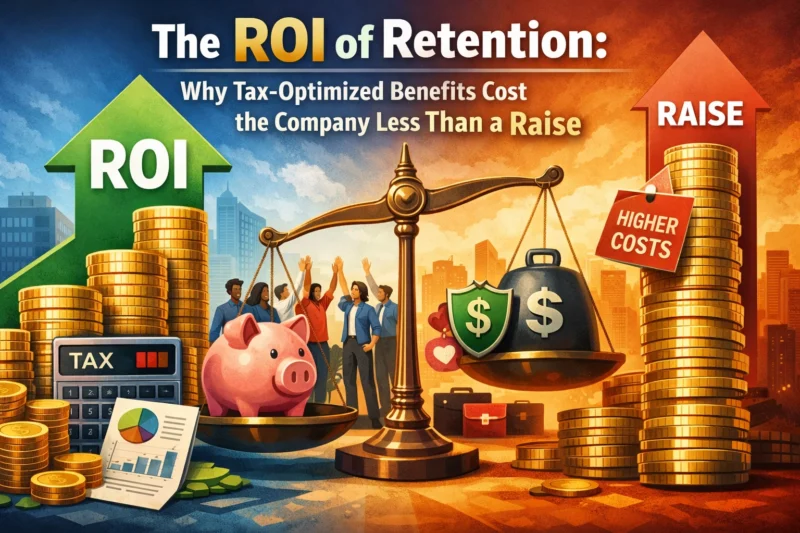
In business, it is an undeniable truth that it isn’t what you make: it’s what you keep. This principle applies to your personal wealth, your company’s bottom line, and, perhaps most importantly, your key employees’ take-home pay. Every business owner has felt the sting of the "Retention Hamster Wheel." You have a superstar: someone who knows your systems, your clients, and where the bodies are buried. They come to you with a job offer from a competitor for 15% more than their current salary. You want to keep them, so you match it. But here is the problem: to give that employee a $20,000 raise, it actually costs your company significantly more than $20,000, and the employee sees significantly less than $20,000 after the IRS takes its cut. Are you simply funding the government’s coffers while trying to save your own culture? There is a better way.


The Friction of the Traditional Raise


When you increase a key executive’s salary, you are choosing the least tax-efficient way to move capital from the business to the individual. First, the company pays payroll taxes on that increase. Then, the employee pays ordinary income tax: often at the highest marginal rate: plus state and local taxes. By the time that "raise" hits their bank account, it has been eroded by 40% or more. Worse yet, a raise offers very little in the way of "Golden Handcuffs." Once a salary is increased, it becomes the new baseline. It doesn’t necessarily incentivize the employee to stay for the next five or ten years; it just makes them more expensive today. What if you could provide a benefit that feels more valuable to the employee, costs the company less in the long run, and creates a powerful incentive for them to stay until retirement? Financial blueprint for NQDC and Phantom Stock plan design


Enter Tax-Optimized Executive Benefits


At Schiff Executive Benefits, we focus on moving away from "tax-heavy" compensation and toward "tax-optimized" wealth building. By using specialized structures, we can bypass the limitations of traditional 401(k) plans and create meaningful value for your inner circle.


1. Non-Qualified Deferred Compensation (NQDC)


Think of an NQDC plan as a "401(k) Mirror." For your highest earners, the standard IRS contribution limits are often a drop in the bucket. An NQDC plan allows them to defer a much larger portion of their compensation, pre-tax, into a plan where it can grow tax-deferred. For the company, this creates a liability on the books, but one that is tied to the employee’s continued service.


2. Phantom Stock Plans


You want your key people to think like owners, but you don't necessarily want to dilute your actual equity. Phantom Stock mimics the appreciation of your company's value. When the company hits certain milestones or the employee reaches a specific tenure, they receive a cash bonus equivalent to the "value" of the shares. It aligns their interests with yours without the legal headaches of actual stock transfers.


3. Split-Dollar Life Insurance


This is perhaps the ultimate "win-win." The company pays the premiums on a life insurance policy for the executive. The executive gets a massive death benefit for their family and, eventually, access to tax-free cash flow from the policy’s cash value. The company, meanwhile, is eventually reimbursed for every cent it paid in premiums. Hourglass on luxury desk representing full cost recovery model for executive benefits


The Full Cost Recovery Model: The Business Owner’s Secret


The biggest difference between a "raise" and a "benefit" is what happens to the money after it leaves your hand. When you pay a salary, that money is gone forever. It is a pure expense. However, many of the strategies we design for our clients utilize the Full Cost Recovery model. By using Corporate Owned Life Insurance (COLI) as the informal funding vehicle for these benefits, the business can actually recover the cost of the program. Here is how it works:


  1. The company establishes an executive benefit (like an NQDC).

  2. The company purchases a life insurance policy on the executive to fund that future liability.

  3. As the policy grows, it provides the liquidity to pay the benefit.

  4. Upon the executive’s eventual passing (even long after retirement), the death benefit is paid to the company tax-free, reimbursing the business for the premiums paid and the benefits distributed.


In this scenario, the "cost" of the benefit isn’t the cash outlay: it’s the opportunity cost of the money. Compare that to a salary increase, which is an absolute loss of capital. When you look at the math, tax-optimized benefits don't just cost less; they can eventually become cost-neutral.


The ROI of Peace of Mind


Financial stress is a silent killer of productivity. Research suggests that financial anxiety costs American employers billions annually in lost focus and engagement. By providing your key talent with a structured path to wealth that isn't eroded by immediate taxation, you aren't just giving them money: you're giving them security. When an executive knows their retirement is secure and their family is protected through a customized executive benefit solution, they aren't looking for the exit. They are looking at how to help you grow the business. Does your current compensation strategy feel like a sieve, where capital is constantly leaking out to the IRS? Are you worried that your best people are one headhunter call away from leaving? Executive expertise in tax-optimized benefit strategies for retention


Building Your Perfect Plan®


We live in an era of economic uncertainty. With national debt rising and tax laws in a constant state of flux, relying on "the way we’ve always done it" is a recipe for stagnation. You need a team of advisors who understand the technical nuances of the tax code and the human nuances of your business culture. At Schiff Executive Benefits, we don't believe in off-the-shelf products. We believe in The Perfect Plan®: a methodology designed to align your corporate goals with the personal financial needs of your leadership team. Whether you are looking to protect your business through a modernized buy/sell agreement or you want to ensure your top performers never have a reason to leave, the strategy must be tax-efficient to be effective.


Take the Next Step


You’ve worked too hard to build your business to let tax inefficiency and talent turnover hold you back. It’s time to stop overpaying for "raises" that don't produce a return and start investing in benefits that build long-term value. Let’s look at the math together. We can help you analyze your current payroll and benefit structure to see where the leaks are and how to plug them. Schedule a consultation with Matt Schiff via our Calendly link here to discuss how we can implement a tax-optimized retention strategy for your company. Grab a coffee, sit back, and let’s talk about how to protect your legacy and your people. The Perfect Plan Podcast banner with Matthew E. Schiff Want to hear more about these strategies in action? Check out The Perfect Plan® Podcast where we dive deep into the technical and emotional aspects of executive wealth and business succession.



Learn more: See why a Section 162 Bonus Plan can cost the company less than a raise.


In the world of business, success often creates its own set of challenges. It is a universal truth that the more an executive achieves, the more they find themselves bumping against ceilings designed for the average: not the exceptional. For the high-earning leaders driving your company’s growth, the standard 401(k) plan eventually becomes a bottleneck. When a top performer realizes they can only protect a fraction of their income for the future due to IRS contribution limits, the very tools meant to retain them begin to lose their edge.


This is where the 401(k) Mirror Plan: a sophisticated form of nonqualified deferred compensation (NQDC): comes into play. It is designed to pick up exactly where the qualified plan leaves off, restoring alignment between an executive’s value and their reward.


The "401(k) Gap": Why Traditional Plans Aren't Enough


For most employees, a 401(k) is the gold standard. However, for key talent, the IRS-mandated contribution limits (and the "highly compensated employee" testing) often mean they can only defer 3% to 5% of their total compensation. While their peers are saving 15% or more toward retirement, your top executives are left with a significant "retirement gap."


A 401(k) Mirror Plan solves this by allowing executives to defer a much higher percentage of their salary and bonus: often up to 75% or even 100%: into a plan that "mirrors" the look, feel, and investment options of the company’s existing 401(k).


Two business professionals in a collaborative discussion over a digital tablet in a bright, professional workspace, illustrating the ease and integration of the Mirror Plan.


Employer-Funded vs. Employee-Funded: A Dual Approach


The beauty of the 401(k) Mirror Plan lies in its flexibility. It isn't just a savings account for the executive; it is a strategic tool for the business owner.


1. Employee-Funded (The Deferral)


This allows the executive to manage their own tax liability. By deferring income now, they avoid current income tax on those dollars and the growth within the plan, paying taxes only when the funds are distributed (ideally in a lower tax bracket during retirement).


2. Employer-Funded (The Reward)


The company can use the mirror plan to provide "Restoration Matches." If an executive’s 401(k) match was capped because of IRS limits, the company can "restore" that match within the NQDC plan. Beyond simple restoration, companies often use these plans for discretionary contributions or Phantom Stock arrangements. This creates a powerful executive retention strategy, often referred to as "golden handcuffs," where benefits vest over time, ensuring your key people stay focused on the long-term success of the firm.


The Importance of Technical Precision: IRC 409A and 101(j)


When you move into the territory of nonqualified plans, the margin for error disappears. This is where IRC 409A becomes the most important acronym in your boardroom. Section 409A governs the timing of deferral elections and distributions; a single operational mistake can trigger immediate taxation and a 20% penalty for the executive.


At Schiff Executive Benefits, we don’t just read the rules: we were in the room when they were written. Our President, Matt Schiff, alongside Michael Goldstein, served as a ranking member of the AALU's NQDC Committee and helped draft the very laws that govern these plans today. This "insider" expertise is critical when designing a plan that must withstand IRS scrutiny.


We recently sat down with Dan Hogans, formerly of the IRS Treasury and a primary architect of the 409A regulations, on The Perfect Plan® Podcast to discuss these complexities. You can watch that interview here to understand why deep technical expertise is the only way to ensure your plan remains a benefit rather than a liability.


A close-up of a high-end fountain pen resting on a detailed financial report, symbolizing the precision and compliance required for 409A and 101(j) regulations.


Cost Recovery: The Employer’s Advantage


One of the most common questions business owners ask is: "How do we afford to promise these future benefits?"


Traditional 401(k) contributions are a straight expense to the company. However, a properly designed 401(k) Mirror Plan can be informally funded using Corporate Owned Life Insurance (COLI). This structure allows the employer to:


  • Offset the P&L impact of the deferred compensation liability.

  • Utilize tax-advantaged growth to fund the benefit payments.

  • Achieve full cost recovery, where the company is eventually reimbursed for every dollar spent on the plan, including the cost of money.


This turns a "cost" into an "asset" on the balance sheet, allowing the company to reward talent without draining long-term capital.


An Integrated Approach with Your Advisors


A 401(k) Mirror Plan does not exist in a vacuum. It must be woven into the fabric of your existing corporate structure and work in harmony with your CPA, Attorney, and TPA. We pride ourselves on being the technical "quarterback" for these solutions. We reverse-engineer the plan based on your specific goals: whether that is solving for a business buyout, protecting an employee’s family, or ensuring your top talent has 100% of the income they need when they retire.


We call this building The Perfect Plan®.


A group of diverse professionals sitting around a conference table in a high-rise office, representing the collaborative


Is Your Executive Team Protected?


If you haven't looked at your executive benefit structure in the last few years, you may be leaving your best people: and your company’s stability: exposed to unnecessary risk. Are you prepared for the "What Ifs"?


  1. What if your top talent leaves for a competitor who offers better deferral options?

  2. What if you are over-paying in taxes because you lack a sophisticated NQDC strategy?

  3. What if your current plan isn't actually compliant with 409A?


Restoring alignment and retention starts with a clear understanding of what your business is worth and how you want to reward those who help it grow.


Ready to see where you stand?
Take the first step toward securing your legacy and optimizing your executive rewards. Use our RISR Application to get a baseline valuation and see how a 401(k) Mirror Plan can fit into your broader corporate strategy.


Sit back, grab a coffee, and let’s talk about how to protect what you’ve built.


Restoring Alignment and Retention


Learn more: our complete guide to NQDC plans and how a 401(k) Mirror Plan works.


The pursuit of wealth preservation is a complex game where only the architects truly understand the rules, which they often write in a language of their own. In the world of high-level executive benefits, there is a universal truth: traditional compensation models eventually hit a ceiling. Whether it is the limitations of qualified plans or the tax drag on personal investments, the "status quo" often fails to protect the professional legacy you have worked decades to build.

When standard tools fall short, we turn to more sophisticated structures. Among the most powerful: and technical: of these is Split Dollar Architecture. Often described as the "Swiss Army Knife" of executive wealth design, Split Dollar is not a product; it is an architectural framework. But like any complex structure, its stability depends entirely on the precision of its foundation: specifically regarding IRC 409A and Sarbanes-Oxley compliance.

At Schiff Executive Benefits, we specialize in "Restoring Alignment and Retention" by reverse-engineering these solutions to match your company's culture and intent. If you are looking for the blueprint for The Perfect Plan®, you must first understand the structural integrity of the Split Dollar masterclass.

The Foundation: Collateral Assignment and the Loan Regime


In its most effective modern form, Split Dollar operates under the "loan regime." Under a Collateral Assignment Split Dollar (CASD) arrangement, the executive owns a life insurance policy, and the employer pays the premiums. The employer structures these payments as a series of loans to the executive, securing each one through a collateral assignment of the policy’s cash value and death benefit.

The beauty of this design lies in its tax efficiency. Because the premium payments are treated as a bona fide loan, they are not currently taxable to the executive as income. The loan typically bears interest at the Applicable Federal Rate (AFR). When the executive passes away or the policy is surrendered, the employer is repaid the loan balance from the policy proceeds, while the remaining cash value or death benefit provides a significant, tax-advantaged windfall for the executive or their estate.

Minimalist Executive Boardroom reflecting sophisticated wealth architecture

The 409A Trap: When "Planned Forgiveness" Becomes a Liability


The technical "gotcha" that keeps many advisors up at night is how these loans interact with IRC 409A. This is an area where our President, Matt Schiff, has a unique vantage point. In 2003 and 2005, Matt was "in the room where it happened," serving as a ranking member of the AALU’s NQDC Committee alongside Michael Goldstein. Together, they helped draft the very laws that govern nonqualified deferred compensation today.

The danger arises when a company decides, from the beginning, that they plan to forgive the Split Dollar loan at a future date: perhaps upon the executive’s retirement or after ten years of service.

Under IRC 409A, the moment you create, in turn, a "legally binding right" to a future benefit, you have entered the world of deferred compensation. If the loan agreement or a side letter promises that the loan will be forgiven based on a service requirement, that forgiveness no longer counts as a simple loan repayment; instead, it becomes a deferral of compensation.

If this is not structured with extreme technical precision: ensuring compliance with 409A’s strict rules on payment triggers, timing, and "deferral elections": the executive could face an immediate tax bill on the present value of that forgiveness, plus a soul-crushing 20% penalty and premium interest. At Schiff Executive Benefits, we don't just "guess" at these rules; we work with the architects who helped write them to ensure your plan is bulletproof.

The Sarbanes-Oxley Wall: The NEO Prohibition


While Split Dollar is a powerhouse for private companies and partnerships, the landscape shifts dramatically for publicly traded entities. This is primarily due to Section 402 of the Sarbanes-Oxley Act (SOX).

Section 402 generally prohibits public companies from making or "arranging" personal loans to their directors and executive officers (often referred to as Named Executive Officers, or NEOs). Because Collateral Assignment Split Dollar is, by definition, a loan-regime arrangement, it creates a massive compliance wall for the top five employees in a public company.

Precision technical documents on a luxury executive desk

For these NEOs, implementing a new CASD loan is typically a non-starter. Even modifications to existing legacy plans can trigger a SOX violation if the modification is seen as a "new extension of credit."

We recently explored these nuances in a deep-dive conversation on The Perfect Plan® Podcast with Dan Hogans, formerly of the IRS Treasury. Dan was one of the primary authors of the 409A regulations, and our discussion on how SOX 402 sidelines public NEOs from certain split-dollar strategies is essential viewing for any corporate board member or GC. You can watch that specific episode here to see the level of technical expertise we bring to every engagement.

Reverse Engineering: The SEB Integrated Approach


Most brokers start with a product. By contrast, we start with the "What If."

  • What if you lose your top talent to a competitor?

  • Perhaps your senior executives face a massive tax gap in retirement?

  • What if your current benefit structure is actually creating a compliance liability?


Our goal-oriented reverse engineering process looks at the end-game first. We work as a bridge between your internal stakeholders and your existing team of advisors: your accountants, attorneys, and TPAs. We don't replace your trusted experts; we provide the specialized technical "overlay" that ensures your Executive Benefits and COLI strategies are fully optimized for cost recovery and compliance.

Collaborative professional advisors in a high-end architectural setting

In a masterclass of wealth design, there is no room for "good enough." Whether you are navigating the complexities of IRC 409A / NQDC Plans or looking to implement The REBA Blueprint, the architecture must be sound.

Building Your Legacy, Your Way


Business succession, retention, and retirement shouldn't be left to chance. If you are managing the wealth and welfare of a high-performance team, you deserve a partner who was "in the room" when the rules were written.

Are you curious about the current value of your business or how a Split Dollar Architecture arrangement could fit into your broader retention strategy? We invite you to sit back, grab a coffee, and join us for a preliminary look at your professional landscape.

Start your Business Valuation and Planning Analysis here to see what is possible.


Explore more insights on our blog feed.

Let’s build it your way. Let’s build it to last.

Modern minimalist executive office representing technical authority


Learn more: Compare the Section 162 Executive Bonus Plan as a simpler alternative to split dollar.


Trust is the currency of the executive suite, but clarity is the exchange rate.


In the world of executive benefits, there is a quiet, expensive disconnect happening right under the noses of most boards and business owners. Companies are pouring millions into sophisticated compensation structures: Nonqualified Deferred Compensation (NQDC) plans, SERPs, and split-dollar arrangements: expecting these "golden handcuffs" to secure their most vital leadership talent. Yet, for many organizations, those handcuffs are unlocked. Not because the money isn't there, but because the message is missing.


If your top talent doesn't understand the value of what you’re giving them, did you actually give it to them?


As we navigate the complexities of 2026, the margin for error has evaporated. We are seeing a shift where "Strategic Discipline" is no longer just a buzzword for the balance sheet; it is the fundamental requirement for talent retention. At Schiff Executive Benefits, we’ve spent nearly a century (combined) watching this play out. We don’t just build plans; we reverse engineer them to match the specific culture and intent of the organization. Because a plan that doesn't resonate with the executive is just a liability looking for a home.


The Invisible Gap: The 29% Problem


Recent data from the NFP/AON executive benefits report highlights a startling reality that should keep every HR director and CEO awake tonight. Only 29% of executives actually understand their benefits.


Think about that for a second. If you ran a factory and only 29% of your machines were functioning, you’d be out of business by Tuesday. If only 29% of your clients paid their invoices, you’d be in court. Yet, in the high-stakes game of executive retention, we’ve somehow accepted that a minority of our key people understand the very tools meant to keep them on board.


A collaborative meeting scene with two professionals focused on a laptop in a bright conference room.


When an executive is "benefit-blind," the retention value of their compensation package drops to zero. They don't see a "wealth-building engine"; they see a confusing line item on a statement they don't know how to read. They see taxes they might have to pay later and rules they don't quite grasp. In their mind, that $500,000 deferred account is "monopoly money" until they can touch it.


This is the first of many "What Ifs" we tackle: What if your top talent leaves? If they don't understand the cost of walking away, they won't hesitate to do it.


The Prize: The 2.3x Loyalty Multiplier


Now, here is the good news: the "New Gold Standard." The same report found that when executives do understand their benefits, they are 2.3 times more likely to stay.


That is the 2.3x Loyalty Multiplier.


It’s not necessarily about adding more zeroes to the bonus check. It’s about adding clarity to the existing structure. When an executive can clearly visualize how their Nonqualified Deferred Compensation Plan bridges the gap between their current lifestyle and their retirement dreams, the psychological bond with the company transforms.


They stop looking at the recruiter’s LinkedIn message because they’ve done the math. They know exactly what they’d be leaving on the table. They understand that their company isn't just paying them; the company is investing in their future. That sense of "Ownership Feel" is what we strive for in every design.


2026 and the Era of Strategic Discipline


The economic landscape of 2026 has brought a new set of challenges. We’re moving past the era of "throwing money at the problem" and into an era of Strategic Discipline.


What does that mean? It means every dollar spent on executive benefits must be scrutinized for its impact on both the balance sheet and the executive’s psyche. It means ensuring full cost recovery for the employer while providing maximum value to the employee.


A conceptual image representing Strategic Discipline with a close-up of a perfectly aligned modern glass structure.


In a world of market volatility and regulatory shifts (looking at you, 409A and 101j), "Strategic Discipline" is the shield. We work alongside your existing advisors: your CPAs and attorneys: to ensure that the plan isn't just a shiny object, but a compliant, efficient, and durable part of your corporate architecture.


The Indispensable NQDC: Why 77% of Firms Are Doubling Down


If you’re looking for evidence that the market is leaning into these strategies, look at the financial sector. Currently, 77% of financial firms are using NQDC plans as an "indispensable" part of their talent strategy.


Why? Because in the financial world, they understand the time value of money and the power of tax-deferred growth. But more importantly, they understand risk. The greatest risk to a business isn't a market downturn; it’s the departure of the people who know how to navigate one.


NQDCs, including 401(k) Mirror plans, allow executives to save far beyond the meager limits of a traditional qualified plan. It levels the playing field for the high-earner who is often "discriminated" against by standard IRS limits. When you provide a way for your leaders to secure 100% of the income they need for retirement, you aren't just giving a benefit: you're providing peace of mind.


Reverse Engineering: The Schiff Way


Most consultants start with a product. They have a "plan in a box" and they try to shove your company culture into it. We think that’s backwards.


At Schiff Executive Benefits, we start with the intent.


  • What are you trying to achieve?

  • Do you want to reward longevity?

  • Do you want to protect the business from a "widow" scenario or a messy buyout?

  • Are you trying to create an "Ownership Feel" for people who don't actually own shares?


A confident executive leader in a blue suit representing trust and professional leadership.


Once we understand the "What If," we reverse engineer the solution. We look at the benefit structure, the funding mechanism (often using COLI for its tax advantages and cost-recovery potential), and most importantly, the communication strategy.


We don't just hand over a 50-page plan document and wish you luck. We help you tell the story. We help that 29% understanding jump to 90%. That is where the 2.3x Loyalty Multiplier lives.


Realizing the Dream Value


Our goal is to help you build a business that is not only successful but sustainable. That means planning for the five core "What Ifs" that every owner faces:


  1. Business with a widow: How do you keep the doors open and the legacy intact?

  2. Business buy-out: Is the transition funded, or is it a ticking time bomb?

  3. Top talent leaving: Have you activated your 2.3x loyalty multiplier?

  4. Senior exec retirement: Are you ready for the replacement cost efficiency gap?

  5. Running out of retirement money: Have you simplified the path to fixed cash flow?


An executive dashboard conceptualized as a sleek metallic tablet with abstract data visualizations.


By addressing these head-on with The Perfect Plan®, you move from a defensive posture to a strategic one. You aren't just reacting to the market; you are shaping your organization's future with Restoring Alignment and Retention as your guiding principles.


Come Join Us


If you’re wondering where your organization sits on the "Clarity Scale," or if you're worried your "golden handcuffs" have become more like "suggestive ribbons," let’s talk.


Sit back, grab your coffee, and let’s look at your current plan through the lens of Strategic Discipline. Are you getting the loyalty you’ve paid for? Or are you part of the 71% of companies whose executives are still in the dark?


Your best people are your greatest asset. It’s time they understood exactly why.


Check out our Articles and Forms for more deep dives into executive retention, or browse our past posts to see how we’ve helped others solve the "What Ifs."


It is a universal truth of human nature that we don't value what we don't understand. Think about it: if someone hands you a complex, high-tech gadget but doesn't provide the manual, it’s just a paperweight. If you’re paying for a subscription you never use because the interface is too confusing, you cancel it.


The same logic applies to the corner office.


Most business owners and board members believe that a high-value executive benefits package is the ultimate "golden handcuff." They pour thousands: sometimes millions: into sophisticated plans designed to attract, retain, and reward their top talent. They assume the sheer dollar value will speak for itself.


But there’s a quiet crisis brewing in the C-suite. A recent report from NFP (an Aon company) revealed a staggering statistic: only 29% of executives say they fully understand their benefits.


That means 71% of your leadership team is, quite literally, in the dark.


The Cost of Confusion: A Retention Risk You Can’t Afford


When an executive doesn't understand the long-term value of their executive benefits, they don’t see a "golden handcuff." They see a "maybe."


In an era where top talent is being courted by competitors daily, a "maybe" is a retention risk. If another company offers a slightly higher base salary but a simpler (or better communicated) bonus structure, your star player might walk. Not because your plan was worse, but because they didn’t realize yours was better.


Communication is the bridge between the expense you incur and the value they perceive. If 71% of your leadership is "mostly confused" or "has questions," you are spending dollars to buy loyalty that isn't actually being delivered.


A professional meeting between two executives in a modern, sunlit office lounge.


Why the Gap Exists (It’s Not Their Fault)


Let’s be honest: the world of executive retention strategies is dense. Between IRC 409A compliance, 101(j) regulations, phantom stock vesting schedules, and the intricacies of Corporate Owned Life Insurance (COLI), it’s a lot to digest.


Your executives are busy running your company. They don’t have time to become experts in non-qualified deferred compensation. When plans are presented as a 50-page technical manual of "what if" scenarios and tax code citations, the brain shuts down.


At Schiff Executive Benefits, we believe the problem isn't the complexity of the plan: it’s the lack of Strategic Discipline in how those plans are designed and communicated.


Restoring Alignment and Retention Through Reverse Engineering


Most consultants start with a product. They’ll show you a specific insurance policy or a pre-packaged deferred comp structure and try to squeeze your company culture into it.


We do the opposite. We start with the goal.


We ask the big questions: What keeps you up at night? What would happen if your top talent walked out the door tomorrow? What does "retirement" look like for your key leaders?


By reverse engineering the solution, we ensure the plan matches the company's culture and intent from day one. This is part of our commitment to Strategic Discipline. It’s about more than just numbers; it’s about ensuring every dollar spent is doing the job it was hired to do: keeping your best people happy, focused, and aligned with your long-term vision.


An executive desk with a high-end fountain pen and professional documents, symbolizing technical precision.


The Perfect Plan®: Clarity as a Competitive Advantage


We call our approach The Perfect Plan®. It’s not just a fancy name; it’s a framework designed to eliminate the "comprehension crisis."


When we design The Perfect Plan®, we look for the "Sweet Spot": where the employer’s goals and the employee’s needs overlap perfectly.


For the Employer, this means:


  • A plan that offers cost recovery.

  • Retention tools (Golden Handcuffs) that actually work.

  • Flexibility in design and vesting.

  • Protection against the loss of key personnel.


For the Employee, this means:


  • Tax-deferred growth and potential tax-free income in retirement.

  • Protection for their family through death or disability benefits.

  • A clear understanding of how their hard work today translates into wealth tomorrow.


When an executive can see, on one page, exactly how their plan grows and what it delivers, the "71% in the dark" problem disappears. Clarity replaces confusion. Security replaces uncertainty.


A modern architectural building lobby representing corporate stability and strategic discipline.


Compliance Isn't Optional


One of the reasons 71% of executives are confused is that many plans are built on shaky ground. If a plan isn't properly designed to comply with government regulations like IRC 409A or IRC 101(j), it creates a looming sense of "technical anxiety."


Executives are smart. They know that if the IRS comes knocking because a "Top Hat" filing was missed or a COLI policy wasn't properly documented, it’s their retirement on the line.


Our team has almost 100 years of combined experience. We helped draft some of the very regulations that govern this space. We work alongside your existing advisors: your accountant, your attorney, your TPA: to ensure that the technical side is bulletproof. When the "What If's" are answered with "We've already taken care of that," your leadership team can get back to what they do best: growing the business.


Is Your Leadership Team in the Dark?


If you haven't sat down with your key executives recently to ask them if they actually understand their benefits, you might be surprised by the answer.


Don't wait for an exit interview to find out your "Golden Handcuffs" were made of cardboard in the eyes of your top talent. Retention is about more than just the offer; it's about the execution and the ongoing alignment of goals.


Two executives collaborating in a high-end office environment.


Building a legacy requires a team that is fully "in the know." It requires a plan that feels like ownership, even to non-owners. It requires The Perfect Plan®.


Sit back, grab your coffee, and think about your team. Are they part of the 29%? Or are they looking for the exit sign because they can't see the value you've worked so hard to provide?


If you're ready to bridge the gap and restore alignment, we’re here to help. Come join us in the light.


Explore more of our strategies for executive retention strategies and see how we can help you plan for all of life's "What If's."


1 2 3 5