
Hi, How Can We Help You?
  • Planning for all of life's "What Ifs".

Category Archives: Retention


Technical Definition: Business Valuation (for Executive Planning)


In the context of executive benefits and succession planning, Business Valuation is the formal process of determining the economic value of a whole business or company unit. This valuation serves as the "strike price" or baseline for synthetic equity plans and buy-sell triggers.


Key Technical Attributes:


  • Methodologies: Commonly determined via Asset-Based, Market Comparison, or Discounted Cash Flow (DCF) approaches. For private companies, a multiple of EBITDA (Earnings Before Interest, Taxes, Depreciation, and Amortization) is a standard benchmark.

  • Compliance: For tax-advantaged executive plans (like Phantom Stock), valuations must often meet IRC Section 409A safe harbor standards to avoid "cheap stock" tax penalties.

  • Trigger Events: A formal valuation is required during "Change in Control" events, partnership buy-outs, or when settling NQDC liabilities upon an executive's separation from service.


It is a universal truth in the world of commerce that your business is more than just a source of income; for most owners, it is their life’s work, their greatest passion, and: by far: their biggest asset. You’ve spent years, perhaps decades, building something from the ground up. You’ve weathered economic shifts, navigated late-night anxieties, and celebrated the hard-won victories that come with entrepreneurship.


But as you look toward the future, a critical question likely keeps you up at night: What is it all actually worth?


Whether you are five years or fifteen years away from a transition, understanding the true value of your business is the starting point for every strategic decision you make. However, valuation is only one side of the coin. The other side: the side that often determines if a sale actually crosses the finish line: is the alignment and retention of the people who help you run it.


At Schiff Executive Benefits, we help business owners navigate the "What Ifs" of their professional legacy. Today, we’re diving into how a clear business valuation serves as the foundation for a retention strategy that ensures your key talent is aligned for a future sale and, just as importantly, stays to provide continuity long after the ink has dried.


The Starting Point: Knowing Your Number


You can’t manage what you don’t measure. Most business owners have a "gut feeling" about what their company is worth, but in a professional transaction, gut feelings don’t hold up under due diligence. A formal valuation is the baseline for your retirement planning, your estate strategy, and your executive benefit design.


Knowing your business's worth allows you to answer the first of our core "What If" questions: What if I want to execute a business buy-out or sale? Without a clear number, you are flying blind.


We believe that every owner should have access to high-quality valuation data without the initial hurdle of a multi-week, high-cost consulting engagement. That is why we provide a streamlined Business Valuation Tool right here on our site. It allows you to generate a secure report that gives you a professional snapshot of your company’s value.


A visual representation of a professional business valuation report on a modern tablet in a boardroom setting.


Once you have that number, the real work begins. You see, a business is only worth its valuation if the "engine" continues to run. And in most successful companies, that engine is powered by a small, select group of key executives.


The Alignment Gap: Why Valuation Isn’t Enough


Imagine you are a prospective buyer looking at two identical companies. Both have the same revenue, the same margins, and the same market share.


  • Company A has a CEO and a key management team who are there for the paycheck and could walk out the door the day the sale closes.

  • Company B has a management team that is contractually and financially aligned with the company’s long-term growth. They have "skin in the game" and a vested interest in the business’s success over the next five to ten years.


Which company would you pay a premium for?


This is where many owners fall short. They focus on the balance sheet but ignore the executive alignment. If your key talent leaves because they are uncertain about their future under new ownership, your business valuation can plummet overnight. This addresses another critical "What If": What if my top talent leaves right when I need them most?


Phantom Stock: The Bridge to a Successful Sale


To bridge the gap between today’s valuation and tomorrow’s sale, we often turn to a powerful tool: Phantom Stock.


Phantom Stock is a written contractual agreement that mimics actual stock ownership without the legal and administrative headaches of handing over real equity. It allows you to grant "units" to your key employees that track the value of the company.


Two executives shaking hands in a modern glass boardroom, representing the alignment of interests between an owner and key talent.


Here is how it works as a retention and sale-alignment tool:


  1. Granting Units: You assign a specific number of phantom shares to your key executives based on the current valuation.

  2. Vesting and Growth: As the business grows in value (tracked by your valuation tool), the value of those phantom units grows.

  3. The Sale Trigger: You can structure the plan so that a "Change of Control" (a sale) triggers a payout. This ensures that when you win, they win.

  4. Golden Handcuffs: By incorporating vesting schedules, you create a powerful incentive for them to stay through the transition period.


This creates what we call an "Ownership Feel" for non-owners. It aligns their daily decisions with your long-term goal: increasing the enterprise value for an eventual exit.


Ensuring Continuity: The Buyer’s Perspective


When a buyer looks at your company, they aren't just buying your equipment or your customer list; they are buying your future cash flow. That cash flow is dependent on continuity.


A buyer will often require that key employees stay on for two to three years post-sale to ensure a smooth transition. If you haven't planned for this, you might find yourself in a difficult spot where the buyer withholds part of the purchase price (an earn-out) based on employee retention.


By implementing a Phantom Stock plan or a Restricted Executive Bonus Arrangement (REBA), you provide the buyer with the security they need. You are essentially telling the buyer, "Don't worry, the people who built this success are financially incentivized to stay and help you grow it further."


This is the essence of Restoring Alignment and Retention. You are aligning the owner's exit goals with the employee's career goals and the buyer's growth goals.


The Technical Edge: The Perfect Plan®


Designing these programs requires more than just a good idea; it requires deep technical expertise to ensure compliance with government regulations like IRC 409A. If a Phantom Stock plan is structured incorrectly, it can lead to immediate tax penalties for your employees: the exact opposite of a "retention" tool.


This is why we developed The Perfect Plan®. It is our proprietary process for reverse-engineering executive benefits. We don't start with a product; we start with your goal.


  • Do you want to sell in 5 years?

  • Do you want to transfer the business to your children?

  • Do you want to ensure your spouse is taken care of if something happens to you?


We look at the tax implications, the funding mechanisms (often using Corporate Owned Life Insurance or COLI for cost recovery), and the legal framework to ensure the plan is "Perfect" for your specific culture and intent.


An IRS technical vibe image showing a fountain pen and legal documents, emphasizing the importance of regulatory compliance in executive benefit design.


Don't Leave Your Legacy to Chance


Running a business is hard enough. Planning for the day you leave it shouldn't be. By starting with a clear valuation and layering in a strategic retention plan, you protect your biggest asset and ensure that your key people are standing right beside you when you cross the finish line.


Whether you are looking for a 401K Mirror to allow executives to defer more income or a robust Phantom Stock plan to prepare for a sale, the time to start is now.


Your legacy isn't just about the numbers on a balance sheet; it's about the people who helped you write the story. Let’s make sure they are aligned for the next chapter.


A Confident team of executives walking through a modern corporate lobby, symbolizing continuity and success after a business transition.


Ready to see what your business is worth?
Sit back, grab your coffee, and use our Business Valuation tool today. Once you have your number, come join us for a conversation about how to protect it.


To explore more strategies on executive alignment and retention, visit our latest articles and insights here.




Success in business is rarely an accident; it is almost always a result of design. There is an old aphorism that says, "If you don't know where you are going, any road will get you there." In the world of executive benefits, many companies find themselves on a road paved with high-priced products that don't actually lead to their destination.


At Schiff Executive Benefits, we believe the road should be built only after the destination is clear. We call this philosophy "Reverse Engineering." It is the heartbeat of our signature approach: The Perfect Plan®.


When we sit down with a business owner or a CEO, we don't start with a catalog of insurance products. We start with the "What Ifs." What if your top talent leaves for a competitor? What if a key partner passes away unexpectedly? What if you run out of retirement money? By focusing on your specific goals and company culture first, we can work backward to build a benefit structure that actually fits.


The Philosophy of Reverse Engineering


Most financial consultants are product-driven. They have a hammer (a specific type of insurance or investment), so every retention problem looks like a nail. Reverse engineering flips that script. It’s about restoring alignment and retention by matching the plan to the intent.


Whether you are a small business with ten employees or a large corporation with thousands, the goal is the same: to attract, retain, and reward the people who make your success possible. To do that effectively, you need a plan that addresses four core pillars.


A minimalist executive desk symbolizing the clarity and control provided by the first pillar of The Perfect Plan®.


Pillar 1: Ownership Feel to Non-Owners


One of the biggest challenges for business owners is making key employees care as much as they do. You want them to have "skin in the game" without necessarily handing over voting shares or complicating your cap table.


Through strategies like Phantom Stock or sophisticated Restricted Executive Bonus arrangements, we can create a benefit that mirrors the growth of the company. When the business wins, the executive wins. This "Ownership Feel" provides the golden handcuffs that keep your best people from looking elsewhere, ensuring your business succession remains stable.


Pillar 2: 100% Protection to Employee Families


We often ask: "What if you had to do business with your partner's widow?" It's a sobering thought. Protection isn't just about the employee; it's about the security of their family and the continuity of the business.


The Perfect Plan® utilizes Corporate Owned Life Insurance (COLI) and Split Dollar programs to provide massive death benefit protection. This ensures that if the worst happens, the family is taken care of 100%, and the business has the liquidity to manage the transition without missing a beat. It’s about building it your way, ensuring that "What If" never becomes "What Now?"


A tranquil architectural space representing the 100% protection and security offered to executive families.


Pillar 3: 100% Income When Needed Most (Retirement)


The standard 401(k) is a wonderful tool, but for high-earning executives, it often falls short. Due to IRS contribution limits, a top-tier executive might only replace 20% or 30% of their income through a traditional plan. That's a "retirement cliff" no one wants to jump off.


This is where the SERP (Supplemental Executive Retirement Plan) becomes the hero of the story. By reverse engineering a deferred compensation strategy, we can bridge that gap, ensuring your key people have 100% of the income they need to maintain their lifestyle in retirement.


Pillar 4: Retirement Made Simple


Complexity is the enemy of execution. If an executive doesn't understand their benefit, they won't value it. The Perfect Plan® focuses on making retirement simple. We design plans with:


  • A Fixed Dollar Amount they can count on.

  • A Fixed Period for payouts.

  • A Fixed Rate of Return to eliminate market anxiety.

  • Fixed Cash Flow for the company.


When the numbers are clear and the promises are kept, retention follows naturally.


A serene infinity pool reflecting the peace of mind and simplicity of a well-engineered retirement plan.


Navigating the Technical Landscape


Building these plans isn't just about vision; it's about precision. We dive deep into the technical weeds of IRC 409A and IRC 101(j) to ensure every program is compliant and optimized for tax efficiency. For the primary technical resource behind this approach, visit our Perfect Plan Guide. Our team has nearly a century of combined experience, and we work hand-in-hand with your existing advisors: your accountant, attorney, and TPA: to ensure The Perfect Plan® integrates seamlessly into your corporate structure.


One of our favorite aspects of these designs is Full Cost Recovery. We believe a benefit shouldn't just be an expense on the balance sheet. By using institutional-grade COLI and other funding vehicles, the employer can often recoup every dollar spent on the plan, including the cost of money. It’s a win for the executive and a win for the bottom line.


Your Legacy, Designed Your Way


At the end of the day, your business is your legacy. The people who help you build it deserve more than a generic "off-the-shelf" benefit package. They deserve a plan that reflects the value they bring to the table every day.


Are you ready to stop buying products and start engineering solutions? Sit back, grab your coffee, and join us on The Perfect Plan® Podcast to learn more about how we can help you realize your dream value.


Let’s sit down and look at your "What Ifs." We’re here to help you guide your business through any environment, ensuring your best people stay right where they belong.


Contact Schiff Executive Benefits today to start reverse engineering your future.


To download the full NQDC Technical Blueprint mentioned in this post, visit our core Perfect Plan Guide.


Learn more: executive retention programs.


It is a universal truth in business that your company is only as strong as the people who keep the lights on and the wheels turning when you aren’t in the room. You’ve spent years: perhaps decades: building a culture, a brand, and a client list. But the real engine of that growth is your key talent. They are the architects of your strategy and the executors of your vision. So, here is the question that keeps many owners up at night: What if your top talent leaves? This isn't just a hypothetical scenario; it’s one of the core "What Ifs" we help business owners navigate every day. When a key executive walks out the door, they don't just take their laptop; they take institutional knowledge, client relationships, and a piece of your company’s momentum. Traditional retention tools like the 401(k) are great for the "rank and file," but for your high-earning leaders, they are often insufficient. The contribution caps are too low, and the "security" they provide isn't enough to stop a competitor from dangling a larger paycheck in front of them. You need something stronger. You need "Golden Handcuffs." But here’s the twist: you need the kind of handcuffs your executives actually want to wear. Enter the Restricted Executive Bonus Arrangement, or REBA.


What is a REBA? (Restoring Alignment and Retention)


At its simplest level, a REBA (also known as a Restricted Executive Bonus Plan or REBP) is a way for a company to provide a select group of key employees with a powerful, life-insurance-based benefit. Unlike a standard bonus that gets spent on a new car or a summer vacation, a REBA is designed for long-term security. The employer pays the premiums on a permanent life insurance policy that is owned by the employee. Because the employee owns the policy, they have a sense of security and "ownership feel" that a traditional deferred compensation plan can’t always match. However, since the company is footing the bill, they want to ensure that the "bonus" serves its purpose: keeping the executive at the desk. This is where the "Restricted" part of the name comes in. Through a Restrictive Endorsement, the employer limits the employee’s access to the policy’s cash value for a specific period of years. A high-end, sophisticated executive boardroom symbolizing stability and corporate success


The Mechanics: How the "Handcuffs" Actually Work


The beauty of the REBA lies in its simplicity and its technical elegance. It operates under IRC Section 162, which is the same tax code that allows businesses to deduct ordinary and necessary business expenses: like salaries and bonuses. Here is the step-by-step breakdown of how we design The Perfect Plan® using a REBA:


  1. The Policy: The employer selects a permanent life insurance policy (often a Corporate Owned Life Insurance or COLI product designed for high-cash-value growth). The employee is the owner and the insured.

  2. The Bonus: The company pays the annual premium directly to the insurance carrier. The IRS treats this payment as a bonus to the employee.

  3. The Tax Treatment: The premium payment is 100% tax-deductible for the employer as a compensation expense. On the flip side, however, the employee reports it as taxable income. (Many companies choose to "gross up" the bonus to cover the tax liability for the employee, making it a "zero-cost" benefit to them).

  4. The Restrictive Endorsement: This is the legal "handcuff." The employer and employee sign an agreement and then file it with the insurance company. It prevents the employee from borrowing against or withdrawing the cash value of the policy without the employer’s written consent for a set number of years (e.g., 10 years or until retirement).


If the executive leaves early? They take the policy with them, but they still can't touch that cash value until the restriction period expires. If they stay? They eventually gain full control over a significant pool of tax-advantaged capital.


Why Executives Actually Want This


Usually, when people hear the term "Golden Handcuffs," they think of something restrictive or punitive. But a REBA is a different beast entirely. It provides three things that every high-level executive craves: Security, Tax Efficiency, and Portability.


1. 100% Protection for Families


One of the "What Ifs" we often discuss is the "Business with a widow" scenario. If something happens to a key executive, their family needs to be protected. Because the REBA is funded with life insurance, there is an immediate, tax-free death benefit that goes to the executive's family from day one. This provides a level of peace of mind that a 401(k) balance simply cannot match in the early years.


2. Retirement Made Simple


We focus on retirement plans that offer a fixed cash flow and a fixed rate of return. The cash value inside a properly structured REBA grows on a tax-deferred basis. When the executive reaches retirement, they can often access that cash value through tax-free loans and withdrawals, providing them with a supplemental "tax-free" income stream. As we like to say, it’s about ensuring they don’t "run out of retirement money."


3. Personal Ownership


In many deferred compensation (409A) plans, the money technically belongs to the company, so the company’s creditors can reach it. In a REBA, the employee is the owner. Even with the restrictive endorsement, the policy is theirs. Therefore, even if the company goes bankrupt or changes hands, the policy stays with the executive. That is a massive security feature for a top-tier leader. A professional collaborative scene between a senior owner and a key executive


The Employer’s Perspective: Why It’s a Win


For the business owner, the REBA is an incredibly flexible tool.


  • Discriminatory Benefits: Unlike a 401(k), you don't have to offer this to everyone. You can pick and choose exactly which key people you want to reward and retain.

  • Simple Administration: There are no "Top Hat" filings, no complex annual ERISA reporting, and no 409A valuation headaches. It’s a bonus plan with an endorsement.

  • Cost Recovery: Because the premiums are deductible, the net cost to the company is lower than many other types of benefits.

  • Succession Planning: A REBA can even be tied into a buy/sell agreement or a succession plan, ensuring that the next generation of leadership has the liquidity they need when it’s time for the founder to exit.


Implementing Life Insurance for Executives


As Sonny mentions in his recent video, "Implementing Life Insurance for Executives," the key to success isn't just buying a policy; it’s the design. You have to reverse engineer the solution based on the intent. Are you trying to provide a retirement supplement? Are you looking for pure retention? Or is this part of a larger estate planning strategy for a partner? At Schiff Executive Benefits, we don't start with the product. We start with the goal. We work alongside your existing team of advisors: your CPA, your attorney, your TPA: to ensure the REBA fits perfectly into your corporate structure. We want to help you realize your dream value while keeping your best people happy and aligned with your long-term mission. A high-end fountain pen on a professional document, signifying the technical precision of a REBA


Is REBA Part of Your Perfect Plan®?


Every business reaches a point where "standard" isn't enough. When you are looking at the "What Ifs" of your business: whether it's the cost of replacing a senior exec or the fear of a key player being poached: you need a strategy that creates true alignment. The REBA is more than just a bonus; it’s a commitment. It tells your key people: "We value you, we want you here for the long haul, and we are willing to invest in your family’s future to prove it." If you are ready to move beyond basic benefits and start building a retention strategy that actually works, we invite you to sit back, grab your coffee, and join us for a conversation. Let’s look at your numbers, your culture, and your goals to see if a Restricted Executive Bonus Arrangement is the right fit for your organization. Building The Perfect Plan® doesn't happen by accident. Instead, it happens by design. Restoring Alignment and Retention. To see more about how we structure these programs, you can browse our latest insights on our posts feed or dive into the technical side of COLI strategies here. A serene retirement scene representing the ultimate peace of mind provided by a well-designed plan


Learn more: See how this fits into the bigger picture in our guide to executive benefits for business owners.


Learn more: Learn how a Section 162 Bonus Plan complements golden-handcuff retention strategies.


It is an undeniable truth in business that the talent you have today is the primary driver of the value you will realize tomorrow.
For many business owners, the greatest anxiety isn’t the market or the competition: it’s the "What If" of their top talent walking across the street to a competitor.


The traditional solution has always been equity. But giving up actual stock is a permanent decision for a temporary problem. It dilutes ownership, complicates voting rights, and introduces minority shareholder issues that can haunt a company for decades. This is why sophisticated organizations are turning to the technical architecture of a Phantom Stock plan.


At Schiff Executive Benefits, we specialize in reverse-engineering these solutions. A phantom stock plan is not just a "bonus"; it is a sophisticated executive retention strategy designed to mimic the full experience of ownership while protecting the integrity of the business’s capital structure.


The Blueprint: Mimicking Ownership Without the Mess


A phantom stock plan is a written contractual arrangement between the company and a key executive. It grants "units" that track the value of the company's common stock. If the company’s value goes up, the value of the executive’s account goes up. It creates an immediate alignment of interests: the executive only wins when the owner wins.


However, the "technical architecture" lies in how these units are defined. You can structure the benefit to equal the appreciation in value from the date of the grant, or you can design it to equal the entire fair market value of the units upon payout.


To create a true "ownership feel," the architecture can include:


  • Synthetic Dividends: Crediting the executive's account with cash equivalents every time a real dividend is paid to shareholders.

  • Synthetic Stock Splits: Adjusting the unit count in tandem with actual corporate restructuring.

  • Vesting Schedules: The ultimate "Golden Handcuffs," ensuring the reward is only realized after a significant period of service or upon reaching specific growth milestones.


Executive Desk


Navigating the IRC 409A Minefield


When you move into the realm of deferred compensation, you enter the jurisdiction of Internal Revenue Code Section 409A. This is where many DIY plans fail.


IRC 409A dictates exactly when and how payments can be made. If a phantom stock plan is "poorly designed," the IRS doesn't just ask for the taxes; they level a 20% penalty tax on the executive, plus interest. This effectively turns a retention tool into a reason for your top person to quit.


Technical compliance requires rigid definitions of "Trigger Events." These typically include:


  1. A specific future date (e.g., a 5-year cliff).

  2. Separation from service (Retirement).

  3. Death or Disability.

  4. Change in Control (The sale of the company).


Our role is to ensure the plan is "Top Hat" compliant, meaning it is maintained for a "select group of management or highly compensated employees." This status allows the plan to avoid the most burdensome requirements of ERISA, provided a simple one-time filing is made with the Department of Labor.


The Financial Engine: Informal Funding and Cost Recovery


A phantom stock plan is a liability on the company's balance sheet. As the company grows: which is the goal: the obligation to the executive grows. A successful plan can eventually create a multi-million dollar cash flow requirement that the business might not be prepared to handle out of operating cash.


This is where the COLI (Corporate Owned Life Insurance) strategy becomes the engine of the plan. By using COLI, the business can informally fund the future liability.


The technical benefits of this architecture include:


  • Tax-Deferred Growth: The assets inside the COLI policy grow without current taxation, matching the deferred nature of the phantom stock obligation.

  • Cost Recovery: When properly structured, the death benefit of the policy can eventually reimburse the company for every dollar ever paid out in benefits, plus the cost of the premiums. We call this full cost recovery.

  • Balance Sheet Neutrality: The cash value of the policy acts as an asset that offsets the growing phantom stock liability, keeping the company's financial statements healthy for future financing or a sale.


Modern Architecture


Realizing the Dream Value


What keeps you up at night? For many owners, it’s the fear that they are building a "house of cards" that will collapse if their right-hand person leaves. A technically sound phantom stock plan restores alignment. It tells your key people: "Your future is tied to my future. When I realize the dream value of this business, so do you."


This isn't just about a paycheck; it's about restoring alignment and retention. It’s about building a legacy where the people who helped you build the mountain get to enjoy the view from the top.


Designing Your Perfect Plan®


At Schiff Executive Benefits, we don't believe in "off the shelf" products. We reverse-engineer our solutions based on your specific culture, your specific "What Ifs," and your specific long-term exit strategy.


Whether you are looking to provide 100% protection to your employee's families or ensure you have 100% income when you need it most, the technical design of your executive benefits is the difference between a successful transition and a legal nightmare.


If you’re ready to stop worrying about your key talent leaving and start focusing on growth, come join us. Let’s look at your architecture.


Sit back, grab your coffee, and discover how we build The Perfect Plan®.


Learn more: how Phantom Stock creates an ownership feel and executive retention programs.


Business success depends on keeping your best people aligned for the long term.
If your company already offers a 401(k), you may still have a gap for highly compensated leaders who need more flexibility, more tax-deferred savings, and stronger executive retention incentives.


If you are running a successful company, you likely have a 401(k) plan in place. It’s the standard. It’s expected. But for your top-tier executives: the ones whose decisions move the needle by millions: the 401(k) is often more like a glass ceiling than a launchpad.


This is why the conversation in C-suites across the country has shifted toward Non-Qualified Deferred Compensation (NQDC) plans, often referred to as the "401(k) Mirror."


At Schiff Executive Benefits, we specialize in Restoring Alignment and Retention. We help you look at the "What Ifs" that define a business's legacy. What if your top talent leaves for a competitor? What if your senior executives can’t afford to retire when they’re ready, creating a bottleneck in your leadership pipeline?


Let’s dive into why NQDC participation is the secret weapon for the modern executive team.


The Problem: The "Success Ceiling" of the 401(k)


The 401(k) is a fantastic tool for the general workforce, but for high-income earners, it’s mathematically insufficient. Because of IRS contribution limits ($23,500 in 2026, plus catch-ups), a top executive earning $400,000 or $500,000 is restricted to saving a tiny fraction of their income on a tax-deferred basis.


Furthermore, "discrimination testing" (ADP/ACP testing) often results in these key players getting their contributions refunded because the rest of the workforce didn't participate at a high enough level. There is nothing quite as frustrating for a key executive as receiving a check back from their 401(k) at the end of the year, along with a tax bill they weren't expecting.


This is where the NQDC plan steps in to mirror: and then shatter: those limits.


Executive strategic planning session focused on NQDC plan design, 401(k) Mirror benefits, and executive retention strategy


What Exactly Is a 401(k) Mirror?


Think of an NQDC plan as a "super-charged" extension of your existing retirement program. It allows your key talent to defer a much larger portion of their compensation: sometimes up to 50%, 75%, or even 100% of their salary and bonus: into a tax-deferred vehicle.


How it works:


  1. Selection: You choose a select group of management or highly compensated employees ("Top Hat" group).

  2. Deferral: The executive chooses how much of their compensation they want to defer before they earn it.

  3. Growth: Those funds are invested (often mirroring the same investment options in the 401(k)) and grow tax-deferred.

  4. Distribution: The executive selects a future date for distribution: perhaps at retirement, or even for a specific milestone like a child’s college tuition.


By removing the IRS contribution caps, you allow your most valuable people to save in a way that actually matches their lifestyle and income level.


Why Your Key Talent Wants This (And Why You Should Too)


Recruiting and Retention: The "Golden Handcuffs"


In a competitive landscape, talent doesn't just want a paycheck; they want a path to wealth. An NQDC plan is a powerful recruiting tool. When you offer a plan that allows an executive to build a massive, tax-deferred nest egg that isn't available at the firm down the street, you've created a significant reason for them to join: and stay.


We often design these plans with employer contributions that have specific vesting schedules. This creates "Golden Handcuffs." If the executive leaves early, they leave money on the table. This directly addresses one of our core 5 What Ifs: What if your top talent leaves?


Tax-Deferred Growth With No Limits


For a high-earner, taxes are often the single biggest hurdle to wealth accumulation. By deferring income into an NQDC plan, the executive isn't just saving money; they are shifting that income from their current high tax bracket into a future, potentially lower tax bracket during retirement.


Unlike a 401(k), there is no "maximum" contribution set by the IRS for NQDC plans. This allows for truly personalized investment strategies that can help an executive realize their "dream value" for retirement.


Executive team collaboration around a 401(k) Mirror and NQDC plan design to strengthen executive retention


Solving the 401(k) Testing Headache


By providing an NQDC plan, you take the pressure off your 401(k). If your HCEs (Highly Compensated Employees) are deferring into the "Mirror" plan, they are less likely to trigger a failed non-discrimination test in the qualified plan. It’s a win for the executive and a win for the plan administrator.


Why NQDC Plan Design Matters for Compliance


The Technical Guardrails: IRC 409A Compliance


While NQDC plans offer incredible flexibility, they aren't a "do-it-yourself" project. They are governed by IRC 409A, a set of rigid IRS rules regarding the timing of elections and distributions.


Failing to comply with 409A can result in immediate taxation of all deferred amounts, plus a 20% penalty and interest. This is why we focus so heavily on the technical design and compliance of every plan we touch. We ensure your program is designed to comply with government regulations from day one, so your "What Ifs" don't become "What Nows."


Integrating The Perfect Plan®


At Schiff Executive Benefits, we don't believe in "off-the-shelf" solutions. We reverse-engineer your benefits based on your specific company culture and intent. This is the philosophy behind The Perfect Plan®.


Whether we are looking at COLI (Corporate Owned Life Insurance) as a way to informally fund these liabilities or exploring 409A/NQDC Plans specifically, our goal is to ensure the plan matches the company's long-term financial health.


Executive wealth accumulation illustration tied to NQDC plan design, 401(k) Mirror funding, and long-term executive retention


Addressing the "What Ifs"


When we sit down with business owners, we always come back to the five core questions that define professional legacy:


  1. What if you end up in business with your partner’s widow?

  2. What if you need to buy out a partner unexpectedly?

  3. What if your top talent leaves?

  4. What if a senior executive can’t afford to retire, and you can't afford to replace them?

  5. What if you run out of money in retirement?


NQDC participation is a direct answer to questions 3 and 4. It provides the incentive for talent to stay, and it provides the financial bridge for senior leaders to retire gracefully, making room for the next generation of leadership without causing a financial strain on the company.


The Bottom Line


Is your current benefit structure actually rewarding your most valuable people, or is it holding them back?


If you are a business owner or a key executive, it’s time to stop looking at the 401(k) as the finish line and start looking at it as the baseline. NQDC plans offer a sophisticated way to attract, retain, and reward the people who make your business possible.


The world of executive benefits can be complex, but it doesn't have to be overwhelming. It’s about taking that first step toward a more secure and aligned future.


Business owner reflecting on executive retention, retirement readiness, and NQDC plan design outcomes


So, sit back, grab your coffee, and think about your team. Are they aligned? Are they protected? Are they incentivized to see your vision through to the end?


If you're ready to explore how a custom-tailored NQDC plan could fit into your organization, we invite you to come join us. Let’s work together to build your version of The Perfect Plan®.


Schiff Executive Benefits specializes in reverse-engineering executive benefit solutions that help businesses thrive. With nearly 100 years of combined experience, we work alongside your existing team of advisors to ensure your programs are technically sound and culturally aligned.


Learn more: our complete guide to NQDC plans.


Talent is the only asset in your business that walks out the door every evening. For any CEO or business owner, the most persistent "universal truth" is that your company’s value is inextricably linked to the handful of key people who drive your vision, manage your risk, and protect your margins.


But what happens when the tools you use to reward them: like the standard 401(k): simply aren't enough?


If you are leading a successful corporation or partnership, you’ve likely hit the "401(k) cap problem." Your top earners are restricted by government-mandated contribution limits, meaning their retirement replacement ratio is significantly lower than that of the rank-and-file staff. This creates a misalignment. It creates a "retention risk."


At Schiff Executive Benefits, we focus on Restoring Alignment and Retention. One of the most powerful tools in our arsenal for solving this is the Supplemental Executive Retirement Plan, or SERP.


What is a SERP, Really?


A Supplemental Executive Retirement Plan (SERP) is a non-qualified, employer-funded retirement plan designed to provide additional benefits to a select group of management or highly compensated employees. Unlike a 401(k), a SERP is "discriminatory": meaning you can choose exactly who gets it and how much they receive.


Most people think of the traditional "Defined Benefit" (DB) SERP as a "gold-plated" pension that only Fortune 500 companies can afford. They see it as a massive liability on the balance sheet that eventually drains the company's cash flow.


That is the old way of thinking.


When we design The Perfect Plan® for our clients, we look at the SERP through a different lens: Cost Recovery.


The Problem: The High Cost of Talent


What keeps you up at night? Is it the thought of your Chief Operations Officer being poached by a competitor? Or is it the looming cost of replacing a senior executive who is five years away from retirement?


The "What Ifs" are real:


  1. Top talent leaving: If your key VP leaves for a 20% raise elsewhere, what was the "glue" keeping them to your chair?

  2. Senior exec retirement/replacement cost efficiency: How do you fund a retirement promise without hurting your future EBITDA?


A traditional SERP is a promise to pay a future benefit. If you don’t "fund" that promise, it’s a mounting debt. If you fund it poorly, it’s a drag on your earnings.


The Solution: The Schiff Executive Benefits Reverse-Engineered SERP


At Schiff Executive Benefits, we specialize in a core strategy: Reverse-engineering the SERP so the company can recover 100% of the cost.


How is this possible? It comes down to the marriage of smart plan design and institutional-grade Corporate Owned Life Insurance (COLI).


The Mechanics of 100% Cost Recovery


The goal is to create a "zero-cost" benefit over the long term. Here is how we break it down for our clients:


  • Step 1: The Promise. The company agrees to pay the executive a specific annual benefit (e.g., $100,000 a year for 15 years) starting at age 65, provided they stay with the firm.

  • Step 2: The Funding. The company purchases a COLI policy on the executive’s life. The company is the owner and beneficiary.

  • Step 3: The Growth. The cash value within the COLI policy grows tax-deferred. The company can use the policy’s cash flow or its own general assets to pay the retirement benefit.

  • Step 4: The Recovery. Upon the executive’s eventual death (long after retirement), the company receives the tax-free death benefit.


When structured correctly within The Perfect Plan®, the total death benefit is designed to equal:


  1. All the premiums the company paid into the policy.

  2. All the after-tax retirement benefits paid to the executive.

  3. The "cost of money" (the interest the company could have earned on that cash elsewhere).


This is why we call it a Cost Recovery SERP. You are rewarding your talent today with a benefit they can't get elsewhere, and you are securing your company’s balance sheet for tomorrow.


Confident executive in a corner office reflecting the security and success of a Supplemental Executive Retirement Plan.


Why a SERP vs. a Mirror Plan?


We often talk about the Mirror Plan or 401(k) Excess Plan. While Mirror Plans are excellent for allowing executives to defer their own salary, a SERP is an employer-funded "stay-put" bonus.


Think of it this way: A Mirror Plan is a convenience; a SERP is a golden handcuff.


In an era where the "War for Talent" is no longer a metaphor but a daily reality, a SERP sends a clear message: “We value your contribution so much that we are willing to invest in your future, provided you continue to invest in ours.”


The "What Ifs" and Benefit Security


When we consult with boards and owners, we often walk through the five core "What If" questions. For a SERP, two, in particular, stand out:


What if the business faces a buy-out?
A properly designed SERP includes "Change in Control" provisions. It ensures that the promise you made to your key talent is honored even if the company changes hands. This actually increases the value of your company to a buyer because it guarantees that the key leadership team will stay through the transition.


What if the executive runs out of retirement money?
The SERP provides a guaranteed floor. Unlike a 401(k) which is subject to market volatility at the exact moment an executive might need to withdraw, a DB SERP is a fixed obligation. It provides peace of mind that a lifetime of hard work has resulted in true financial security.


Modern professional boardroom in a clean AI-generated scenario with polished conference table and sophisticated corporate atmosphere.


Beyond Banks: SERPs for Corporations and Partnerships


While we have a deep history in the banking world with BOLI, these strategies are just as vital for private corporations, law firms, and manufacturing entities.


Whether it is a 409A plan or a complex Restricted Executive Bonus Arrangement (REBA), the goal remains the same: Attract, Retain, and Reward.


For partnerships, a SERP can be the perfect bridge for a buy/sell arrangement. It allows the firm to fund the exit of a senior partner without draining the operating capital needed by the junior partners to grow the business.


Is Your Executive Benefit Package Competitive?


The market is moving fast. Economic shifts and changes in tax code (like the implications of Section 4960 for tax-exempt orgs or changing corporate rates) mean that a plan designed five years ago might be obsolete today.


Are you still using a "commodity" plan, or are you using The Perfect Plan®?


Architecture matters. Most brokers will sell you a product: a life insurance policy or a mutual fund platform. We provide the architecture. We reverse-engineer the outcome you want: 100% cost recovery and a happy, loyal executive team: and then we build the financial engine to get there.


Securing Your Legacy


At the end of the day, executive benefits are about more than just numbers on a spreadsheet. They are about the professional legacy you are building. They are about ensuring that the business you’ve poured your life into continues to thrive long after you’ve stepped away from the daily grind.


By implementing a Cost Recovery SERP, you aren't just spending money on "benefits." You are moving money from a taxable pocket to a tax-advantaged pocket, creating an asset that offsets a liability, and ensuring your best people are aligned with your long-term goals.


If you’re wondering if your current plan is truly optimized: or if you’re realizing for the first time that your 401(k) is leaving your top people behind: let’s talk.


Sit back, grab your coffee, and let’s look at your current architecture. We can help you determine if you’re on the right path or if it’s time to move toward a more secure, cost-effective future.


Come join us at Schiff Executive Benefits. Let’s start Restoring Alignment and Retention in your organization today.


Learn more: executive retention programs.


A business is only as strong as the people who lead it. It is an old aphorism, but in the modern economy, it has never been truer. Your executive team isn’t just a group of employees; they are the institutional memory, the strategic engine, and often the face of your company to your clients.


Yet, many CEOs and business owners find themselves staring at the ceiling at 2:00 AM, haunted by one of our core "What If" questions: What if my top talent leaves?


If you are relying on standard benefits to keep your "MVPs" from jumping ship to a competitor, you are likely making critical errors that leave your flank exposed. At Schiff Executive Benefits, we specialize in moving beyond "commodity" products and into The Perfect Plan® architecture.


Here are the seven most common mistakes we see in executive retention: and how a Restricted Executive Bonus Arrangement (REBA) can fix them while Restoring Alignment and Retention.


1. Relying on the 401(k) to Do the Heavy Lifting


The most common mistake is assuming that a robust 401(k) plan is enough to satisfy a high-earning executive. It isn’t. Due to IRS contribution limits, your top earners are often "capped out" long before they reach a deferral percentage that supports their lifestyle in retirement.


When an executive realizes they can only save a fraction of what they need, they start looking for opportunities elsewhere that offer more sophisticated wealth-building tools. They feel the "401(k) cap problem" personally. If you aren't offering a way to bypass these limits, you are effectively telling your best people that their growth has a ceiling.


Executive at a desk reviewing retirement planning documents in a modern office.


2. "Golden Handcuffs" That Are Made of Glass


Many retention plans are designed with vesting schedules intended to act as "Golden Handcuffs." However, if those handcuffs are easily broken or "bought out" by a competitor, they are essentially made of glass.


Standard bonus structures are often too liquid or too short-term. A competitor can simply offer a sign-on bonus that covers the "lost" equity or deferred compensation an executive leaves behind. To truly retain talent, the benefit must be structured so that the cost of leaving is too high to ignore, and the reward for staying is too valuable to walk away from.


3. Ignoring the "Ownership Feel"


There is a massive psychological difference between an employee and a stakeholder. Most retention plans feel like a transaction: "If you do X, we pay you Y."


Mistake number three is failing to provide "Ownership Feel." When an executive feels like they have a personal stake in a tangible asset: one that grows and provides security for their family: their loyalty shifts. A Restricted Executive Bonus Arrangement (REBA) creates this feeling by using a cash-value life insurance policy owned by the executive but restricted by the company. It’s theirs, but they have to earn the right to access it.


4. Tax Inefficiencies for the Executive


High-net-worth individuals are hyper-sensitive to taxes. If your retention strategy involves simply cutting a larger check, half of that "retention" is going straight to the IRS.


Many traditional deferred compensation plans result in a massive tax bill down the road. Executives are looking for ways to build tax-advantaged wealth. If your plan doesn't account for the "tax drag" on their net worth, it isn't as valuable as you think it is. REBAs utilize the tax-advantaged nature of life insurance to provide potential tax-free income in retirement: a benefit that resonates deeply with sophisticated leaders.


Senior executive reviewing a benefits strategy folder in a private office.


5. Plans That Are an Expense, Not an Investment (No Cost Recovery)


From the company's perspective, the biggest mistake is treating executive benefits as a "sunk cost." Most bonuses leave the balance sheet and never come back.


In a world of tightening margins, CFOs are rightfully wary of adding massive fixed expenses. This is where many traditional plans fail. They satisfy the "retention" goal but hurt the "profitability" goal. A properly structured The Perfect Plan® focuses on Cost Recovery. By using Corporate Owned Life Insurance (COLI) or structured REBAs, the company can often recover the entire cost of the program, including the time value of money, upon the executive's death or retirement.


6. The "One-Size-Fits-All" Commodity Trap


If you bought your executive benefit plan "off the shelf" from a carrier or a generalist broker, it’s a commodity, not an architecture.


Executives know when they are being given a "standard" package. It feels impersonal. The mistake here is failing to align the benefit with the specific needs of the business and the individual. Are you a corporation, a partnership, or an ESOP? Each requires a different structural approach. Whether it's Split Dollar or a Mirror Plan, the plan must be bespoke to be effective.


7. Failing to Secure the Business Against the "What Ifs"


Retention is only half the battle. The final mistake is failing to realize that "retention" and "succession" are two sides of the same coin.


What happens if that executive doesn't leave for a competitor, but instead passes away prematurely? Does the business have the liquidity to find a replacement? Does the executive’s family have security? If your retention plan doesn't also function as a succession or security tool, you have a massive hole in your corporate strategy.


Two business partners discussing continuity planning in a conference room.


How REBA Fixes the Retention Crisis


The Restricted Executive Bonus Arrangement (REBA) is the "Swiss Army Knife" of executive benefits. It addresses every mistake listed above by balancing the needs of the employer and the executive.


How It Works:


  1. The Bonus: The employer pays a bonus to the executive, which the executive uses to pay premiums on a cash-value life insurance policy.

  2. The Restriction: The executive owns the policy, but the employer and executive enter into a "Restrictive Covenant." This prevents the executive from accessing the cash value or surrendering the policy for a set period (the "Golden Handcuffs").

  3. The Tax Advantage: While the bonus is taxable income to the executive (often "doubled up" by the employer to cover the tax), the growth inside the policy is tax-deferred, and retirement income can be accessed tax-free via policy loans.

  4. Cost Recovery: The plan can be designed so that the employer is named as a beneficiary for the amount of the premiums paid, ensuring the company is made whole.


Why REBA Wins:


  • Ownership Feel: The executive sees their name on the policy. It is a portable, tangible asset that they "earn" over time.

  • Security: It provides an immediate death benefit for the executive’s family, addressing the "What If" of an untimely passing.

  • No IRS Caps: Unlike 401(k)s, there are no government-mandated contribution limits on these arrangements.

  • Alignment: It aligns the executive's long-term wealth with their continued service to your company.


Senior executive reviewing a benefits strategy folder in a private office.


Restoring Alignment and Retention


At Schiff Executive Benefits, we don't believe in just selling products. We believe in building The Perfect Plan®.


If you are worried about your top talent leaving, or if you feel like your current benefit spend is disappearing into a black hole with no "Ownership Feel" for your team, it’s time to audit your strategy. Are you making these seven mistakes? Are your "Golden Handcuffs" actually keeping people in their seats, or are they just an expensive suggestion?


Don't wait until a headhunter calls your VP of Operations to realize your retention plan is lacking. The cost of replacing a key executive can be 2x to 3x their annual salary: not to mention the lost momentum and client relationships.


We invite you to sit back, grab your coffee, and think about the legacy you are building. If you want to explore how a REBA or a COLI-funded strategy can protect your business and reward your best people, come join us for a conversation.


Let’s ensure that when you ask the "What If" questions, you already have the answers.


Ready to secure your team? Contact us today to begin architecting your solution.


Learn more: the REBA blueprint for executive retention and executive retention programs.


Learn more: See how this fits into the bigger picture in our guide to executive benefits for business owners.


It is often said that the only two certainties in life are death and taxes. In the world of high-level business, we might add a third: the constant effort of your competitors to recruit your most talented leaders. You have spent years building your company, refining your culture, and hand-picking a team that executes your vision. But as tax brackets climb and the cost of replacing a key executive continues to skyrocket, you may find yourself asking: Is there a way to reward my best people without the tax man taking half, and while ensuring they stay for the long haul?


At Schiff Executive Benefits, we believe the answer shouldn't be a compromise. You shouldn't have to choose between corporate tax efficiency and meaningful executive rewards. We have spent two decades refining a strategy that addresses these exact anxieties. We call it The Perfect Plan®.


The Great Tax Chokepoint


Most successful business owners operate within a system that penalizes success. You pay your executives a high salary, and they are immediately pushed into the highest possible tax bracket. You offer a bonus, and nearly half of it vanishes before it ever hits their bank account. Meanwhile, qualified plans like 401(k)s have strict contribution limits that barely scratch the surface of what a high-earning executive needs for a secure retirement.


This creates a "tax chokepoint" that limits the effectiveness of your compensation strategy. When your rewards are inefficient, your executive retention suffers. Executives start looking for the next big "sign-on bonus" elsewhere because their current "take-home" pay feels stagnant relative to their contribution.


The Perfect Plan® was designed to shatter this chokepoint. It is built on a specific economic architecture: Contributions go in Pre-Tax, the Benefits grow Tax-Deferred, and the Benefits are eventually paid out Tax-Free.


![Executive team discussing retention strategy in a modern office]


The Three Pillars of The Perfect Plan®


To understand why The Perfect Plan® is a game-changer for executive benefits, you have to look at the three pillars of its financial structure.


1. Contributions are Pre-Tax


In a traditional compensation model, every dollar you pay an executive is taxed immediately at the corporate level (if it’s not a deductible expense) or at the individual level (as income). The Perfect Plan® utilizes sophisticated deferred compensation structures and COLI (Corporate Owned Life Insurance) strategies to ensure that the money being set aside for the future isn't eroded by current taxes. This allows more capital to work for the executive from day one.


2. Benefits Grow Tax-Deferred


Compound interest is the eighth wonder of the world, but taxes are its greatest enemy. When your executive's retirement or retention fund is growing in a taxable environment, a portion of that growth is shaved off every single year. In The Perfect Plan®, the assets grow within a tax-advantaged shell. This means the growth is reinvested in its entirety, accelerating the wealth-building process significantly compared to traditional investments.


3. Benefits are Paid Tax-Free


This is the "Holy Grail" of financial planning. Most retirement plans (like a traditional IRA or 401(k)) are simply "tax-deferred," meaning the IRS is just waiting for the executive to retire so they can take their cut of the much larger pie. The Perfect Plan® aims for a tax-free distribution. This provides the executive with maximum purchasing power during their retirement years and provides the company with a highly efficient way to fulfill its promises.


![Senior executive reviewing long-term retirement planning with an advisor]


Restoring Alignment and Retention


A common problem we see is a "misalignment" between what the business owner wants and what the executive needs. The owner wants the executive to think like an owner: to focus on the long-term health of the company. The executive, however, is often focused on the short-term: their annual salary and their immediate tax bill.


We use the tagline Restoring Alignment and Retention because The Perfect Plan® bridges this gap.
By using NQDC (Non-Qualified Deferred Compensation) and Restricted Bonus Arrangements, we create "Golden Handcuffs" that are actually made of gold, not just iron. We align the executive's future wealth with the company's future success.


Have you ever wondered what would happen if your top talent walked out the door tomorrow? This is one of our core "What If" questions. The cost to replace a high-level executive is often 2x to 3x their annual salary when you factor in search fees, lost productivity, and the "knowledge drain." The Perfect Plan® provides a structured, secure way to make sure they stay.


![Business owner and leadership team discussing succession and retention]


The 9 Considerations of The Perfect Plan®


Designing The Perfect Plan® isn't about picking a product off a shelf. It is a consultative process where we evaluate nine critical considerations tailored to your specific business:


  1. Deduction Timing: We analyze when the tax deduction is most valuable to your corporation.

  2. Employee Deferrals: We determine how much of their own pay the executive should be able to set aside.

  3. Employee Retention: We build vesting schedules that ensure long-term loyalty.

  4. Design Flexibility: Unlike rigid 401(k) plans, The Perfect Plan® is highly customizable.

  5. Ownership-Style Benefits: We can simulate the benefits of ownership (like phantom stock) without actually diluting your equity.

  6. Discretionary Deferrals: The company maintains control over the level of contributions.

  7. Defined Benefits: We create clear, predictable outcomes for the executive’s retirement.

  8. Asset and Income Control: You maintain control over the assets and the timing of distributions.

  9. Company Value and Succession: We ensure the plan supports your eventual exit strategy or business succession.


Why This Matters Now


We are living in an era of unprecedented economic volatility. Market shifts, changing tax laws, and the rising national debt all point toward one thing: taxes are unlikely to go down in the long run. If you are relying on traditional methods to reward your key people, you are leaving your most important assets: your people and your capital: vulnerable to these external forces.


Using The Perfect Plan® is about taking control. It’s about moving from a reactive stance ("How do I stop my VP from leaving?") to a proactive one ("I have built a platform where my VP would be crazy to leave"). It is about intellectual credibility and external validation. When an executive sees a plan this well-structured, they don't just see a bonus; they see a company that is serious about its future and theirs.


A Legacy of Security


At the end of the day, your business is your legacy. But that legacy is only as strong as the people who support it. Are you protecting that legacy with the most efficient tools available? Or are you operating on "standard" advice that was designed for the average company, not yours?


As we celebrate our 20th anniversary at Schiff Executive Benefits, our mission remains the same: to act as your guide through these unstable financial environments. We don't just sell plans; we build security.


If you’ve been losing sleep over the "What Ifs": what if taxes rise, what if your top talent leaves, or what if you run out of retirement money: it’s time for a different approach. You've worked too hard to let inefficiency drain your success.


We invite you to learn more about how we can help you realize your dream value. Sit back, grab your coffee, and join us for an episode of The Perfect Plan® Podcast. Let’s start a conversation about restoring alignment in your business.


Building it your way isn't just a goal; it's a possibility. Let's make it a reality with The Perfect Plan®.


Come join us.


Success, as they say, creates its own set of problems. In the world of executive leadership, one of the most frustrating problems is the "success ceiling" built into traditional retirement plans. You’ve worked hard, you’ve climbed the ladder, and you’ve reached a point where your compensation reflects your value to the organization. But when you go to save for your future, you find that the government has placed a very small cap on your primary bucket.


It’s a universal truth in financial planning: you can’t pour a gallon of water into a pint glass. Yet, that is exactly what the IRS asks high-earning executives to do every year with the 401(k) plan. As we move into 2026, the contribution limits, while slightly adjusted for inflation, still represent a fraction of what a top-tier executive needs to defer to maintain their lifestyle in retirement.


At Schiff Executive Benefits, we specialize in Restoring Alignment and Retention. We help companies realize that when their most valuable people are "capped out" by noon on the first day of the year, it creates a disconnect. This is where the 401k mirror plan becomes the ultimate tool for both the executive and the employer.


The Great Executive Gap


For the average employee, a 401(k) is a fantastic tool. It’s accessible, it’s automated, and it provides a significant tax hedge. However, for a CEO or a Senior VP earning $300,000, $500,000, or more, the $24,500 limit is a drop in the bucket. When you factor in that many of these executives are also subject to "Top Heavy" testing, which can further limit their contributions if the rest of the workforce isn't participating at high levels, the gap between current income and retirement readiness grows even wider.


This gap is more than just a math problem; it’s a retention risk. One of our core "What If" questions we ask business owners is: What if your top talent leaves? If your competitors are offering a way for executives to defer 50% or even 80% of their total compensation while you are stuck offering a capped 401(k), who do you think has the advantage?


What Exactly is a 401(k) Mirror Plan?


A 401k mirror plan is a type of Non-Qualified Deferred Compensation (NQDC) plan designed to "mirror" the features of your existing 401(k), but without the restrictive IRS contribution limits. It allows executives to defer a much larger portion of their salary and bonuses into a tax-deferred vehicle.


Think of it as an "overflow" tank. Once an executive hits their 401(k) limit for the year, any additional elected deferrals automatically flow into the Mirror Plan.


From the executive's perspective, the experience is seamless. They often see the same investment menus they are used to in the 401(k). From the company's perspective, it’s a powerful way to provide a high-value benefit to a select group of people without the administrative nightmare of ERISA non-discrimination testing. Because these plans are "non-qualified," you can choose exactly who participates.


Creating the "Golden Handcuffs"


The term "Golden Handcuffs" often gets a bad rap, but in the context of executive benefits, it is about creating a mutually beneficial bond. By using a Mirror Plan, a company can implement vesting schedules on employer contributions that encourage long-term loyalty.


Imagine a scenario where the company provides a "Restoration Match." If the executive is limited in their 401(k) match because of IRS caps, the company can make up that difference in the Mirror Plan. However, that money doesn't just belong to the executive on day one. By applying a 5 or 10-year vesting schedule, or perhaps a "cliff" vesting tied to a specific retirement age, you ensure that the executive has a very expensive reason to stay.


This addresses another one of our "What Ifs": What if you could make the cost of your senior executive retiring or being replaced more efficient? By building a robust Mirror Plan, you aren't just paying for past performance; you are securing future stability.


Clean professional corporate office background.


The Technical Reality: 409A Compliance


When we talk about deferred compensation, we have to talk about the rules of the road. Specifically, Internal Revenue Code Section 409A.


Section 409A governs the timing of elections and distributions for non-qualified plans. If you don't follow these rules to the letter, the executive could face immediate taxation on all deferred amounts plus a 20% penalty. This is why you don't want to "DIY" a Mirror Plan.


Proper 409A compliance ensures that:


  • Deferral elections are made before the year in which the money is earned.

  • Distribution events (like retirement, disability, or a specific date) are clearly defined and followed.

  • The plan avoids "accelerated distributions" that would trigger IRS red flags.


At Schiff Executive Benefits, we act as the guide through these "unstable" regulatory environments. We ensure the plan is designed not just for maximum financial benefit, but for maximum legal security.


Funding the Future with COLI


One of the common questions we get from CFOs is: "How do we handle the liability on the balance sheet?"


When an executive defers $100,000 into a Mirror Plan, that money stays with the company. It’s an unfunded liability, a promise to pay in the future. To manage this risk and offset the cost of the plan, many sophisticated corporations utilize Corporate Owned Life Insurance (COLI).


COLI allows the company to invest the deferred amounts into a tax-advantaged vehicle. The cash value growth within the policy can be used to match the gains in the executive’s Mirror Plan account. When it comes time to pay the executive, the company can withdraw or borrow against the policy, and eventually, the death benefit provides a "cost recovery" mechanism for the company.


This is the hallmark of The Perfect Plan®. It’s not just a benefit; it’s a strategic financial asset that protects the company’s bottom line while rewarding its best people.


Restoring Alignment and Retention


We often talk to business owners who are worried about their "professional legacy." They’ve spent decades building a culture and a brand, only to worry that it might fall apart if their key lieutenants leave for a competitor with a better "package."


A Mirror Plan is more than a retirement account. It is a statement of value. It says to your executive: "We recognize that the standard rules aren't enough for someone of your caliber. We are willing to go above and beyond to ensure your financial security, provided you continue to help us build ours."


This alignment is the key to business succession. Whether you are worried about a business buy-out, running out of retirement money, or even what happens if you’re suddenly in business with a widow, the strength of your executive team is your greatest hedge against uncertainty.


Clean professional Washington D.C. business background.


Why Now?


The economic landscape is shifting. With national debt rising and tax brackets always a point of political contention, the ability to defer income now: and potentially take it in a lower bracket during retirement: is an incredibly attractive proposition. Furthermore, as the "War for Talent" intensifies, the companies that offer sophisticated solutions like the 401k mirror plan are the ones that will win the next decade.


Are you worried that your current benefit structure is "leaking" talent? Are you hitting that 401(k) ceiling yourself and wondering why there isn't a better way?


We invite you to take a look at how we’ve helped other corporations and partnerships navigate these complexities. You can learn more about our approach by listening to The Perfect Plan® Podcast, where we dive deep into the strategies that keep businesses thriving across generations.


Let’s Start the Conversation


Navigating executive benefits shouldn't feel like a chore. It should feel like building a fortress around your most valuable assets.


If you’re ready to move past the limitations of the "pint glass" 401(k) and start filling the gallon jug, we’re here to help. Whether you are looking at deferred compensation for the first time or need an audit of your existing 409A plans, our team is ready to consult.


Sit back, grab your coffee, and think about your "What Ifs." Then, when you're ready to find the answers, come join us. Let’s build something that lasts.


Reach out to us at Schiff Executive Benefits today to learn more about how we can help you turn those 401(k) limits into a platform for growth.


Restoring Alignment and Retention


Schedule: Wednesday, May 6, 2026, at 7:00 AM Eastern Time


Learn more: executive retention programs.


A business is only as strong as the promises it keeps to its key people. In the world of high-growth, mid-cap companies: the "stocks under rocks" often highlighted in the Burkenroad Reports: talent is the primary engine of value. When we look at companies like Pool Corp (POOL), Haverty Furniture (HVT), Powell Industries (POWL), and Cal-Maine Foods (CALM), or financial institutions like First Bancshares (FBMS) and First Guaranty Bancshares (FGBI), we see organizations that have built incredible legacies.


But here is the universal truth: Your most valuable assets walk out the door every night. Whether they come back the next morning: and whether they stay for the next decade: depends on more than just a competitive salary. It depends on "Benefit Security."


At Schiff Executive Benefits, we specialize in Restoring Alignment and Retention. We’ve analyzed the public structures of these Burkenroad-profile companies to identify where executive benefits are performing at a high level and where "Operational Drift" might be putting the company: and the executive: at risk.


The "What If" That Keeps Presidents Up at Night


When I sit down with a President or a CEO, I often start with one of our core "What If" questions: What if your top talent leaves?


Think about the replacement cost. It’s not just the recruiter fee. It’s the lost institutional knowledge, the client relationships that follow the executive, and the momentum that stalls during a transition. For companies in the Burkenroad universe, where lean management teams often drive outsized results, the departure of a key leader isn't just a hurdle: it’s a headwind.


The solution isn't simply "more pay." It is about creating an Ownership Feel for those who don’t actually own shares, and providing a level of security that makes it impossible for them to look elsewhere.


Executive desk and collaborating business team symbolizing strategic leadership retention and benefit security.


Creating an "Ownership Feel" for Non-Owners


For corporations like Powell Industries or Cal-Maine Foods, retaining key managers requires a strategy that mirrors the rewards of ownership without the dilution of equity. This is where Phantom Stock or sophisticated Non-Qualified Deferred Compensation (NQDC) plans come into play.


By structuring a plan that tracks company performance or specific growth metrics, you give the executive a stake in the outcome. They begin to think like an owner because their long-term wealth is tied to the firm’s trajectory. However, a plan on paper is only as good as the funding behind it.


Many companies fall into the trap of "unfunded liabilities." They promise a benefit 15 years down the road but leave the bill for a future management team to pay. This creates a lack of security for the executive. They find themselves asking: Will the money actually be there when I’m ready to exit?


Benefit Security and the Power of Full Cost Recovery


This is where the conversation shifts from a human resources discussion to a balance sheet discussion. For the companies we’ve analyzed, such as First Bancshares and First Guaranty Bancshares, the use of Bank-Owned Life Insurance (BOLI) is a standard tool. For our corporate friends like Pool Corp and Haverty Furniture, the equivalent is Corporate-Owned Life Insurance (COLI).


The goal is Full Cost Recovery.


Most benefit plans are an expense. We view them as a strategic reallocation of assets. By using COLI or BOLI as an informal funding vehicle, the employer can recover:


  1. The original premium paid into the plan.

  2. The cost of the benefits paid to the executive.

  3. The "opportunity cost" of the money (the interest the company could have earned elsewhere).


When structured correctly, the plan becomes "cost-neutral" or even "cost-positive" to the corporation while providing 100% protection to the employee's family and 100% of the promised income in retirement.


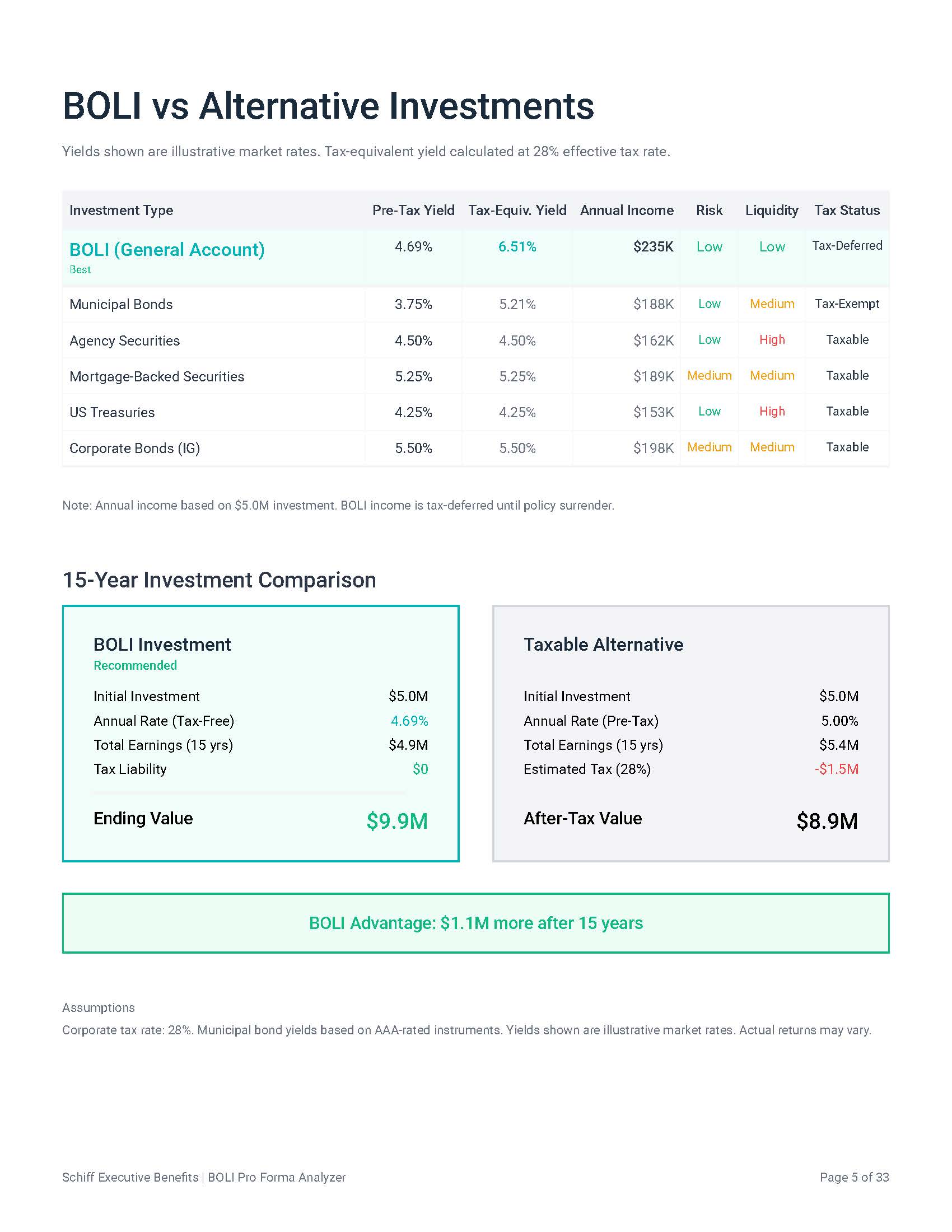
BOLI vs Fixed Income Investments Comparison Chart


Retirement Made Simple: The Four Pillars


In my experience, executive benefit plans often become overly complex, leading to confusion and, ultimately, a lack of perceived value. We advocate for Retirement Made Simple. If an executive at Haverty’s or Powell Industries can’t explain their retirement plan to their spouse in two minutes, the plan is failing as a retention tool.


The Perfect Plan® (as we call our optimized approach) focuses on four fixed pillars:


  • Fixed Dollar Amount: The executive knows exactly what they will receive.

  • Fixed Period: The duration of the payments is defined and guaranteed.

  • Fixed Rate of Return: No market volatility keeping the retiree awake at night.

  • Fixed Cash Flow: A predictable stream of income that supplements the 401(k) limits.


When you offer "Retirement Made Simple," you remove the anxiety of "running out of money," which is one of our primary "What If" anchors. You can learn more about how we frame these outcomes by visiting our The Perfect Plan®.


Technical Compliance: Avoiding "Operational Drift"


One of the biggest risks we see in the Burkenroad companies is Operational Drift. A plan that was compliant and efficient in 2010 may be a ticking time bomb today due to changes in IRC 409A and IRC 101(j).


IRC 409A: The Safe Harbor Update


IRC 409A governs how and when deferred compensation is paid. The penalties for non-compliance are draconian: immediate taxation of all deferred amounts plus a 20% penalty tax on the employee. We often find that companies haven't updated their "Safe Harbor" language to reflect modern IRS guidance. If you haven't audited your NQDC plan in the last three years, you are likely drifting. You can watch a short overview of 409A compliance here.


IRC 101(j): The Notice and Consent Rule


For companies using COLI (Corporate-Owned Life Insurance) to fund these plans, compliance with IRC 101(j) is non-negotiable. If you do not obtain written consent from the executive before the policy is issued, the death benefit: which is supposed to be tax-free: becomes taxable income to the corporation.


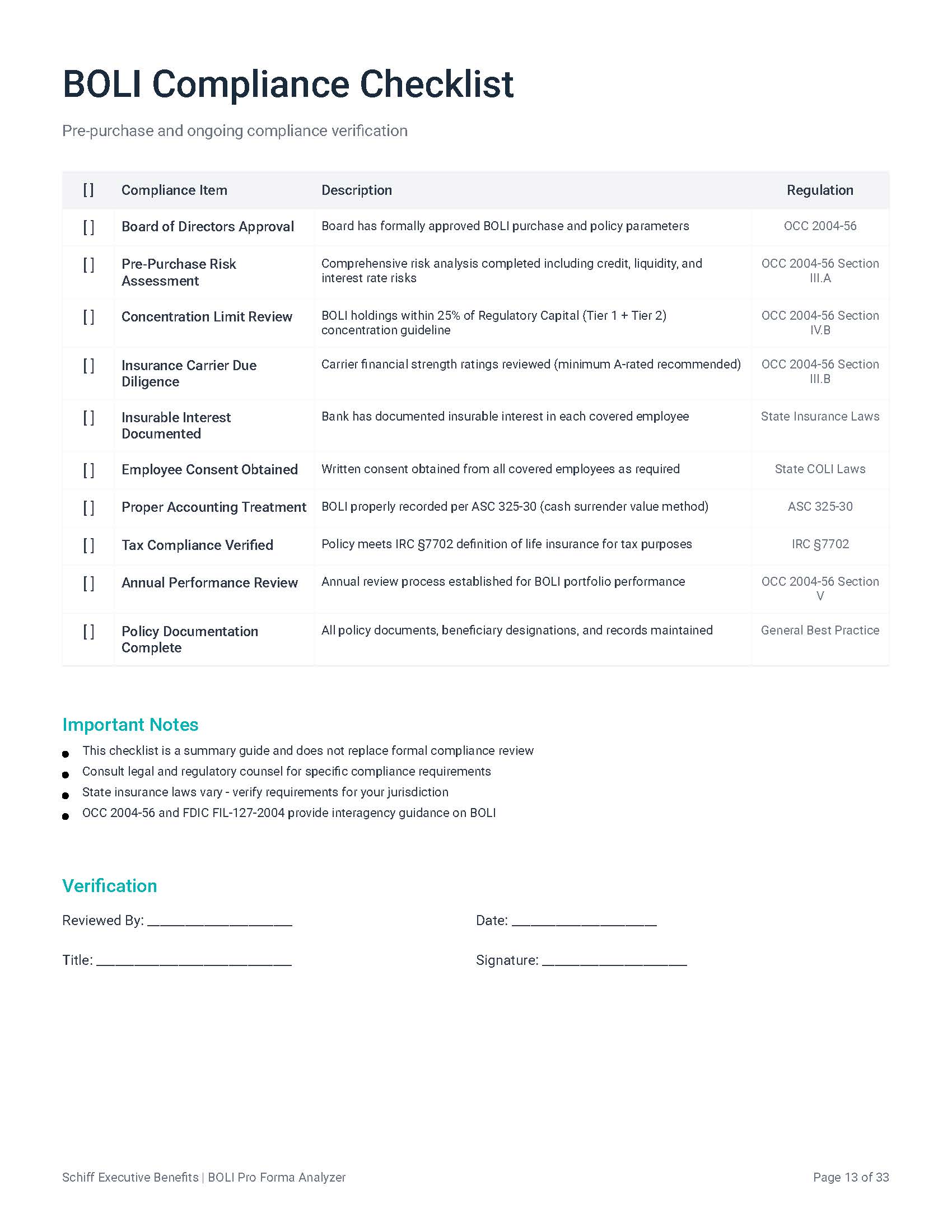
BOLI Compliance Checklist


Benchmarking the Burkenroad Peer Groups


When we look at the specific companies in this analysis, we see a range of maturity in their executive benefit structures.


  • Financial Institutions (FBMS, FGBI): These banks generally understand BOLI but often lack a post-purchase analysis to ensure their peer group benchmarking is up to date. Are you holding too much cash in the plan? Is your BOLI/Capital ratio optimized?

  • Retail and Industrial (POOL, HVT, POWL, CALM): These corporations often have "Legacy Plans" that are either under-funded or using outdated insurance products that don't offer the flexibility required for today’s executive.


The question isn't just "Do you have a plan?" The question is "Is your plan still doing its job?"


Restoring Alignment


The goal of any executive benefit strategy should be to align the interests of the shareholder, the company, and the key executive. When an executive at a company like Cal-Maine Foods knows that their family is 100% protected and their retirement is 100% secure, their focus remains on driving the business forward.


They aren't looking at the "next big offer" because they are already participating in The Perfect Plan®.


If you are a Center of Influence (COI) advising these companies, or an executive within one of these organizations, it’s time to move past the "set it and forget it" mentality. The economic environment has shifted, and your retention strategies must shift with it.


We invite you to retain your key people with ownership-like benefits and ensure your organization is protected against the "What Ifs" that matter most.


Sit back, grab your coffee, and let’s look at your plan together. We’re here to act as your guide through the complexities of executive security, ensuring your legacy: and the legacies of your top talent: are built on a foundation that lasts.


Come join us for Part 2, where we will dive deeper into the specific financial impact of "Full Cost Recovery" for the Burkenroad industrial sector.


Matt Schiff
President, Schiff Executive Benefits
Restoring Alignment and Retention


Learn more: executive retention programs.