Hi, How Can We Help You?
  • Planning for all of life's "What Ifs".

Category Archives: Life Insurance


In the world of institutional finance, capital is the lifeblood of growth, yet for insurance carriers, it is also a highly regulated and scrutinized resource. Managing a balance sheet while simultaneously trying to attract and retain the industry’s brightest minds is a delicate act of precision. How do you deploy surplus capital in a way that is both productive and capital-efficient?


Institutional Corporate Owned Life Insurance (iCOLI) is a specialized subset of the broader Corporate Owned Life Insurance (COLI) market, specifically engineered for the unique regulatory and financial landscape of insurance carriers. While traditional COLI is used by general corporations to fund executive benefits, iCOLI goes a step further, optimizing the carrier’s capital structure while providing a robust vehicle for executive retention and recruitment.


What Makes iCOLI Different?


At its core, iCOLI is life insurance owned by an insurance company on the lives of its key executives. However, unlike standard policies, iCOLI is built for the institutional scale. It is an "admitted asset" on the balance sheet, meaning it is recognized by regulators as a valid piece of the company’s financial strength.


The primary driver for carriers is the Risk-Based Capital (RBC) treatment. In an environment where every dollar of capital must be allocated with extreme care, iCOLI offers a significant advantage:


  • Life Insurers: Typically face a 0% RBC charge for iCOLI.

  • Property & Casualty (P&C) Insurers: Typically face a 5% RBC charge.


Compared to other asset classes that might carry a much higher capital drag, iCOLI allows a carrier to deploy surplus capital into a tax-advantaged vehicle with minimal impact on their required capital ratios. This is capital efficiency at its finest: restoring alignment between corporate goals and regulatory realities.


A financial professional analyzing data on a computer in a modern office.


Solving the "What Ifs" of the C-Suite


For the decision-makers at insurance carriers, the primary concern is often the "What If" regarding their human capital. What if our top talent leaves for a competitor? What if we are not providing a competitive enough retirement package to keep our senior leadership engaged?


Because iCOLI is an institutional-grade product, it is the ideal engine for funding sophisticated Non-Qualified Deferred Compensation (NQDC) plans and Supplemental Executive Retirement Plans (SERPs). It provides the company with:


  1. Tax-Deferred Growth: The cash value within the policy grows without immediate tax liability.

  2. Cost Recovery: The death benefit can be structured to recover the costs of the executive’s benefits, the premiums paid, and the cost of money.

  3. Liquidity: The policy remains an admitted asset that can be accessed to meet future benefit obligations.


The Expert in the Room


When dealing with iCOLI, compliance is not just a checkbox; it is a fundamental requirement. Navigating the complexities of IRC Section 101(j) and IRC Section 409A requires more than just a broker: it requires an architect who was "in the room where it happened."


Matt Schiff, President of Schiff Executive Benefits, brings a unique level of authority to these discussions. As a member of the AALU’s NQDC Committee, Matt helped draft the very laws that govern these programs today. His deep technical expertise ensures that your iCOLI program is not only high-performing but also fully compliant with the rigorous standards of the IRS and the NAIC. For those interested in the technical nuances of these regulations, we highly recommend listening to The Perfect Plan® Podcast interview with Dan Hogans, a former official from the U.S. Treasury Department, who worked alongside Matt during the development of these critical tax codes.


A collaborative meeting in a bright conference room with business professionals.


The Perfect Plan® for Carriers


We believe that every executive benefit program should be reverse-engineered starting with your specific goals. For insurance carriers, those goals usually include maintaining a strong RBC ratio while building a Perfect Plan® that secures the loyalty of their top leadership.


iCOLI is a powerful tool in that arsenal, but it is just one part of the conversation. If you are ready to see how this fits into your larger corporate strategy, we invite you to take the first step.


Determine your business's current standing and valuation through our RISR assessment tool here.


Looking for a deeper dive into the mechanics, historical context, and advanced strategies of iCOLI? Read our comprehensive guide: Institutional Corporate Owned Life Insurance (iCOLI): The Deep Dive.


At Schiff Executive Benefits, we help you plan for all of life's "What If's" while ensuring your business remains competitive, compliant, and cost-effective. Come join us( let’s build your legacy together.)


Learn more: Corporate Owned Life Insurance (COLI).


Slug: /faqs-coli/ In business, as in life, certainty is the ultimate currency. Every successful organization eventually faces the reality that its greatest assets walk out the door every evening, and the "What If" of those assets not returning is what keeps most owners awake at night. Corporate Owned Life Insurance (COLI) is a sophisticated tool designed to bring order to that uncertainty, providing a structured way to protect the business and reward the people who build it. At Schiff Executive Benefits, we specialize in Restoring Alignment and Retention. Because we were "in the room where it happened", with Matt Schiff helping draft the very laws that govern these plans, we provide a level of technical depth you won't find elsewhere.


What is Corporate Owned Life Insurance (COLI)?


Corporate Owned Life Insurance (COLI) is a life insurance policy taken out by a business on the life of a key employee or executive. The company pays the premiums, owns the policy, and is typically the beneficiary. It serves two primary purposes: protecting the company against the financial loss of a key leader and providing a tax-advantaged vehicle to informally fund executive benefit programs like a NQDC Complete Guide.


Who can be insured under a COLI plan?


Under modern regulations, you cannot simply insure any employee. To qualify for favorable tax treatment, the insured must generally be a "highly compensated" employee or part of a "Top Hat" group. This typically includes the top 35% of the company’s highest-paid employees or those defined as highly compensated under IRC 414(q). For a deeper look at how to structure these groups, see our COLI Strategic Guide.


What is IRC 101(j) and why does it matter?


IRC 101(j) is often referred to as the "COLI Best Practices Law." Enacted in 2006, it establishes strict notice and consent requirements that must be met before a policy is issued. Our President, Matt Schiff, was a member of the AALU's NQDC Committee and worked alongside Michael Goldstein to help draft these very regulations. If you don't follow these rules to the letter, you risk losing the tax-free nature of the death benefit.


What is IRS Form 8925 and who needs to file it?


Any employer that owns one or more employer-owned life insurance contracts must file IRS Form 8925 annually. This form reports the number of employees covered, the total amount of insurance in force, and confirms that valid consent was received for each insured individual. Failing to file this or making errors is one of the most common 7 BOLI/COLI Mistakes we see in the industry. A focused business executive reviewing compliance documents and financial reports in a bright, modern office, emphasizing the importance of IRC 101(j) and Form 8925 accuracy.


What happens if we don't comply with IRC 101(j)?


The consequences are severe. If you fail to meet the notice and consent requirements, the death benefit, which is usually tax-free, becomes taxable income to the corporation at its marginal tax rate. This can turn a calculated financial strategy into a massive, unexpected tax liability, undermining the entire goal of the program.


Is COLI the same as Split Dollar?


No. In a traditional COLI arrangement, the company owns 100% of the policy and the employee has no rights to the cash value or death benefit. In contrast, Split Dollar Architecture involves an agreement where the employer and employee share the costs and benefits of the policy. COLI is generally simpler to administer and does not result in imputed income to the employee.


What's the difference between COLI and BOLI?


The "C" stands for Corporate and the "B" stands for Bank. They are fundamentally the same insurance concept, but they are governed by different accounting standards (FASB for corporations vs. OCC/interagency guidelines for banks). Both rely on the same tax-advantaged principles to offset the rising costs of employee benefits.


Can COLI help us recover the cost of executive benefits?


Absolutely. This is often called "full cost recovery." By using the tax-advantaged growth within the policy and the eventual death benefit, a company can recover the cost of the premiums, the cost of the benefit payments, and even the "time value" of the money used. You can learn more about this math in our post on SERP + COLI Cost Recovery.


How does COLI work with a SERP or NQDC plan?


COLI is the "engine" that powers these plans. While a SERP Guide outlines the promise you make to an executive, the COLI policy provides the cash to fulfill that promise. It sits on the corporate balance sheet as an asset that grows tax-deferred, matching the growing liability of the deferred compensation promise. An aerial view of a modern corporate boardroom where business leaders are discussing long-term strategy and executive retention tools.


How many employees can we cover?


There is no hard "cap" on the number of employees, but the group must meet the "highly compensated" or "director" criteria set forth in IRC 101(j). Most companies focus on the "Top Hat" group, the key decision-makers and high-impact producers who represent the greatest risk and value to the firm.


Can the death benefit be taxed?


Yes, but only if you fail to comply with the regulations. If IRC 101(j) requirements are met, the death benefit remains tax-free. This is why working with an expert who was involved in the legislative process is critical. We ensure your plan is built on a foundation of compliance, protecting your Perfect Plan® from IRS scrutiny.


Does COLI require 409A compliance?


While COLI itself is an insurance product, the plan it funds (like a deferred compensation agreement) is almost certainly subject to IRC 409A. This law governs the timing of deferrals and distributions. Because Matt Schiff helped draft these rules, we integrate COLI funding with a robust 409A Compliance guide to ensure you avoid the 20% excise tax penalties.


What happens to COLI policies when an executive leaves the company?


The company generally has three options: maintain the policy (if consent was properly obtained), surrender the policy for its cash value, or, in some cases, sell or transfer the policy to the executive as part of a retirement package. The flexibility to keep the policy in force even after the executive leaves is one of the reasons COLI is such a powerful cost-recovery tool.


How do we choose a carrier for COLI?


Choosing a carrier is about more than just the lowest premium. You need a carrier with a strong "Comdex" rating, a history of stable dividend performance (for whole life), or competitive institutional pricing (for VUL/IUL). As independent brokers, we reverse engineer the solution: starting with your goals and then selecting the carrier that fits the plan, rather than forcing a "product" on you.


Is COLI right for our business?


If you are asking "What If" our top talent leaves, or "What If" we can't afford to pay out our retirement promises, then COLI deserves a look. It is ideal for profitable companies looking to attract, retain, and reward key talent while protecting the bottom line. To see how these strategies fit into a broader vision, check out The Perfect Plan® podcast/post where we discuss the reverse engineering process we use for every client. Two professional colleagues sharing a coffee and a conversation in an authentic, warm office setting, representing the consultative and human-centric approach of Schiff Executive Benefits.


Ready to Build Your Perfect Plan®?


Stop worrying about the "What Ifs" and start planning for the "Whens." Whether you are looking to protect your business from the loss of a key leader or you need to fund a sophisticated executive benefit plan, we are here to guide you with decades of technical expertise. Click here to value your business and explore your options via our RISR application. Disclaimer: Schiff Executive Benefits does not provide tax or legal advice. You should always consult with your own professional tax and legal advisors before implementing any executive benefit or insurance program. Our role is to work alongside your team to ensure the technical design matches your corporate goals.


Learn more: Corporate Owned Life Insurance (COLI).


In the competitive landscape of modern business, the greatest asset any company possesses is not its technology, its intellectual property, or its equipment. It is its people. But for many business owners: particularly those operating as S-corps, partnerships, or LLCs: finding the right way to reward those people while keeping the business’s bottom line healthy can feel like a riddle without an answer.

How do you provide a significant benefit to your top talent that is immediately deductible to the business, relatively simple to administer, and entirely flexible?

Fortunately, the answer often lies within a specific corner of the tax code: IRC Section 162. Known more commonly as a Section 162 Bonus Plan (or an Executive Bonus Plan), this strategy is one of the most effective, yet underutilized, tools in the executive benefits toolkit.

At Schiff Executive Benefits, our mission is "Restoring Alignment and Retention." We believe that when the goals of the company and the goals of the key executive are aligned, everyone wins. The Section 162 Bonus Plan is a cornerstone of that philosophy.

What is a Section 162 Bonus Plan?


At its simplest, a Section 162 Bonus Plan is an arrangement where an employer pays the premiums on a life insurance policy owned by a key employee.

Under IRC Section 162, businesses are permitted to deduct "ordinary and necessary" expenses paid or incurred during the taxable year in carrying on any trade or business. This includes a reasonable allowance for salaries or other compensation for personal services actually rendered.

In this specific plan, the "bonus" given to the employee is the premium payment for a permanent life insurance policy. Because the employee owns the policy and the employer has no rights to the cash value or the death benefit, the IRS views these premium payments as taxable compensation to the employee and a deductible business expense for the employer.

A business executive reviewing financial documents and tax forms in a bright, modern office setting.

How the Executive Bonus Plan Works: A Step-by-Step Breakdown


The mechanics of a Section 162 Executive Bonus Plan are remarkably straightforward compared to more complex nonqualified deferred compensation (NQDC) arrangements:

  1. Selection: The employer selects the specific key employee(s) they wish to reward. Unlike a 401(k) or other qualified plans, Section 162 plans can be highly discriminatory. You can choose one person or twenty: there are no participation requirements.

  2. Application: The employee applies for a permanent life insurance policy (such as Whole Life or Indexed Universal Life). The employee is the owner and the insured, and they designate their own beneficiaries.

  3. Premium Payment: The employer pays the premium directly to the insurance carrier (or bonuses the cash to the employee to pay it).

  4. Tax Treatment: The employer deducts the premium as a compensation expense. The employee reports the premium amount as W-2 taxable income.

  5. The "Double Bonus" Option: Many employers choose to provide a "tax gross-up": essentially a second bonus to cover the income taxes the employee owes on the premium bonus. As a result, the benefit becomes "cost-free" to the executive.


Why Choose Section 162 Over a REBA?


You may have heard us talk about Restricted Executive Bonus Arrangements (REBA). Although both rest on the foundation of IRC Section 162, they serve different purposes.

A REBA includes a "restrictive endorsement." This is a legal agreement that prevents the employee from accessing the policy’s cash value or surrendering the policy for a set number of years without the employer's consent. It creates what we call "golden handcuffs."

A straight Section 162 Bonus Plan, by contrast, is the "simple" version. There is no restrictive endorsement. The employee has immediate, full ownership and access to the policy’s benefits.

Why choose the simpler version?

  • Immediate Reward: It provides a tangible, owned asset to the employee from day one.

  • Simplicity: There are no legal endorsements to file or track.

  • Portability: If the employee leaves, they take the policy with them (and keep paying the premiums themselves if they choose). This makes it a very attractive "reward" for long-standing loyalty rather than a "threat" to keep them from leaving.


The Perfect Solution for Pass-Through Entities


One of the biggest challenges for owners of S-corps, Partnerships, and LLCs is that they often cannot participate in traditional deferred compensation (NQDC) plans on a pre-tax basis.

Because the income of a pass-through entity flows directly to the owners' personal tax returns, "deferring" income usually doesn't provide the same tax arbitrage it does in a C-corp. However, a Section 162 Bonus Plan allows the business to deduct the cost of premiums for key employees (who are not owners), helping the business manage its taxable income while building a powerful benefit for the team that makes the business run.

As we often discuss on The Perfect Plan®, achieving true financial security requires planning for all of life's "What Ifs." In fact, a single Section 162 plan addresses several at once: providing 100% protection to employee families through the death benefit and potential supplemental retirement income through cash value growth.

Two professional partners shaking hands after a successful strategic planning meeting.

The Technical Edge: Why Schiff Executive Benefits?


When you are dealing with executive benefits and the Internal Revenue Code, expertise isn't just a "nice to have": it's a requirement.

Our President, Matt Schiff, brings a level of authority to these discussions that few in the industry can match. In the early 2000s, Matt was "in the room where it happened." As a member of the AALU's NQDC Committee, Matt worked alongside industry legends like Michael Goldstein to help draft the very laws that govern these plans today, including IRC 409A and 101(j).

This technical pedigree ensures that when we design a Section 162 plan, it isn't just a "product sale." It is a compliant, strategically sound arrangement designed to withstand regulatory scrutiny. In fact, a major benefit of the Section 162 Bonus Plan is that it typically avoids the heavy compliance burdens of 409A and doesn't require a "Top Hat" filing with the Department of Labor, because it is considered current compensation rather than a retirement plan.

However, you must still ensure compliance with IRC 101(j) regarding employer-owned life insurance notice and consent if there is any employer involvement in the process. We ensure those boxes are checked.

Benefits at a Glance


  • For the Employer:

    • Immediate tax deduction for premiums paid.

    • Ability to discriminate (reward only the people you choose).

    • No ERISA or 401(k) testing requirements.

    • No 409A compliance or Top Hat filings.

    • Simple to set up and maintain.


  • For the Executive:

    • Immediate ownership of a permanent life insurance policy.

    • Tax-deferred growth of cash value.

    • Potentially tax-free supplemental retirement income (through policy loans/withdrawals).

    • Self-completing benefit (the death benefit protects their family immediately).

    • Portability: the policy stays with them even if they change careers.


A business executive looking thoughtfully out an office window, representing long-term vision and security.

Is a Section 162 Plan Right for Your Business?


Every business has a unique culture and a unique set of goals. At Schiff Executive Benefits, we don't believe in "off-the-shelf" solutions. We start by asking the "What Ifs":

  • What if your top salesperson left tomorrow?

  • Or what if your key executive passed away unexpectedly?

  • What if you could provide a life-changing benefit to your most loyal people without creating a permanent liability on your balance sheet?


Ultimately, if you are looking for a way to attract, retain, and reward talent that is simpler than a Traditional SERP but more substantial than a standard bonus, the Section 162 Bonus Plan may be the "Perfect Plan" for your needs.

To hear more about how we think about these structures, I encourage you to listen to Matt Schiff’s interview on The Perfect Plan® Podcast with Dan Hogans (formerly of the U.S. Treasury Department), where they dive deep into the nuances of executive compensation.

Take the Next Step


Ready to see how a Section 162 Bonus Plan fits into your business strategy? We use a data-driven approach to help you realize the true value of your business and your key talent.

Click here to use our RISR tool and begin your business valuation and talent assessment today.

Let's work together to restore alignment and retention in your organization. Grab your coffee, sit back, and let's build something that lasts.


Learn more: See how this fits into the bigger picture in our guide to executive benefits for business owners.


Change is constant. Process matters. If you're evaluating bank owned life insurance, you need a framework that is clear, compliant, and easy for leadership to follow. Our BOLI process is designed to help banks move from early evaluation to confident implementation without unnecessary complexity. At Schiff Executive Benefits, we make BOLI implementation easier to understand, easier to present, and easier to manage.


Why This Process Matters


A successful BOLI process helps your bank:


  • Offset employee benefit costs

  • Support executive benefit liabilities

  • Stay aligned with risk and capital considerations

  • Give the board a clean path to informed decision-making


Bank executives in a clean modern boardroom reviewing BOLI implementation strategy and OCC 2004-56 compliance


Foundation: OCC 2004-56


Every sound BOLI implementation starts with OCC 2004-56. This guidance sets the standard for how banks evaluate risk, document their analysis, and approach bank owned life insurance as a safe and sound asset. We treat OCC 2004-56 as the starting point, not the finish line. That keeps the entire BOLI process focused, defensible, and board-ready.


The 10-Step BOLI Process


Our pre-purchase analysis is built to help bank leadership evaluate structure, risk, pricing, and fit before moving forward.


1. Calculate Employee Benefit Liabilities


Define the benefit costs the BOLI program is meant to offset.


2. Conduct OCC Testing


Measure capital impact, earnings alignment, and insurance-to-capital positioning.


3. Analyze Insurable Interest


Confirm legal eligibility and proper insurable interest for covered lives.


4. Review Risk


Evaluate credit risk, interest rate risk, liquidity risk, and legislative risk.


5. Prepare Financial Models


Run independent projections for yield, surrender outcomes, and cost recovery.


6. Review Carrier Investment Strategy


Assess how the carrier invests and whether that approach fits your bank.


7. Review Policy Characteristics


Compare General Account, Separate Account, and Hybrid Account options.


8. Reverse-Engineer the Product


Build the design around your bank’s goals instead of forcing a shelf product.


9. Negotiate Final Pricing


Work to improve net yield, pricing, and overall policy economics.


10. Support Board Review


Deliver a concise executive summary and due diligence package for approval.


Implementation and Ongoing Support


Approval is not the end of the BOLI process. It is the beginning of proper execution. We support the full BOLI implementation phase, including documentation, employee consent, policy placement, and delivery. After purchase, we continue with annual reviews, carrier monitoring, and updated analysis so your bank owned life insurance strategy stays aligned with the original goal. We also work alongside your existing advisors, including accountants, attorneys, and TPAs, so the process stays coordinated and efficient.


Ready to implement a smarter BOLI strategy?


Schedule a consultation For a broader look at related executive benefit strategies, visit our services.


Meta Description: Our BOLI process helps banks streamline BOLI implementation with clear steps, OCC 2004-56 alignment, and practical bank owned life insurance guidance.


Learn more: our complete guide to Bank Owned Life Insurance (BOLI).


The only constant in the world of high-stakes business is change, yet one truth remains universal: your business is only as strong as the people who lead it. For decades, the most successful organizations have understood that attracting and retaining top-tier talent isn't just about a competitive salary: it’s about creating a sense of ownership and securing a legacy.

But as you scale, the tools you use to build that security become increasingly complex. You move from simple "handshakes" to sophisticated financial structures. Among these, few are as powerful: or as misunderstood: as Split Dollar life insurance. When built correctly, it is a masterpiece of financial engineering. When built poorly, it can trigger a regulatory nightmare.

At Schiff Executive Benefits, we specialize in reverse-engineering these solutions to ensure they match your company culture and intent while "Restoring Alignment and Retention." To navigate this landscape, you need to understand the "architecture" of the plan: the interaction between tax regimes, the impact of the Sarbanes-Oxley Act (SOX), and the technical nuances of Internal Revenue Code (IRC) Section 409A.

The Two Foundations: Collateral Assignment vs. Endorsement


Think of a Split Dollar arrangement as a partnership between an employer and a key executive to share the costs and benefits of a life insurance policy. However, the way you structure that partnership determines everything from who owns the policy to how the IRS views the transaction.

1. The Loan Regime (Collateral Assignment)


In a Collateral Assignment Split Dollar (CASD) arrangement, the executive owns the policy. The employer pays the premiums, but those payments are treated as a series of loans to the executive. To secure the repayment of these loans, the executive assigns the policy’s cash value or death benefit to the employer as collateral.

This is often the preferred route for private companies because it allows for a more efficient transfer of wealth. However, because it is technically a loan, it must follow the rules of IRC Section 7872, requiring a market-rate interest or the imputation of income to the executive.

2. The Economic Benefit Regime (Endorsement)


In an Endorsement Split Dollar arrangement, the employer owns the policy. The employer "endorses" a portion of the death benefit to the executive’s beneficiaries. Here, the executive is not receiving a loan; they are receiving a taxable "economic benefit" (the value of the current life insurance protection).

While this is simpler from a documentation standpoint, it is often less flexible for long-term retirement planning than the loan-regime approach.

Architectural shot of a modern glass and steel office building, symbolizing the structural integrity required in benefit design.

The SOX 402 Hurdle: A Warning for Public Companies


If you are a decision-maker at a public company (or a company planning to go public), the architecture of your Split Dollar plan faces a significant regulatory roadblock: Section 402 of the Sarbanes-Oxley Act.

Passed in the wake of major corporate scandals, SOX Section 402 made it unlawful for any public issuer to extend or maintain credit in the form of a "personal loan" to any director or executive officer. Because a Collateral Assignment Split Dollar plan is legally structured as a loan, it falls squarely into the crosshairs of this prohibition.

For the top five employees in a public company, the loan-regime approach is generally a "no-go." Implementing a CASD plan for these individuals could lead to severe legal and civil penalties. In these environments, we typically pivot toward Endorsement structures or other Non-Qualified Deferred Compensation (NQDC) models that avoid the "loan" definition entirely.

409A and the Strategic Loan: Planning for the "What If"


One of the most attractive features of a Split Dollar loan is the possibility of loan forgiveness. Imagine a scenario where, after 15 years of exceptional service, the company forgives the executive's debt, effectively turning the life insurance policy into a tax-efficient retirement windfall.

However, if you don't plan for this from the start, you are walking into a trap set by IRC Section 409A.

Section 409A governs nonqualified deferred compensation. If a company decides on a whim to forgive a Split Dollar loan at retirement, the IRS may view that forgiveness as a "deferral of compensation." If the arrangement wasn't drafted to comply with 409A from day one, the executive could face immediate income inclusion, a 20% penalty tax, and premium interest charges.

"In the Room Where It Happened"


This is where technical expertise becomes your greatest asset. Our President, Matt Schiff, doesn't just read these laws; he was "in the room" when they were being shaped. In 2003 and 2005, Matt served as a member of the AALU’s NQDC Committee alongside Michael Goldstein. Together, they helped draft the very laws: IRC 409A and 101(j): that govern these plans today.

When we talk about "Split Dollar Architecture," we aren't just following a template. We are using the same deep technical insight that helped establish the regulatory framework.

An executive desk with professional documents and a high-end pen, reflecting the technical and regulatory precision required for 409A compliance.

The History of Deferred Compensation


To truly understand why these rules exist, it helps to look back at the history of the industry. We recently sat down with Dan Hogans, formerly of the U.S. Treasury Department and one of the primary architects of the 409A regulations, to discuss how we got here.

You can watch that full conversation, "The History of Deferred Compensation," on The Perfect Plan® Podcast. It’s a masterclass in how regulatory shifts changed the way businesses protect their key people.

At Schiff Executive Benefits, we integrate these lessons into every Perfect Plan® we design. Whether it's ensuring 100% protection for employee families or creating a 100% income stream in retirement, the goal is always the same: security through precision.

Why "Reverse Engineering" Matters


Most brokers start with a product. They have a policy they want to sell, and they try to fit your company into it. We take the opposite approach. We reverse-engineer the solution based on your specific goals.

  • Are you a public company? We avoid the SOX 402 traps.

  • Are you a private firm looking for a "Golden Handshake"? We structure the CASD with 409A-compliant forgiveness triggers.

  • Are you worried about cost recovery? We design the Cost Recovery Engine to ensure the business eventually receives every dollar it put into the plan.


We work as an integrated part of your advisory team, collaborating with your accountants and attorneys to ensure that the plan we build today doesn't become a liability tomorrow.

Two professionals in a modern collaborative space, highlighting the integrated approach of working with existing advisors.

Realizing Your Dream Value


Your business is your legacy. The people who help you build it deserve a plan that is as robust and well-thought-out as the company itself.

Are you asking the right "What If" questions?

  1. What if your top talent leaves for a competitor tomorrow?

  2. What if a senior executive retires and the replacement cost exceeds your budget?

  3. What if you could provide "Ownership Feel" to non-owners without giving away equity?


The answers to these questions lie in the architecture of your benefits. By utilizing The Perfect Plan®, you aren't just buying insurance; you are implementing a strategic retention tool that scales with your success.

Come Join Us


Navigating SOX, 409A, and Split Dollar regimes can feel like walking through a minefield. But you don't have to do it alone. Sit back, grab your coffee, and let’s look at how we can reinforce your company's foundation.

Whether you are a small business with 10 employees or a large corporation with 10,000, the principles of retention and alignment remain the same.

Ready to see what your business is truly worth and how you can protect it?

Get your professional business valuation here using the RISR tool.

Let’s build something that lasts.

A premium, minimalist library representing the peace of mind and long-term legacy provided by a well-architected executive benefit plan.


Learn more: 409A compliance, design, and strategy and Split Dollar architecture for executive wealth.


The Short Answer


Corporate Owned Life Insurance (COLI) is life insurance a company buys on the lives of selected employees, where the company owns the policy, pays the premium, and is named beneficiary. Businesses use COLI as a tax-advantaged balance sheet asset to informally finance executive benefit obligations — deferred compensation, supplemental retirement promises, split dollar arrangements — with the goal of recovering the cost of those benefits over time. Cash value inside the policy generally grows tax-deferred, and death proceeds are generally received income-tax-free, provided the company satisfies the notice and consent requirements of IRC 101(j) before the policy is issued.


COLI is also called company owned life insurance or employer-owned life insurance. When the buyer is a bank, the same structure is called BOLI. When the buyer is an insurance carrier, it is called iCOLI. The mechanics are largely the same; the regulator and the accounting context differ.


What Is Corporate Owned Life Insurance?


At its core, COLI is employer-owned life insurance placed on eligible employees for a legitimate business purpose. The structure has four moving parts:


  • The company owns the policy. It holds every incident of ownership — the right to borrow, surrender, change the beneficiary, and direct any investment allocation.

  • The company pays the premium. Premiums are not deductible. This is a capital allocation decision, not an expense strategy.

  • The company is the beneficiary. Proceeds are payable to the business, though many designs share a portion with the insured's family as an added benefit.

  • The insured employee gives written notice and consent before issue. This is not a formality. Miss it and the tax treatment of the death benefit changes permanently.


The planning value is not in the insurance itself. It is in what the asset does inside the business. A properly designed COLI case takes capital that would otherwise sit in taxable short-term instruments and repositions it into a vehicle whose growth is tax-deferred, whose eventual proceeds are generally tax-free, and whose timing can be matched to a liability the company has already promised to pay.


How COLI Life Insurance Works as a Balance Sheet Asset


COLI should be evaluated as a long-term corporate asset, not as a current-year tax play. The policy's cash surrender value is carried as an asset on the company's books. Growth inside the contract is generally not currently taxable. For a business comparing alternatives, that can create a materially more efficient holding environment than fully taxable fixed income or short-term corporate cash.


The analysis that matters is a comparison, not an absolute. The question is never "is COLI a good asset?" It is "compared to the taxable alternative this company would otherwise hold for the same duration, what is the after-tax outcome?" That comparison depends on the company's marginal tax rate, its holding period, its liquidity needs, and its tolerance for an asset that is not marked to market daily.


What COLI Is Typically Used to Finance


The common thread is duration. Every one of these is a promise the company has made that comes due years from now. COLI is a way to hold an asset whose characteristics resemble the liability it is meant to support.[HERO] Abstract technical business dashboard with financial charts, data layers, and analytical visuals, emphasizing the balance sheet structure and quantitative role of COLI.


COLI vs. BOLI vs. iCOLI: Which Applies to You


The three acronyms describe the same fundamental structure under three different owners, and they are frequently confused.


  • COLI — Corporate Owned Life Insurance. Bought by an operating company, professional firm, or partnership. Governed by the general tax rules discussed on this page.

  • BOLI — Bank Owned Life Insurance. Same structure, bank buyer, plus a layer of banking regulation. Federal regulators expect banks to conduct a pre-purchase analysis and to observe concentration guidance relative to capital.

  • iCOLI — Institutional Corporate Owned Life Insurance. Bought by insurance carriers to optimize capital and surplus. Different accounting regime, different risk framework.


If you are trying to decide which structure fits your institution, our companion piece on choosing between BOLI and COLI covers the decision in detail.


IRC 101(j): The Rule That Makes or Breaks a COLI Case


This is the single most important technical rule in employer-owned life insurance, and it is where most damaged cases go wrong.


Before the Pension Protection Act of 2006, employer-owned death benefits were generally income-tax-free with few conditions. The Act added IRC 101(j), which reversed the default. For an employer-owned life insurance contract, death proceeds are now taxable income to the employer above the premiums paid unless the arrangement satisfies both a notice-and-consent requirement and one of several exceptions.


The Notice and Consent Requirement


Before the policy is issued, the employee must:


  1. Be notified in writing that the employer intends to insure their life, and be told the maximum face amount for which they could be insured at the time the contract is issued;

  2. Give written consent to being insured, and to the coverage continuing after the insured terminates employment; and

  3. Be informed in writing that the employer will be a beneficiary of any proceeds payable on the employee's death.


The timing word is before. Consent obtained after issue does not cure the defect, and there is no general retroactive fix. A signature missing from a file years ago can convert a tax-free death benefit into ordinary income at the worst possible moment.


The Exceptions


Assuming notice and consent were properly completed, proceeds remain generally income-tax-free if the insured falls into a qualifying category — broadly, an insured who was an employee within twelve months of death, or who at the time the contract was issued was a director, a highly compensated employee, or a highly compensated individual as those terms are defined in the Code. There is also an exception for proceeds paid to the insured's heirs or used to purchase an equity interest from them.


This is why COLI is not a rank-and-file product. The eligible insured class is narrow by design, and confirming eligibility at issue is part of the underwriting discipline, not an afterthought.


Annual Reporting: IRS Form 8925


An employer holding employer-owned life insurance contracts generally files Form 8925 with its annual tax return, reporting the number of employees insured, the total amount of insurance in force, and confirming that valid consent is on file for each insured. Companies that acquire businesses often inherit policies without inheriting the consent documentation. If you have grown through acquisition and hold policies you did not originate, that file review should happen now rather than at a claim.[HERO] Abstract analytical business interface with layered charts, financial metrics, and technical data visualization, reflecting the investigative and compliance-driven structure of COLI.


Accounting Treatment


Under U.S. GAAP, an investment in a life insurance contract is generally reported at the amount that could be realized under the contract as of the balance sheet date — in practice, cash surrender value, net of any applicable surrender charges the company would actually incur. Changes in that realizable amount flow through income. Death proceeds in excess of carrying value are recognized when the claim is realizable.


Two practical consequences follow. First, the reported asset in early policy years is the cash surrender value, not the premium paid, and in some designs those differ meaningfully at the outset. Second, your auditor will want to see the carrier's annual statement supporting the carrying value. Neither is a problem in a well-designed case, but both should be discussed with your CPA before the first premium is paid, not after the first audit.


Cost Recovery: The Mechanic That Justifies the Structure


Cost recovery is the reason most companies use COLI rather than simply accruing the liability and paying benefits from operating cash.


The sequence works like this:


  1. The company makes a benefit promise — a deferred compensation account, a SERP, a phantom stock award — that comes due in the future.

  2. Rather than leaving that liability unmatched, the company allocates capital to a COLI policy on the insured executive.

  3. Cash value accumulates on a tax-deferred basis over the working career.

  4. When benefits become payable, the company can access policy values, subject to policy terms, to help fund them. Benefit payments to the executive are generally deductible to the company when paid and taxable to the executive when received.

  5. At the insured's death, the carrier pays proceeds to the company. Subject to compliance with 101(j) and the transfer-for-value rules, those proceeds are generally income-tax-free and can substantially restore the capital the company committed.


That final step is what advisors mean by "cost recovery." It does not make the benefit free, and any projection of full recovery depends on assumptions — policy performance, mortality timing, tax rates, and the discipline of leaving the structure intact — that should be stress-tested rather than accepted. A design that only works at an illustrated rate is not a design. Ask to see it at guaranteed assumptions before you commit capital.


Where COLI Cases Go Wrong


In thirty years of reviewing existing programs, the same failures recur:


  • Missing or late 101(j) consent. The most common and the most expensive. Almost always discovered at claim.

  • Transfer-for-value exposure. Moving a policy between entities in a reorganization, or to a partner or shareholder, can taint the tax-free death benefit under IRC 101(a)(2) unless it lands in a recognized safe harbor.

  • Orphaned policies. The producer retired, nobody has reviewed performance in a decade, and the carrying assumptions no longer hold.

  • Asset and liability that don't match. The benefit promise was designed by one advisor and the funding by another, and the two were never reconciled.

  • Design that ignores 409A. The insurance can be perfect and the underlying deferred compensation plan can still fail. See our guide to 409A compliance.


If you already hold COLI or BOLI and have not had it independently reviewed, our piece on the seven most common portfolio mistakes is a reasonable place to start.


Designing COLI Around the Liability


A COLI case should be engineered around the obligation it is intended to support — never the reverse. That means identifying the liability, measuring when it comes due, selecting the appropriate insureds, and evaluating how policy performance interacts with the broader benefit design.


At Schiff Executive Benefits we start with the technical objective and reverse engineer the structure around the company's financial intent, its liability profile, and its compliance requirements. Whether the goal is to support deferred compensation, coordinate with a split dollar program, or finance a phantom stock payout, the financing has to match the promise. That methodology is the core of The Perfect Plan®.


The Technical Advantage


Compliance in this field is not a checkbox. It is the difference between a tax-free asset and a serious tax problem. In 2003 and 2005, our President, Matt Schiff, served as a member of the AALU's NQDC Committee alongside Michael Goldstein, working on the industry response to the regulations that became IRC 409A and IRC 101(j). When we discuss COLI compliance, we are drawing on direct involvement in how these rules took shape.


You can hear more on the technical history in Matt's interview with Dan Hogans, formerly of the Treasury Department, on The Perfect Plan® Podcast.[HERO] Technical financial analytics scene with structured reports, chart overlays, and corporate data review visuals, reinforcing the cost recovery mechanics behind COLI.


Free Download: COLI FAQ


Answers to the most common questions about corporate-owned life insurance.


Open the Free PDF


Frequently Asked Questions About COLI


What is the difference between COLI and company owned life insurance?


Nothing. They are two names for the same structure. "Corporate owned life insurance" and "company owned life insurance" are used interchangeably, and the Code refers to it as employer-owned life insurance. Some advisors reserve "company owned" for non-corporate entities such as partnerships and LLCs, but the tax rules under IRC 101(j) apply to all of them.


Are COLI premiums tax deductible?


No. Premiums paid on a policy where the company is a direct or indirect beneficiary are not deductible under IRC 264. The tax advantage of COLI is on the accumulation and death benefit side, not the premium side. Any presentation that suggests otherwise should be a red flag.


Is the COLI death benefit tax-free?


Generally yes, but only if the arrangement satisfies IRC 101(j) — proper written notice and consent before issue, plus a qualifying insured — and does not run afoul of the transfer-for-value rules. If those conditions are not met, proceeds above the premiums paid are taxable as ordinary income to the company.


Can a company buy COLI on any employee?


Practically, no. The 101(j) exceptions effectively limit favorable treatment to directors, highly compensated employees and individuals as defined in the Code, and recent employees. Broad-based coverage of rank-and-file employees — the practice that drew scrutiny in the 1990s and prompted the 2006 legislation — is not how modern COLI is designed.


Does the employee need to consent to COLI?


Yes, in writing, before the policy is issued. The employee must be told the maximum face amount, must consent to coverage continuing after employment ends, and must be informed that the employer will be a beneficiary. Consent cannot be obtained retroactively.


What happens to a COLI policy when the insured leaves the company?


The company continues to own the policy and may keep it in force, which is precisely why the consent language must disclose that possibility up front. Whether keeping it makes sense is an economic question that depends on the policy's performance and the liability it was purchased to support.


How is COLI different from key person insurance?


Key person insurance is one use case for COLI. It covers the economic loss to the business when a critical individual dies. Most COLI programs go further, using the asset to informally finance an ongoing benefit obligation rather than only to indemnify a death.


What is the minimum size for a COLI program to make sense?


There is no statutory minimum, but the structure has fixed administrative and compliance costs. The question to ask is whether the company has a real, durable benefit obligation and capital it can commit for the long term. A company with neither is better served by simpler tools.


Who regulates COLI?


COLI is governed primarily by the Internal Revenue Code — 101(j), 264, 7702, and 409A where a deferred compensation plan is involved — along with state insurance law. Banks buying BOLI face an additional layer of federal banking supervision that does not apply to ordinary corporate buyers.


The Next Step


If you are evaluating COLI, the right starting point is a technical review of four things: the objective, the insured class, the liability design, and the compliance process. The structure has to fit the business purpose, the accounting posture, and the long-term benefit obligation — in that order.


If you already hold policies, the starting point is different: a file review to confirm that 101(j) consent exists for every insured and that the carrying assumptions still hold.


To begin, use our RISR business valuation tool for an instant baseline, or schedule a conversation to talk through whether COLI belongs on your balance sheet.


Related Resources


External References


Designing COLI Around the Liability


A COLI case should be engineered around the obligation it is intended to support. That means identifying the liability, measuring the timing of the obligation, selecting appropriate insureds, and evaluating how policy performance interacts with the employer's broader benefit design. At Schiff Executive Benefits, that planning process starts with the technical objective. We reverse engineer the structure around the company's financial intent, the liability profile, and the compliance requirements. Whether the objective is to support deferred compensation or coordinate with Split Dollar Programs, the financing should match the promise. This methodology is central to The Perfect Plan®.


The Technical "Insider" Advantage


When it comes to executive benefits, compliance isn't just a checkbox, it's the difference between a tax-free asset and a major IRS headache. This is where our expertise is unmatched. Our President, Matt Schiff, didn't just study the laws; he helped write them. In 2003 and 2005, Matt served as a member of the AALU's NQDC Committee alongside Michael Goldstein. Together, they worked in the "room where it happened," helping to draft the very regulations that govern IRC 409A and IRC 101(j) today. When we talk about COLI compliance, we are coming from a place of deep technical authority. We understand the nuances of IRS Form 8925 and the strict notice-and-consent requirements that must be met before a policy is issued. If you miss a single signature under IRC 101(j), your tax-free death benefit could suddenly become taxable income. Can you afford that risk? You can hear more about these technical "deep dives" and the history of these regulations by listening to Matt's interview with Dan Hogans (formerly of the U.S. Treasury Department) on The Perfect Plan® Podcast.[HERO] Close-up technical business visualization with financial graphs, reporting layers, and strategic data analysis elements, underscoring the quantitative planning behind COLI. 


Not sure this is the right structure?

Answer six questions and we will point you to the plan that fits your situation — and tell you plainly what to watch out for.

Find your plan →


Life has a funny way of happening while you're busy making other plans.
It’s a universal truth we all acknowledge, yet when it comes to the boardrooms and executive suites where the future is mapped out, we often lean on a false sense of security. You’ve worked hard to build a career, a company, and a legacy. You’ve likely been told that your "benefits package" has you covered. But if you’re a high-net-worth executive or a business owner, there’s a quiet reality hiding in the fine print of your standard group life insurance policy: it was never designed for you.


At Schiff Executive Benefits, we spend a lot of time talking about the "What Ifs." One of the most haunting is the "What If" of the widow: or the family: left behind. If the unthinkable happened tomorrow, would your standard corporate plan truly provide 100% protection, or would it leave a gaping hole in your family’s lifestyle?


In Episode 16 of The Perfect Plan® podcast, we dove deep into how we reverse-engineer these problems to find what we call the "Sweet Spot." You can also watch Episode 16 here: https://youtu.be/yRgW-DcuD7U. Today, let’s peel back the curtain on why standard life insurance fails top talent and how a more sophisticated approach can restore alignment between your success and your family’s security.


The Illusion of "Group" Security


Most executives walk into their roles and see "3x Salary" or "5x Salary" life insurance coverage and think, “I’m set.” It feels like a safety net, but for someone in your tax bracket, it’s more like a spiderweb.


The IRS, under IRC Section 79, effectively puts a ceiling on how much tax-free "protection" you can actually receive through a group plan. While the first $50,000 of coverage is excluded from your gross income, anything above that threshold triggers what we call "imputed income." Suddenly, the "free" benefit the company is providing starts showing up as a tax hit on your W-2 every year.


But the tax hit isn't the biggest problem. The real issue is the Nondiscrimination Rules. If a company tries to provide significantly higher benefits to its "Key Employees" (the officers and high-earners like you) without doing the same for every single rank-and-file employee, the IRS can step in. If the plan is deemed discriminatory, you: the executive: could lose that $50,000 exclusion entirely. The full cost of the coverage becomes taxable income.


Is that really "100% protection," or is it just a tax liability dressed in a suit?


The Spending Economy and the $100 Rule


My father used to say something that has stuck with me for over 35 years in this business: "Everybody lives their life based upon their income."


Think about it. We live in a spending economy. If you have $100, you spend $98. If you have $10,000, you spend $9,980. High-net-worth individuals are not immune to this. As your income grows, your lifestyle: your home, your children’s education, your charitable giving: grows with it.


Standard group life insurance doesn't account for this lifestyle inflation. It’s a "one size fits all" solution in a "custom-tailored" world. When we talk about 100% protection, we aren't just talking about a death benefit. We are talking about the ability to maintain the momentum of your life for your family, even if you are no longer there to drive it.


The "The Perfect Plan®" Philosophy: Pre-Tax vs. Reality


In The Perfect Plan® Podcast, I often joke that the "illegal" Perfect Plan® would be:


  1. Pre-tax money goes in.

  2. It grows tax-deferred.

  3. It comes out tax-free.


The IRS will never give you that triple-crown. However, through Corporate Owned Life Insurance (COLI), we can design a "Sweet Spot" that gets as close as legally possible.


By using the corporation as the entity and specialized financial instruments as the engine, we can create a benefit that provides a tax-free death benefit to the family, while also acting as a cost-recovery tool for the employer. This is where executive benefits move from being a "cost" to being an "asset" on the balance sheet.


Why COLI is the Executive’s Secret Weapon


For a business owner, the "What If" of losing a key executive is a massive operational risk. It can take three to five years to recover from the loss of a top-tier CFO or President. COLI (Corporate Owned Life Insurance) allows a company to insure that risk while simultaneously funding the promise of a supplemental retirement or death benefit for the executive's family.


Unlike standard group term life, COLI-funded plans are:


  • Institutionally Priced: These aren't the products you find on a retail shelf. They are high-cash-value vehicles designed for corporate balance sheets.

  • Flexible: They can be designed to include riders for Long-Term Care (LTC), ensuring that your Perfect Plan® covers you not just in death, but in the event of a health crisis.

  • Cost-Recoverable: The business can eventually recover the premiums paid, making the net cost of providing the benefit zero over the long term.


The Enron Lesson and 409A Compliance


We can’t talk about executive benefits without talking about compliance. Many people don't realize that the rules governing Non-Qualified Deferred Compensation (NQDC): known as IRC 409A: came about because of the Enron collapse.


Back in 2003, our team was actually involved in some of the tax writing that led to these regulations. The goal was to protect both the executives and the rank-and-file from poor management. Today, if your executive benefit plan isn't structured with deep technical expertise, you aren't just risking your family’s security: you're risking a 20% tax penalty plus interest from the IRS for non-compliance.


When we audit plans, we often find that they haven't been touched since the early 2000s. They are "set and forget" relics that provide zero protection against modern tax environments.


Building Your Own Perfect Plan®


So, what does 100% protection actually look like? It looks like a plan that is reverse-engineered from your specific goals.


Are you worried about the tax-free death benefit? Are you looking for a 401k Mirror to save more than the $23,000 limit? Are you interested in "Phantom Stock" that gives you an ownership feel without the dilution?


At Schiff Executive Benefits, we don't start with a product. We start with a conversation. We work alongside your existing team: your accountant, your attorney, your family office: to ensure that every piece of the puzzle fits. We want to help you realize your "dream value" and build it your way.


Restoring Alignment and Retention


The ultimate goal of any executive benefit is to restore alignment. When the executive’s family is 100% protected and their retirement is secure, they can focus on what they do best: growing the business. This creates a "Golden Handcuff" that doesn't feel like a chain, but like a shared victory.


As we discussed in The Perfect Plan® Podcast Episode 16, whether you are the business owner, the executive, or the matriarch/patriarch of your family, you need to ask yourself: What is the perfect way my life would run if everything was set up properly?


Don't wait for a "What If" to become a "What Now."


Come Join Us


If this has sparked a question or perhaps a little bit of healthy anxiety about your current coverage, let’s talk. Sit back, grab your coffee, and let’s look at the math together. Whether you have 1 employee or 20,000, we have the technical expertise to ensure your plan is compliant, cost-effective, and: most importantly: truly protective.


Contact us today to start reverse-engineering your The Perfect Plan®.


Common sense wins. Strong balance sheets do not happen by accident. And in this business, the future belongs to the institutions that fund tomorrow’s promises before those promises come due.

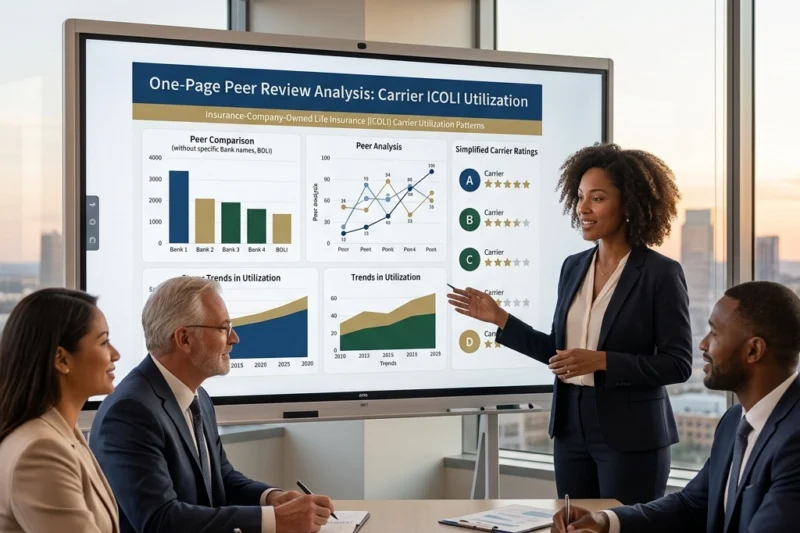
When you review the top U.S. life insurance carriers, one truth stands out quickly: the strongest players do not treat Insurance Company Owned Life Insurance (ICOLI) as an afterthought. They use it as a strategic balance-sheet asset. At Schiff Executive Benefits, that is exactly the lens we bring to every review. We reverse engineer goals, measure available capacity, and help leadership teams make decisions that restore alignment and retention.

Executive Summary


Analysis of Insurance Company Owned Life Insurance (ICOLI) holdings for the top 50 U.S. life insurance carriers. Focus: comparing admitted ICOLI assets against statutory surplus to identify industry benchmarks and individual carrier purchase capacity.

This report is designed for a peer review setting. It is formal in structure, practical in tone, and built to support executive discussion. The central question is simple: how are leading carriers using ICOLI to support long-term executive liabilities and non-qualified plan obligations while maintaining strong capital positions?

The answer matters. If the institutions that manufacture and distribute life insurance are also deploying it as a strategic internal asset, that is not coincidence. That is a benchmark.

Professional executive desk with financial reports illustrating strategic ICOLI utilization and corporate benefit planning.

Report Scope and Benchmark Framework


This analysis compares admitted ICOLI assets to statutory surplus across the top 50 U.S. life insurance carriers. The purpose is twofold:

  • Identify where leading carriers currently sit on the ICOLI utilization curve

  • Highlight potential additional purchase capacity based on peer positioning

  • Provide a practical reference point for executive benefit funding discussions

  • Frame ICOLI as a strategic tool rather than a passive holding


In plain English, this is about more than rankings. It is about capacity. It is about solvency. And it is about whether a carrier is using one of the most efficient balance-sheet tools available to support long-duration obligations.

Full Comparison Data Table: Top 50 U.S. Life Insurance Carriers


Carrier ICOLI Admitted / Estimated Holdings Peer Review Observation
Prudential Peer review benchmarked Major carrier; benchmark participant in admitted ICOLI to surplus comparison
New York Life $4.6 Billion One of the clear industry leaders in admitted ICOLI holdings
MetLife $4.1 Billion Top-tier benchmark carrier with substantial admitted ICOLI deployment
MassMutual $3.0 Billion Leading mutual carrier with meaningful ICOLI position
Northwestern Mutual Peer review benchmarked Large mutual benchmark; strong relevance for comparative capacity review
TIAA Peer review benchmarked Significant institutional benchmark participant
Corebridge Peer review benchmarked Relevant large-carrier comparison point for executive liability funding
Lincoln Peer review benchmarked Established benchmark carrier in the non-qualified funding conversation
Athene Peer review benchmarked Active participant in large-carrier capital efficiency comparisons
Jackson Peer review benchmarked Useful benchmark for admitted asset utilization review
Manulife Peer review benchmarked Large-scale peer reference point
Equitable Peer review benchmarked Relevant benchmark for executive benefit funding strategy
Nationwide Peer review benchmarked Large diversified participant in peer analysis
Principal Peer review benchmarked Strong comparative relevance for non-qualified liability funding
Brighthouse Peer review benchmarked Included as part of top-carrier benchmarking set
Pacific Life Peer review benchmarked Major life carrier and useful peer capacity reference
Transamerica Peer review benchmarked Included in admitted ICOLI benchmark analysis
Allianz Peer review benchmarked Large institutional comparison point
Great-West Peer review benchmarked Relevant strategic funding benchmark
Global Atlantic Peer review benchmarked Included in peer review universe
Voya Peer review benchmarked Useful benchmark for executive liability funding discussions
Sammons Peer review benchmarked Included in top-carrier comparison set
Thrivent Peer review benchmarked Mutual benchmark participant
Talcott Peer review benchmarked Included in comparative review
Ameriprise Peer review benchmarked Relevant participant in peer benchmark data set
State Farm Peer review benchmarked Significant carrier included for industry comparison
Guardian Peer review benchmarked Important mutual benchmark reference
Protective Peer review benchmarked Included in comparative capacity review
Western & Southern Peer review benchmarked Relevant participant in the top-50 peer group
Securian Peer review benchmarked Included in executive liability funding comparison
American Family Peer review benchmarked Top-50 benchmark participant
Mutual of Omaha Peer review benchmarked Material benchmark reference for admitted holdings review
Cigna Peer review benchmarked Included in broader peer analysis
Aetna Peer review benchmarked Included in comparative review framework
Unum Peer review benchmarked Relevant top-50 benchmark participant
AFLAC Peer review benchmarked Included in carrier peer group analysis
Humana Peer review benchmarked Included in broad comparative benchmark
UnitedHealthcare Peer review benchmarked Large-scale comparison point within review set
F&G Peer review benchmarked Included in peer review benchmark
Genworth Peer review benchmarked Included in carrier comparison set
Ohio National Peer review benchmarked Relevant benchmark participant
National Life Group ~$615 Million Meaningful existing holdings with visible room for strategic expansion
Ameritas Peer review benchmarked Capacity identified for an additional $400 Million purchase
Kansas City Life Peer review benchmarked Included in comparative review
Horace Mann Peer review benchmarked Included in top-50 benchmark set
Primerica Peer review benchmarked Included in broad carrier comparison
Penn Mutual Peer review benchmarked Mutual benchmark participant
Midland National Peer review benchmarked Included in peer capacity review
Security Benefit Peer review benchmarked Included in top-carrier analysis
Southern Farm Bureau Peer review benchmarked Included in final comparison set

Strategic Insights


The market leaders are not using ICOLI casually. They are using it deliberately to fund long-term executive liabilities, support deferred compensation obligations, and create a more efficient funding mechanism for non-qualified plans. That matters because executive benefit promises are easy to make in a good year. Funding them responsibly over time is the real discipline.

What makes ICOLI especially attractive in the carrier environment?

  • Balance-sheet efficiency: ICOLI can help offset long-duration executive obligations with a purpose-built asset.

  • 0% RBC charge: Under applicable treatment, ICOLI can offer highly favorable capital treatment, which is a major reason sophisticated carriers continue to use it.

  • Tax-advantaged growth: Policy cash value growth improves internal asset efficiency versus many taxable alternatives.

  • Death benefit recovery: The life insurance chassis provides long-term cost recovery that supports employer economics.

  • Plan funding flexibility: ICOLI works especially well when paired with non-qualified deferred compensation, supplemental executive retirement plans, and other targeted retention designs.


This is where the Schiff Method matters. We do not start with a product. We start with the goal. Then we reverse engineer the structure around the liability, the timeline, the culture, and the economics. That is how you build a plan that is not only technically sound, but also practical inside a real company with real people and real constraints.

If you are reviewing admitted ICOLI relative to surplus, you are really asking a sharper question: how much strategic capacity remains before a carrier reaches its own comfort threshold? That is the kind of question that keeps a peer review meeting productive.

Selected Carrier Commentary


New York Life


At $4.6 Billion in admitted ICOLI, New York Life stands out as one of the clearest industry benchmarks. Size alone does not tell the story. What matters is what that size signals: long-term confidence in ICOLI as a funding vehicle for executive liabilities and institutional promises.

MetLife


At $4.1 Billion, MetLife reflects the same disciplined use of ICOLI as a strategic balance-sheet asset. This is not window dressing. This is infrastructure.

MassMutual


At $3.0 Billion, MassMutual remains firmly in the top tier. The carrier’s position reinforces the broader takeaway that large, well-capitalized institutions continue to rely on ICOLI where efficiency and long-term liability management matter.

National Life Group


With approximately $615 Million in holdings, National Life Group shows meaningful participation while still leaving visible room for expansion relative to likely peer capacity bands.

Ameritas


Ameritas is especially notable from a peer review standpoint because our analysis indicates capacity for an additional $400 Million purchase. That does not mean a carrier should buy simply because it can. It means there is room to evaluate whether strategic underutilization is leaving value on the table.

Why This Matters Beyond the Carrier Space


Even though this report focuses on insurance carriers, the lesson travels well. The same core logic applies when corporations and partnerships use COLI to attract, retain, and reward key talent, fund non-qualified obligations, and prepare for the business “What Ifs” that can hit without warning.

That is why the peer review process is valuable. It turns abstract strategy into measurable comparison. It helps answer questions like:

  • Are we underutilizing a highly efficient funding tool?

  • Are we carrying long-term executive liabilities without a matching asset?

  • Are we solving retention problems in a cost-effective way?

  • Are we planning for replacement cost, retirement income, or ownership transition before the point of no return?


For leaders thinking bigger about non-qualified benefit design, The Perfect Plan® conversation is always about alignment first. Strategy second. Product last.

Conclusion


ICOLI continues to be a primary strategic vehicle for cost-effectively managing executive benefits and non-qualified liabilities across the life insurance sector.

That is the big takeaway from this peer review analysis. The strongest carriers continue to use ICOLI because it works. It supports long-term promises. It helps preserve capital efficiency. And it gives leadership teams a disciplined way to fund obligations before those obligations become pressure points.

If you want to evaluate how these same planning principles translate into executive benefit strategy, non-qualified design, or COLI implementation, we would be glad to walk through it with you. You can also explore more insights on our posts page or join us at The Perfect Plan®.

Restoring Alignment and Retention.

They say that the only constant in life is change, but in the world of high-stakes banking and executive leadership, the only constant is the relentless need for top-tier talent. Without the right people in the right seats, even the most storied financial institutions are just buildings with impressive vaults.

We’ve all felt the shift. The landscape of executive benefits is evolving faster than a New Orleans jazz solo. Tax codes shift, regulatory scrutiny tightens, and the "Great Reshuffle" has turned the hunt for executive retention into a strategic arms race.

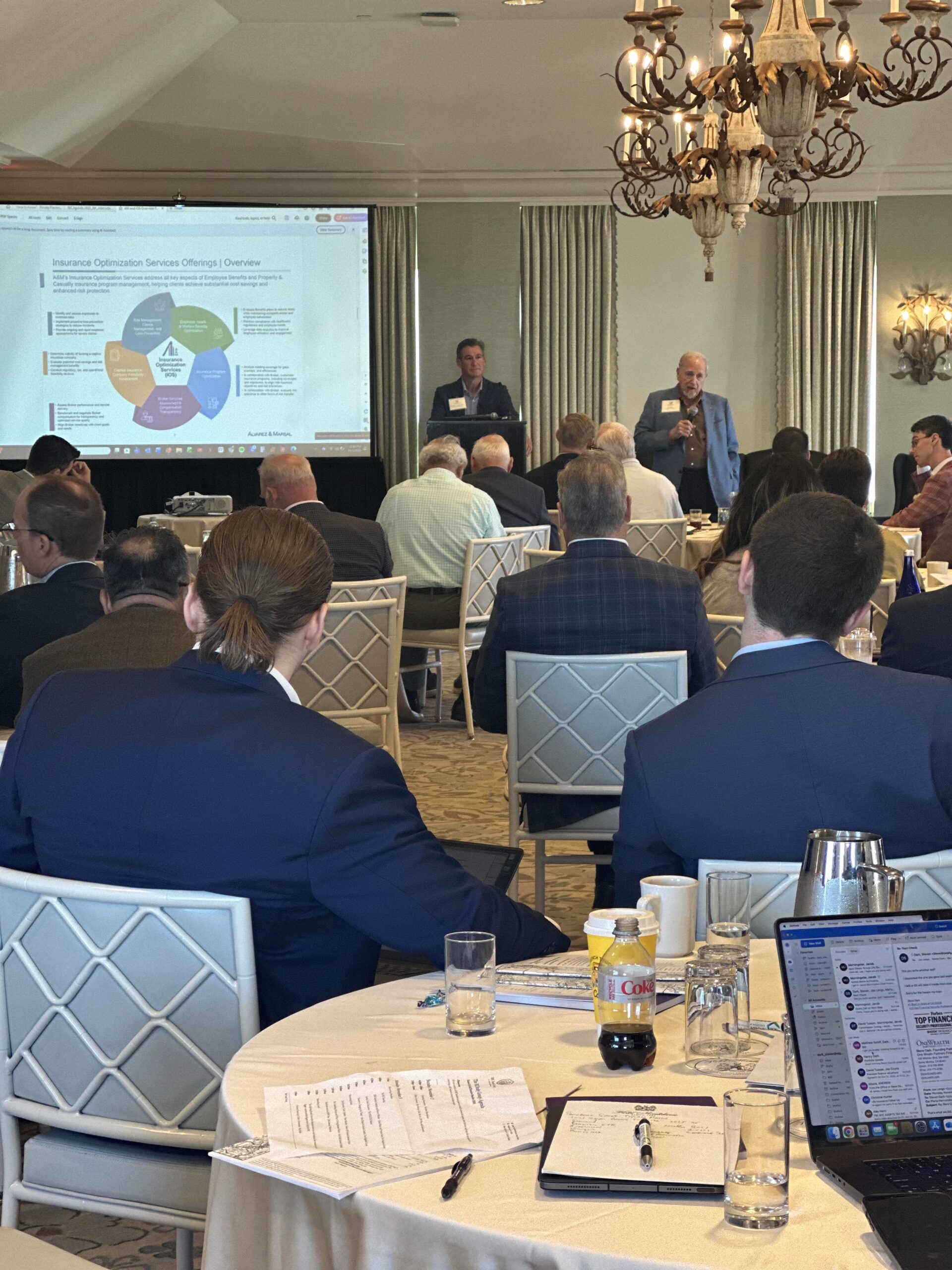
If you are an advisor to the banking industry’s elite, or a leader responsible for the long-term health of your institution, you know that standing still is the same as moving backward. That is why we are thrilled to announce that registration is officially live for the 2026 Independent Bank Corporate (IBC) Owned Life Insurance Study Group.

From November 1–3, 2026, we are returning to our spiritual home at the Hotel Monteleone in New Orleans. This isn't just another industry conference where you sit in a windowless ballroom and trade business cards over lukewarm coffee. This is an exclusive gathering designed for top-tier advisors who are serious about Restoring Alignment and Retention.

Why New Orleans? Why Now?


There is a reason we keep coming back to the French Quarter. Beyond the history and the atmosphere, New Orleans represents a blend of tradition and innovation: much like the strategies we discuss.

What keeps you up at night? For many of our attendees, it’s the "What Ifs" that haunt the boardroom.

  • What if your top talent leaves for a competitor tomorrow?

  • What if a senior executive retires and the replacement cost exceeds your projections?

  • What if a sudden tragedy leaves the business dealing with a widow or a complex succession crisis?


These aren't just hypothetical anxieties; they are the fault lines that can crack a bank’s foundation. At the 2026 IBC Study Group, we don’t just identify these problems; we build the solutions. We focus on the mechanics of Bank-Owned Life Insurance (BOLI) and Corporate-Owned Life Insurance (COLI) not as mere products, but as the engine for The Perfect Plan®.

The Technical Heart: BOLI and Beyond


While the surroundings are legendary, the core of this study group is deeply technical. We dive into the weeds of cost-recovery strategies and the nuances of Bank-Owned Life Insurance (BOLI).

In today’s volatile market, banks are looking for ways to offset the rising costs of employee benefits without taking on undue risk. BOLI remains one of the most effective tools for institutional capital management, offering tax-deferred growth and tax-free death benefits that can be used to fund non-qualified deferred compensation (NQDC) plans or supplemental executive retirement plans (SERPs).

Our sessions will cover:

  • Advanced Cost-Recovery Models: How to structure BOLI to ensure that the bank is made whole for the costs of executive benefits.

  • Executive Retention Strategies: Moving beyond standard bonuses to create "Golden Handcuffs" that actually work.

  • Regulatory Compliance: Navigating the latest updates to ensuring your plans remain "Gospel-compliant" with current tax and banking laws.

  • Succession Planning: Solving the "Business with a Widow" scenario through structured buy-sell arrangements and key-person coverage.


We understand that you are navigating an unstable financial environment. You need a guide who has been through the cycles. Our team at Schiff Executive Benefits acts as that guide, helping you realize your institution’s dream value while protecting your most valuable assets: your people.

Food, Fun, and Friendship: The Monday Night Highlight


We have always believed that the best business happens when the formal ties are loosened. The IBC Study Group has built a reputation on the "Three Fs": Food, Fun, and Friendship. This year, we are taking that to a new level.

On Monday night, we are hosting a Mardi Gras Theme Jazz Reception and Dinner in the brand-new Courtyard at the Hotel Monteleone. Imagine the sound of a brass band echoing off the brick walls, the scent of authentic Creole cuisine in the air, and the chance to network with the brightest minds in the industry in a setting that is uniquely New Orleans.

This isn't just a dinner; it’s an experience designed to foster the kind of deep professional relationships that last decades. It’s where the real "Study Group" happens: sharing stories of what worked, what didn't, and how we are all navigating the complexities of the modern financial world.

Is This Group Right for You?


The IBC Study Group is an exclusive circle. We intentionally keep the numbers focused to ensure that every participant can engage in the high-level dialogue that makes this meeting so valuable.

If you are an advisor who deals with:

  • Institutional BOLI portfolios.

  • Corporate-Owned Life Insurance (COLI) for non-bank entities.

  • Executive benefit plan design and 409A compliance.

  • ESOPs and partnership buy-outs.


...then you belong in the room. This is your opportunity to step away from the day-to-day grind and look at the big picture. Are you building a legacy, or just managing a spreadsheet? Are you offering your clients The Perfect Plan®, or just a standard off-the-shelf solution?

Secure Your Spot


The 2025 Study Group was a complete sell-out, and we expect 2026 to follow suit. The combination of the Monteleone’s charm, the technical depth of our sessions, and the new Monday night Jazz Reception makes this a "must-attend" event on the calendar.

Don't let the "What Ifs" stay unanswered.

  • What if you miss out on the specific tax-efficiency strategies that could save your client millions?

  • What if your competitors are in New Orleans while you’re at your desk?


Registration is now live for the meeting, and hotel reservations are now available through the Hotel Monteleone room block. Important: meeting registration does not cover your hotel booking. They are separate, and you will need to complete both.

Meeting Registration: Register for the 2026 IBC Study Group Here

Hotel Reservation Link: Book your room at Hotel Monteleone

Block Code: IBC30J

If you prefer to call in your reservation, contact 504-523-3341 or 800-535-9595 between 9:00 a.m. and 5:00 p.m. CDT and reference the block code IBC30J.

Sit back, grab your coffee, and mark your calendar. We are heading back to the Big Easy to restore alignment, ensure retention, and celebrate the profession we love.

We can't wait to see you in the Courtyard.


Schiff Executive Benefits is dedicated to helping businesses and banks navigate the complexities of executive retention and cost recovery. Through The Perfect Plan®, we provide the security and guarantees needed in an uncertain world.

For more information on our services or to view our latest insights, visit our posts feed.