

Time is the only asset that cannot be replaced. In the world of high-level finance, whether you are running a regional bank or a multi-state corporation, you know that a missed opportunity today translates into a massive liability tomorrow. You’ve worked hard to build your organization, to hire the right people, and to protect your bottom line. But often, the very tools designed to safeguard your future, Corporate Owned Life Insurance (COLI) and Bank Owned Life Insurance (BOLI), become stagnant because of a “set it and forget it” mentality.
Are you absolutely certain your current portfolio is actually working for you, or is it just sitting there? Does your executive benefits strategy still align with the goals you set five years ago?
At Schiff Executive Benefits, we believe in a “reverse engineering” approach. We don’t start with a product; we start with your desired outcome. Whether you’re looking to offset benefit costs, secure “golden handcuffs” for key talent, or fund a buy/sell arrangement, your portfolio needs to be precise.
Here are the 7 most common mistakes we see in COLI and BOLI portfolios and, more importantly, how you can fix them.
1. Treating Your Portfolio as a “Static” Asset
The market moves. Regulations shift. Tax codes evolve. Yet, many corporations and banks treat their life insurance portfolios like a dusty file in a cabinet. A common misperception is that BOLI or COLI is illiquid or unchangeable. In reality, these are dynamic financial instruments.
If you haven’t reviewed your portfolio in the last 24 months, you are likely missing out on repricing opportunities or better-performing crediting rates. Market conditions change, and a portfolio requires periodic review to identify upgrade opportunities. Just as you wouldn’t ignore your equity portfolio or your loan book, you cannot ignore your COLI/BOLI holdings.
2. Neglecting 101(j) and 409A Compliance
Compliance isn’t just a box to check; it’s the foundation of your tax-advantaged status. Under IRC Section 101(j), if you don’t follow specific notice and consent requirements before the policy is issued, the death benefit, which should be tax-free, could suddenly become taxable income.
Similarly, for corporations using nonqualified deferred compensation (NQDC) plans, the shadow of Section 409A is always present. A single mistake in how your plan is structured or how the COLI informally funds it can lead to immediate taxation and 20% penalties for your key executives.
The Fix: Conduct a comprehensive audit of your documentation. Do you have the signed consents? Is your plan document 409A compliant? If you’re unsure, it’s time to bring in our team to look under the hood.
3. Ignoring Credit Quality and Concentration Risk
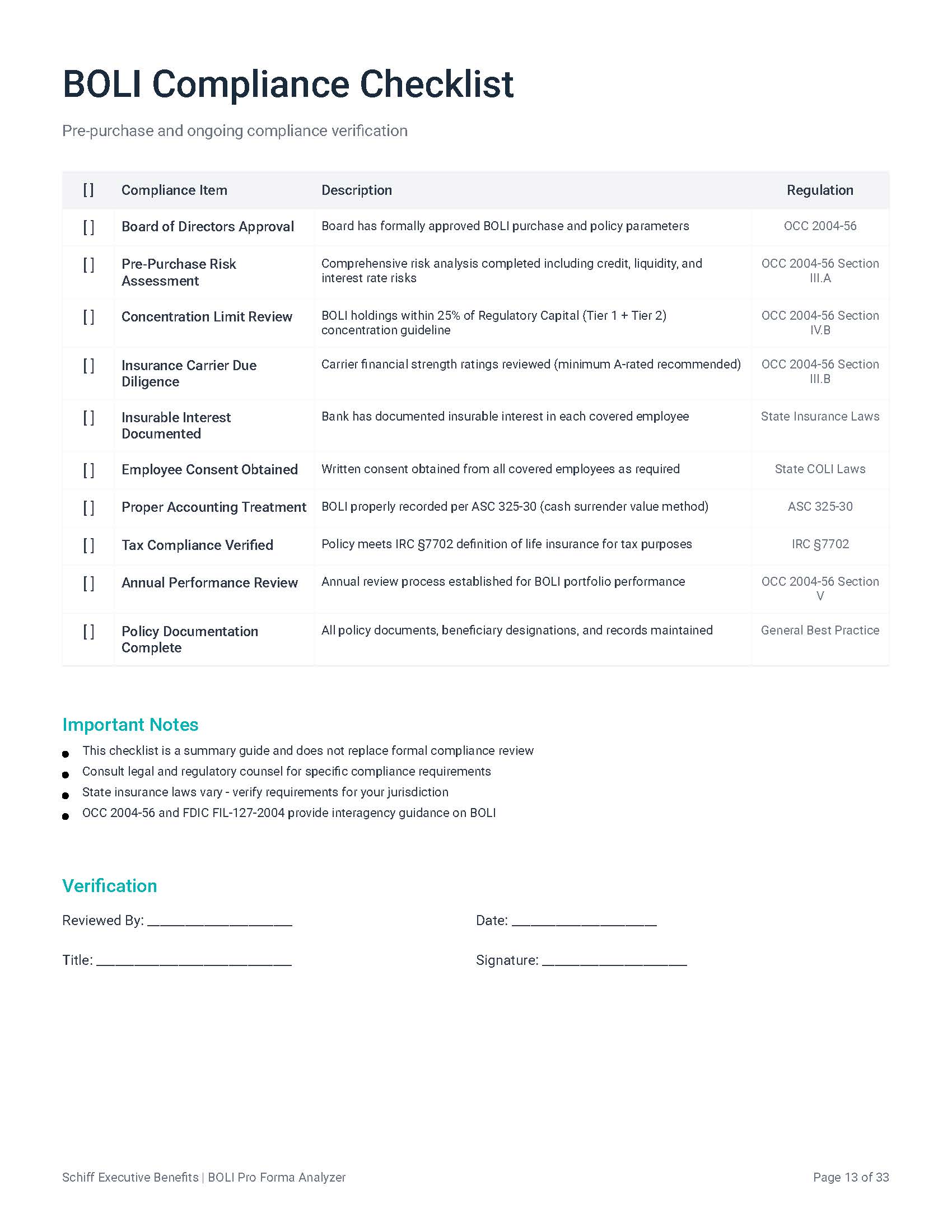
We’ve all seen what happens when an organization puts too many eggs in one basket. In a BOLI environment, credit quality is paramount. Many providers pass along data from insurance carriers without truly validating it. Are you monitoring the financial health of the carrier? Are you diversified across multiple carriers to mitigate risk?
A healthy portfolio requires in-depth insurance carrier analysis. At Schiff Executive Benefits, we help you look beyond the marketing materials to the actual solvency and commitment of the carrier to the BOLI/COLI market.

Suggested prompt: A professional, high-end close-up of a hand reviewing a financial spread sheet with a glass of water on a polished wooden desk, warm natural lighting.
4. Failing to Link the Portfolio to Executive Retention
Why do you have these policies in the first place? For many of our clients, the goal is “Full Cost Recovery” of executive benefit plans. However, if your executive retention strategies are disconnected from your portfolio performance, you aren’t maximizing your “Ownership Feel.”
Are you using Split Dollar arrangements? Are you leveraging the portfolio to create a “Golden Handcuff” effect that makes it impossible for your competitors to poach your top talent? If your portfolio is just a line item on the balance sheet and not a tool for talent management, you’re missing half the value.
5. Underestimating the Power of ESOP Integration
For partnerships and private corporations, Employee Stock Ownership Plans (ESOPs) are a powerful way to align employee interests with company growth. However, ESOPs create unique liquidity needs, especially when it comes to repurchase obligations.
Mistake number five is failing to use COLI to “sprinkle in” liquidity for these obligations. By reverse-engineering your future cash flow needs, we can structure a COLI portfolio that grows tax-deferred, providing the cash exactly when the company needs to buy back shares from retiring employees.
6. Overlooking Buy/Sell and Succession Funding
What keeps you up at night? For many business owners, it’s the question of what happens to the firm if a partner passes away or becomes disabled. Many Buy/Sell arrangements are funded with outdated policies that don’t account for the current valuation of the business.
If your business has grown (and we hope it has!), your 10-year-old policy is likely insufficient. You are essentially leaving your legacy to chance. We use a technical lens to ensure your Buy/Sell funding matches your current “dream value,” ensuring a smooth transition for the remaining partners and the family of the deceased.
7. Lacking a “Team of Advisors” Approach
The most dangerous phrase in business is “I’ve got it covered.” Managing a COLI/BOLI portfolio requires a blend of legal, tax, accounting, and insurance expertise. If your insurance agent doesn’t understand the nuances of FASB accounting or the specific regulatory hurdles faced by banks, they aren’t helping you, they’re creating risk.
At Schiff Executive Benefits, we don’t work in a vacuum. We collaborate with your existing CPAs and legal counsel to ensure that your Perfect Plan® is airtight from every angle.
The Path Forward: Reverse Engineering Your Success
The national debt is rising, market volatility is the new constant, and the “war for talent” is only getting more intense. In this environment, you cannot afford a mediocre portfolio. You need a strategy that is as sophisticated as the organization you’ve built.
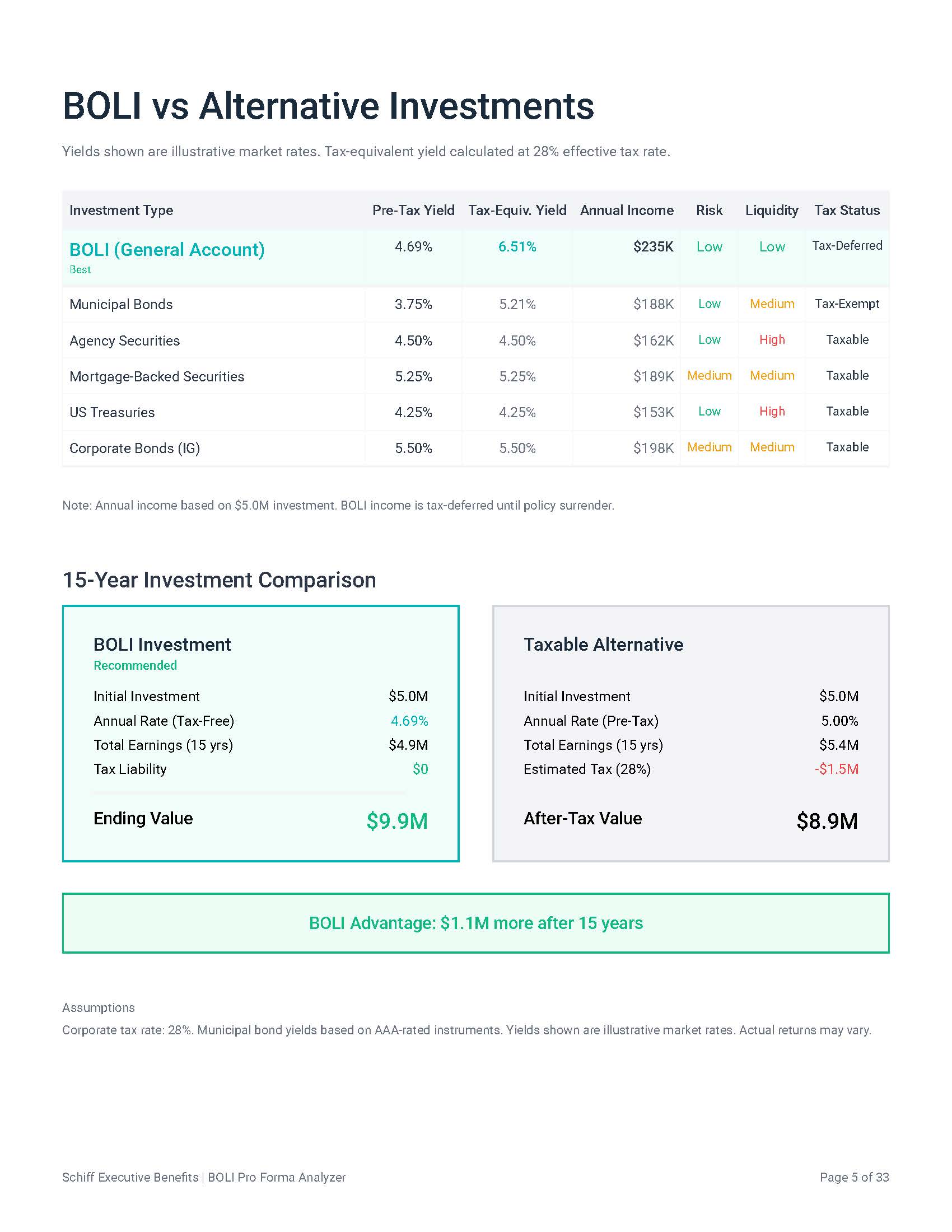
Are you realizing the maximum after-tax yield on your assets? Is your plan structured to recover every dollar of cost, including the opportunity cost of the money?
If these questions give you pause, it’s okay. Most of our clients felt the same way before we began the “reverse engineering” process with them. They were looking for security and a guarantee that their hard work would translate into a lasting legacy.
We invite you to stop guessing and start knowing. Your professional legacy is too important to leave to “standard” industry practices. You deserve a plan that is built your way, with your goals as the blueprint.
Sit back, grab your coffee, and let’s have a conversation. Whether you want to dive deep into the technicalities of a 409A plan or just want a second set of eyes on your BOLI holdings, we are here to guide you through the uncertainty.
Come join us at Schiff Executive Benefits. Let’s make sure your portfolio is doing exactly what it was meant to do: protect your business and reward your people.
To hear more about our philosophy and see these strategies in action, check out The Perfect Plan® Podcast where we break down complex financial structures into actionable executive advice.
Schiff Executive Benefits provides specialized consulting. For specific legal or tax advice, please consult with your professional advisors. You can find our full disclosure here.
Learn more: our complete guide to Bank Owned Life Insurance (BOLI) and Corporate Owned Life Insurance (COLI).