They say that the only constant in life is change, but in the world of high-stakes banking and executive leadership, the only constant is the relentless need for top-tier talent. Without the right people in the right seats, even the most storied financial institutions are just buildings with impressive vaults.
We’ve all felt the shift. The landscape of executive benefits is evolving faster than a New Orleans jazz solo. Tax codes shift, regulatory scrutiny tightens, and the "Great Reshuffle" has turned the hunt for executive retention into a strategic arms race.
If you are an advisor to the banking industry’s elite, or a leader responsible for the long-term health of your institution, you know that standing still is the same as moving backward. That is why we are thrilled to announce that registration is officially live for the 2026 Independent Bank Corporate (IBC) Owned Life Insurance Study Group.
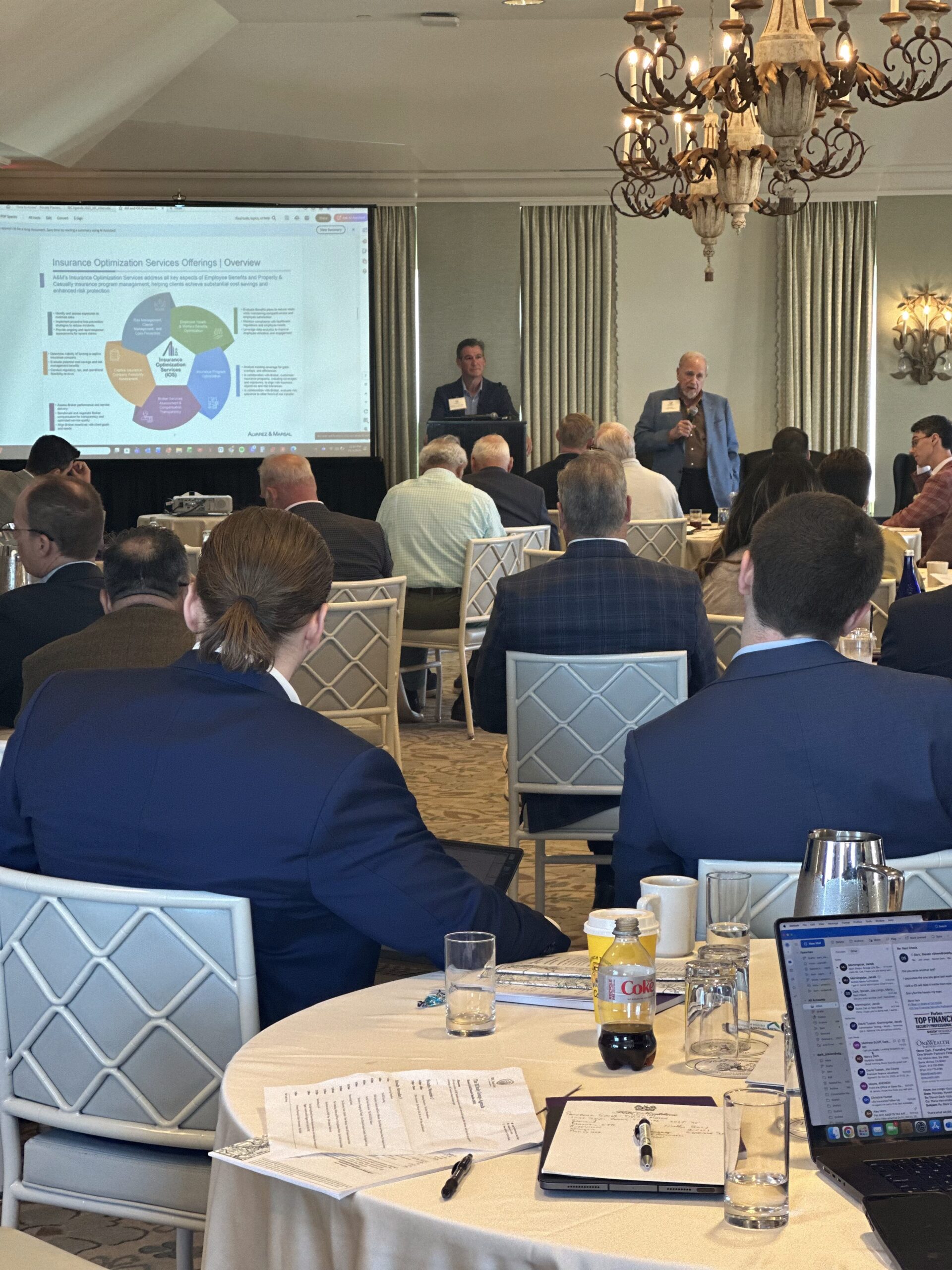
From November 1–3, 2026, we are returning to our spiritual home at the Hotel Monteleone in New Orleans. This isn't just another industry conference where you sit in a windowless ballroom and trade business cards over lukewarm coffee. This is an exclusive gathering designed for top-tier advisors who are serious about Restoring Alignment and Retention.
Why New Orleans? Why Now?
There is a reason we keep coming back to the French Quarter. Beyond the history and the atmosphere, New Orleans represents a blend of tradition and innovation: much like the strategies we discuss.
What keeps you up at night? For many of our attendees, it’s the "What Ifs" that haunt the boardroom.
What if your top talent leaves for a competitor tomorrow?
What if a senior executive retires and the replacement cost exceeds your projections?
What if a sudden tragedy leaves the business dealing with a widow or a complex succession crisis?
These aren't just hypothetical anxieties; they are the fault lines that can crack a bank’s foundation. At the 2026 IBC Study Group, we don’t just identify these problems; we build the solutions. We focus on the mechanics of Bank-Owned Life Insurance (BOLI) and Corporate-Owned Life Insurance (COLI) not as mere products, but as the engine for The Perfect Plan®.
The Technical Heart: BOLI and Beyond
While the surroundings are legendary, the core of this study group is deeply technical. We dive into the weeds of cost-recovery strategies and the nuances of Bank-Owned Life Insurance (BOLI).
In today’s volatile market, banks are looking for ways to offset the rising costs of employee benefits without taking on undue risk. BOLI remains one of the most effective tools for institutional capital management, offering tax-deferred growth and tax-free death benefits that can be used to fund non-qualified deferred compensation (NQDC) plans or supplemental executive retirement plans (SERPs).
Our sessions will cover:
Advanced Cost-Recovery Models: How to structure BOLI to ensure that the bank is made whole for the costs of executive benefits.
Executive Retention Strategies: Moving beyond standard bonuses to create "Golden Handcuffs" that actually work.
Regulatory Compliance: Navigating the latest updates to ensuring your plans remain "Gospel-compliant" with current tax and banking laws.
Succession Planning: Solving the "Business with a Widow" scenario through structured buy-sell arrangements and key-person coverage.
We understand that you are navigating an unstable financial environment. You need a guide who has been through the cycles. Our team at Schiff Executive Benefits acts as that guide, helping you realize your institution’s dream value while protecting your most valuable assets: your people.
Food, Fun, and Friendship: The Monday Night Highlight
We have always believed that the best business happens when the formal ties are loosened. The IBC Study Group has built a reputation on the "Three Fs": Food, Fun, and Friendship. This year, we are taking that to a new level.
On Monday night, we are hosting a Mardi Gras Theme Jazz Reception and Dinner in the brand-new Courtyard at the Hotel Monteleone. Imagine the sound of a brass band echoing off the brick walls, the scent of authentic Creole cuisine in the air, and the chance to network with the brightest minds in the industry in a setting that is uniquely New Orleans.
This isn't just a dinner; it’s an experience designed to foster the kind of deep professional relationships that last decades. It’s where the real "Study Group" happens: sharing stories of what worked, what didn't, and how we are all navigating the complexities of the modern financial world.
Is This Group Right for You?
The IBC Study Group is an exclusive circle. We intentionally keep the numbers focused to ensure that every participant can engage in the high-level dialogue that makes this meeting so valuable.
If you are an advisor who deals with:
Institutional BOLI portfolios.
Corporate-Owned Life Insurance (COLI) for non-bank entities.
Executive benefit plan design and 409A compliance.
ESOPs and partnership buy-outs.
...then you belong in the room. This is your opportunity to step away from the day-to-day grind and look at the big picture. Are you building a legacy, or just managing a spreadsheet? Are you offering your clients The Perfect Plan®, or just a standard off-the-shelf solution?
Secure Your Spot
The 2025 Study Group was a complete sell-out, and we expect 2026 to follow suit. The combination of the Monteleone’s charm, the technical depth of our sessions, and the new Monday night Jazz Reception makes this a "must-attend" event on the calendar.
Don't let the "What Ifs" stay unanswered.
What if you miss out on the specific tax-efficiency strategies that could save your client millions?
What if your competitors are in New Orleans while you’re at your desk?
Registration is now live for the meeting, and hotel reservations are now available through the Hotel Monteleone room block. Important: meeting registration does not cover your hotel booking. They are separate, and you will need to complete both.
If you prefer to call in your reservation, contact 504-523-3341 or 800-535-9595 between 9:00 a.m. and 5:00 p.m. CDT and reference the block code IBC30J.
Sit back, grab your coffee, and mark your calendar. We are heading back to the Big Easy to restore alignment, ensure retention, and celebrate the profession we love.
We can't wait to see you in the Courtyard.
Schiff Executive Benefits is dedicated to helping businesses and banks navigate the complexities of executive retention and cost recovery. ThroughThe Perfect Plan®, we provide the security and guarantees needed in an uncertain world.
For more information on our services or to view our latest insights, visit ourposts feed.
Bank-Owned Life Insurance (BOLI) is life insurance a bank purchases on the lives of its officers and directors, where the bank owns the policy, pays the premium, and is the beneficiary. Banks use BOLI as a tax-advantaged balance sheet asset to offset the rising cost of employee benefit programs. Cash surrender value grows tax-deferred, death proceeds are generally received income-tax-free, and the resulting yield typically exceeds what the same capital would earn in taxable short-term instruments of comparable credit quality.
BOLI is permissible for national banks under 12 U.S.C. 24 (Seventh) and is governed by the 2004 Interagency Statement on the Purchase and Risk Management of Life Insurance. The Statement sets supervisory guidelines rather than statutory caps: aggregate cash surrender value is generally expected to stay within 25% of Tier 1 capital, with exposure to any single carrier generally within 15%. It also calls for a documented pre-purchase analysis.
The same structure bought by an operating company is called COLI; bought by an insurance carrier, iCOLI.
A bank is only as strong as its community, and its community is only as strong as the leaders who serve it. In the financial world, stability is the cornerstone of trust. Yet, many bank executives find themselves facing an unstable paradox: how do you maintain a competitive edge and protect your balance sheet while simultaneously funding the escalating costs of employee benefits?
If you are leading a financial institution today, you are likely wrestling with the "What Ifs" that keep even the most seasoned presidents awake at night. What if your top talent is lured away by a larger competitor? What if the cost of your pension and health plans continues to outpace your portfolio’s yield? What if your senior executive retirement costs become a drag on your regulatory capital?
To find the answer, we look toward a strategy utilized by over 65% of banks in the United States. It is a tool designed for Restoring Alignment and Retention: Bank-Owned Life Insurance (BOLI).
What is BOLI, and Why Does It Matter?
At its most fundamental level, Bank-Owned Life Insurance is a life insurance policy purchased by a bank on the lives of its key employees: usually officers and directors. The bank is the owner and the beneficiary of the policy.
While the term "insurance" is in the name, for a financial institution, BOLI is primarily a sophisticated investment and a Tier 1 asset. The bank pays a premium (often a single lump sum), and the cash value of the policy grows over time.
Why is this so popular? Because it solves the problem of "lazy capital." Instead of holding assets in low-yield taxable instruments, banks move capital into a tax-advantaged BOLI structure where the growth can offset specific liabilities. It is a method of taking a "dead" expense: like the cost of executive benefits — and turning it into a high-performing asset.
The Economic Reality: After-Tax Yield and Efficiency
In a world where interest rates are volatile and traditional fixed-income yields are often squeezed by taxes, BOLI stands out as a beacon of efficiency.
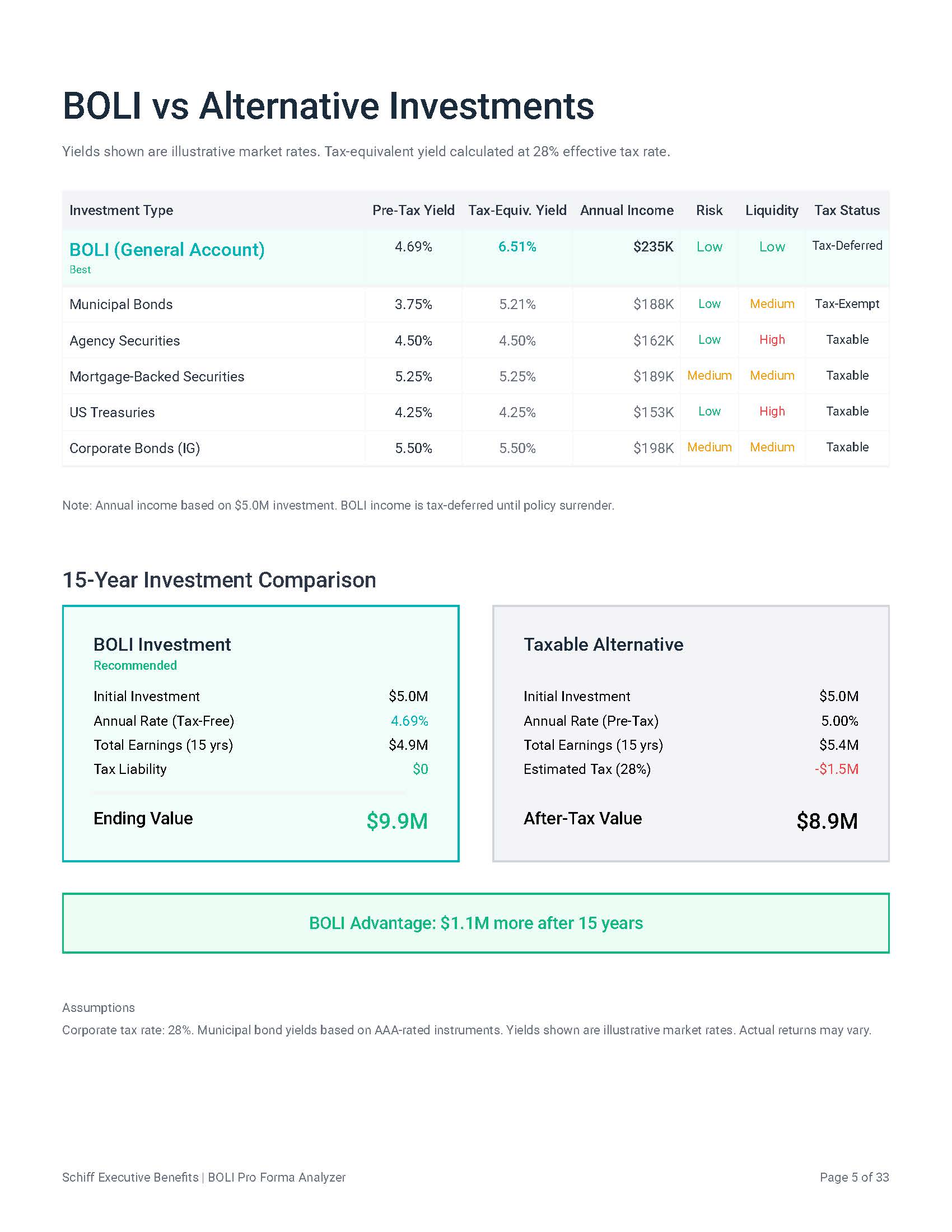
When you compare BOLI to alternative fixed-income investments: such as municipal bonds, agency securities, or Treasuries: the difference is often staggering. Because the cash value growth within a BOLI policy is tax-deferred (and tax-free if held until the death of the insured), the "tax-equivalent" yield is significantly higher than what a bank can typically earn elsewhere.
As shown in our proprietary BOLI Pro Forma Analyzer, a $5 million investment in BOLI can provide a tax-equivalent rate that significantly outperforms corporate bonds or MBS portfolios. This isn't just about "beating the market"; it’s about generating the necessary cash flow to fund Non-Qualified Deferred Compensation (NQDC) and other executive carve-outs that are essential for retention.
Offsetting the Rising Cost of Talent
What is the true cost of losing your CFO or a high-performing VP of Lending? It isn't just the recruiter's fee. It is the loss of institutional knowledge, the disruption of client relationships, and the significant expense of "buying" a replacement in a competitive market.
Most banks use BOLI to recover the costs of:
Post-retirement medical benefits
Supplemental Executive Retirement Plans (SERPs)
Group term life insurance premiums
401(k) matching and pension obligations
By utilizing BOLI, you are essentially creating an informal "sinking fund" to pay for these future obligations. It allows you to offer "ownership-like" benefits without actually diluting your bank’s equity. This is how you retain your key people while keeping the bank’s financial health intact.
Regulatory Compliance: The Tier 1 Advantage
One of the most frequent questions I get from Bank Presidents is: "How will the regulators view this?"
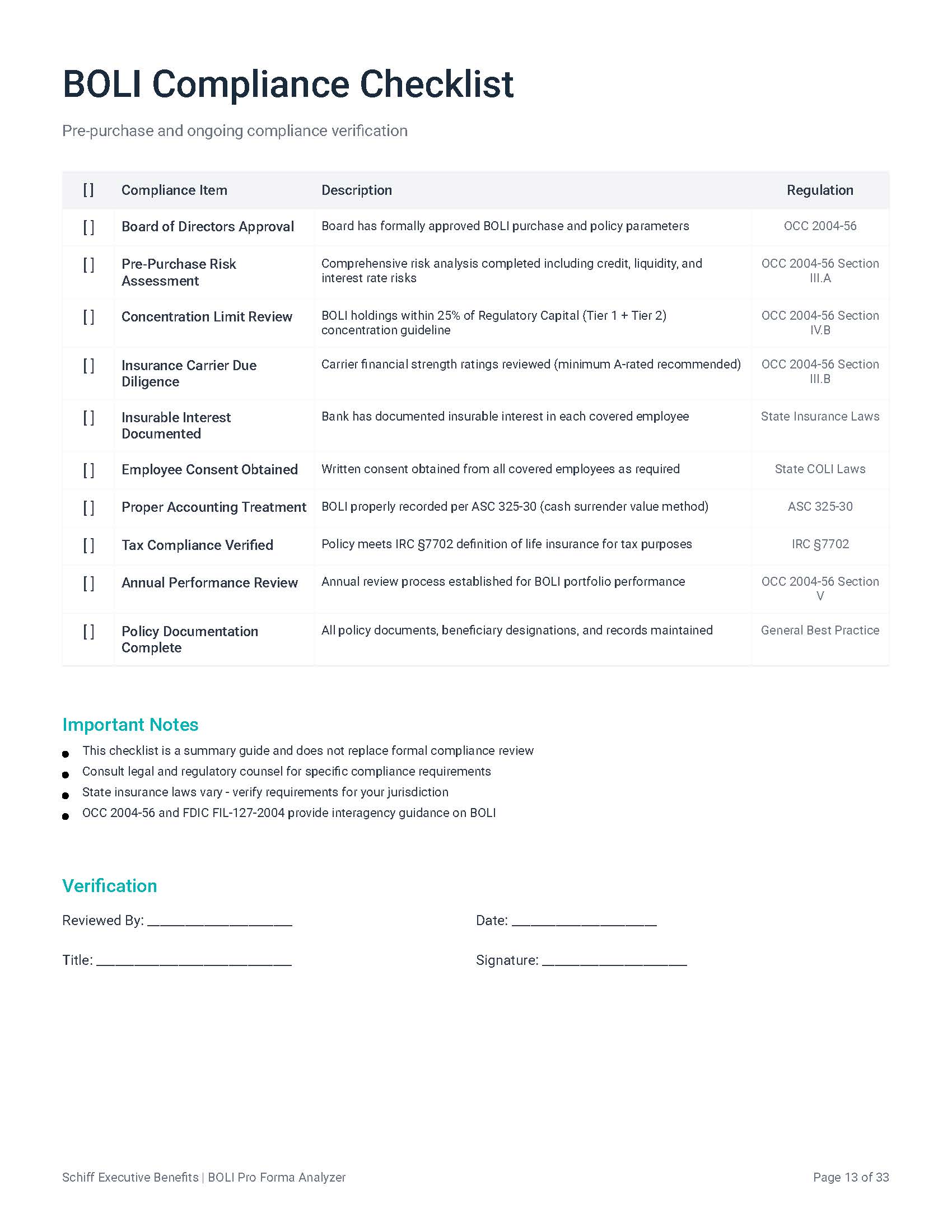
The answer is found in the Interagency Statement on the Purchase and Risk Management of Life Insurance. BOLI is recognized as a permissible investment for banks, provided it is managed within specific guidelines. Most notably, the Office of the Comptroller of the Currency (OCC) and other regulators generally allow BOLI holdings up to 25% of a bank’s Tier 1 capital.
Because BOLI is a high-quality asset backed by highly-rated insurance carriers, it provides a stable foundation for your balance sheet. Unlike securities portfolios, BOLI cash values are typically not subject to the "mark-to-market" volatility that can plague a bank during periods of rising interest rates. This makes it a preferred tool for managing earnings consistency.
One compliance requirement carries more weight than the rest, because it cannot be corrected after the fact: written notice and consent must be in hand before a policy is issued. See the §101(j) notice and consent deadline.
The same legislation added an annual reporting obligation, filed with the company return: Form 8925.
The Human Element: Survivor Income as an Incentive
While the bank is the primary beneficiary, BOLI can also be structured to provide a powerful direct benefit to the insured executives.
Through "split-dollar" arrangements, a portion of the death benefit can be directed to the executive’s family. This provides "pre-retirement survivor income": a massive incentive for a key leader who wants to ensure their family is protected while they focus on growing your institution.
Think about the peace of mind you are offering your top officers. You aren't just giving them a salary; you are giving them a legacy. When you align the bank’s financial goals with the personal security of its leaders, you create an environment where talent stays for the long haul.
Why the "Carrier Agnostic" Approach Matters
The BOLI market is nuanced. There are different types of products: General Account, Hybrid Account, and Separate Account: each with its own risk profile and yield potential.
At Schiff Executive Benefits, we believe that your bank deserves a solution tailored to your specific capital structure and risk appetite, not a "product of the month." We operate as independent brokers, which means we work with all the major, highly-rated carriers to find the right fit for you.
Our process, which we call The Perfect Plan®, involves:
A Deep-Dive Needs Analysis: We look at your current benefit liabilities and capital ratios.
Carrier Evaluation: We vet the financial strength and historical performance of potential insurance partners.
Pro Forma Modeling: We show you exactly how BOLI will impact your EPS and ROA over 10, 20, and 30 years.
Implementation and Administration: We handle the heavy lifting, from board education to ongoing compliance monitoring.
The Point of No Return: Why Wait?
Every day that your bank's benefit liabilities grow while your assets remain in taxable, low-yield accounts is a day of lost opportunity. Economic shifts are coming, and the cost of talent is not going down.
Are you prepared for the next five years? What if your replacement cost for your senior team increases by 20%? What if your 401(k) matches become a burden on your margins?
BOLI is not just a financial product; it is a strategic shield. It provides a calm, structured way out of the anxiety of rising costs. It allows you to focus on what you do best: banking: while we ensure your "human capital" is fully funded and protected.
Join Us for a Deeper Conversation
Navigating the complexities of executive benefits and BOLI doesn't have to be a solo journey. Whether you are looking to implement your first BOLI plan or you want a review of your existing holdings to ensure they are performing as promised, we are here to help.
Sit back, grab your coffee, and let's discuss how we can bring stability back to your executive suite. Building your bank’s legacy should be a realization of your dream value, not a source of stress.
Come join us and discover how The Perfect Plan® can help you achieve alignment and retention.
A BOLI purchase is a reallocation of existing bank assets, not new spending. The bank moves capital from a taxable holding — typically short-duration securities or fed funds — into an insurance contract on the lives of consenting officers.
The bank identifies a legitimate business need, usually the cost of an existing or planned benefit obligation.
It performs and documents a pre-purchase analysis covering need, amount, carrier selection, product characteristics, and risk.
Eligible insureds provide written notice and consent before any policy is issued.
The bank pays a single premium, or a limited series, and records the cash surrender value as an asset.
Cash value accumulates tax-deferred at the credited rate, and the increase is recognized in non-interest income.
At the insured's death, the carrier pays the bank; proceeds above carrying value are generally income-tax-free.
The reason this works economically is the absence of current tax on the inside build-up. A taxable instrument yielding the same nominal rate is worth materially less after tax. That spread is the entire case for BOLI, and it is why the comparison must always be run against the specific alternative the bank would otherwise hold.
BOLI Is a Hold-to-Maturity Asset
Surrendering a policy generally triggers ordinary income on the gain and forfeits the tax-free death benefit — the two features that justified the purchase. BOLI should therefore be underwritten as a permanent allocation. A bank that may need that liquidity inside ten years is not a good candidate, and any presentation that treats cash value as a liquidity source deserves scrutiny.
The Three Account Types
Product selection drives most of the risk difference between two otherwise identical BOLI programs.
General Account — assets sit in the carrier's general account. The carrier declares a credited rate, usually with a guaranteed floor. Simplest to administer, and the bank takes direct credit exposure to the carrier. Suits smaller programs and banks that prefer a declared rate over transparency.
Separate Account — assets are held in a segregated account, insulated from the claims of the carrier's general creditors. Returns track the underlying portfolio, so a stable value protection wrapper is generally used to smooth book value. More transparent, more moving parts, and the wrap provider becomes its own counterparty to diligence.
Hybrid Account — a general account chassis with some separate-account characteristics, typically better rate transparency than pure general account without the full complexity of a wrapped separate account.
Institutional Indexed Universal Life — crediting tied to an index formula subject to caps and floors. Requires the board to understand exactly how the crediting method behaves in a flat or negative index year.
There is no universally correct answer. The right structure follows from the bank's size, its credit appetite, its comfort with mark-to-market mechanics, and how much administrative capacity it has.
Aggregate cash surrender value of all life insurance holdings is generally expected to remain within 25% of Tier 1 capital, with exposure to any single carrier generally within 15%. These are supervisory guidelines rather than statutory caps — a bank exceeding them is not automatically in violation, but is expected to document why the concentration is prudent and how it is managed. In practice, examiners treat an undocumented excess far more harshly than a well-reasoned one.
The Pre-Purchase Analysis
This is where most criticized BOLI programs fail, and the failure is almost always documentation rather than economics. A defensible analysis addresses:
The specific business need and the benefit obligation being offset
The amount of insurance and how that amount was derived
Vendor and carrier selection, including financial strength and the basis for choosing among carriers
Product characteristics, including crediting methodology and surrender charges
Alternatives considered and why BOLI was preferred
The full risk assessment — liquidity, credit, interest rate, operational, compliance, reputation, and price risk
Evidence of board or committee review and approval before purchase
The analysis must exist before the purchase. Reconstructing one after an examiner asks is not the same thing, and examiners can tell the difference.
Ongoing Risk Management
Approval at purchase does not end the obligation. Regulators expect periodic review — at minimum annually — covering carrier financial condition, policy performance against expectations, continued compliance with concentration guidance, and confirmation that the original business purpose still holds. Programs that were bought correctly and then left unmonitored for a decade are a recurring examination finding.
IRC 101(j): Notice and Consent
BOLI is employer-owned life insurance, so IRC 101(j) applies with full force. Since the Pension Protection Act of 2006, death proceeds are taxable to the bank above premiums paid unless, before the policy is issued, the insured has been notified in writing of the intent to insure and the maximum face amount, has consented in writing to coverage that may continue after employment ends, and has been informed the bank will be a beneficiary.
The insured must also fall within a qualifying category, which in a banking context generally means directors and highly compensated employees as defined in the Code. The bank files Form 8925 annually with its return.
Two situations create most of the exposure. The first is acquisition: banks that grow by merger routinely inherit policies without inheriting the consent files. The second is time — programs bought fifteen years ago by people who have since retired, where nobody has verified that the documentation still exists. Both are worth auditing before a claim rather than during one.
Accounting Treatment
An investment in life insurance is reported at the amount realizable under the contract at the balance sheet date, which in practice means cash surrender value net of any surrender charge the bank would actually incur. Periodic increases flow through non-interest income. Death proceeds above carrying value are recognized when realizable.
Two consequences worth raising with your CFO before the first premium: the asset recorded in year one is cash surrender value, not premium paid, and in some product designs those differ meaningfully at the outset. And the carrier's annual statement becomes audit support, so the reporting relationship matters as much as the crediting rate.
What BOLI Actually Funds
BOLI is informal financing, not funding. The policy is a general asset of the bank; it is not pledged, segregated, or promised to any participant. Most programs are used to offset:
Split dollar and endorsement arrangements providing survivor income to officers' families
General group benefit costs — health, disability, and post-retirement obligations
Any plan document or officer communication implying the policy secures the benefit creates a constructive receipt problem and undermines the arrangement. The promise and the asset must stay legally separate.
Where BOLI Programs Go Wrong
Missing 101(j) consent — the most expensive failure, and almost always found at claim rather than at purchase.
Thin or backdated pre-purchase analysis — the most common examination criticism.
Carrier concentration drift — a program that was inside the 15% single-carrier guideline at purchase can breach it as capital changes or as one carrier's block outperforms.
Orphaned programs — the originating producer is gone, nobody reviews performance, and the crediting rate has quietly reset.
Product mismatch — separate account complexity sold to a bank without the staff to administer it, or a general account placement with a carrier whose financial strength has since deteriorated.
Free Download: Bank-Owned Life Insurance (BOLI) Guide
Tell us where to send it. The PDF opens right away, and we will email you a copy.
Frequently Asked Questions About BOLI
What is BOLI in banking?
BOLI is life insurance owned by a bank on the lives of its officers and directors, held as a balance sheet asset to offset employee benefit costs. The bank pays the premium, owns the cash value, and receives the death benefit.
Is BOLI legal for banks?
Yes. National banks may purchase and hold life insurance under 12 U.S.C. 24 (Seventh) in connection with employee compensation and benefit plans, key person coverage, and related purposes. State-chartered institutions operate under comparable state authority. The purchase must address a legitimate business need.
How much BOLI can a bank own?
Supervisory guidance generally expects aggregate cash surrender value within 25% of Tier 1 capital, and within 15% for any single carrier. These are guidelines requiring documented justification if exceeded, not hard statutory ceilings.
Are BOLI premiums tax deductible?
No. Premiums on a policy where the bank is a beneficiary are not deductible. The tax advantage sits in the tax-deferred accumulation and the generally tax-free death benefit.
What happens to BOLI when an insured officer leaves the bank?
The bank continues to own the policy and typically keeps it in force — which is exactly why the 101(j) consent must disclose that coverage may continue after employment ends. Whether to retain it is an economic question about that policy's performance.
Can a bank surrender a BOLI policy?
It can, but surrender generally triggers ordinary income on the gain and forfeits the tax-free death benefit. Surrender charges may also apply in early years. BOLI should be purchased as a permanent allocation, not a liquidity reserve.
What is the difference between BOLI and COLI?
The structure is essentially the same; the owner differs. BOLI is bought by a bank and carries an additional layer of federal banking supervision. COLI is bought by an operating company and is governed by the tax rules without that supervisory overlay. Our side-by-side comparison works through the choice.
What is stable value protection?
In separate account BOLI, a stable value wrap smooths the reported book value of the underlying portfolio so the bank is not exposed to mark-to-market swings in earnings. The wrap provider is a distinct counterparty and belongs in the pre-purchase credit analysis alongside the carrier.
How often should a BOLI program be reviewed?
At least annually, covering carrier financial condition, actual versus expected performance, concentration against current Tier 1 capital, and continued alignment with the original business purpose. Many banks also commission an independent review every few years.
Can BOLI be restructured without triggering tax?
A 1035 exchange may permit moving from one contract to another without current recognition, but the analysis is fact-specific and interacts with 101(j) and the transfer-for-value rules. A wholesaler's illustration is not a substitute for that analysis.
Time is the only asset that cannot be replaced. In the world of high-level finance, whether you are running a regional bank or a multi-state corporation, you know that a missed opportunity today translates into a massive liability tomorrow. You’ve worked hard to build your organization, to hire the right people, and to protect your bottom line. But often, the very tools designed to safeguard your future, Corporate Owned Life Insurance (COLI) and Bank Owned Life Insurance (BOLI), become stagnant because of a "set it and forget it" mentality.
Are you absolutely certain your current portfolio is actually working for you, or is it just sitting there? Does your executive benefits strategy still align with the goals you set five years ago?
At Schiff Executive Benefits, we believe in a "reverse engineering" approach. We don't start with a product; we start with your desired outcome. Whether you’re looking to offset benefit costs, secure "golden handcuffs" for key talent, or fund a buy/sell arrangement, your portfolio needs to be precise.
Here are the 7 most common mistakes we see in COLI and BOLI portfolios and, more importantly, how you can fix them.
1. Treating Your Portfolio as a "Static" Asset
The market moves. Regulations shift. Tax codes evolve. Yet, many corporations and banks treat their life insurance portfolios like a dusty file in a cabinet. A common misperception is that BOLI or COLI is illiquid or unchangeable. In reality, these are dynamic financial instruments.
If you haven't reviewed your portfolio in the last 24 months, you are likely missing out on repricing opportunities or better-performing crediting rates. Market conditions change, and a portfolio requires periodic review to identify upgrade opportunities. Just as you wouldn't ignore your equity portfolio or your loan book, you cannot ignore your COLI/BOLI holdings.
2. Neglecting 101(j) and 409A Compliance
Compliance isn't just a box to check; it’s the foundation of your tax-advantaged status. Under IRC Section 101(j), if you don’t follow specific notice and consent requirements before the policy is issued, the death benefit, which should be tax-free, could suddenly become taxable income.
Similarly, for corporations using nonqualified deferred compensation (NQDC) plans, the shadow of Section 409A is always present. A single mistake in how your plan is structured or how the COLI informally funds it can lead to immediate taxation and 20% penalties for your key executives.
The Fix: Conduct a comprehensive audit of your documentation. Do you have the signed consents? Is your plan document 409A compliant? If you're unsure, it’s time to bring in our team to look under the hood.
We’ve all seen what happens when an organization puts too many eggs in one basket. In a BOLI environment, credit quality is paramount. Many providers pass along data from insurance carriers without truly validating it. Are you monitoring the financial health of the carrier? Are you diversified across multiple carriers to mitigate risk?
A healthy portfolio requires in-depth insurance carrier analysis. At Schiff Executive Benefits, we help you look beyond the marketing materials to the actual solvency and commitment of the carrier to the BOLI/COLI market.
Suggested prompt: A professional, high-end close-up of a hand reviewing a financial spread sheet with a glass of water on a polished wooden desk, warm natural lighting.
4. Failing to Link the Portfolio to Executive Retention
Why do you have these policies in the first place? For many of our clients, the goal is "Full Cost Recovery" of executive benefit plans. However, if your executive retention strategies are disconnected from your portfolio performance, you aren’t maximizing your "Ownership Feel."
Are you using Split Dollar arrangements? Are you leveraging the portfolio to create a "Golden Handcuff" effect that makes it impossible for your competitors to poach your top talent? If your portfolio is just a line item on the balance sheet and not a tool for talent management, you’re missing half the value.
5. Underestimating the Power of ESOP Integration
For partnerships and private corporations, Employee Stock Ownership Plans (ESOPs) are a powerful way to align employee interests with company growth. However, ESOPs create unique liquidity needs, especially when it comes to repurchase obligations.
Mistake number five is failing to use COLI to "sprinkle in" liquidity for these obligations. By reverse-engineering your future cash flow needs, we can structure a COLI portfolio that grows tax-deferred, providing the cash exactly when the company needs to buy back shares from retiring employees.
6. Overlooking Buy/Sell and Succession Funding
What keeps you up at night? For many business owners, it’s the question of what happens to the firm if a partner passes away or becomes disabled. Many Buy/Sell arrangements are funded with outdated policies that don't account for the current valuation of the business.
If your business has grown (and we hope it has!), your 10-year-old policy is likely insufficient. You are essentially leaving your legacy to chance. We use a technical lens to ensure your Buy/Sell funding matches your current "dream value," ensuring a smooth transition for the remaining partners and the family of the deceased.
7. Lacking a "Team of Advisors" Approach
The most dangerous phrase in business is "I’ve got it covered." Managing a COLI/BOLI portfolio requires a blend of legal, tax, accounting, and insurance expertise. If your insurance agent doesn't understand the nuances of FASB accounting or the specific regulatory hurdles faced by banks, they aren't helping you, they're creating risk.
At Schiff Executive Benefits, we don't work in a vacuum. We collaborate with your existing CPAs and legal counsel to ensure that your Perfect Plan® is airtight from every angle.
The Path Forward: Reverse Engineering Your Success
The national debt is rising, market volatility is the new constant, and the "war for talent" is only getting more intense. In this environment, you cannot afford a mediocre portfolio. You need a strategy that is as sophisticated as the organization you’ve built.
Are you realizing the maximum after-tax yield on your assets? Is your plan structured to recover every dollar of cost, including the opportunity cost of the money?
If these questions give you pause, it’s okay. Most of our clients felt the same way before we began the "reverse engineering" process with them. They were looking for security and a guarantee that their hard work would translate into a lasting legacy.
We invite you to stop guessing and start knowing. Your professional legacy is too important to leave to "standard" industry practices. You deserve a plan that is built your way, with your goals as the blueprint.
Sit back, grab your coffee, and let’s have a conversation. Whether you want to dive deep into the technicalities of a 409A plan or just want a second set of eyes on your BOLI holdings, we are here to guide you through the uncertainty.
To hear more about our philosophy and see these strategies in action, check out The Perfect Plan® Podcast where we break down complex financial structures into actionable executive advice.
Schiff Executive Benefits provides specialized consulting. For specific legal or tax advice, please consult with your professional advisors. You can find our full disclosure here.
If any of these turned up something in your own file, the one that cannot be fixed retroactively is the consent sequence. Start with the §101(j) notice and consent deadline.



 They say that the only constant in life is change, but in the world of high-stakes banking and executive leadership, the only constant is the relentless need for top-tier talent. Without the right people in the right seats, even the most storied financial institutions are just buildings with impressive vaults.