
Hi, How Can We Help You?
  • Planning for all of life's "What Ifs".

Category Archives: Retirement


They say the view from the top is spectacular, but they rarely mention that the wind is a whole lot stronger up there.


There is a common aphorism in the business world: "Success breeds complexity." For most executives and business owners, this isn't just a catchy phrase; it’s a daily reality. You’ve spent twenty or thirty years climbing the ladder, building a legacy, and reaching the zenith of your earning potential. By all traditional metrics, you’ve "made it."


Yet, for many in the 40-to-55-year-old demographic, this peak professional moment coincides with what we call the "Critical Convergence." It is the moment when your professional influence is at its highest, but your family’s financial and emotional security is at its most vulnerable.


Welcome to the Executive Sandwich.


The Weight of the "Critical Convergence"


The Executive Sandwich isn't just about being busy; it’s about being squeezed from both ends by the people you love most. On one side, you have children entering their most expensive years: think elite university tuitions, housing, and the "failure to launch" buffer. On the other side, you have aging parents whose health may be declining, requiring specialized care, assisted living, or significant financial oversight.


Nearly one in four adults in this age bracket is now providing financial support to both children and parents simultaneously. When you layer this on top of the high-end lifestyle costs consistent with executive status and the desperate need to maximize your own retirement contributions, the "squeeze" becomes a vice grip.


Have you ever stopped to ask yourself: What if I’m the one who runs out of retirement money because I was too busy funding everyone else’s life?


This is one of the core questions we address at Schiff Executive Benefits. In our mission of Restoring Alignment and Retention, we recognize that an executive who is financially stressed at home is an executive who cannot be fully present in the boardroom.


![Warm multigenerational family scene showing the sandwich generation squeeze]


The Financial Paradox of High Earners


It seems counterintuitive. How can someone making mid-to-high six figures (or seven figures) be at risk?


The reality is that the "401(k) Cap" creates a massive college funding gap for high earners. If you are limited in what you can put away in traditional tax-qualified plans, you are often forced to fund these "sandwich" expenses out of cash flow or after-tax savings.


When a $100,000-a-year tuition bill hits at the same time as a $10,000-a-month memory care bill for a parent, even a healthy executive salary starts to look thin. This is the decade where the "What Ifs" start to feel very real.


  1. What if you run out of retirement money? (The fear of the "wealth gap").

  2. What if top talent leaves? (The fear that you, as the engine of the business, are too burned out to lead).

  3. What if the business faces a buyout? (The fear that your personal financial "sandwich" makes you vulnerable during a transition).


The Human Toll: Burnout is a Business Liability


We can talk about the numbers all day, but we also have to talk about the person behind the desk. Research shows that 64% of "sandwich generation" professionals are at high risk for burnout. For women in the 40-54 age bracket, that number is even more staggering, with nearly half falling into the most severe burnout categories.


When an executive is struggling to balance a high-stakes career with caregiving responsibilities, the business suffers. We see it in unplanned absences, attrition, and a loss of institutional knowledge. In 2025 alone, nearly half a million women exited the US workplace due to caregiving pressures.


As a business owner, you have to ask: What is the cost of senior exec retirement or replacement efficiency? If your top people are leaving because they can't manage the "sandwich," your company is losing its most valuable asset: its human capital.


![Calm leadership reflection in a sunlit executive office or library]


Strategies for the Squeezed Executive


So, how do we fix it? How do we take an unstable financial environment and create a "security guarantee"?


At Schiff Executive Benefits, we don't believe in "one-size-fits-all" solutions. We look at the intersection of corporate health and personal legacy. For corporations and partnerships, this often involves sophisticated tools like Corporate Owned Life Insurance (COLI) and Non-Qualified Deferred Compensation (NQDC) plans.


The Power of COLI


Corporate Owned Life Insurance (COLI) is a powerful tool that allows a business to fund executive benefits while creating a tax-advantaged asset on the balance sheet. Unlike traditional plans, COLI doesn't have the same restrictive contribution limits, making it an ideal vehicle for bridging the retirement gap for those in the Executive Sandwich. It allows the company to support its mission of Restoring Alignment and Retention by providing the executive with a specialized benefit that addresses their unique family risks.


The Perfect Plan®


Everything we do is centered around The Perfect Plan®. This isn't just a catchy name; it’s our proprietary approach to ensuring that every piece of the financial puzzle fits together. Whether we are discussing buy/sell arrangements or 409A compliance, The Perfect Plan® is designed to ensure that the business can survive the "What Ifs."


For example, consider the "What If" of doing business with a widow. If a business partner passes away during their career peak: right in the middle of their family's riskiest decade: is the business prepared to buy out the heirs? Or are you about to find yourself in business with your late partner's spouse?


![Modern architectural shield protecting a home and office building as a financial security moat]


Why Now is the Point of No Return


As we celebrate our 20th Anniversary at Schiff Executive Benefits, we’ve seen how economic shifts can turn a manageable "sandwich" into a financial crisis. With the national debt rising and tax laws in a constant state of flux, the strategies that worked for the previous generation may not work for you.


You are in your peak earning years. This is the "make or break" decade for your legacy. You cannot afford to wait until the kids graduate or the inheritance clears to start planning. The "point of no return" is closer than you think.


If you are a business owner, you have a dual responsibility. You must protect your family from the "sandwich" while protecting your company from the loss of key talent who are facing the same pressures.


A Consultative Dialogue


I want you to take a second and think about what keeps you up at night. Is it the market volatility? Is it the thought of your top VP leaving for a competitor? Or is it the mounting pile of tuition bills and healthcare invoices sitting on your kitchen island?


These aren't just "personal problems." They are strategic business challenges.


When you work with a team of advisors who understand the nuances of executive benefits, you aren't just buying a policy; you are building a moat around your life's work.


Let’s Talk


The Executive Sandwich is a reality of modern success, but it doesn't have to be a recipe for disaster. By utilizing The Perfect Plan® and exploring strategies like COLI and tailored deferred compensation, you can navigate this "riskiest decade" with confidence.


You’ve worked too hard to let the "Critical Convergence" derail your future. It’s time to move from anxiety to security.


So, grab your coffee, sit back, and really look at your current plan. Is it actually protecting you? Or is it just a collection of various products that don't talk to each other?


If you’re ready to see how we can help align your corporate goals with your personal legacy, we’d love to have a conversation. You can explore more of our insights on our blog feed or reach out to us directly.


Let’s make sure your career peak is remembered for your achievements, not for the risks you didn't see coming.


Schiff Executive Benefits: Restoring Alignment and Retention.


For more information on our specific services and how we handle executive legacy planning, visit our services page.


A business is only as strong as the people who power it. It’s a universal truth that every CEO and business owner understands deep down: your top 10% of talent usually accounts for 90% of your forward momentum. But here is the paradox of modern business: the more valuable an employee becomes, the harder it is to reward them through traditional channels.


If you’ve ever felt the frustration of wanting to write a significant "thank you" check to a key executive, only to have your HR director or CPA tell you that "IRS non-discrimination rules" won't allow it, you’re not alone. The standard tools we use to reward the masses: like the 401(k) or traditional profit sharing: are designed to be broad, not deep. They are built for equality, not for equity.


At Schiff Executive Benefits, we believe in Restoring Alignment and Retention. Sometimes, the most "fair" thing you can do for your business is to be strategically "discriminatory."


The 401(k) Cap Problem: When "Fair" Isn't Enough


We often talk about the 401(k) cap problem. For your average employee, a 401(k) is a fantastic tool. But for your high-earners: the people navigating your company through choppy economic waters: those IRS contribution limits are a drop in the bucket. When someone earning $350,000 is capped at the same contribution level as someone earning $75,000, their "replacement ratio" at retirement plummets.


This creates a massive gap. And that gap is exactly where your competitors look when they try to headhunt your best people. It leads us to one of the central "What If" questions we ask our clients: What if your top talent leaves?


If you can’t reward them significantly more than the person in the cubicle next to them, why should they stay when a competitor offers a 20% bump and a signing bonus? This is where the Restricted Executive Bonus Plan (REBP) enters the chat.


Strategic planning session for executive retention using a Restricted Executive Bonus Plan in a modern office.


Enter the Restricted Executive Bonus Plan (REBP)


"Discriminatory" is usually a dirty word in corporate America, but in the world of executive benefits, it’s a strategic superpower. A Restricted Executive Bonus Plan (REBP), often referred to as a Section 162 Plan, allows you to pick and choose exactly who you want to reward.


No testing. No filings. No "top-heavy" worries.


How It Works (The Technical "Why")


The REBP is a non-qualified plan that uses a life insurance contract (typically Corporate Owned Life Insurance or COLI) as the funding vehicle. Here’s the simplified flow:


  1. The Bonus: The company pays a bonus to the executive.

  2. The Policy: That bonus is used to pay the premium on a permanent life insurance policy owned by the executive.

  3. The Tax Treatment: The bonus is tax-deductible to the employer as compensation. The executive pays income tax on the bonus amount (though many companies "double-bonus" to cover the tax hit).

  4. The Growth: Inside the policy, the cash value grows on a tax-deferred basis.

  5. The Access: Later in life, the executive can access that cash value through tax-free loans and withdrawals to supplement their retirement.


It sounds simple because, compared to a qualified plan, it is. But the "Restricted" part of the REBP is where the magic happens for the employer.


The "Golden Handcuffs": Putting the 'Restricted' in REBP


A standard executive bonus plan is great, but it doesn't solve the retention problem. If you give someone a bonus today and they leave tomorrow, you’ve just funded their exit.


The Restricted Executive Bonus Plan adds a specialized endorsement to the policy. This legal agreement restricts the executive’s access to the policy’s cash value for a specific period: say, five, ten, or fifteen years. This is what we call "Golden Handcuffs."


If the executive stays, the restrictions are eventually lifted, and they gain full control of a valuable, tax-advantaged asset. If they leave early? They walk away from a significant portion of that wealth.


Does this sound like a more effective way to handle the "What If" of top talent leaving? It creates a "stay" incentive that grows more valuable every single year the executive remains with the firm.


NQDC Panel NYC 2026


Why Employers Love the REBP


When Matt Schiff sits down with a President or business owner, the conversation usually turns to the bottom line. From an employer's perspective, the REBP offers three major wins:


  • Immediate Tax Deductibility: Unlike many deferred compensation plans where you have to wait until the employee retires to take the deduction, REBP bonuses are deductible now.

  • Simple Administration: You don’t need an army of actuaries. There is no ERISA reporting (in most cases) and no complex non-discrimination testing.

  • Total Control: You decide who participates, how much they get, and how long the "handcuffs" stay on. You can reward your VP of Operations differently than your CFO.


Why Executives Love the REBP


For the high-performing executive, the REBP solves the "tax-heavy" retirement problem.


  • Tax-Deferred Growth: The policy grows without a 1099 every year.

  • Portability: This is a huge selling point. The executive owns the policy. If the company is sold or if they fulfill their vesting period and move on, they take the plan with them. It isn’t tied to the company’s general creditors like a traditional deferred compensation plan might be.

  • Death Benefit: It provides immediate protection for their family, which is often a secondary but highly valued benefit.


Integrating the Strategy into The Perfect Plan®


We don't look at these tools in a vacuum. A Restricted Executive Bonus Plan is just one piece of the puzzle. When we design The Perfect Plan®, we look at your entire corporate structure.


Are you a partnership looking for succession planning? Are you a corporation worried about the cost of senior executive retirement?


The goal is to move from a state of uncertainty to a state of security. Many business owners lie awake at night wondering if their key people are happy. They wonder if the business could survive a sudden departure. By implementing a selective, discriminatory profit-sharing strategy, you aren't just "paying people more": you are building a fortress around your most valuable assets.


Collaborative Meeting Session


Is It Time to Be Selective?


The transition from a standard "everyone gets the same" mentality to a "strategic retention" mentality can feel like a big shift. But in an unstable economic environment, the risk of doing nothing is far greater than the risk of being selective.


Think about your "top five." The five people whose absence would cause your phone to ring at 3:00 AM. Are they currently incentivized to stay for the next decade? Or are they one LinkedIn message away from a new zip code?


If you want to explore how to reward your best people without the constraints of qualified plans, we should talk. It’s about more than just numbers; it’s about your professional legacy and the long-term health of your company.


Grab a coffee, sit back, and think about what your "Perfect Plan" looks like. When you're ready to stop worrying about the "What Ifs" and start building a strategy that restores alignment, come join us.


We’ve been doing this for over 20 years, and we’d love to help you build it your way.


Ready to see how a Restricted Executive Bonus Plan fits into your business? Explore our services or reach out to Matt and the team today.


They say that a bird in the hand is worth two in the bush, but when you are standing at the threshold of retirement, you start wondering exactly which bush you should reach into first. For decades, you’ve been focused on one thing: accumulation. You’ve watched the numbers grow, checked your statements, and contributed to your 401(k) with the discipline of a marathon runner.


But then, the finish line appears. Suddenly, the game changes. You aren't just putting money away anymore; you have to figure out how to take it out without the tax man taking a massive bite or, even worse, running out of it before you run out of breath.


At Schiff Executive Benefits, we often talk about the five core "What If" questions that keep executives and business owners up at night. The big one we’re tackling today is the fifth: What if you run out of retirement money?


Solving that "What If" isn't just about how much you’ve saved; it’s about the design of your retirement paycheck.


The Story of Ruth: A Study in Transition


To make this real, let’s look at a case study we recently handled. Let’s call her Ruth. Ruth is a single nurse who spent her entire career caring for others. She’s been incredibly diligent, building up a solid nest egg. But as she approached her mid-60s, she felt a sense of paralysis.


Ruth had several different "buckets" of money, but no clear map on how to spend them. She was worried about whether she should take Social Security now or later. She was worried about her traditional IRA vs. her Roth. And as a single person, she was particularly concerned about the long-term: who would care for her if her health declined?


Ruth’s situation is common. Whether you are a high-level executive or a dedicated professional like Ruth, the transition from "saver" to "spender" is a psychological and mathematical hurdle. We needed to create The Perfect Plan® for her, one that turned her pile of assets into a predictable, sustainable stream of income.


Matt Schiff - Professional Smile


Understanding Your Tax Buckets


Before you can decide where your income should come from first, you have to categorize your assets. Not all dollars are created equal. In the eyes of the IRS, they live in very different neighborhoods:


  • The Pre-Tax Bucket (Traditional IRA/401(k)): This is where most people have the bulk of their savings. It’s "forever taxed" money. Every dollar you take out is taxed as ordinary income.

  • The Tax-Free Bucket (Roth IRA/401(k)): This is the holy grail. You’ve already paid taxes on this money, so it grows and comes out tax-free.

  • The Non-Qualified Bucket (Brokerage Accounts): This is money sitting in stocks, bonds, or mutual funds outside of a retirement account. You only pay taxes on the gains (capital gains), not the "cost basis" (the money you originally put in).

  • The Cash Bucket (Bank Accounts/CDs): Highly liquid, but the interest is taxed annually. In a low-interest environment, this bucket often loses purchasing power to inflation.


The goal of Retirement Paycheck Design is to coordinate these buckets so you aren't paying more to Uncle Sam than is absolutely necessary.


The Social Security Tug-of-War: 62 vs. 67 vs. 70


One of the first questions Ruth asked was, "When should I start my Social Security?"


There is a lot of "conventional wisdom" out there, but "conventional" rarely means "perfect." Here is how we look at the Social Security timeline:


Age 62: The Liquidity Play


Taking Social Security at 62 gives you immediate cash flow. For some, this is a "protection" move. If you have concerns about your health or you want to preserve your investment principal during a market downturn, taking it early might make sense. However, you are locking in a permanently reduced benefit, roughly 30% less than your full retirement age amount.


Age 67: The Full Retirement Age (FRA)


For most people retiring today, this is the "baseline." You get 100% of your promised benefit.


Age 70: The Max Benefit


If you wait until 70, your benefit increases by about 8% for every year you delay past your FRA. This is a massive "guaranteed" return that is hard to find anywhere else. However, there’s a catch: to wait until 70, you have to live off your other assets for those intervening years. You are essentially "spending down" your IRAs or brokerage accounts to "buy" a higher Social Security check later.


For Ruth, we had to weigh the math. Does she drain her liquid investments now to get a bigger check at 70? Or does she take the check now to keep her investments growing? There is no one-size-fits-all answer, which is why a customized design is essential.


Executive desk with financial planning documents for retirement income and Social Security strategy.


Beware the Age 73 "Tax Bomb"


There is a ticking clock in your retirement plan called the Required Minimum Distribution (RMD). Currently, once you hit age 73 (and moving to 75 in the future), the government forces you to take money out of your pre-tax accounts.


If you’ve been a great saver and your IRA has grown to $2 million or $3 million, those mandatory withdrawals can be huge. They can push you into a higher tax bracket, increase the cost of your Medicare premiums, and make your Social Security benefits more taxable.


We call this the RMD Tax Bomb. One of the primary goals of our design process is to "defuse" this bomb by strategically taking distributions before you are forced to, or by utilizing Roth conversions during lower-income years.


Managing the Silent Killer: Inflation


Ruth was worried about inflation, and rightly so. But we look at inflation through two different lenses: fixed costs and rising lifestyle costs.


  1. Fixed Costs: If Ruth has a mortgage with a fixed 3% interest rate, her "inflation" on that expense is effectively 0%. The payment stays the same while the value of the dollar drops.

  2. Rising Costs: Healthcare and general lifestyle expenses (travel, dining, gas) do not stay fixed. Healthcare inflation, in particular, often runs much higher than the standard Consumer Price Index (CPI).


In Ruth’s design, we ensured that her guaranteed income sources (Social Security and potential annuities) covered her fixed "must-pay" bills, while her investment portfolio was positioned to provide the "inflation-adjusted" raises she would need for her lifestyle over the next 20 to 30 years.


The Single Professional’s Risk: Long-Term Care


As a single nurse, Ruth knew better than anyone that "hope is not a strategy" when it comes to aging. Without a spouse to provide "informal" care at home, the financial burden of a long-term care event is much higher for singles.


We incorporated a strategy that looked at her assets not just as an income source, but as a reserve for care. By Restoring Alignment and Retention of her capital, we could ensure that if she ever needed help, she wouldn't have to rely on the state or be a burden on her extended family.


Modern Meeting Work Scene


Designing Your Perfect Plan®


Retirement shouldn't feel like a series of stressful guesses. It should feel like a well-earned victory lap. Whether you are concerned about your own retirement or you are an employer looking at how to attract, retain, and reward the top talent in your firm by helping them solve these same problems, the framework remains the same.


We help executives and professionals navigate the complexities of:


If you are wondering which bucket you should dip into first, don't guess. The difference between an accidental retirement and a designed one can be hundreds of thousands of dollars in taxes saved and a lifetime of peace of mind.


At Schiff Executive Benefits, we specialize in helping you find that clarity. We invite you to explore our services and video library to see how we’ve helped others in your shoes.


Ready to talk about your specific situation?


Sit back, grab your coffee, and let’s start a conversation. We can help you design a paycheck that lasts as long as you do.


Ready to talk? Click here to schedule your initial meeting.


Restoring Alignment and Retention.


Disclaimer: This blog post is for educational purposes only and does not constitute financial, legal, or tax advice. Please consult with your professional advisors before making any significant financial decisions.


Learn more: See how decanting assets turns your portfolio into retirement income you can’t outlive.









A parent’s greatest ambition is to provide a better life for their children than the one they had. It is a universal, undeniable truth that spans generations and tax brackets. We work late, we climb the corporate ladder, and we navigate high-stakes environments, often with the singular goal of ensuring our children have every opportunity: starting with a world-class education.


But for the modern executive, that ambition often runs head-first into a "math problem" that most people don’t even realize exists.


In Part 1 of our "Sandwich Generation" series, we looked at the emotional and financial toll of caring for aging parents while raising children. Today, in Part 2, we are getting tactical. We are looking upward at the looming cost of higher education and how the current legislative environment actually penalizes the highest earners in the room.


If you are an executive making $450,000 or more, you aren't just facing higher tuition bills; you are facing a structural disadvantage in how you are allowed to save for them.


The 401(k) Math Problem: A 10% Disadvantage


Most people view the 401(k) as the gold standard of retirement and savings. For the average American worker, it is. If an employee earns $150,000 a year and contributes the 2026 limit of $24,500 (plus any catch-up contributions), they are shielding roughly 16% of their income from taxes and growing it for the future.


Now, let’s look at the C-suite.


If you are an executive earning $460,000, that same $24,500 contribution represents only about 5% of your income. While your peers are saving 15% to 20% of their earnings in a tax-advantaged environment, you are capped at 5%. The remaining 95% of your income is subject to the highest marginal tax rates.


This creates a massive "Savings Gap." When the time comes to write a check to Tulane, Harvard, or Michigan, most executives are forced to do so with "expensive" dollars: money that has already been taxed at 37% or higher.


Furthermore, if you try to tap into your 401(k) to cover a tuition spike, you aren't just hit with the tax; you’re hit with a 10% early withdrawal penalty if you are under age 59½. For the Sandwich Generation executive, whose children hit college age while they are in their peak earning years (usually their 40s or 50s), the 401(k) is a locked box that is too small to begin with.


An executive reviewing university brochures while considering college funding strategies beyond the 401k cap.


The 401(k) Mirror Plan: A Pre-Tax Tuition Solution


At Schiff Executive Benefits, we focus on Restoring Alignment and Retention. One of the most powerful ways to do that is through a Nonqualified Deferred Compensation (NQDC) plan, often referred to as a "Mirror Plan."


A Mirror Plan allows executives to defer a much larger percentage of their compensation: sometimes up to 80% or 90%: into a tax-deferred account. Unlike a 401(k), there are no IRS-mandated contribution caps on NQDC plans. If you need to save $100,000 a year for your children’s education, a Mirror Plan allows you to do that with pre-tax dollars.


But the real "magic" for college funding lies in the Specific Date Withdrawal feature.


Navigating 409A: The Specific Date Strategy


Under Internal Revenue Code Section 409A, NQDC plans allow participants to schedule distributions for specific times. Unlike a 401(k), where you generally have to wait until retirement or 59½ to avoid penalties, an NQDC plan can be structured to pay out while you are still working.


Imagine your daughter is 10 years old. You know that in eight years, you will need to start paying tuition. Under a Mirror Plan, you can elect to defer a portion of your salary or bonus today and schedule that distribution to hit your bank account in exactly eight years.


The benefits are twofold:


  1. Pre-Tax Funding: You are funding the "College Fund" with gross dollars, not net dollars. This significantly increases your "buying power" for tuition.

  2. No 10% Penalty: Because these plans are designed for flexibility, you avoid the early withdrawal penalties associated with traditional retirement accounts.


It is a tactical, solution-oriented way to ensure that your "Sandwich" years don't result in you running out of retirement money: one of the core "What Ifs" we help business owners and executives solve.


Matt Schiff Speaking NQDC


Why Companies Offer the "College Funding" Benefit


You might ask, "Why would my company set this up for me?"


The answer is simple: Executive Retention.


In today’s market, losing a top-tier executive costs a company significantly more than just their salary. It costs institutional knowledge, client relationships, and momentum. By offering a Mirror Plan, a company provides a "Golden Handshake" that solves the executive's most pressing personal anxiety: paying for their children’s future without sacrificing their own retirement.


When a company helps an executive solve the "401(k) Math Problem," they aren't just providing a benefit; they are building a bridge of loyalty. We call this The 401(k) Cap Problem: How a Mirror Plan Rewards Your Best People.


Integrating the Mirror Plan into The Perfect Plan®


At Schiff Executive Benefits, we don't look at these tools in a vacuum. A Mirror Plan is one piece of a larger puzzle we call The Perfect Plan®.


Whether we are discussing Corporate Owned Life Insurance (COLI) to informally fund these obligations or structured buy/sell arrangements, the goal is always the same: clarity.


We often see executives who are "over-funded" in their 401(k) but "under-saved" for their specific life goals. They have the assets, but they don't have the liquidity or the tax efficiency they need when the tuition bill arrives.


By utilizing a Mirror Plan, you can keep your 401(k) on track for your 70s while using your deferred compensation to handle your 50s.


Executive couple meeting with a consultant to discuss a Mirror Plan for retirement and education savings.


The Professional’s Legacy


We often talk about the "5 What Ifs" that keep business owners awake at night. When it comes to the Sandwich Generation, the fear of Senior exec retirement/replacement cost efficiency and running out of retirement money are top of mind.


But there is a deeper, more personal "What If": What if I can't provide the same level of education for my kids that my parents provided for me?


Economic shifts and rising tuition costs have made the "standard" path: saving in a 529 and maxing out a 401(k): insufficient for high earners. You need a strategy that reflects your income level. You need a strategy that recognizes that as an executive, the rules of the game are different for you.


Tactical Summary for the Executive


If you are looking at your 401(k) and realizing it won't cover the gap, consider these steps:


  • Audit your "Savings Gap": Calculate what percentage of your total income is actually protected by tax-advantaged accounts. If it's less than 10%, you have a cap problem.

  • Review the Plan Documents: Does your company offer an NQDC or Mirror Plan? If so, does it allow for "In-Service" or "Specific Date" distributions?

  • Coordinate with your Team: Ensure your tax advisor and financial consultant are looking at your deferrals as part of a holistic education funding strategy, not just a retirement strategy.


Join the Conversation


Solving the college funding gap is about more than just numbers; it’s about peace of mind. It’s about knowing that while you are leading your company toward its goals, your family’s future is being secured with the same level of executive precision.


If you are a business owner looking to reward your top talent, or an executive trying to navigate the "Sandwich" years, we invite you to sit back, grab your coffee, and explore how we can help.


Check out our latest insights on The Perfect Plan® Podcast or reach out to our team to discuss how a Mirror Plan can work for your organization.


Stay tuned for Part 3 of our series, where we will dive into the "Downstage" of the Sandwich: Caring for Aging Parents without Derailing Your Corporate Legacy.


Official SEB Mini Logo


Restoring Alignment and Retention.


In sports, as in business, the name on the front of the jersey is far more important than the name on the back. However, any coach will tell you that you can’t win the championship if your star players decide to take their talents to a rival team halfway through the season.


Success is never an accident. It is the result of high intention, sincere effort, intelligent direction, and skillful execution. At Tulane, we call it the "Roll Wave" spirit: that relentless drive to overcome the odds and build something lasting. In the corporate world, I call it The Tulane Strategy. It’s about more than just "benefits"; it’s about coaching your executive team to a win by aligning their personal success with the company’s long-term goals.


When we talk about executive benefits at Schiff Executive Benefits, we aren't just talking about spreadsheets and tax codes. We are talking about Restoring Alignment and Retention.


The Freeman School Mindset: Building for the Long Game


If you’ve ever walked through the Goldring/Woldenberg Business Complex at Tulane’s Freeman School of Business, you feel the weight of legacy and the energy of innovation. It’s where I learned that a business is only as strong as its leadership core.


Tulane Freeman School Business Complex


In the current economic climate, many business owners are looking at their roster and feeling a sense of unease. They see the "Top Talent Leaving" (one of our core 5 What Ifs) and wonder if their current playbook is enough to keep their key players on the field.


Are you playing defense, or are you coaching to win?


Most companies offer a standard 401(k) and call it a day. But for your top-tier executives, the standard plan often isn't enough. Due to IRS limits, your highest-paid people are often the ones most restricted in their ability to save for retirement. This is known as The 401(k) Cap Problem. When your stars realize they are being sidelined by contribution limits, they start looking for a team that will let them play the full game.


What Keeps You Up at Night?


As a business owner or CEO, you’ve likely asked yourself the hard questions. At SEB, we’ve distilled these into five thematic anchors that we call the "What Ifs." These aren't just hypothetical scenarios; they are the "fumbles" that can cost you the game:


  1. The Widow Question: What happens if your partner passes away and you find yourself in business with their spouse?

  2. The Buy-Out: How do you fund a buy-sell agreement without draining the company’s cash flow?

  3. The Talent Drain: What if your VP of Sales or your CTO is recruited by your biggest competitor tomorrow morning?

  4. The Retirement Gap: Are your senior executives actually on track to retire, or will their replacement costs cripple your bottom line?

  5. The Longevity Risk: Will you: and your team: run out of money in retirement because you didn't plan for the tax environment of the future?


If these questions keep you awake, you aren’t alone. But a good coach doesn’t just identify the problem; they design a play to overcome it.


The Perfect Plan®: Restoring Alignment


To win, you need a strategy that rewards performance while ensuring loyalty. This is where The Perfect Plan® comes into play.


The Perfect Plan® isn't a one-size-fits-all product. It is a consultative framework designed to restore the alignment between what the executive needs and what the company wants. Think of it as the "scholarship" that keeps the star athlete committed to the university. It’s a promise of future value that is earned through current performance.


Matt Schiff - Confident Blue Suit Standing


The Defensive Line: Corporate Owned Life Insurance (COLI)


In the corporate world, especially for non-banking entities, Corporate Owned Life Insurance (COLI) is a foundational tool. It provides a tax-efficient way to fund the promises you make to your executives. Whether it’s funding a Supplemental Executive Retirement Plan (SERP) or securing a buy-sell agreement, COLI acts as the defensive line that protects your company’s balance sheet from the unexpected.


When we implement a COLI strategy, we aren't just looking at the death benefit. We are looking at the cash value growth that can offset the liabilities of executive benefits. It’s about making the math work so you can focus on making the business work.


The Offensive Play: Non-Qualified Deferred Compensation (NQDC)


If COLI is the defense, then Non-Qualified Deferred Compensation (NQDC) is the offense. A well-structured NQDC plan (often referred to as a "Mirror Plan") allows your executives to defer a portion of their compensation: above and beyond 401(k) limits: on a pre-tax basis.


This does two things:


  1. It helps the executive solve their retirement gap.

  2. It creates "golden handcuffs" that keep them tied to your organization's success.


By incorporating vesting schedules, you ensure that your team stays together long enough to see the vision through to the end. You aren't just paying them to show up; you are coaching them to stay and win.


Leadership from the Sidelines to the C-Suite


I recently had the privilege of speaking at the NQDC Industry Updates panel in NYC. Sitting there with other industry leaders, it became clear that the challenges we face in 2026: market volatility, changing tax laws, and a hyper-competitive talent market: require a new kind of leadership.


Matt Schiff Speaking NQDC


It requires an authoritative yet empathetic approach. We understand that your business is your legacy. It’s not just about the numbers; it’s about the people who built those numbers with you.


When you look at your executive team, do you see a group of individuals, or do you see a championship team? A championship team has a shared vision and a shared reward. If your current benefits package feels like a "participation trophy" rather than a "championship ring," it might be time to redraw the playbook.


Realizing Your Dream Value


Every business owner has a "dream value" for their company: the point at which they can step away knowing the business is secure and their lifestyle is protected. But you can't reach that dream value if you are constantly stuck in a cycle of "recruit, train, lose, repeat."


By implementing The Perfect Plan®, you are building it your way. You are creating an environment where your top people feel valued, secured, and aligned with your long-term objectives.


As we look toward the future, the economic environment remains "unstable" at best. National debt is rising, and tax rates are a moving target. In this environment, doing nothing is the riskiest move you can make. It is the point of no return.


Come Join Us in the Winner’s Circle


At Schiff Executive Benefits, we don't just sell plans; we build partnerships. We want to act as your guide through the complexities of COLI, Split Dollar arrangements, and 401(k) mirror plans. We want to help you answer those "What If" questions with a confident, "We’ve got a plan for that."


Matt Schiff - Grand Staircase Wisdom Inscription


So, I invite you to take a breath. Sit back, grab your coffee, and think about your team. Are they positioned to win? Are you?


If you're ready to explore how the Tulane spirit of grit and strategy can transform your executive retention, let's talk. We’re here to help you restore alignment and ensure that when the final whistle blows, your team is the one holding the trophy.


Schiff Executive Benefits Full Logo


Ready to start coaching your team to a win?
Contact us today to learn more about how The Perfect Plan® can secure your company's future. You can also browse our latest insights and industry updates on our posts page.


Roll Wave!


It has often been said that a man who has his health has a thousand dreams, but a man who does not has only one. For the high-achieving executive, the transition from a storied career into a hard-earned retirement is the ultimate "dream value." You have spent decades navigating market volatility, managing complex teams, and securing the future of your organization. But there is one variable that remains stubbornly outside of any spreadsheet: the unpredictable nature of long-term health.


The reality is that traditional retirement strategies often overlook the "What If" that keeps many leaders up at night: What if I run out of retirement money because of a long-term care event?


At Schiff Executive Benefits, we believe in Restoring Alignment and Retention. When it comes to protecting your most valuable human capital: and your own personal legacy: the choice between Long-Term Care (LTC) riders and standalone coverage isn't just a technical insurance decision. It is a strategic move to safeguard a lifetime of work.


The "What If" Problem: Why Long-Term Care is the Missing Piece


Most executive benefit packages are robust when it comes to life insurance, disability, and deferred compensation. However, the gap between "wealthy" and "secure" is often defined by long-term care coverage. A private room in an assisted living facility or 24-hour home care can easily exceed $150,000 a year in today's market: and those costs are only rising.


For the corporation, the question is equally pressing: How do you attract and retain senior talent when the competition is offering "The Perfect Plan®"? If your senior executives are worried about their personal solvency in the face of a health crisis, they aren't focused on the long-term vision of your company.


Secure executive at home reflecting on a legacy protected by a comprehensive executive LTC strategy.


Standalone LTC Policies: The Traditional Specialist


Standalone long-term care insurance was once the gold standard. These policies are dedicated instruments designed for one thing: paying for care.


The Pros:


  • Customization: You can often dial in specific elimination periods, inflation protection percentages, and benefit durations.

  • Pure Focus: Every dollar of premium is directed toward the LTC benefit.


The Cons:


  • The "Use It or Lose It" Trap: This is the primary anxiety for many executives. If you pay premiums for twenty years and then pass away peacefully in your sleep without ever needing care, the insurance company keeps the premiums. For a high-net-worth individual, this feels like an inefficient use of capital.

  • Volatile Premiums: Many older standalone policies saw significant rate increases over the years, creating uncertainty in retirement budgeting.

  • Stringent Underwriting: Getting approved for a standalone policy can be a gauntlet of medical exams and history checks.


LTC Riders on Life Insurance: The Integrated Alternative


In recent years, we have seen a massive shift toward "linked-benefit" or "hybrid" strategies. This usually involves adding an LTC rider to a permanent life insurance policy, often structured as Corporate Owned Life Insurance (COLI).


How It Works


Instead of a separate policy, the LTC benefit is "accelerated" from the death benefit. If you need care, you tap into the life insurance policy's face value. If you don't need care, your beneficiaries receive the full death benefit.


The Benefits of the Rider Approach:


  • Efficiency: Your premium is never "wasted." It either pays for care or it pays a death benefit.

  • Simplified Underwriting: When these plans are implemented as part of a deferred compensation or executive benefit program, we can often negotiate simplified or "guaranteed issue" underwriting for a group of executives. This is a massive win for senior leaders who might have minor health hiccups that would disqualify them from standalone coverage.

  • Cost Recovery: This is where the strategy becomes a powerful executive retention strategy.


Visual display of leading insurance and financial carriers Schiff Executive Benefits works with


Why Riders Are More Cost-Effective for Employers


When we sit down with a board of directors or a business owner, the conversation usually turns to the bottom line. How can the company afford to provide such a high-tier benefit?


The answer lies in the structure of the COLI. If structured correctly, the employer can achieve full cost recovery. The company pays the premiums and remains the beneficiary of the policy. The executive receives the long-term care protection as a benefit of their employment. When the executive eventually passes away (long after they have retired), the company receives the death benefit tax-free, which can reimburse the company for every dollar of premium paid, plus a rate of return.


This transforms an "expense" into an "informal funding vehicle." It allows the company to offer a world-class benefit that helps attract and retain top talent without permanently depleting the balance sheet.


Senior executive and partner collaborating on executive benefit plans to improve retention and alignment.


Comparing the Strategies: At a Glance


Feature Standalone LTC LTC Rider (Hybrid/COLI)
Primary Purpose Long-term care only Death benefit + Long-term care
Premium ROI None if care is never needed Guaranteed (either care or death benefit)
Underwriting Strict/Medical Often Simplified for Executive Groups
Cost Recovery None for employer Possible full recovery for employer
Flexibility High customization of care Integrated into broader financial plan

Compliance and Company Culture


Choosing the right strategy isn't just about the math; it’s about alignment. Does the plan reflect your company culture? If you pride yourself on being a "family-first" or "legacy-focused" organization, providing a benefit that ensures an executive won't be a burden to their family is a powerful message.


However, you must ensure compliance. Whether you are dealing with 409A plans or complex buy/sell arrangements, the integration of LTC coverage must be handled by experts.


At Schiff Executive Benefits, we guide you through the regulatory environment, ensuring that the consent forms are in order and that the plan is communicated clearly to the participants.


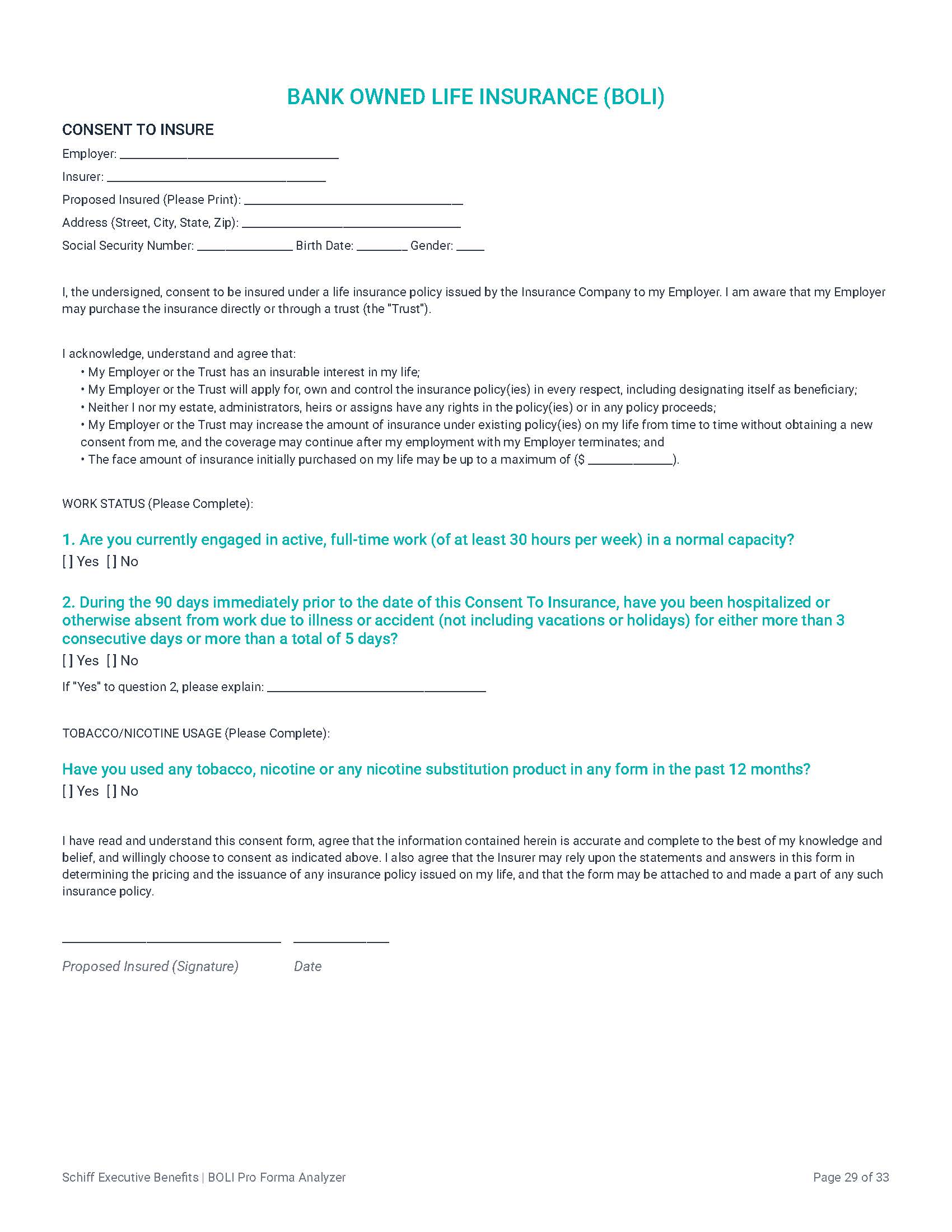
Sample Bank Owned Life Insurance (BOLI) consent form, used to ensure compliance in executive benefit structures


The Path Forward: Which is Best for You?


So, how do you choose?


If you are a solo practitioner or a small business owner with no interest in permanent life insurance, a standalone policy might still hold some appeal for its pure-play simplicity.


However, for the majority of corporations and partnerships looking to solve for the "5 What Ifs," the LTC Rider/Hybrid approach is usually the superior choice. It addresses the senior executive retirement/replacement cost efficiency, provides a guaranteed return on premium, and serves as a formidable tool for retention.


Are you worried that your current retirement strategy is one health crisis away from collapse? Are you concerned that your top talent might be lured away by a competitor offering more security?


These are the questions that define your professional legacy. You don't have to navigate these "unstable" financial environments alone. Building it your way means having a team of advisors who understand that your business and your personal life are inextricably linked.


We invite you to take a breath, sit back, grab your coffee, and let’s look at your current plan. Is it truly The Perfect Plan®? If not, we are here to help you find the alignment you deserve.


Come join us at Schiff Executive Benefits. Let’s make sure your "thousand dreams" remain intact, no matter what the future holds.


Contact us today to explore executive LTC strategies tailored to your firm.


There is a universal truth in the world of commerce that every seasoned entrepreneur eventually realizes: It is not what you make; it is what you keep. You have spent years, perhaps decades, pouring your sweat, late nights, and capital into building a successful enterprise. You’ve navigated market volatility, managed complex teams, and scaled your vision into a reality. Yet, when you look at your personal balance sheet compared to the company’s revenue, a frustrating disconnect often appears.


Why is it that the business can afford top-tier equipment, expansive marketing budgets, and plush office spaces, but when you try to move that same capital into your personal pocket, the IRS stands at the gate demanding a 30%, 40%, or even 50% "toll"?


If you feel like you are "business rich" but "personally capped," you aren't alone. Most business owners are stuck in the traditional qualified plan trap. You maximize your 401(k), perhaps add a profit-sharing component, and then... you hit a wall. Federal limits dictate how much you can save, and as a high-earner, those limits are often a drop in the bucket compared to the lifestyle you’re building or the legacy you want to leave.


What if there was a way to use corporate dollars: money already sitting inside your business: to build personal wealth that grows tax-deferred and comes out tax-free?


The Tax Trap: Why Traditional Advice Fails High-Earners


Standard financial advice is built for the "average" employee. For the person earning $100,000 a year, a 401(k) is a fantastic tool. But for the business owner or the key executive driving millions in value, the math just doesn't work. When you factor in the "Top Heavy" testing rules and the strict contribution caps, you quickly realize that the traditional system is designed to limit your ability to accumulate wealth.


Furthermore, traditional retirement accounts are "tax-deferred," not "tax-exempt." This means you are essentially making a bet with the federal government. You’re betting that tax rates will be lower thirty years from now than they are today. Given the current trajectory of national debt and government spending, is that a bet you really want to make?


We believe there is a better way. We call it the Perfect Plan® model.


financial-blueprint-analysis.webp


Introducing the Perfect Plan® Model


At Schiff Executive Benefits, we focus on a methodology that aligns corporate objectives with personal wealth goals. The Perfect Plan® isn't a single product; it is a strategic framework designed to move money from the business to the individual in the most tax-efficient manner possible.


The goal of the Perfect Plan® is to achieve three specific outcomes:


  1. Tax-Deductible Contributions: The business gets a deduction for the cost of the benefit.

  2. Tax-Deferred Growth: The assets grow without being eroded by annual capital gains or income taxes.

  3. Tax-Free Distribution: You can access the wealth in retirement without triggering a massive tax bill.


Does this sound too good to be true? It isn't. Large corporations and banks have been using these strategies for decades: often referred to as Bank-Owned Life Insurance (BOLI) or Corporate-Owned Life Insurance (COLI). The secret is simply scaling these institutional strategies down to the private business level.


Strategy 1: The Executive "Bonus" That Actually Works


Most bonuses are a tax nightmare. You pay the employee (or yourself) $100,000; the business loses $100,000 in cash, and the individual receives about $60,000 after taxes. That’s a 40% loss of friction right out of the gate.


Using an Executive Bonus Plan (Section 162), we can restructure this. The business pays the premium on a high-cash-value life insurance policy owned by the executive. The premium is deductible to the business and taxable to the executive, but we can "double bonus" the tax amount so the executive has zero out-of-pocket cost. Inside that policy, the money grows tax-deferred. When it’s time to retire, the executive can take loans against the policy: which are generally tax-free: to fund their lifestyle.


You’ve essentially used corporate dollars to create a private "bank" for yourself, bypass the 401(k) limits, and secure a tax-free income stream.


Strategy 2: Split-Dollar Arrangements


For the owner looking to move significant wealth out of the company without an immediate tax hit, "Split-Dollar" arrangements are the gold standard. In this scenario, the company and the executive "split" the costs and benefits of a permanent life insurance policy.


The company pays the premiums, which are treated as a series of loans to the executive (at very low IRS-mandated interest rates). Because it’s a loan, there’s no immediate income tax for the executive. The cash value inside the policy grows, often far exceeding the interest on the loan. At death or at a pre-determined rollout point, the company is paid back its premiums, and the executive (or their heirs) keeps the remaining millions: often entirely tax-free.


A golden tree in an executive office symbolizing tax-efficient personal wealth building and tax-free growth.


The Power of Tax-Free Growth and Distribution


Think about your current portfolio. If you have $5 million in a traditional IRA, you don't actually have $5 million. You have $3 million, and the IRS has a $2 million lien on your account. Every time the market goes up, the IRS’s share grows. Every time tax rates go up, your share shrinks.


When you build wealth using the corporate dollar strategies we advocate for, you are removing the IRS as a partner in your future. You are locking in a 0% tax rate on those distributions. This provides a level of certainty that no traditional stock-and-bond portfolio can match.


As Matthew Schiff often says on The Perfect Plan® Podcast, "The greatest risk to your retirement isn't market volatility; it's the uncertainty of future tax legislation." By using corporate dollars now to fund tax-advantaged vehicles, you are essentially "tax-morphing" your wealth: changing it from a taxable liability into a private, protected asset.


Why Retention and Wealth Building Go Hand-in-Hand


While you are building your own wealth, these same plans serve as the ultimate "Golden Handcuffs" for your key employees. In today’s competitive talent market, a simple 401(k) match isn't enough to keep a CFO or a VP of Sales from being recruited away.


By offering a Deferred Compensation or a tax-efficient executive benefit plan, you are providing them something they cannot get anywhere else: a path to tax-free wealth. If they leave, they leave the benefit behind. If they stay, they retire wealthy. It’s a win-win that uses the company’s cash flow to solve two problems at once: tax efficiency for you and retention for the business.


perfect-plan-podcast-banner.webp


The Point of No Return: Why Now?


We are currently living in a unique economic window. Tax rates are historically low, but the clock is ticking on the expiration of the Tax Cuts and Jobs Act (TCJA). Furthermore, as the national debt continues to climb, the pressure to raise revenue through higher income and estate taxes is mounting.


Waiting until you are ready to exit the business to think about tax efficiency is a mistake. The best time to start moving corporate dollars into personal, tax-efficient buckets was ten years ago. The second best time is today.


Are you currently maximizing every dollar your business generates? Or are you leaving a "tip" for the IRS every year because your benefit plan is stuck in the 1990s?


Take the Next Step Toward Your Perfect Plan®


Building wealth tax-efficiently requires more than just a good accountant; it requires a specialized architect who understands the intersection of corporate tax law, executive compensation, and insurance design.


At Schiff Executive Benefits, we don't just sell plans; we design outcomes. We help you look at your business not just as a source of current income, but as a powerful engine for personal wealth accumulation.


executive-confidence-blue-suit.webp


If you’re ready to stop overpaying the IRS and start using your corporate dollars to secure your personal legacy, let’s have a conversation. It’s time to move beyond the limitations of standard retirement planning and start building your Perfect Plan®.


Schedule a consultation with Matt Schiff today via our Calendly link here.


Sit back, grab a coffee, and let’s look at the math together. You’ve done the hard work of building the business: now let’s make sure you get to keep what you’ve earned.


Learn more: See how a Section 162 Executive Bonus Plan turns corporate dollars into personal wealth.


They say that most people don’t plan to fail; they simply fail to plan. In the world of high-stakes executive retention, this aphorism carries a heavy price tag. You’ve worked hard to build a company that attracts the best and brightest, but are you certain the "Golden Handcuffs" you’ve designed aren’t actually made of lead?


Nonqualified deferred compensation (NQDC) plans are among the most powerful tools in a business owner’s arsenal. They are the engine of Restoring Alignment and Retention. When executed correctly, an NQDC plan allows your key players to defer a portion of their compensation, and the associated taxes, until a future date, typically retirement. But the IRS has turned this landscape into a minefield. One wrong step with 409A plans doesn’t just result in a slap on the wrist for the company; it triggers a 20% penalty tax and immediate income recognition for your most valued executives.


Does that sound like a way to keep your top talent happy? Or is it the very thing that keeps you up at night, wondering if a simple administrative oversight will lead to your top talent walking across the street to a competitor?


Let’s look at the seven most common mistakes we see with nonqualified deferred compensation plans and, more importantly, how to fix them before the regulators come knocking.


1. Using "Custom" Payment Triggers That Break Section 409A


We often see business owners who want to be flexible. They want to pay out an executive when they "retire" or "after the big project is done." While that sounds like a great way to reward loyalty, Section 409A is incredibly rigid. There are only six permitted payment events: a specified date, separation from service, disability, death, a change in control, or an unforeseeable emergency.


If your plan document uses a vague term like "retirement" without tying it specifically to a "separation from service" or a "attaining age 65," you are in the danger zone.


The Fix: Audit your plan documents to ensure every payment trigger mirrors the exact language required by Section 409A. A "savings clause" won’t protect you here; the definitions must be right from the start.


2. Failing to Keep Up with Regulatory Urgency (SEC Rule 701)


If you are using phantom stock or equity-based NQDC plans, you need to be aware of the shifting landscape of SEC Rule 701. As of March 2026, companies hitting the $10M equity grant threshold face significantly increased disclosure requirements. Many private companies use an NQDC plan specifically to keep their finances private. If you aren't tracking your cumulative grants, you might accidentally trigger a requirement to open your books to every employee.


The Fix: Work with a team of advisors who understand both the tax and the securities side of these plans. If you are approaching that $10M threshold, it may be time to pivot your strategy to a cash-based Mirror Plan or a COLI-funded arrangement to maintain privacy.


financial-blueprint-analysis.webp


3. Missing the SECURE 2.0 Roth Mandate Connection


You might be asking, "What does my 401(k) have to do with my deferred comp?" Everything. With the SECURE 2.0 Act, high-earners (those making over $145,000) are now mandated to make their "catch-up" contributions as Roth (after-tax) dollars. This effectively removes one of the last bastions of pre-tax deferral for your top people.


As a result, the demand for nonqualified deferred compensation plans has skyrocketed. Executives are looking for ways to bridge that tax-deferral gap. If your NQDC plan isn't designed to "mirror" the 401(k) experience, you are missing a massive opportunity to provide value.


The Fix: Position your NQDC as a "401(k) Mirror Plan." This allows executives to defer income beyond the statutory limits of a qualified plan, restoring the tax advantages they’ve lost elsewhere.


4. Sloppy Valuation of Phantom Equity


If your plan rewards executives based on the growth of the company’s value (Phantom Stock or SARs), you must have a defensible valuation. We see many mid-market firms using "back-of-the-napkin" math or outdated internal formulas. If the IRS decides your valuation doesn't meet 409A requirements, they can deem the entire plan non-compliant.


The Fix: Commit to a regular, independent valuation. It is a small price to pay compared to the 20% penalty tax and interest charges that would otherwise fall on your executives' shoulders.


5. Ignoring the "12-Month / 5-Year" Rule for Re-Deferrals


In an unstable economic environment, an executive might decide they don't actually want their payout next year. They’d rather keep it in the plan for a few more years. You might think, "Sure, let’s just change the date."


Not so fast. Section 409A requires that any election to delay a payment must be made at least 12 months before the original payment date, and the new payment date must be at least five years in the future.


The Fix: Education is key. Ensure your executives understand these timelines well in advance. At Schiff Executive Benefits, we emphasize that The Perfect Plan® isn't just about the initial design; it’s about the ongoing education of the participants.


Executive benefits advisor explaining NQDC plan timelines and 409A compliance to a business owner.


6. Confusing SARs with Phantom Stock


While they sound similar, Stock Appreciation Rights (SARs) and Phantom Stock are treated differently under the law. SARs can sometimes be exempt from 409A if they are designed correctly: specifically, if they only pay out the "appreciation" and don't have a fixed payout date. However, if you add too many bells and whistles, you might inadvertently turn a SAR into a deferred compensation plan that must comply with every 409A nuance.


The Fix: Decide what you are trying to achieve. Is the goal long-term equity-like growth, or is it a structured retirement supplement? Your choice of vehicle (COLI vs. SARs vs. Phantom Equity) should follow your goal, not the other way around.


7. Operational "Form vs. Substance" Errors


You can have the most beautiful plan document in the world, but if your HR or payroll department isn't executing it correctly, the document won't save you. We frequently see "operational failures": where a payment is made a few days too early, or a deferral election was signed a few days too late. The IRS treats these operational errors just as harshly as document errors.


The Fix: Regular plan audits are essential. You wouldn't go five years without a physical checkup; don't let your executive benefits go five years without a compliance review.


Why the "What Ifs" Matter


When we sit down with business owners, we often ask the hard questions:


  • What if your top talent leaves for a competitor tomorrow?

  • What if you need to buy out a partner, but your cash is tied up in unfunded liabilities?


An NQDC plan is more than just a tax tax-deferred bucket. It is a strategic tool to ensure that your "What Ifs" have answers. By using Corporate Owned Life Insurance (COLI) to fund these plans, you can create a tax-efficient informal funding mechanism that sits on the balance sheet, offsetting the liability of the deferred comp while providing the liquidity needed to keep the business running smoothly during a transition.


executive-confidence-blue-suit.webp


Realizing Your Dream Value


Your business is your legacy. You’ve spent years building it your way. Don't let that legacy be tarnished by a 20% tax penalty that could have been avoided with better design and oversight.


The goal of any executive benefit strategy is to create a sense of security: for the owner and the employee. When your key people know their future is secure and their tax burden is managed, they stop looking at the door and start looking at how they can help you grow the company further.


Let’s Sit Back and Review


If it’s been a while since you’ve looked at your NQDC plan documents, or if you’re concerned that recent regulatory shifts (like SECURE 2.0) have left your plan outdated, let’s talk.


You don't have to navigate this unstable financial environment alone. We’ve built a career out of guiding owners through these complexities. Whether it’s through our consulting services or the insights we share on The Perfect Plan® Podcast, our mission is to help you restore alignment in your organization.


Come join us for a conversation. Sit back, grab your coffee, and let’s see if we can turn your "Golden Handcuffs" back into the valuable retention tool they were meant to be.


perfect-plan-podcast-banner.webp


Learn more: our complete guide to NQDC plans.


They say a rising tide lifts all boats, but in the world of executive benefits, the tide often hits a sea wall just as things are getting interesting.


If you’ve spent your career building a business, a partnership, or a bank, you know that your most valuable asset doesn’t show up on a balance sheet: it walks out the door every evening at 5:00 PM. Keeping that talent happy, motivated, and, most importantly, stationary is the secret sauce to long-term success. But as we head into 2026, many of your top performers are hitting a "contribution ceiling" that is quietly eroding their ability to retire on their own terms.


You see, the traditional 401(k) is a fantastic tool for the broad employee base. It’s the "Old Reliable" of the retirement world. But for your high-earners: the C-suite, the rainmakers, and the key partners: it’s often woefully inadequate.


Are you asking your top people to settle for a retirement plan that covers only a fraction of their income? Or are you looking for a way to let them save in a way that actually mirrors their value to the firm?


Let’s look at the fork in the road and decide which path is right for your team in 2026.


Executives discussing high-earner retirement strategies and 401k mirror plan options.


The Problem: The 401(k) Glass Ceiling


The universal truth of qualified plans is that they are built for the "average," not the "exceptional." As an executive or a high-compensated employee (HCE), the IRS places strict limits on how much you can squirrel away.


For 2026, the elective deferral limit is hovering around $24,500. While that sounds like a decent chunk of change, consider someone earning $400,000 or $500,000 a year. That $24,500 represents a tiny percentage of their total compensation. When they retire, they are going to face a massive "income gap" because they couldn't defer enough of their salary during their peak earning years to maintain their lifestyle later.


And then there is the "Top-Heavy" problem. If your lower-level employees don’t participate in the 401(k) at high enough rates, the IRS steps in and actually limits what the HCEs can contribute even further. It’s a frustrating reality: your best people are penalized because of the choices of the broader workforce.


Why 2026 Changes the Math


We are currently standing at a unique financial crossroads. The SECURE Act 2.0 has introduced several shifts that are coming to a head this year. Specifically, for those earning over approximately $145,000, any "catch-up" contributions must now be made on a Roth (after-tax) basis.


For the high-earner who was counting on that extra pre-tax deduction to lower their current tax bill, the IRS just moved the goalposts. This shift toward mandatory Roth treatment for HCE catch-ups is making the traditional 401(k) less attractive for immediate tax planning.


This is where the 401(k) Mirror Plan: formally known as a Nonqualified Deferred Compensation (NQDC) plan: starts to look like a much better vehicle.


Enter the Mirror Plan: Reflection Without the Restrictions


So, what exactly is a 401(k) Mirror Plan? Think of it as a "shadow" version of your existing 401(k), but without the IRS handcuffs.


A Mirror Plan is a type of nonqualified deferred compensation plan designed to allow executives to defer a much larger portion of their compensation: sometimes up to 100% of their base salary and bonus: on a pre-tax basis. It "mirrors" the 401(k) in user experience (you choose your investments, you see a balance, you have a login), but it operates under a completely different set of rules.


The Deferral Advantage


While the 401(k) caps you at $24,500 (plus catch-ups), an NQDC plan allows your top talent to bridge that income gap. If a partner wants to defer $100,000 of their bonus to avoid a massive tax hit this year and let that money grow tax-deferred for a decade, they can. That is simply impossible in a traditional qualified plan.


Financial blueprint analysis emphasizing plan design and compliance


Side-by-Side: The 2026 Comparison


When we sit down with clients to build out The Perfect Plan®, we look at the numbers. Here is how the two stack up for a high-earner in today’s environment:


  • Contribution Limits:

    • 401(k): Strictly capped by the IRS.

    • Mirror Plan: Virtually unlimited (determined by the company’s plan design).


  • Tax Treatment:

    • 401(k): Pre-tax deferrals, but 2026 catch-ups are now mandatory Roth for HCEs.

    • Mirror Plan: Remains 100% pre-tax on all deferrals, providing immediate tax relief.


  • Matching:

    • 401(k): Limited by Section 401(a)(17) (the "compensation cap").

    • Mirror Plan: The company can provide "make-whole" matches that exceed the IRS compensation cap.


  • Vesting & Retention:

    • 401(k): Standard vesting schedules.

    • Mirror Plan: Can include customized "Golden Handcuff" provisions to ensure your top people stay for the long haul.


The Elephant in the Room: Security


If Mirror Plans are so much better, why doesn't everyone use them for everything? It comes down to one word: Security.


A 401(k) is a "qualified" plan, meaning the money is held in a trust for the employee. Even if the company goes bankrupt, that money is safe. A Mirror Plan, or NQDC plan, is "unfunded" in the eyes of the IRS. It is essentially a promise by the company to pay the executive in the future. The assets technically remain on the company's balance sheet and are subject to the claims of the company’s general creditors.


This is the "what keeps you up at night" factor. Executives often ask, "Matt, what if the bank is sold? What if the company hits a rough patch in ten years?"


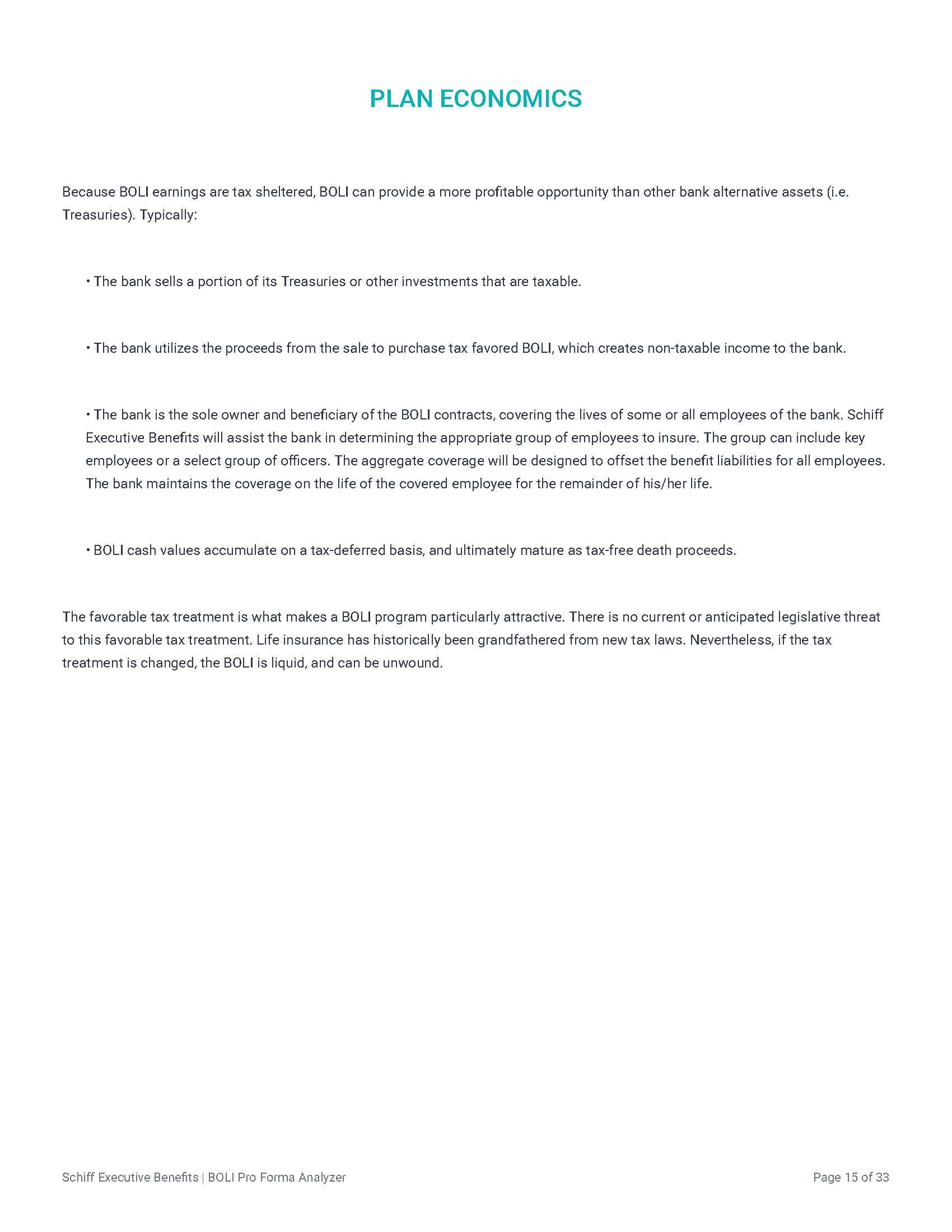
This is why we focus so heavily on the funding of these plans. Using tools like Corporate Owned Life Insurance (COLI) or Bank Owned Life Insurance (BOLI), a company can informally fund these obligations. COLI provides a way for the company to offset the cost of the plan while providing a layer of informal security that the funds will be there when the executive retires. You can learn more about how we structure these at our COLI information page.


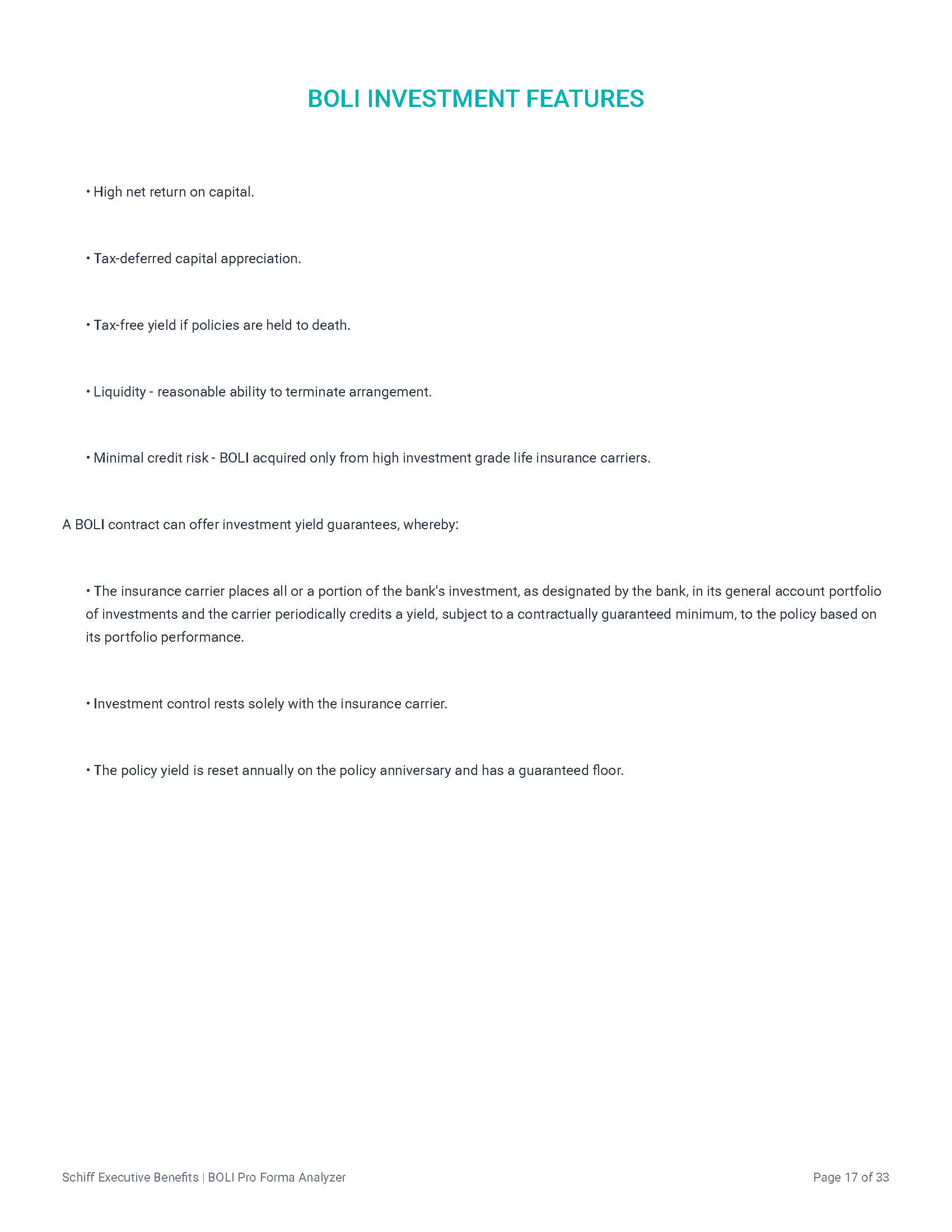
Lists key features of BOLI/COLI including tax-deferred growth and yield guarantees


Why 2026 is the Year to Review Your Design


We are currently in a period of fiscal uncertainty. With the national debt at record highs and tax laws in a state of constant flux, the ability to control when and how you take your income is the ultimate luxury.


Waiting until 2027 to fix a top-heavy 401(k) issue is a reactive move. Being proactive in 2026 by implementing a Mirror Plan allows you to:


  1. Recruit Top Talent: When a candidate is choosing between two firms, the one offering a way to save $100k pre-tax usually wins.

  2. Reward Your "Engine": Show your HCEs that you recognize they are different and deserve a plan that reflects that.

  3. Hedge Against Tax Hikes: By deferring income now, executives can potentially take distributions in the future when they are in a lower tax bracket or when they have more control over their financial picture.


Executive leader reviewing financial growth and tax-deferred strategies for a Mirror Plan.


Building It Your Way


At Schiff Executive Benefits, we don’t believe in "off-the-shelf" solutions. Every corporation, partnership, and bank has a different culture and a different set of goals. Our mission is to guide you through the "unstable" air of modern finance to find a destination that works for everyone.


Whether you are looking at Buy/Sell arrangements, ESOPs, or complex Nonqualified Deferred Compensation plans, the goal is always the same: The Perfect Plan®.


So, which is better for your high-earners in 2026?


The answer is usually "both." A robust 401(k) for the foundation, and a carefully structured Mirror Plan for the penthouse. One provides the baseline; the other provides the incentive for your most valuable people to stay and build their legacy with you.


Let’s Start the Conversation


If you’re wondering how your current plan stacks up, or if you’re tired of your top people complaining about their 401(k) limits, let’s chat.


There is no pressure and no "hard sell." Just a consultative dialogue about your professional legacy and how to protect it. Grab a coffee, take a look at our team of advisors, and when you're ready, reach out. We’d love to help you realize your dream value.


Come join us. Let's build something that lasts.


Contact Matt Schiff and the team today to review your executive benefit strategy.


Learn more: how a 401(k) Mirror Plan works.