

They say a rising tide lifts all boats, but in the world of executive benefits, the tide often hits a sea wall just as things are getting interesting.
If you’ve spent your career building a business, a partnership, or a bank, you know that your most valuable asset doesn’t show up on a balance sheet: it walks out the door every evening at 5:00 PM. Keeping that talent happy, motivated, and, most importantly, stationary is the secret sauce to long-term success. But as we head into 2026, many of your top performers are hitting a "contribution ceiling" that is quietly eroding their ability to retire on their own terms.
You see, the traditional 401(k) is a fantastic tool for the broad employee base. It’s the "Old Reliable" of the retirement world. But for your high-earners: the C-suite, the rainmakers, and the key partners: it’s often woefully inadequate.
Are you asking your top people to settle for a retirement plan that covers only a fraction of their income? Or are you looking for a way to let them save in a way that actually mirrors their value to the firm?
Let’s look at the fork in the road and decide which path is right for your team in 2026.

The Problem: The 401(k) Glass Ceiling
The universal truth of qualified plans is that they are built for the "average," not the "exceptional." As an executive or a high-compensated employee (HCE), the IRS places strict limits on how much you can squirrel away.
For 2026, the elective deferral limit is hovering around $24,500. While that sounds like a decent chunk of change, consider someone earning $400,000 or $500,000 a year. That $24,500 represents a tiny percentage of their total compensation. When they retire, they are going to face a massive "income gap" because they couldn't defer enough of their salary during their peak earning years to maintain their lifestyle later.
And then there is the "Top-Heavy" problem. If your lower-level employees don’t participate in the 401(k) at high enough rates, the IRS steps in and actually limits what the HCEs can contribute even further. It’s a frustrating reality: your best people are penalized because of the choices of the broader workforce.
Why 2026 Changes the Math
We are currently standing at a unique financial crossroads. The SECURE Act 2.0 has introduced several shifts that are coming to a head this year. Specifically, for those earning over approximately $145,000, any "catch-up" contributions must now be made on a Roth (after-tax) basis.
For the high-earner who was counting on that extra pre-tax deduction to lower their current tax bill, the IRS just moved the goalposts. This shift toward mandatory Roth treatment for HCE catch-ups is making the traditional 401(k) less attractive for immediate tax planning.
This is where the 401(k) Mirror Plan: formally known as a Nonqualified Deferred Compensation (NQDC) plan: starts to look like a much better vehicle.
Enter the Mirror Plan: Reflection Without the Restrictions
So, what exactly is a 401(k) Mirror Plan? Think of it as a "shadow" version of your existing 401(k), but without the IRS handcuffs.
A Mirror Plan is a type of nonqualified deferred compensation plan designed to allow executives to defer a much larger portion of their compensation: sometimes up to 100% of their base salary and bonus: on a pre-tax basis. It "mirrors" the 401(k) in user experience (you choose your investments, you see a balance, you have a login), but it operates under a completely different set of rules.
The Deferral Advantage
While the 401(k) caps you at $24,500 (plus catch-ups), an NQDC plan allows your top talent to bridge that income gap. If a partner wants to defer $100,000 of their bonus to avoid a massive tax hit this year and let that money grow tax-deferred for a decade, they can. That is simply impossible in a traditional qualified plan.

Side-by-Side: The 2026 Comparison
When we sit down with clients to build out The Perfect Plan®, we look at the numbers. Here is how the two stack up for a high-earner in today’s environment:
- Contribution Limits:
- 401(k): Strictly capped by the IRS.
- Mirror Plan: Virtually unlimited (determined by the company’s plan design).
- Tax Treatment:
- 401(k): Pre-tax deferrals, but 2026 catch-ups are now mandatory Roth for HCEs.
- Mirror Plan: Remains 100% pre-tax on all deferrals, providing immediate tax relief.
- Matching:
- 401(k): Limited by Section 401(a)(17) (the "compensation cap").
- Mirror Plan: The company can provide "make-whole" matches that exceed the IRS compensation cap.
- Vesting & Retention:
- 401(k): Standard vesting schedules.
- Mirror Plan: Can include customized "Golden Handcuff" provisions to ensure your top people stay for the long haul.
The Elephant in the Room: Security
If Mirror Plans are so much better, why doesn't everyone use them for everything? It comes down to one word: Security.
A 401(k) is a "qualified" plan, meaning the money is held in a trust for the employee. Even if the company goes bankrupt, that money is safe. A Mirror Plan, or NQDC plan, is "unfunded" in the eyes of the IRS. It is essentially a promise by the company to pay the executive in the future. The assets technically remain on the company's balance sheet and are subject to the claims of the company’s general creditors.
This is the "what keeps you up at night" factor. Executives often ask, "Matt, what if the bank is sold? What if the company hits a rough patch in ten years?"
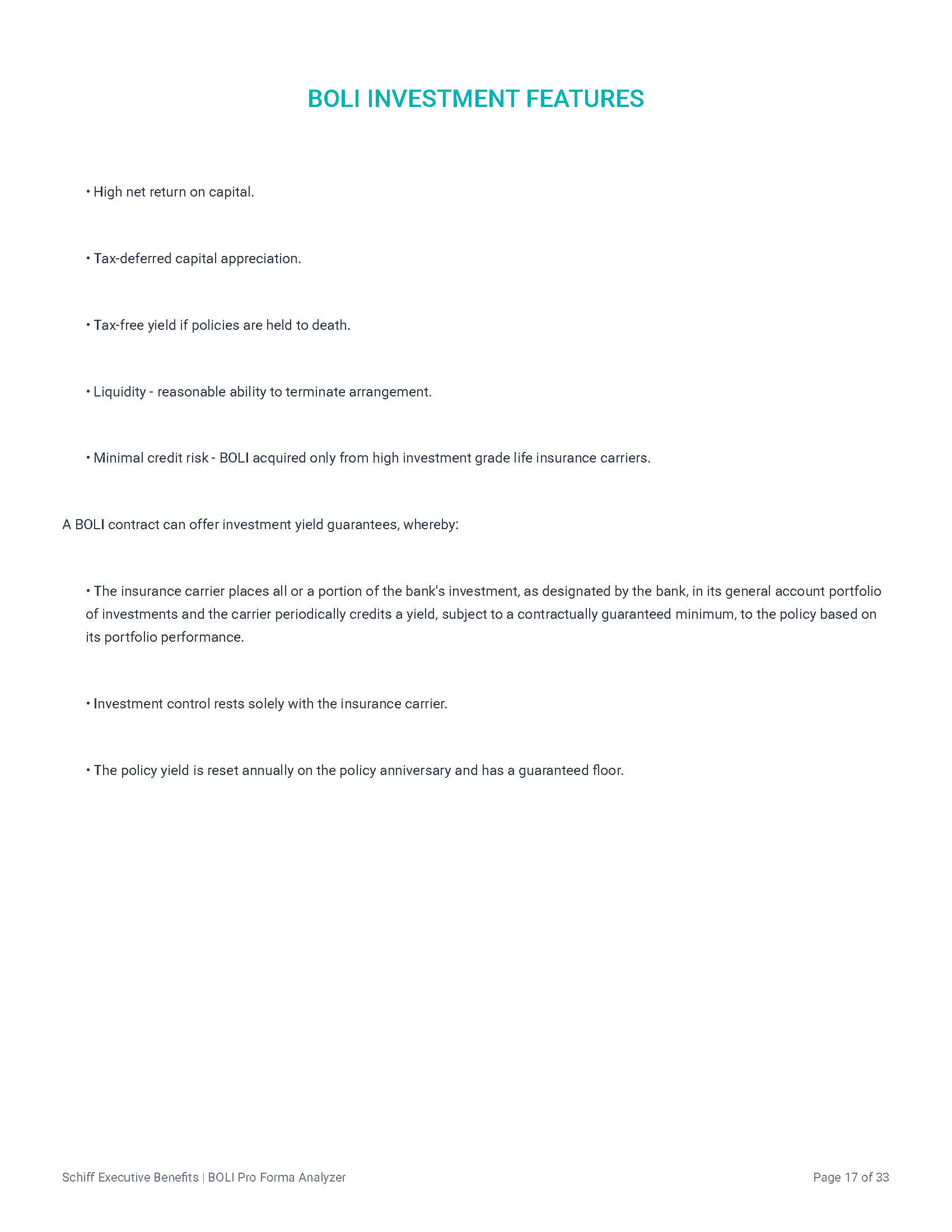
This is why we focus so heavily on the funding of these plans. Using tools like Corporate Owned Life Insurance (COLI) or Bank Owned Life Insurance (BOLI), a company can informally fund these obligations. COLI provides a way for the company to offset the cost of the plan while providing a layer of informal security that the funds will be there when the executive retires. You can learn more about how we structure these at our COLI information page.
Why 2026 is the Year to Review Your Design
We are currently in a period of fiscal uncertainty. With the national debt at record highs and tax laws in a state of constant flux, the ability to control when and how you take your income is the ultimate luxury.
Waiting until 2027 to fix a top-heavy 401(k) issue is a reactive move. Being proactive in 2026 by implementing a Mirror Plan allows you to:
- Recruit Top Talent: When a candidate is choosing between two firms, the one offering a way to save $100k pre-tax usually wins.
- Reward Your "Engine": Show your HCEs that you recognize they are different and deserve a plan that reflects that.
- Hedge Against Tax Hikes: By deferring income now, executives can potentially take distributions in the future when they are in a lower tax bracket or when they have more control over their financial picture.

Building It Your Way
At Schiff Executive Benefits, we don’t believe in "off-the-shelf" solutions. Every corporation, partnership, and bank has a different culture and a different set of goals. Our mission is to guide you through the "unstable" air of modern finance to find a destination that works for everyone.
Whether you are looking at Buy/Sell arrangements, ESOPs, or complex Nonqualified Deferred Compensation plans, the goal is always the same: The Perfect Plan®.
So, which is better for your high-earners in 2026?
The answer is usually "both." A robust 401(k) for the foundation, and a carefully structured Mirror Plan for the penthouse. One provides the baseline; the other provides the incentive for your most valuable people to stay and build their legacy with you.
Let’s Start the Conversation
If you’re wondering how your current plan stacks up, or if you’re tired of your top people complaining about their 401(k) limits, let’s chat.
There is no pressure and no "hard sell." Just a consultative dialogue about your professional legacy and how to protect it. Grab a coffee, take a look at our team of advisors, and when you're ready, reach out. We’d love to help you realize your dream value.
Come join us. Let's build something that lasts.
Contact Matt Schiff and the team today to review your executive benefit strategy.
Learn more: how a 401(k) Mirror Plan works.