
Hi, How Can We Help You?
  • Planning for all of life's "What Ifs".

Monthly Archives: May 2026

Last reviewed: September 2026  |  Written by Matthew E. Schiff, CLU, ChFC, WMCP — President, Schiff Executive Benefits

If you run a closely held company, you have almost certainly had this thought: my best people act like owners, so should I make them owners? And then, about four seconds later, the second thought: what happens to my company if I do?

A phantom stock plan is the answer to both questions at once. It gives your key people the economics of ownership without putting a single share on the cap table. This guide covers what phantom stock is, how it works, what it costs, how it is taxed, where IRC 409A can wreck it, and how to decide whether it belongs in your business.

What this guide covers


What is a phantom stock plan?


A phantom stock plan is a written agreement in which a company promises to pay a key employee a future cash amount tied to the value of company stock, without actually issuing any stock. The employee receives "phantom" units that track real share value. When a triggering event occurs — vesting, a set date, retirement, or a sale of the business — the company pays out in cash. The employee never becomes a shareholder and never receives voting rights, and the owner's equity is never diluted.

Because nothing is actually transferred, phantom stock is not equity at all in the legal sense. It is a form of nonqualified deferred compensation — a contractual obligation of the company that happens to be measured by share value instead of a flat dollar amount.

You will also see it called phantom equity, shadow stock, synthetic equity, or a phantom share plan. In an LLC, the same structure is usually called a phantom unit plan, because LLCs have units rather than shares. The mechanics are identical.

Why owners choose it


Real equity brings four things an owner may not want to hand over: voting rights, information rights, a claim on distributions, and a minority shareholder who can be very difficult to remove. Phantom stock delivers the one thing the key employee actually wants — economic upside tied to the growth they helped create — and none of the four things the owner does not want to give.

Business owner and key executive reviewing a phantom stock plan agreement

How a phantom stock plan works, step by step


Every phantom stock plan, regardless of size, is built from the same seven decisions.

1. The company adopts a written plan document


The plan document defines eligibility, the unit pool, valuation method, vesting, payment triggers, forfeiture, and what happens on death, disability, termination for cause, and a change of control. This is a legal document. It is drafted by counsel, not downloaded.

2. Key employees receive phantom units


Each participant gets an award agreement granting a specific number of units, with a stated baseline value on the grant date. Units are typically expressed either as a raw number of shares or as a percentage of company value.

3. Units vest over time or on performance


Vesting is what turns a bonus into a retention tool. Cliff vesting (nothing for five years, then 100%) creates the strongest handcuffs. Graded vesting (20% a year for five years) is gentler and easier to explain. Performance vesting ties units to EBITDA, revenue, or another metric the executive can actually move.

4. The company is valued on a defined schedule


Usually annually. The valuation method must be written into the plan before anyone has a stake in the answer.

5. A triggering event occurs


Common triggers: a fixed date, separation from service, retirement, death, disability, or a change of control. The trigger must be specified at the outset — this is where 409A compliance is won or lost.

6. The company pays cash


Payment is usually a lump sum or an installment stream over three to five years. Installments soften the cash flow hit and can extend the retention effect past the payout date.

7. The company takes a deduction


The employer generally receives a compensation deduction in the year the payment is included in the employee's income, and the employee reports it as ordinary W-2 wages.

The two types of phantom stock plans


Full Value Plan Appreciation-Only Plan (SAR-style)
What the employee receives The entire value of each phantom unit at payout Only the increase in value from the grant date
Payout if company value is flat Full baseline value is still paid Zero
Feels most like Restricted stock A stock option
Best for Long-tenured executives; retention and retirement-style benefits Growth-stage companies; rewarding value creation specifically
Company cost Higher and more predictable Lower, but entirely dependent on growth
Risk to the owner Liability accrues even in a flat year Executive gets nothing in a flat year, which can hurt morale


Most closely held companies we work with land on appreciation-only, or a blend: a modest full-value tranche for stability plus an appreciation tranche for upside. The blend gives the executive a reason to stay and a reason to perform, which are not the same motivation.

A phantom stock example with real numbers


A manufacturing company is valued at $20 million. The owner wants to retain a VP of Operations who is genuinely hard to replace.

  • Grant: 200 phantom units, where each unit tracks 0.01% of company value. At grant, each unit is worth $2,000 — so the award has a baseline value of $400,000.

  • Type: Appreciation only.

  • Vesting: Five-year cliff.

  • Trigger: The later of vesting or separation from service.


Five years later the company is valued at $32 million. Each unit is now worth $3,200. The appreciation is $1,200 per unit.

Payout: 200 units × $1,200 = $240,000, paid in cash, taxed to the VP as ordinary income, and generally deductible by the company in the year paid.

Read that from the owner's side. The company grew $12 million in value. The executive who helped drive that growth captured $240,000 of it — 2% of the increase. The owner kept 100% of the stock, 100% of the votes, and 98% of the appreciation, and paid the benefit out of the growth itself rather than out of the original enterprise value.

Now read the flat scenario. If the company is still worth $20 million in year five, the appreciation-only payout is zero. That is the design working as intended — but it is also exactly why plan design matters more than the plan document. A key executive who receives nothing after five years of loyalty may leave the day the number is announced.

How phantom shares are valued


Valuation is where do-it-yourself plans fall apart. The plan document must specify the method before anyone has an incentive to argue about it. The usual options:

  • Independent appraisal. Most defensible, most expensive. Common where amounts are large or the ownership group is not unanimous.

  • Formula valuation. A stated multiple of EBITDA, revenue, or book value, applied consistently. Cheap and predictable, but a formula that fit the company at $8 million in revenue may be badly wrong at $40 million.

  • Board determination. Fastest and least defensible. Invites disputes, and creates real 409A exposure if the method is not reasonable and consistently applied.

  • Ongoing valuation platform. A monitored valuation updated continuously rather than once a year.


At Schiff Executive Benefits we use RISR for this. The reason is practical rather than technical: an owner who sees company value tracked continuously makes better decisions about plan sizing, funding, and timing than an owner who finds out once a year in a PDF.

Phantom stock vs. real equity, stock options, and SARs


Phantom Stock Real Equity Stock Options SARs
Dilutes ownership No Yes Yes, on exercise No
Voting rights None Yes After exercise None
Employee out-of-pocket cost None Often purchase price Exercise price None
Employee tax treatment Ordinary income at payout Potential capital gains Varies (ISO vs. NSO) Ordinary income at payout
Employer deduction Yes, when paid Limited Varies Yes, when paid
Requires company cash at payout Yes No No (company receives cash) Yes
409A applies Generally yes No Sometimes Generally yes
Reversible / adjustable Yes, by design Very difficult Difficult Yes


The honest trade-off: real equity offers the employee better tax treatment, and phantom stock offers the owner better control and reversibility. If your key executive's primary goal is capital gains treatment on a future sale, phantom stock will not deliver that and you should say so plainly rather than sell around it.

We go deeper on this comparison in Phantom Stock vs. Stock Options vs. Real Equity: A Business Owner's Decision Guide.

How is phantom stock taxed?


For the employee


Phantom stock payouts are generally taxable as ordinary W-2 income in the year received, subject to income tax withholding. There is no capital gains treatment, because no capital asset was ever held. FICA treatment follows the special timing rule for nonqualified deferred compensation: amounts are generally taken into account for FICA in the later of the year services are performed or the year the amount vests, which can be earlier than the year of payment.

For the employer


The company generally receives a compensation deduction matching the year the employee includes the amount in income. Note that this is a deduction against ordinary income, taken when the cash actually goes out the door — which is a very different thing from the accrual the company has been carrying on its books in the years leading up to it.

For the accountants


Phantom stock is liability-classified for book purposes and is generally re-measured each reporting period. Rising company value produces a rising compensation expense that hits the P&L before any cash moves. Owners are routinely surprised by this. Tell your CFO before you adopt the plan, not after.

The pass-through question


S corporations, partnerships, and LLCs can all use phantom stock, and for many of them it is a better answer than real equity precisely because adding an owner to a pass-through entity creates K-1 complications, distribution obligations, and eligibility risks that a cash-settled plan simply avoids.

IRC 409A: the rule that breaks most phantom stock plans


A phantom stock plan is nonqualified deferred compensation, which means Internal Revenue Code Section 409A generally applies. This is not a footnote. It is the single most common failure point in plans we are asked to repair.

409A governs when deferred amounts may be paid. Payment events must be specified in writing before the compensation is earned, and must fall within a permitted category — a fixed schedule, separation from service, death, disability, an unforeseeable emergency, or a change in control. What 409A does not permit is the thing owners most want: the ability to decide later, based on how the year is going.

Where plans fail, in order of how often we see it:

  1. Discretionary payment timing. "We'll pay it out when it makes sense" is a 409A violation written in plain English.

  2. Informal acceleration. Paying an executive early as a favor blows the plan for that executive — and can taint others.

  3. An undefined change-of-control trigger. "Sale of the company" is not a 409A definition. The regulation has one; use it.

  4. Amending the plan after the fact. Changing the payment schedule mid-stream without following the subsequent-deferral rules.

  5. No written plan at all. A handshake plus a spreadsheet is not a plan document.


The consequence of failure lands on the employee, not the company: immediate income inclusion of all vested deferred amounts, plus an additional 20% federal tax, plus a premium interest charge. An executive who receives that letter will not be retained by the plan that produced it.

If you suspect an existing plan has a problem, there are IRS correction programs, and the sooner a defect is found the cheaper it is to fix. See 409A Corrections and our complete guide to IRC 409A compliance.

IRC 409A compliance review for a nonqualified deferred compensation plan

The funding problem — and how to solve it


Here is the part most articles skip. A phantom stock plan creates a real, growing, unfunded liability, and the payout arrives on a date you do not fully control. If your top three executives all retire within eighteen months of each other, the company writes three large checks in eighteen months.

Owners generally handle this one of three ways:

  • Pay from cash flow. Simplest. Works until the numbers get large or several triggers cluster.

  • Sinking fund. Set aside taxable investments. Straightforward, but the earnings are taxed annually, which erodes the very growth you need to keep pace with a rising liability.

  • Corporate-owned life insurance (COLI). The company owns the policy, is the beneficiary, and uses the cash value to informally fund the future obligation. The asset stays on the company's balance sheet and the death benefit can recover the plan's cost.


Informal funding through COLI is the approach we design most often, and the reason is cost recovery rather than tax alchemy: the structure is intended to let the company recapture the plan's cost over time, so the retention benefit does not end up as a permanent reduction in enterprise value. It is not right for every company — it requires insurable executives, a long time horizon, and a balance sheet that can carry the asset — and any design has to be modeled against your actual numbers before it means anything.

Phantom stock plans for small and mid-sized companies


Phantom stock has a reputation as a big-company tool. In practice it is more useful to a $10–$150 million closely held business than to a public company, for a simple reason: a public company has real stock to hand out that costs it nothing in control. A closely held owner does not.

Where it fits best:

  • A single owner or a small ownership group that will not dilute. This is the core case. The whole design exists for it.

  • An S corporation. Adding shareholders creates eligibility risk and a second class of stock problem. Phantom stock adds neither.

  • An LLC or partnership. Issuing profits interests or units means K-1s, self-employment tax questions, and a new capital account. A cash-settled phantom unit plan avoids all of it.

  • A family business with non-family key employees. The most common problem we are handed: the general manager who has run the place for a decade is not a family member and never will be an owner, and everyone knows it. Phantom stock is how that gets fixed without a Thanksgiving conversation.

  • An owner five to ten years from exit. Buyers pay more for a business whose leadership team is contractually motivated to stay through the transition. See tax-smart exit strategies.


Where it does not fit


Be honest about the negative cases, because they exist. Phantom stock is a poor fit if the company's cash flow cannot support a large payout in a bad year, if ownership genuinely intends to sell equity to the management team, if the executive's real goal is capital gains treatment, or if the business has no credible way to establish value. A company that cannot answer "what is this business worth?" cannot run a plan that pays out based on the answer.

What it costs to set up


Design and documentation for a straightforward single-employer plan generally runs a few thousand dollars in legal fees plus annual valuation costs, with ongoing administration that is measured in hours per year, not weeks. Compare that to the cost of a formal equity issuance, a shareholders' agreement, and a buy-sell — or to the cost of losing the executive.

Advantages and disadvantages of phantom stock


Advantages Disadvantages
No dilution of ownership or voting control Payout is ordinary income — no capital gains treatment
No new shareholders, no information rights, no minority-holder problems Requires company cash at payout
Highly flexible — awards can be sized and structured per executive Creates a liability that grows with company value
Employer deduction when paid Book compensation expense hits the P&L before cash moves
Works for S corps, C corps, LLCs, and partnerships 409A compliance is mandatory and unforgiving
Reversible and adjustable in a way real equity is not Requires a credible, repeatable valuation
Strong retention effect through vesting Participants are general unsecured creditors of the company


Is a phantom stock plan right for your company?


Five questions. If you answer yes to the first three, phantom stock is worth designing.

  1. Is there a specific person whose departure would materially damage the business? Plans built for a category of employee underperform. Plans built for a named person work.

  2. Are you unwilling to give up equity or voting control? If you are willing, real equity may serve the executive better and you should consider it honestly.

  3. Can you establish company value in a way both sides will accept? Without this, nothing else matters.

  4. Can the company fund the payout when it comes due? If not, solve funding as part of the design rather than after it.

  5. Do you have access to 409A-competent design? This is a compliance exercise dressed as a compensation exercise.


Business owner evaluating whether a phantom stock plan fits the company

Who designs phantom stock plans?


Phantom stock sits at the intersection of three disciplines, which is why it is so often done badly. An attorney can draft the document but usually does not model the funding. A CPA can handle the tax and book treatment but does not design the retention mechanics. A financial advisor can talk about the funding vehicle but frequently does not know 409A well enough to keep the plan out of trouble.

An executive benefits specialist coordinates all three, and that is the work Schiff Executive Benefits has done since 2006. We design and administer nonqualified plans — phantom stock, SERPs, 401(k) mirror plans, split dollar, and COLI/BOLI-funded structures — for closely held businesses and banks.

Our founder, Matthew E. Schiff, CLU, ChFC, WMCP, served as a ranking member of AALU's NQDC Committee during the drafting of the IRC 409A and 101(j) regulatory frameworks in 2003 and 2005, and today supports more than 2,500 agents working in the 409A and 101(j) space. That matters here for one reason: on phantom stock, 409A is the failure point, and there are not many people who were in the room when those rules were written.

Every plan we build starts the same way: we reverse-engineer it from what you are actually trying to accomplish — retention, succession, exit value, or fairness to someone who earned it — and then work backward to the structure. That is The Perfect Plan® approach.

Frequently asked questions about phantom stock plans


Is phantom stock real stock?


No. Phantom stock is a contractual promise to pay cash based on the value of company stock. No shares are issued, no ownership transfers, and the participant receives no voting rights, no dividends as a shareholder, and no equity on the cap table.

How is phantom stock taxed?


Phantom stock payouts are generally taxed to the employee as ordinary W-2 income in the year received, with income tax withholding. There is no capital gains treatment. FICA generally applies under the special timing rule for nonqualified deferred compensation, which can be earlier than the payment year. The employer generally receives a compensation deduction in the year the employee includes the amount in income.

Does phantom stock dilute ownership?


No. That is the central design feature. Because no shares are issued, existing ownership percentages, voting control, and the cap table are unchanged.

What is the difference between phantom stock and stock appreciation rights?


They are closely related. Phantom stock most often refers to full-value units that pay the entire value of the phantom share. A stock appreciation right pays only the increase in value from the grant date. An appreciation-only phantom stock plan and a cash-settled SAR are functionally the same instrument.

Can an LLC or S corporation use phantom stock?


Yes, and it is often a better fit than real equity for both. In an LLC the units are usually called phantom units. In an S corporation, phantom stock avoids the shareholder eligibility and second-class-of-stock issues that come with issuing actual shares, and avoids putting a K-1 in a key employee's hands.

Does 409A apply to phantom stock?


Generally yes. A phantom stock plan is nonqualified deferred compensation, so payment events must be specified in writing in advance and must fall within the categories 409A permits. Failure results in immediate income inclusion of vested amounts plus an additional 20% federal tax and a premium interest charge, assessed against the employee.

How is the value of a phantom stock unit determined?


By the method written into the plan document — an independent appraisal, a stated formula such as a multiple of EBITDA, a board determination, or an ongoing valuation platform. The method must be reasonable, applied consistently, and set before anyone has a stake in the outcome.

What happens to phantom stock if the company is sold?


It depends on the change-of-control provision in the plan document. Well-drafted plans accelerate vesting and pay out at the transaction value, using the 409A definition of a change in control. Plans that say "sale of the company" without defining it create both a valuation dispute and a compliance problem at the worst possible moment.

What happens if the employee quits or is fired?


Whatever the plan says. Typically unvested units are forfeited. Treatment of vested units on a voluntary resignation, a termination without cause, and a termination for cause should each be addressed separately — and the for-cause definition should be written before you need it.

How much phantom stock should a company grant?


There is no formula, but a total phantom pool of roughly 5% to 15% of company value across all participants is a common range for closely held businesses, sized against what the executive would earn elsewhere and what the company can fund. Start with the retention target, not the percentage.

Is phantom stock a good idea for a small business?


For a closely held business with one or a few owners who will not dilute, and one or a few key employees who are genuinely hard to replace, it is one of the most effective retention tools available. It is a poor idea for a company that cannot value itself credibly or cannot fund the eventual payout.

What is the difference between phantom stock and profit sharing?


Profit sharing pays on annual earnings. Phantom stock pays on enterprise value. The distinction matters because an executive can have a great earnings year while destroying long-term value, or a flat earnings year while building it. Phantom stock rewards the thing an owner actually sells.

Talk to someone who has done this before


If you are weighing phantom stock against real equity, repairing a plan that was not designed with 409A in mind, or trying to figure out how you would fund a payout five years from now, that is a conversation worth having before the documents get drafted.

Schedule a conversation with Schiff Executive Benefits →

Keep reading


This material is for general informational purposes only and does not constitute tax, legal, or investment advice. Schiff Executive Benefits does not provide tax or legal advice. Consult your own tax and legal advisors regarding your specific circumstances.


Talent is the only asset in your business that walks out the door every evening. For any CEO or business owner, the most persistent "universal truth" is that your company’s value is inextricably linked to the handful of key people who drive your vision, manage your risk, and protect your margins.


But what happens when the tools you use to reward them: like the standard 401(k): simply aren't enough?


If you are leading a successful corporation or partnership, you’ve likely hit the "401(k) cap problem." Your top earners are restricted by government-mandated contribution limits, meaning their retirement replacement ratio is significantly lower than that of the rank-and-file staff. This creates a misalignment. It creates a "retention risk."


At Schiff Executive Benefits, we focus on Restoring Alignment and Retention. One of the most powerful tools in our arsenal for solving this is the Supplemental Executive Retirement Plan, or SERP.


What is a SERP, Really?


A Supplemental Executive Retirement Plan (SERP) is a non-qualified, employer-funded retirement plan designed to provide additional benefits to a select group of management or highly compensated employees. Unlike a 401(k), a SERP is "discriminatory": meaning you can choose exactly who gets it and how much they receive.


Most people think of the traditional "Defined Benefit" (DB) SERP as a "gold-plated" pension that only Fortune 500 companies can afford. They see it as a massive liability on the balance sheet that eventually drains the company's cash flow.


That is the old way of thinking.


When we design The Perfect Plan® for our clients, we look at the SERP through a different lens: Cost Recovery.


The Problem: The High Cost of Talent


What keeps you up at night? Is it the thought of your Chief Operations Officer being poached by a competitor? Or is it the looming cost of replacing a senior executive who is five years away from retirement?


The "What Ifs" are real:


  1. Top talent leaving: If your key VP leaves for a 20% raise elsewhere, what was the "glue" keeping them to your chair?

  2. Senior exec retirement/replacement cost efficiency: How do you fund a retirement promise without hurting your future EBITDA?


A traditional SERP is a promise to pay a future benefit. If you don’t "fund" that promise, it’s a mounting debt. If you fund it poorly, it’s a drag on your earnings.


The Solution: The Schiff Executive Benefits Reverse-Engineered SERP


At Schiff Executive Benefits, we specialize in a core strategy: Reverse-engineering the SERP so the company can recover 100% of the cost.


How is this possible? It comes down to the marriage of smart plan design and institutional-grade Corporate Owned Life Insurance (COLI).


The Mechanics of 100% Cost Recovery


The goal is to create a "zero-cost" benefit over the long term. Here is how we break it down for our clients:


  • Step 1: The Promise. The company agrees to pay the executive a specific annual benefit (e.g., $100,000 a year for 15 years) starting at age 65, provided they stay with the firm.

  • Step 2: The Funding. The company purchases a COLI policy on the executive’s life. The company is the owner and beneficiary.

  • Step 3: The Growth. The cash value within the COLI policy grows tax-deferred. The company can use the policy’s cash flow or its own general assets to pay the retirement benefit.

  • Step 4: The Recovery. Upon the executive’s eventual death (long after retirement), the company receives the tax-free death benefit.


When structured correctly within The Perfect Plan®, the total death benefit is designed to equal:


  1. All the premiums the company paid into the policy.

  2. All the after-tax retirement benefits paid to the executive.

  3. The "cost of money" (the interest the company could have earned on that cash elsewhere).


This is why we call it a Cost Recovery SERP. You are rewarding your talent today with a benefit they can't get elsewhere, and you are securing your company’s balance sheet for tomorrow.


Confident executive in a corner office reflecting the security and success of a Supplemental Executive Retirement Plan.


Why a SERP vs. a Mirror Plan?


We often talk about the Mirror Plan or 401(k) Excess Plan. While Mirror Plans are excellent for allowing executives to defer their own salary, a SERP is an employer-funded "stay-put" bonus.


Think of it this way: A Mirror Plan is a convenience; a SERP is a golden handcuff.


In an era where the "War for Talent" is no longer a metaphor but a daily reality, a SERP sends a clear message: “We value your contribution so much that we are willing to invest in your future, provided you continue to invest in ours.”


The "What Ifs" and Benefit Security


When we consult with boards and owners, we often walk through the five core "What If" questions. For a SERP, two, in particular, stand out:


What if the business faces a buy-out?
A properly designed SERP includes "Change in Control" provisions. It ensures that the promise you made to your key talent is honored even if the company changes hands. This actually increases the value of your company to a buyer because it guarantees that the key leadership team will stay through the transition.


What if the executive runs out of retirement money?
The SERP provides a guaranteed floor. Unlike a 401(k) which is subject to market volatility at the exact moment an executive might need to withdraw, a DB SERP is a fixed obligation. It provides peace of mind that a lifetime of hard work has resulted in true financial security.


Modern professional boardroom in a clean AI-generated scenario with polished conference table and sophisticated corporate atmosphere.


Beyond Banks: SERPs for Corporations and Partnerships


While we have a deep history in the banking world with BOLI, these strategies are just as vital for private corporations, law firms, and manufacturing entities.


Whether it is a 409A plan or a complex Restricted Executive Bonus Arrangement (REBA), the goal remains the same: Attract, Retain, and Reward.


For partnerships, a SERP can be the perfect bridge for a buy/sell arrangement. It allows the firm to fund the exit of a senior partner without draining the operating capital needed by the junior partners to grow the business.


Is Your Executive Benefit Package Competitive?


The market is moving fast. Economic shifts and changes in tax code (like the implications of Section 4960 for tax-exempt orgs or changing corporate rates) mean that a plan designed five years ago might be obsolete today.


Are you still using a "commodity" plan, or are you using The Perfect Plan®?


Architecture matters. Most brokers will sell you a product: a life insurance policy or a mutual fund platform. We provide the architecture. We reverse-engineer the outcome you want: 100% cost recovery and a happy, loyal executive team: and then we build the financial engine to get there.


Securing Your Legacy


At the end of the day, executive benefits are about more than just numbers on a spreadsheet. They are about the professional legacy you are building. They are about ensuring that the business you’ve poured your life into continues to thrive long after you’ve stepped away from the daily grind.


By implementing a Cost Recovery SERP, you aren't just spending money on "benefits." You are moving money from a taxable pocket to a tax-advantaged pocket, creating an asset that offsets a liability, and ensuring your best people are aligned with your long-term goals.


If you’re wondering if your current plan is truly optimized: or if you’re realizing for the first time that your 401(k) is leaving your top people behind: let’s talk.


Sit back, grab your coffee, and let’s look at your current architecture. We can help you determine if you’re on the right path or if it’s time to move toward a more secure, cost-effective future.


Come join us at Schiff Executive Benefits. Let’s start Restoring Alignment and Retention in your organization today.


Learn more: executive retention programs.


A business is only as strong as the people who lead it. It is an old aphorism, but in the modern economy, it has never been truer. Your executive team isn’t just a group of employees; they are the institutional memory, the strategic engine, and often the face of your company to your clients.


Yet, many CEOs and business owners find themselves staring at the ceiling at 2:00 AM, haunted by one of our core "What If" questions: What if my top talent leaves?


If you are relying on standard benefits to keep your "MVPs" from jumping ship to a competitor, you are likely making critical errors that leave your flank exposed. At Schiff Executive Benefits, we specialize in moving beyond "commodity" products and into The Perfect Plan® architecture.


Here are the seven most common mistakes we see in executive retention: and how a Restricted Executive Bonus Arrangement (REBA) can fix them while Restoring Alignment and Retention.


1. Relying on the 401(k) to Do the Heavy Lifting


The most common mistake is assuming that a robust 401(k) plan is enough to satisfy a high-earning executive. It isn’t. Due to IRS contribution limits, your top earners are often "capped out" long before they reach a deferral percentage that supports their lifestyle in retirement.


When an executive realizes they can only save a fraction of what they need, they start looking for opportunities elsewhere that offer more sophisticated wealth-building tools. They feel the "401(k) cap problem" personally. If you aren't offering a way to bypass these limits, you are effectively telling your best people that their growth has a ceiling.


Executive at a desk reviewing retirement planning documents in a modern office.


2. "Golden Handcuffs" That Are Made of Glass


Many retention plans are designed with vesting schedules intended to act as "Golden Handcuffs." However, if those handcuffs are easily broken or "bought out" by a competitor, they are essentially made of glass.


Standard bonus structures are often too liquid or too short-term. A competitor can simply offer a sign-on bonus that covers the "lost" equity or deferred compensation an executive leaves behind. To truly retain talent, the benefit must be structured so that the cost of leaving is too high to ignore, and the reward for staying is too valuable to walk away from.


3. Ignoring the "Ownership Feel"


There is a massive psychological difference between an employee and a stakeholder. Most retention plans feel like a transaction: "If you do X, we pay you Y."


Mistake number three is failing to provide "Ownership Feel." When an executive feels like they have a personal stake in a tangible asset: one that grows and provides security for their family: their loyalty shifts. A Restricted Executive Bonus Arrangement (REBA) creates this feeling by using a cash-value life insurance policy owned by the executive but restricted by the company. It’s theirs, but they have to earn the right to access it.


4. Tax Inefficiencies for the Executive


High-net-worth individuals are hyper-sensitive to taxes. If your retention strategy involves simply cutting a larger check, half of that "retention" is going straight to the IRS.


Many traditional deferred compensation plans result in a massive tax bill down the road. Executives are looking for ways to build tax-advantaged wealth. If your plan doesn't account for the "tax drag" on their net worth, it isn't as valuable as you think it is. REBAs utilize the tax-advantaged nature of life insurance to provide potential tax-free income in retirement: a benefit that resonates deeply with sophisticated leaders.


Senior executive reviewing a benefits strategy folder in a private office.


5. Plans That Are an Expense, Not an Investment (No Cost Recovery)


From the company's perspective, the biggest mistake is treating executive benefits as a "sunk cost." Most bonuses leave the balance sheet and never come back.


In a world of tightening margins, CFOs are rightfully wary of adding massive fixed expenses. This is where many traditional plans fail. They satisfy the "retention" goal but hurt the "profitability" goal. A properly structured The Perfect Plan® focuses on Cost Recovery. By using Corporate Owned Life Insurance (COLI) or structured REBAs, the company can often recover the entire cost of the program, including the time value of money, upon the executive's death or retirement.


6. The "One-Size-Fits-All" Commodity Trap


If you bought your executive benefit plan "off the shelf" from a carrier or a generalist broker, it’s a commodity, not an architecture.


Executives know when they are being given a "standard" package. It feels impersonal. The mistake here is failing to align the benefit with the specific needs of the business and the individual. Are you a corporation, a partnership, or an ESOP? Each requires a different structural approach. Whether it's Split Dollar or a Mirror Plan, the plan must be bespoke to be effective.


7. Failing to Secure the Business Against the "What Ifs"


Retention is only half the battle. The final mistake is failing to realize that "retention" and "succession" are two sides of the same coin.


What happens if that executive doesn't leave for a competitor, but instead passes away prematurely? Does the business have the liquidity to find a replacement? Does the executive’s family have security? If your retention plan doesn't also function as a succession or security tool, you have a massive hole in your corporate strategy.


Two business partners discussing continuity planning in a conference room.


How REBA Fixes the Retention Crisis


The Restricted Executive Bonus Arrangement (REBA) is the "Swiss Army Knife" of executive benefits. It addresses every mistake listed above by balancing the needs of the employer and the executive.


How It Works:


  1. The Bonus: The employer pays a bonus to the executive, which the executive uses to pay premiums on a cash-value life insurance policy.

  2. The Restriction: The executive owns the policy, but the employer and executive enter into a "Restrictive Covenant." This prevents the executive from accessing the cash value or surrendering the policy for a set period (the "Golden Handcuffs").

  3. The Tax Advantage: While the bonus is taxable income to the executive (often "doubled up" by the employer to cover the tax), the growth inside the policy is tax-deferred, and retirement income can be accessed tax-free via policy loans.

  4. Cost Recovery: The plan can be designed so that the employer is named as a beneficiary for the amount of the premiums paid, ensuring the company is made whole.


Why REBA Wins:


  • Ownership Feel: The executive sees their name on the policy. It is a portable, tangible asset that they "earn" over time.

  • Security: It provides an immediate death benefit for the executive’s family, addressing the "What If" of an untimely passing.

  • No IRS Caps: Unlike 401(k)s, there are no government-mandated contribution limits on these arrangements.

  • Alignment: It aligns the executive's long-term wealth with their continued service to your company.


Senior executive reviewing a benefits strategy folder in a private office.


Restoring Alignment and Retention


At Schiff Executive Benefits, we don't believe in just selling products. We believe in building The Perfect Plan®.


If you are worried about your top talent leaving, or if you feel like your current benefit spend is disappearing into a black hole with no "Ownership Feel" for your team, it’s time to audit your strategy. Are you making these seven mistakes? Are your "Golden Handcuffs" actually keeping people in their seats, or are they just an expensive suggestion?


Don't wait until a headhunter calls your VP of Operations to realize your retention plan is lacking. The cost of replacing a key executive can be 2x to 3x their annual salary: not to mention the lost momentum and client relationships.


We invite you to sit back, grab your coffee, and think about the legacy you are building. If you want to explore how a REBA or a COLI-funded strategy can protect your business and reward your best people, come join us for a conversation.


Let’s ensure that when you ask the "What If" questions, you already have the answers.


Ready to secure your team? Contact us today to begin architecting your solution.


Learn more: the REBA blueprint for executive retention and executive retention programs.


Learn more: See how this fits into the bigger picture in our guide to executive benefits for business owners.


They say that people don’t leave companies; they leave managers. But in the rarefied air of executive leadership, the truth is often more pragmatic: People leave where they feel they have reached a ceiling: both in their impact and their long-term financial security.


If you are leading a successful corporation or partnership today, you already know that your "key talent" is your most valuable, yet most volatile, asset. You’ve likely asked yourself the haunting "What If" questions that keep many founders and CEOs up at night: What if my top talent leaves for a competitor? What if my senior executive's retirement costs become an efficiency drain on the business?


At Schiff Executive Benefits, we specialize in Restoring Alignment and Retention. Restoring Alignment and Retention is more than a tagline. It is the goal. When it comes to rewarding the people who move the needle for your organization, standard benefits packages often fall short. This is where nonqualified deferred compensation plans come into play. Two of the most common heavy hitters in this space are the Supplemental Executive Retirement Plan (SERP) and the NQDC "401(k) Mirror."


The question isn’t just which one is "better," but which one fits your specific goals for growth, legacy, and security.


The Foundation: Why Standard Benefits Aren’t Enough


There is a universal truth in the world of executive compensation: The more you earn, the less your traditional 401(k) does for you. Because of IRS contribution limits and nondiscrimination testing, your highest earners are often restricted from saving a percentage of their income that actually moves the needle for their retirement.


While a mid-level manager might be able to replace 70-80% of their income through a 401(k) and Social Security, a top-tier executive might find themselves replacing only 20-30%. This is the "retirement gap," and if you don't help them bridge it, someone else will.


To solve this, we look to the world of nonqualified plans. Unlike qualified plans (like 401(k)s), these are exempt from most ERISA requirements, allowing you to be "discriminatory" in a good way: choosing exactly who participates and how much they receive.


The NQDC "401(k) Mirror": Empowering the Individual


A Nonqualified Deferred Compensation (NQDC) plan, often referred to as a "401(k) Mirror," is designed to look and feel familiar to your executives.


How It Works


In an NQDC plan, the executive elects to defer a portion of their current salary or bonus into the plan before taxes are applied. This money is then "invested" (typically in a menu of funds that mirrors your 401(k) options) and grows tax-deferred until it is distributed, usually at retirement or a specified date.


Pros for the Employee


  • Tax Efficiency: They are deferring income at today’s high tax brackets and (ideally) taking it out later when they may be in a lower bracket.

  • Wealth Accumulation: It allows them to save far beyond the $23,000 or $30,500 limits of a traditional 401(k).

  • Flexibility: Many NQDC plans allow for "in-service" distributions, meaning they can save for a child’s college tuition or a second home, not just retirement.


Pros for the Employer


  • Low Direct Cost: Since the plan is primarily funded by the employee’s own salary deferrals, the direct cash outlay for the company is minimal compared to a fully funded pension.

  • Retention through "Stickiness": While it’s the employee's money, the company can add matching contributions with a vesting schedule. This creates a powerful reason for the executive to stay until they are fully vested.


The SERP: The Ultimate "Golden Handcuffs"


While an NQDC is often employee-funded, a Supplemental Executive Retirement Plan (SERP) is typically 100% employer-funded. It is a promise from the company to pay the executive a specific benefit in the future.


How It Works


A SERP is essentially a "Defined Benefit" plan for a select group. The company agrees to pay the executive a certain amount: either a lump sum or an annuity: starting at retirement. This is often tied to a long vesting schedule (e.g., 10 years or age 65).


Pros for the Employee


  • Pure Reward: It is "found money." They don’t have to take a pay cut today to secure a windfall tomorrow.

  • Security: It provides a predictable, guaranteed income stream that acts as the foundation for their retirement lifestyle.


Pros for the Employer


  • Maximum Retention: This is the ultimate tool for preventing top talent from leaving. If an executive stands to lose $1 million in SERP benefits by leaving two years early, they are highly unlikely to walk across the street to a competitor.

  • Succession Control: It allows you to stabilize the timing of a senior leader’s retirement, ensuring you have a smooth transition plan in place.

  • Tax Benefits: Through Corporate Owned Life Insurance (COLI), the company can often fund these obligations in a way that is highly tax-efficient and eventually cost-neutral.


SERP vs. NQDC: The Head-to-Head Comparison


When deciding which path to take within The Perfect Plan®, it helps to look at the strategic differences:


Feature NQDC (401(k) Mirror) SERP (Defined Benefit Style)
Primary Funding Employee (Salary/Bonus Deferral) Employer (Company Contributions)
Complexity Moderate High
Retention Strength Moderate (Based on company match) High (The "Golden Handcuffs")
Risk Market risk usually sits with employee Funding risk sits with employer
Best For Broader executive groups Targeted, mission-critical leaders

Are you looking to provide a flexible tax-savings tool for your entire C-suite, or are you trying to ensure your CEO and COO don't retire a day before your five-year growth plan is complete? This is the heart of the decision.


The Role of COLI in Funding the Promise


One thing that keeps business owners up at night is the "unfunded liability." Both SERPs and NQDC plans are essentially IOUs from the company to the executive. If you haven't set aside assets to pay those IOUs, you are creating a massive future debt on your balance sheet.


This is where Corporate Owned Life Insurance (COLI) comes in. For corporations and partnerships, COLI is the gold standard for funding these executive benefits. The company owns the policy, pays the premiums, and is the beneficiary. The cash value grows tax-deferred and can be used to pay the benefits when they come due.


When structured correctly as part of The Perfect Plan®, COLI can make the entire executive benefit program cost-neutral or even cash-flow positive over the long term. This addresses the "What If" regarding senior executive retirement cost efficiency: turning a potential liability into a strategic asset.


Navigating the 409A Minefield


We cannot talk about these plans without mentioning Section 409A of the Internal Revenue Code. Ever since 2004, the IRS has been incredibly strict about how and when deferred compensation is elected and paid out. A single mistake in the timing of a deferral election or the wording of a distribution event can lead to immediate taxation for the executive, plus a 20% penalty and interest.


This is why you don't do this alone. You need a team that understands the intersection of tax law, insurance architecture, and executive psychology.


Which One is Right for Your Team?


Choosing between a SERP and an NQDC isn't about finding a "product" off a shelf. It’s about design. At Schiff Executive Benefits, we believe in a consultative approach that starts with your vision for the company.


  • Choose NQDC if: You want to offer a competitive, high-value tax planning tool to a larger group of managers and executives without significantly increasing company overhead.

  • Choose SERP if: You have 1-3 "key" people whose departure would be catastrophic to the business and you need to provide a massive incentive for them to stay until the finish line.


In many cases, the most effective version of The Perfect Plan® actually combines elements of both.


Restoring Alignment and Retention


At the end of the day, your business exists to create value: for your customers, your shareholders, and your family. But you cannot create that value if your focus is constantly diverted by the fear of losing your best people or the anxiety of an unmanaged retirement liability.


The most successful leaders we work with understand that executive benefits are not just "perks." They are strategic investments in the stability of the enterprise. By bridging the retirement gap and aligning the interests of the executive with the long-term health of the company, you aren't just paying people: you are building a partnership.


Are you ready to stop worrying about "What If" and start building a guarantee? Whether you are interested in Corporate Owned Life Insurance (COLI), a custom SERP, or a 409A-compliant NQDC plan, our team is here to guide you through the fog.


Sit back, grab your coffee, and let’s look at your current roster. Who are the people you can’t afford to lose? Let’s make sure they feel the same way about you.


Visit our latest insights and strategies here to see how we are helping firms across the country secure their legacies.


Learn more: our complete guide to NQDC plans and executive retention programs.


It is often said that the only two certainties in life are death and taxes. In the world of high-level business, we might add a third: the constant effort of your competitors to recruit your most talented leaders. You have spent years building your company, refining your culture, and hand-picking a team that executes your vision. But as tax brackets climb and the cost of replacing a key executive continues to skyrocket, you may find yourself asking: Is there a way to reward my best people without the tax man taking half, and while ensuring they stay for the long haul?


At Schiff Executive Benefits, we believe the answer shouldn't be a compromise. You shouldn't have to choose between corporate tax efficiency and meaningful executive rewards. We have spent two decades refining a strategy that addresses these exact anxieties. We call it The Perfect Plan®.


The Great Tax Chokepoint


Most successful business owners operate within a system that penalizes success. You pay your executives a high salary, and they are immediately pushed into the highest possible tax bracket. You offer a bonus, and nearly half of it vanishes before it ever hits their bank account. Meanwhile, qualified plans like 401(k)s have strict contribution limits that barely scratch the surface of what a high-earning executive needs for a secure retirement.


This creates a "tax chokepoint" that limits the effectiveness of your compensation strategy. When your rewards are inefficient, your executive retention suffers. Executives start looking for the next big "sign-on bonus" elsewhere because their current "take-home" pay feels stagnant relative to their contribution.


The Perfect Plan® was designed to shatter this chokepoint. It is built on a specific economic architecture: Contributions go in Pre-Tax, the Benefits grow Tax-Deferred, and the Benefits are eventually paid out Tax-Free.


![Executive team discussing retention strategy in a modern office]


The Three Pillars of The Perfect Plan®


To understand why The Perfect Plan® is a game-changer for executive benefits, you have to look at the three pillars of its financial structure.


1. Contributions are Pre-Tax


In a traditional compensation model, every dollar you pay an executive is taxed immediately at the corporate level (if it’s not a deductible expense) or at the individual level (as income). The Perfect Plan® utilizes sophisticated deferred compensation structures and COLI (Corporate Owned Life Insurance) strategies to ensure that the money being set aside for the future isn't eroded by current taxes. This allows more capital to work for the executive from day one.


2. Benefits Grow Tax-Deferred


Compound interest is the eighth wonder of the world, but taxes are its greatest enemy. When your executive's retirement or retention fund is growing in a taxable environment, a portion of that growth is shaved off every single year. In The Perfect Plan®, the assets grow within a tax-advantaged shell. This means the growth is reinvested in its entirety, accelerating the wealth-building process significantly compared to traditional investments.


3. Benefits are Paid Tax-Free


This is the "Holy Grail" of financial planning. Most retirement plans (like a traditional IRA or 401(k)) are simply "tax-deferred," meaning the IRS is just waiting for the executive to retire so they can take their cut of the much larger pie. The Perfect Plan® aims for a tax-free distribution. This provides the executive with maximum purchasing power during their retirement years and provides the company with a highly efficient way to fulfill its promises.


![Senior executive reviewing long-term retirement planning with an advisor]


Restoring Alignment and Retention


A common problem we see is a "misalignment" between what the business owner wants and what the executive needs. The owner wants the executive to think like an owner: to focus on the long-term health of the company. The executive, however, is often focused on the short-term: their annual salary and their immediate tax bill.


We use the tagline Restoring Alignment and Retention because The Perfect Plan® bridges this gap.
By using NQDC (Non-Qualified Deferred Compensation) and Restricted Bonus Arrangements, we create "Golden Handcuffs" that are actually made of gold, not just iron. We align the executive's future wealth with the company's future success.


Have you ever wondered what would happen if your top talent walked out the door tomorrow? This is one of our core "What If" questions. The cost to replace a high-level executive is often 2x to 3x their annual salary when you factor in search fees, lost productivity, and the "knowledge drain." The Perfect Plan® provides a structured, secure way to make sure they stay.


![Business owner and leadership team discussing succession and retention]


The 9 Considerations of The Perfect Plan®


Designing The Perfect Plan® isn't about picking a product off a shelf. It is a consultative process where we evaluate nine critical considerations tailored to your specific business:


  1. Deduction Timing: We analyze when the tax deduction is most valuable to your corporation.

  2. Employee Deferrals: We determine how much of their own pay the executive should be able to set aside.

  3. Employee Retention: We build vesting schedules that ensure long-term loyalty.

  4. Design Flexibility: Unlike rigid 401(k) plans, The Perfect Plan® is highly customizable.

  5. Ownership-Style Benefits: We can simulate the benefits of ownership (like phantom stock) without actually diluting your equity.

  6. Discretionary Deferrals: The company maintains control over the level of contributions.

  7. Defined Benefits: We create clear, predictable outcomes for the executive’s retirement.

  8. Asset and Income Control: You maintain control over the assets and the timing of distributions.

  9. Company Value and Succession: We ensure the plan supports your eventual exit strategy or business succession.


Why This Matters Now


We are living in an era of unprecedented economic volatility. Market shifts, changing tax laws, and the rising national debt all point toward one thing: taxes are unlikely to go down in the long run. If you are relying on traditional methods to reward your key people, you are leaving your most important assets: your people and your capital: vulnerable to these external forces.


Using The Perfect Plan® is about taking control. It’s about moving from a reactive stance ("How do I stop my VP from leaving?") to a proactive one ("I have built a platform where my VP would be crazy to leave"). It is about intellectual credibility and external validation. When an executive sees a plan this well-structured, they don't just see a bonus; they see a company that is serious about its future and theirs.


A Legacy of Security


At the end of the day, your business is your legacy. But that legacy is only as strong as the people who support it. Are you protecting that legacy with the most efficient tools available? Or are you operating on "standard" advice that was designed for the average company, not yours?


As we celebrate our 20th anniversary at Schiff Executive Benefits, our mission remains the same: to act as your guide through these unstable financial environments. We don't just sell plans; we build security.


If you’ve been losing sleep over the "What Ifs": what if taxes rise, what if your top talent leaves, or what if you run out of retirement money: it’s time for a different approach. You've worked too hard to let inefficiency drain your success.


We invite you to learn more about how we can help you realize your dream value. Sit back, grab your coffee, and join us for an episode of The Perfect Plan® Podcast. Let’s start a conversation about restoring alignment in your business.


Building it your way isn't just a goal; it's a possibility. Let's make it a reality with The Perfect Plan®.


Come join us.


A business is only as strong as the promises it keeps to its key people. In the world of high-growth, mid-cap companies: the "stocks under rocks" often highlighted in the Burkenroad Reports: talent is the primary engine of value. When we look at companies like Pool Corp (POOL), Haverty Furniture (HVT), Powell Industries (POWL), and Cal-Maine Foods (CALM), or financial institutions like First Bancshares (FBMS) and First Guaranty Bancshares (FGBI), we see organizations that have built incredible legacies.


But here is the universal truth: Your most valuable assets walk out the door every night. Whether they come back the next morning: and whether they stay for the next decade: depends on more than just a competitive salary. It depends on "Benefit Security."


At Schiff Executive Benefits, we specialize in Restoring Alignment and Retention. We’ve analyzed the public structures of these Burkenroad-profile companies to identify where executive benefits are performing at a high level and where "Operational Drift" might be putting the company: and the executive: at risk.


The "What If" That Keeps Presidents Up at Night


When I sit down with a President or a CEO, I often start with one of our core "What If" questions: What if your top talent leaves?


Think about the replacement cost. It’s not just the recruiter fee. It’s the lost institutional knowledge, the client relationships that follow the executive, and the momentum that stalls during a transition. For companies in the Burkenroad universe, where lean management teams often drive outsized results, the departure of a key leader isn't just a hurdle: it’s a headwind.


The solution isn't simply "more pay." It is about creating an Ownership Feel for those who don’t actually own shares, and providing a level of security that makes it impossible for them to look elsewhere.


Executive desk and collaborating business team symbolizing strategic leadership retention and benefit security.


Creating an "Ownership Feel" for Non-Owners


For corporations like Powell Industries or Cal-Maine Foods, retaining key managers requires a strategy that mirrors the rewards of ownership without the dilution of equity. This is where Phantom Stock or sophisticated Non-Qualified Deferred Compensation (NQDC) plans come into play.


By structuring a plan that tracks company performance or specific growth metrics, you give the executive a stake in the outcome. They begin to think like an owner because their long-term wealth is tied to the firm’s trajectory. However, a plan on paper is only as good as the funding behind it.


Many companies fall into the trap of "unfunded liabilities." They promise a benefit 15 years down the road but leave the bill for a future management team to pay. This creates a lack of security for the executive. They find themselves asking: Will the money actually be there when I’m ready to exit?


Benefit Security and the Power of Full Cost Recovery


This is where the conversation shifts from a human resources discussion to a balance sheet discussion. For the companies we’ve analyzed, such as First Bancshares and First Guaranty Bancshares, the use of Bank-Owned Life Insurance (BOLI) is a standard tool. For our corporate friends like Pool Corp and Haverty Furniture, the equivalent is Corporate-Owned Life Insurance (COLI).


The goal is Full Cost Recovery.


Most benefit plans are an expense. We view them as a strategic reallocation of assets. By using COLI or BOLI as an informal funding vehicle, the employer can recover:


  1. The original premium paid into the plan.

  2. The cost of the benefits paid to the executive.

  3. The "opportunity cost" of the money (the interest the company could have earned elsewhere).


When structured correctly, the plan becomes "cost-neutral" or even "cost-positive" to the corporation while providing 100% protection to the employee's family and 100% of the promised income in retirement.


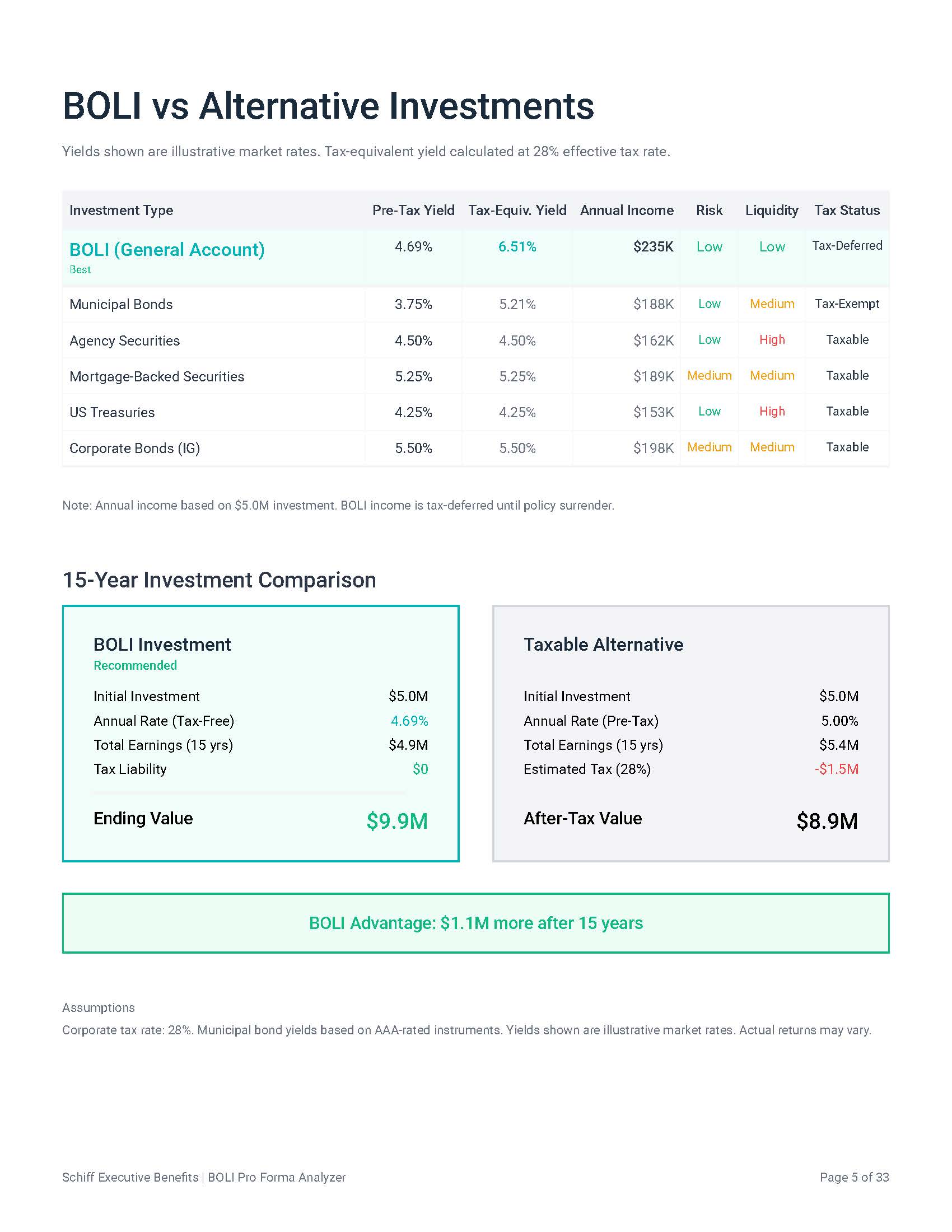
BOLI vs Fixed Income Investments Comparison Chart


Retirement Made Simple: The Four Pillars


In my experience, executive benefit plans often become overly complex, leading to confusion and, ultimately, a lack of perceived value. We advocate for Retirement Made Simple. If an executive at Haverty’s or Powell Industries can’t explain their retirement plan to their spouse in two minutes, the plan is failing as a retention tool.


The Perfect Plan® (as we call our optimized approach) focuses on four fixed pillars:


  • Fixed Dollar Amount: The executive knows exactly what they will receive.

  • Fixed Period: The duration of the payments is defined and guaranteed.

  • Fixed Rate of Return: No market volatility keeping the retiree awake at night.

  • Fixed Cash Flow: A predictable stream of income that supplements the 401(k) limits.


When you offer "Retirement Made Simple," you remove the anxiety of "running out of money," which is one of our primary "What If" anchors. You can learn more about how we frame these outcomes by visiting our The Perfect Plan®.


Technical Compliance: Avoiding "Operational Drift"


One of the biggest risks we see in the Burkenroad companies is Operational Drift. A plan that was compliant and efficient in 2010 may be a ticking time bomb today due to changes in IRC 409A and IRC 101(j).


IRC 409A: The Safe Harbor Update


IRC 409A governs how and when deferred compensation is paid. The penalties for non-compliance are draconian: immediate taxation of all deferred amounts plus a 20% penalty tax on the employee. We often find that companies haven't updated their "Safe Harbor" language to reflect modern IRS guidance. If you haven't audited your NQDC plan in the last three years, you are likely drifting. You can watch a short overview of 409A compliance here.


IRC 101(j): The Notice and Consent Rule


For companies using COLI (Corporate-Owned Life Insurance) to fund these plans, compliance with IRC 101(j) is non-negotiable. If you do not obtain written consent from the executive before the policy is issued, the death benefit: which is supposed to be tax-free: becomes taxable income to the corporation.


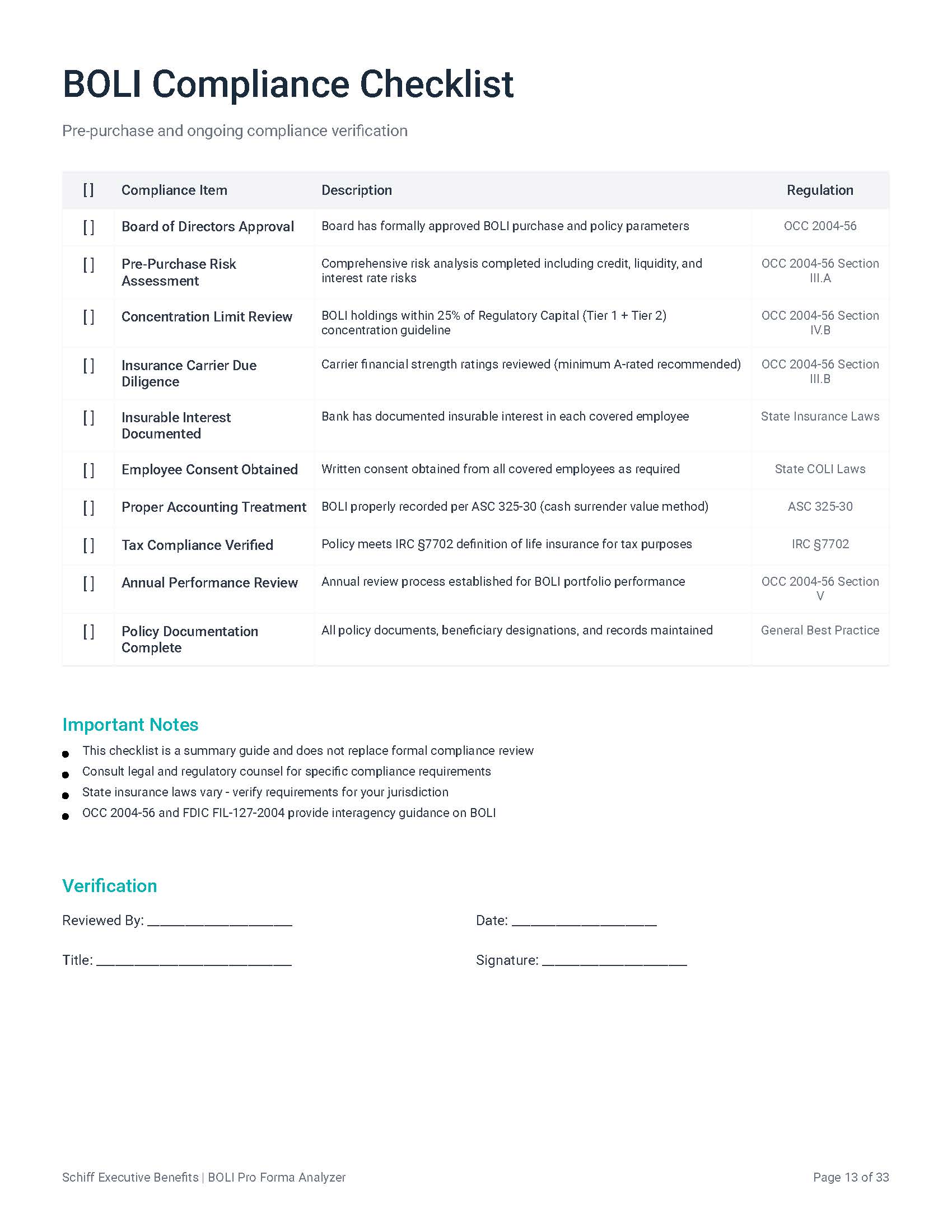
BOLI Compliance Checklist


Benchmarking the Burkenroad Peer Groups


When we look at the specific companies in this analysis, we see a range of maturity in their executive benefit structures.


  • Financial Institutions (FBMS, FGBI): These banks generally understand BOLI but often lack a post-purchase analysis to ensure their peer group benchmarking is up to date. Are you holding too much cash in the plan? Is your BOLI/Capital ratio optimized?

  • Retail and Industrial (POOL, HVT, POWL, CALM): These corporations often have "Legacy Plans" that are either under-funded or using outdated insurance products that don't offer the flexibility required for today’s executive.


The question isn't just "Do you have a plan?" The question is "Is your plan still doing its job?"


Restoring Alignment


The goal of any executive benefit strategy should be to align the interests of the shareholder, the company, and the key executive. When an executive at a company like Cal-Maine Foods knows that their family is 100% protected and their retirement is 100% secure, their focus remains on driving the business forward.


They aren't looking at the "next big offer" because they are already participating in The Perfect Plan®.


If you are a Center of Influence (COI) advising these companies, or an executive within one of these organizations, it’s time to move past the "set it and forget it" mentality. The economic environment has shifted, and your retention strategies must shift with it.


We invite you to retain your key people with ownership-like benefits and ensure your organization is protected against the "What Ifs" that matter most.


Sit back, grab your coffee, and let’s look at your plan together. We’re here to act as your guide through the complexities of executive security, ensuring your legacy: and the legacies of your top talent: are built on a foundation that lasts.


Come join us for Part 2, where we will dive deeper into the specific financial impact of "Full Cost Recovery" for the Burkenroad industrial sector.


Matt Schiff
President, Schiff Executive Benefits
Restoring Alignment and Retention


Learn more: executive retention programs.


Common sense wins. Strong balance sheets do not happen by accident. And in this business, the future belongs to the institutions that fund tomorrow’s promises before those promises come due.


When you review the top U.S. life insurance carriers, one truth stands out quickly: the strongest players do not treat Insurance Company Owned Life Insurance (ICOLI) as an afterthought. They use it as a strategic balance-sheet asset. At Schiff Executive Benefits, that is exactly the lens we bring to every review. We reverse engineer goals, measure available capacity, and help leadership teams make decisions that restore alignment and retention.


Executive Summary


Analysis of Insurance Company Owned Life Insurance (ICOLI) holdings for the top 50 U.S. life insurance carriers. Focus: comparing admitted ICOLI assets against statutory surplus to identify industry benchmarks and individual carrier purchase capacity.


This report is designed for a peer review setting. It is formal in structure, practical in tone, and built to support executive discussion. The central question is simple: how are leading carriers using ICOLI to support long-term executive liabilities and non-qualified plan obligations while maintaining strong capital positions?


The answer matters. If the institutions that manufacture and distribute life insurance are also deploying it as a strategic internal asset, that is not coincidence. That is a benchmark.


Professional executive desk with financial reports illustrating strategic ICOLI utilization and corporate benefit planning.


Report Scope and Benchmark Framework


This analysis compares admitted ICOLI assets to statutory surplus across the top 50 U.S. life insurance carriers. The purpose is twofold:


  • Identify where leading carriers currently sit on the ICOLI utilization curve

  • Highlight potential additional purchase capacity based on peer positioning

  • Provide a practical reference point for executive benefit funding discussions

  • Frame ICOLI as a strategic tool rather than a passive holding


In plain English, this is about more than rankings. It is about capacity. It is about solvency. And it is about whether a carrier is using one of the most efficient balance-sheet tools available to support long-duration obligations.


Full Comparison Data Table: Top 50 U.S. Life Insurance Carriers


Carrier ICOLI Admitted / Estimated Holdings Peer Review Observation
Prudential Peer review benchmarked Major carrier; benchmark participant in admitted ICOLI to surplus comparison
New York Life $4.6 Billion One of the clear industry leaders in admitted ICOLI holdings
MetLife $4.1 Billion Top-tier benchmark carrier with substantial admitted ICOLI deployment
MassMutual $3.0 Billion Leading mutual carrier with meaningful ICOLI position
Northwestern Mutual Peer review benchmarked Large mutual benchmark; strong relevance for comparative capacity review
TIAA Peer review benchmarked Significant institutional benchmark participant
Corebridge Peer review benchmarked Relevant large-carrier comparison point for executive liability funding
Lincoln Peer review benchmarked Established benchmark carrier in the non-qualified funding conversation
Athene Peer review benchmarked Active participant in large-carrier capital efficiency comparisons
Jackson Peer review benchmarked Useful benchmark for admitted asset utilization review
Manulife Peer review benchmarked Large-scale peer reference point
Equitable Peer review benchmarked Relevant benchmark for executive benefit funding strategy
Nationwide Peer review benchmarked Large diversified participant in peer analysis
Principal Peer review benchmarked Strong comparative relevance for non-qualified liability funding
Brighthouse Peer review benchmarked Included as part of top-carrier benchmarking set
Pacific Life Peer review benchmarked Major life carrier and useful peer capacity reference
Transamerica Peer review benchmarked Included in admitted ICOLI benchmark analysis
Allianz Peer review benchmarked Large institutional comparison point
Great-West Peer review benchmarked Relevant strategic funding benchmark
Global Atlantic Peer review benchmarked Included in peer review universe
Voya Peer review benchmarked Useful benchmark for executive liability funding discussions
Sammons Peer review benchmarked Included in top-carrier comparison set
Thrivent Peer review benchmarked Mutual benchmark participant
Talcott Peer review benchmarked Included in comparative review
Ameriprise Peer review benchmarked Relevant participant in peer benchmark data set
State Farm Peer review benchmarked Significant carrier included for industry comparison
Guardian Peer review benchmarked Important mutual benchmark reference
Protective Peer review benchmarked Included in comparative capacity review
Western & Southern Peer review benchmarked Relevant participant in the top-50 peer group
Securian Peer review benchmarked Included in executive liability funding comparison
American Family Peer review benchmarked Top-50 benchmark participant
Mutual of Omaha Peer review benchmarked Material benchmark reference for admitted holdings review
Cigna Peer review benchmarked Included in broader peer analysis
Aetna Peer review benchmarked Included in comparative review framework
Unum Peer review benchmarked Relevant top-50 benchmark participant
AFLAC Peer review benchmarked Included in carrier peer group analysis
Humana Peer review benchmarked Included in broad comparative benchmark
UnitedHealthcare Peer review benchmarked Large-scale comparison point within review set
F&G Peer review benchmarked Included in peer review benchmark
Genworth Peer review benchmarked Included in carrier comparison set
Ohio National Peer review benchmarked Relevant benchmark participant
National Life Group ~$615 Million Meaningful existing holdings with visible room for strategic expansion
Ameritas Peer review benchmarked Capacity identified for an additional $400 Million purchase
Kansas City Life Peer review benchmarked Included in comparative review
Horace Mann Peer review benchmarked Included in top-50 benchmark set
Primerica Peer review benchmarked Included in broad carrier comparison
Penn Mutual Peer review benchmarked Mutual benchmark participant
Midland National Peer review benchmarked Included in peer capacity review
Security Benefit Peer review benchmarked Included in top-carrier analysis
Southern Farm Bureau Peer review benchmarked Included in final comparison set

Strategic Insights


The market leaders are not using ICOLI casually. They are using it deliberately to fund long-term executive liabilities, support deferred compensation obligations, and create a more efficient funding mechanism for non-qualified plans. That matters because executive benefit promises are easy to make in a good year. Funding them responsibly over time is the real discipline.


What makes ICOLI especially attractive in the carrier environment?


  • Balance-sheet efficiency: ICOLI can help offset long-duration executive obligations with a purpose-built asset.

  • 0% RBC charge: Under applicable treatment, ICOLI can offer highly favorable capital treatment, which is a major reason sophisticated carriers continue to use it.

  • Tax-advantaged growth: Policy cash value growth improves internal asset efficiency versus many taxable alternatives.

  • Death benefit recovery: The life insurance chassis provides long-term cost recovery that supports employer economics.

  • Plan funding flexibility: ICOLI works especially well when paired with non-qualified deferred compensation, supplemental executive retirement plans, and other targeted retention designs.


This is where the Schiff Method matters. We do not start with a product. We start with the goal. Then we reverse engineer the structure around the liability, the timeline, the culture, and the economics. That is how you build a plan that is not only technically sound, but also practical inside a real company with real people and real constraints.


If you are reviewing admitted ICOLI relative to surplus, you are really asking a sharper question: how much strategic capacity remains before a carrier reaches its own comfort threshold? That is the kind of question that keeps a peer review meeting productive.


Selected Carrier Commentary


New York Life


At $4.6 Billion in admitted ICOLI, New York Life stands out as one of the clearest industry benchmarks. Size alone does not tell the story. What matters is what that size signals: long-term confidence in ICOLI as a funding vehicle for executive liabilities and institutional promises.


MetLife


At $4.1 Billion, MetLife reflects the same disciplined use of ICOLI as a strategic balance-sheet asset. This is not window dressing. This is infrastructure.


MassMutual


At $3.0 Billion, MassMutual remains firmly in the top tier. The carrier’s position reinforces the broader takeaway that large, well-capitalized institutions continue to rely on ICOLI where efficiency and long-term liability management matter.


National Life Group


With approximately $615 Million in holdings, National Life Group shows meaningful participation while still leaving visible room for expansion relative to likely peer capacity bands.


Ameritas


Ameritas is especially notable from a peer review standpoint because our analysis indicates capacity for an additional $400 Million purchase. That does not mean a carrier should buy simply because it can. It means there is room to evaluate whether strategic underutilization is leaving value on the table.


Why This Matters Beyond the Carrier Space


Even though this report focuses on insurance carriers, the lesson travels well. The same core logic applies when corporations and partnerships use COLI to attract, retain, and reward key talent, fund non-qualified obligations, and prepare for the business “What Ifs” that can hit without warning.


That is why the peer review process is valuable. It turns abstract strategy into measurable comparison. It helps answer questions like:


  • Are we underutilizing a highly efficient funding tool?

  • Are we carrying long-term executive liabilities without a matching asset?

  • Are we solving retention problems in a cost-effective way?

  • Are we planning for replacement cost, retirement income, or ownership transition before the point of no return?


For leaders thinking bigger about non-qualified benefit design, The Perfect Plan® conversation is always about alignment first. Strategy second. Product last.


Conclusion


ICOLI continues to be a primary strategic vehicle for cost-effectively managing executive benefits and non-qualified liabilities across the life insurance sector.


That is the big takeaway from this peer review analysis. The strongest carriers continue to use ICOLI because it works. It supports long-term promises. It helps preserve capital efficiency. And it gives leadership teams a disciplined way to fund obligations before those obligations become pressure points.


If you want to evaluate how these same planning principles translate into executive benefit strategy, non-qualified design, or COLI implementation, we would be glad to walk through it with you. You can also explore more insights on our posts page or join us at The Perfect Plan®.


Restoring Alignment and Retention.


Time has a funny way of moving both slowly and at breakneck speed. They say the only constant in life is change, but in the world of executive benefits, the only constant is complexity. Today, as I sit in my office on this Wednesday, April 15, 2026, I’m reflecting on a journey that started exactly two decades ago.


In 2006, I made a choice that felt both terrifying and inevitable. I walked away from a comfortable role as Managing Director at NYLEX Benefits. I was managing a massive operation, hitting high-stakes premium goals, and overseeing regional directors. But I felt a pull toward something more personal, more technical, and frankly, more innovative. I wanted to build a firm where the "chief bottle washer" (that was me) was also the creative mind behind the most sophisticated plan designs in the industry.


Schiff Executive Benefits was born from that desire. And twenty years later, our mission remains the same: Restoring Alignment and Retention.


The Universal Truth of Growth


There is a universal truth in business: Growth without a plan is just a slow-motion collision with reality.


When we started SEB, the landscape was different. 409A regulations were the "new kid on the block" causing headaches for every C-suite in America. Fast forward to today, and while the regulations have evolved, the underlying anxiety for business owners hasn't changed. You still worry about the same things at 2:00 AM.


You worry about your legacy. You worry about your people. And you worry about the "What Ifs."


At Schiff Executive Benefits, we built our technical legacy by answering those "What Ifs" before they become "What Nows."


That legacy was built through a series of very real milestones:


  • The Perfect Plan® PRESENTED BY MATT SCHIFF, CLU, CHFC, WMCP

  • Schiff Executive Benefits (SEB)'s story

  • Established Schiff Benefits Group May 2006 (after leaving NYLEX Benefits as Managing Director)

    • Managing Director NYLEX Benefits 1998-2006

    • Member Firm of NFP (Partners) 2006-2008

    • Valmark Member Firm 2009-2012 (Top 20 of 150 firms)

    • 12 Year MassMutual Executive Benefits Specialist (in MMEPA and MMGP)

    • Was a Member Firm of Lion Street in 2020 to 2022

    • Top Ten Firm with AgencyOne in 2024

    • Helped draft 409A and 101(j) in 2003 and 2005 as a ranking member of AALU's NQDC Committee with Michael Goldstein


The Five "What Ifs" That Keep You Up


Over the last twenty years, I’ve sat across the table from hundreds of CEOs, partners, and founders. Whether it’s a high-growth tech firm or a multi-generational manufacturing company, the questions are remarkably consistent. We frame our entire philosophy around these five what-if anchors:


  1. What if you end up in business with your partner’s widow or widower? (The Succession Crisis)

  2. What if you need to buy out a partner, but the cash isn’t there? (The Buy-Out Dilemma)

  3. What if your top talent walks across the street to your biggest competitor? (The Retention Risk)

  4. What if a senior executive retires, and the cost to replace them sinks your EBITDA? (The Replacement Cost)

  5. What if you: the person who built it all: run out of money in retirement? (The Personal Risk)


If you haven't asked yourself these questions lately, now is the time. We call this the process of building The Perfect Plan®. It’s not just a catchy name; it’s a registered methodology designed to ensure that your business remains an asset, not a liability, to your family and your future.


A Technical Legacy: Beyond the 401(k)


Twenty years ago, many companies thought a robust 401(k) was enough to keep top-tier talent. We knew better. We’ve spent two decades educating the market on why a 401(k) is often a "math problem" for high earners. When you’re dealing with contribution limits, your most valuable people are often the most underserved.


Our technical legacy is rooted in the "Golden Handcuffs": strategies that actually work. We’ve specialized in:


  • Non-Qualified Deferred Compensation (NQDC): Helping executives save significantly more than the standard $23,000 annual limit.

  • Corporate Owned Life Insurance (COLI): Using institutional-grade insurance to fund future liabilities while providing tax-efficient growth.

  • Split Dollar Arrangements: Creating sophisticated ways to provide life insurance benefits while retaining corporate control of the cash value.

  • ESOPs and Buy/Sell Funding: Ensuring that when a transition happens, it’s funded with "discounted dollars" rather than current cash flow.


Innovation through Partnership: The Ridgeback Era


You can’t stay at the top of your game for twenty years by standing still. Sixteen months ago we took a massive leap forward by joining The Ridgeback Group as a founding firm.


Why? Because the technical demands of our clients were outpacing traditional consulting. By integrating AI-powered modeling systems, we’ve been able to automate plan management and maintain ongoing client tracking. One of the biggest mistakes I see in this industry is the "set it and forget it" mentality. A plan designed in 2018 might be completely irrelevant by 2026 if tax laws or interest rates shift. And we must practice whaat do for our client. 


Our partnership with Ridgeback ensures that The Perfect Plan® stays aligned with real-world change. It’s about using data to predict where the "Executive Sandwich" might squeeze your leadership team: the decade where they are simultaneously supporting aging parents and funding their children’s education. It’s the riskiest decade of their careers, and we have the technical tools to protect them through it.


More Than Just Numbers


While I love the technical side: the IRC 101(j) compliance, the 409A structuring, the complex math of 401(k) excess plans: this anniversary isn't just about spreadsheets. It’s about people.


I also can’t look back on twenty years without thinking about the milestone relationships that helped shape our path. Along the way, we’ve had the privilege of working with and alongside organizations like NFP, Valmark, MassMutual, Lion Street, and AgencyOne. Each chapter sharpened our perspective. Each relationship expanded our technical depth. And each one reinforced a lesson that still guides us today: no firm builds a lasting legacy alone.


I remember a client from about ten years ago: a founder of a major construction firm. He was terrified of what would happen if his son wasn't ready to take over. We sat down and walked through the "What Ifs." We implemented a COLI-funded buy/sell agreement and a deferred compensation plan that kept his key foremen on board for the transition.


Last year, he sent me a photo from his boat in Florida. He’s retired. His son is thriving. His foremen are still there. That is what I mean by Restoring Alignment and Retention.


A Dedication to Education: The American College of Financial Services


Jayne and Matt at the Solomon Huebner Award ceremony honoring Albert J. “Bud” Schiff.


Jayne and Matt at the Solomon Huebner Award ceremony honoring Albert J. “Bud” Schiff.


Our commitment to technical mastery is rooted in a deep respect for education and the professional standards of our industry. This is perhaps best exemplified by our family’s long-standing relationship with The American College of Financial Services.


Founded in 1927 by Dr. Solomon S. Huebner—often called the "father of insurance education"—The American College is the nation’s largest non-profit educational institution dedicated to the financial services profession. For nearly a century, it has set the benchmark for excellence through its rigorous designations, including the CLU®, ChFC®, and MSFS. Huebner was also one of the first to champion holistic planning through rigorous fact-finding: the discipline of asking deeper questions before recommending any solution. Today, that approach is widely recognized as the gold standard for fiduciaries, but it is a principle designees of The American College have practiced since the institution’s inception.


It was a profound honor for our family when my father, Albert J. “Bud” Schiff, CLU, ChFC, AEP, was recognized with the Solomon Huebner Award in November 2013. This award is the College’s highest honor, presented to individuals who have made significant, lifelong contributions to the industry and the College’s mission. Here, my mother, Jayne, and I are pictured at the ceremony celebrating his legacy of leadership and his unwavering dedication to the advancement of professional knowledge in insurance services. In 2018, Jayne Schiff was also named a distinguished alum of The American College for Financial Services. That legacy of disciplined inquiry still shapes how we work today. It is why we begin with deep questions, not quick answers, and why our planning process is built around understanding the full picture before designing a path forward.


Celebration Photos


Celebrating 20 years of professional achievement and the trusted relationships that helped define our technical legacy.


Matt Schiff - Restaurant Group Shot: marking the 20-year milestone with warm conversation, shared memories, and the relationships that have shaped Schiff Executive Benefits.


Twenty years in, and the strongest milestones are still built around people, partnership, and time well spent together.


Matt Schiff - Elegant Restaurant Camaraderie: honoring two decades of leadership, trust, and the personal relationships behind long-term success.


An elegant moment that reflects what twenty years in this business has always been about: trust earned, relationships maintained, and a legacy built the right way.


NYC Event Networking 1: celebrating the 20-year milestone through connection, collaboration, and the professional community that helped shape the journey.


Great work rarely happens alone. This milestone is also a celebration of the network, conversations, and shared momentum behind the last twenty years.


Warm Restaurant Social Shot: commemorating 20 years of meaningful relationships, shared success, and the human side of a technical business.


Even in a highly technical field, relationships still matter most. That truth has carried Schiff Executive Benefits through every chapter of the last twenty years.


The Next 20 Years


As we celebrate this milestone, I’m often asked, "What’s next, Matt?"


The answer is simple: More innovation. The national debt is rising, tax rates are a moving target, and the competition for talent has never been more global. Whether you are a bank, a massive C-Corp, or a growing partnership, the need for sophisticated, technically sound executive benefits is only going to grow.


We are continuing to expand our video library to help demystify these complex topics. We are refining The Perfect Plan® to account for new economic shifts. And we are continuing to ask the hard questions that other consultants avoid.


A Note of Gratitude


To our clients: Thank you for trusting us with your legacy. To our partners: Thank you for your collaboration. To my team: Thank you for being the engine that drives this technical legacy forward.


I started this firm as the "chief bottle washer." Today, I’m proud to lead a team that sets the standard for the entire executive benefits industry.


If you’ve been wondering if your current plan is actually doing what it’s supposed to do: if it’s truly rewarding your best people while protecting your bottom line: let’s talk. No high pressure, no complex jargon without context. Just a conversation about your business and your future.


Sit back, grab your coffee, and when you're ready, come join us for the next chapter.


Here’s to twenty years of innovation, and to many more.


Matt Schiff
President, Schiff Executive Benefits


Want to see how we tackle these issues in real-time? Check out The Perfect Plan® Podcast for deep dives into the strategies that keep businesses thriving.