
Hi, How Can We Help You?
  • Planning for all of life's "What Ifs".

Category Archives: Deferred Compensation


It’s an old aphorism in the business world that "your people are your greatest asset," but any business owner who has ever lost a key executive to a competitor knows the cold, hard reality behind those words. When your top talent walks out the door, they don’t just take their laptop; they take your institutional knowledge, your client relationships, and a significant chunk of your company’s momentum.


So, what keeps you up at night? For many of our clients, it’s "What If #3": What if my top talent leaves?


If you want your key people to act like owners, you usually have to give them a piece of the pie. But traditional equity, actual stock, comes with strings that many owners find suffocating. Voting rights, tax complications, and the permanent dilution of your hard-earned ownership are high prices to pay for loyalty.


Enter Phantom Stock. It is the ultimate tool for attracting, retaining, and rewarding talent without actually handing over the keys to the kingdom. It provides that coveted "Ownership Feel" to non-owners, creating a powerful alignment of interests while keeping you firmly in the driver’s seat.


What is Phantom Stock, Anyway? (The "Not-Actually-Stock" Stock)


At its core, Phantom Stock is a contractual agreement. You aren't giving the executive actual shares of your company. Instead, you are giving them "units" that mimic the performance of your stock.


Think of it as a mirror. When the company’s value goes up, the value of those phantom units goes up. When the company pays a dividend, the executive might receive a "dividend equivalent." At a predetermined time: usually retirement, a sale of the company, or a specific anniversary: the company pays the executive a cash bonus equal to the value of those units.


It’s a win-win. The executive gets the financial upside of being an owner, and you get a motivated leader who is incentivized to drive the company’s valuation higher. But because it’s "phantom," there is no actual equity changing hands. No voting rights. No messy minority shareholder lawsuits. Just pure, performance-based incentive.


A sophisticated executive desk with a leather blotter, a high-end fountain pen, and a pair of designer glasses resting on a legal document, representing the technical precision of executive benefit design.


The Magic of the "Golden Handcuffs"


We often talk about "Golden Handcuffs" in the world of executive benefits. It sounds a bit restrictive, but in practice, it’s about creating a benefit so valuable that leaving the company becomes a very expensive decision for the executive.


Phantom Stock is a premier retention tool because of its vesting schedule. You can design the plan so that the executive only receives the value of their units if they stay for a specific period: say, five or ten years. If they leave early to join a competitor, they leave their phantom "fortune" on the table.


This creates what we call "Ownership Feel to Non-Owners." When an executive knows that their personal net worth is tied to the long-term growth of your company, their perspective shifts. They stop thinking like an employee and start thinking like a stakeholder. They care about the bottom line because it’s their bottom line, too.


The Technical "Vibe": Why Compliance Matters (409A and 101(j))


Now, sit back, grab your coffee, and let’s talk shop for a moment. While Phantom Stock sounds simple in theory, the execution requires a steady, expert hand. Because these plans involve promising a future payment, they fall under the watchful eye of the IRS: specifically IRC Section 409A.


If you’ve spent any time in the world of deferred compensation, you know that 409A is the "landmine" section of the tax code. If a plan is designed incorrectly, the executive can be hit with immediate taxation, a 20% penalty, and interest charges. It’s a mess you want to avoid at all costs.


This is where experience becomes your greatest asset. Our President, Matt Schiff, wasn't just studying these laws: he was in the room when they were being shaped. As a ranking member of the AALU's NQDC Committee, Matt worked alongside Michael Goldstein to help draft the very regulations that govern these plans today.


When we design a Phantom Stock plan, we aren't just guessing. We are leveraging decades of "insider" expertise to ensure your plan is bulletproof. We even discuss these complexities in-depth on The Perfect Plan® Podcast, including a fascinating interview with Dan Hogans, who was formerly with the IRS Treasury and was a primary architect of 409A.


An abstract, high-end architectural view of a modern glass skyscraper reflecting a clear blue sky, signifying transparency, growth, and the solid structure of a well-designed executive plan.


Funding the Future: The COLI Connection


One of the most common questions we get from business owners is: "How do I pay for this in ten years without a massive cash flow crunch?"


If your company value skyrockets (which is the goal!), you could be looking at a very large payout to your executive down the road. To manage this risk, many smart companies use Corporate Owned Life Insurance (COLI) as an informal funding vehicle.


COLI allows the company to grow assets in a tax-advantaged environment, which can then be used to pay out the Phantom Stock benefits when they come due. It’s about "Full Cost Recovery." A properly designed program doesn't just pay the executive; it can actually result in the company recovering the cost of the plan entirely over the long term. This is a core pillar of how we help businesses plan for all of life's "What If's."


Building Your Version of The Perfect Plan®


At Schiff Executive Benefits, we don't believe in "off-the-shelf" solutions. Every company culture is different, and every owner has a different vision for their legacy. We use a process we call reverse engineering: we start with your goals: who do you want to reward, and what do you want the outcome to look like?: and we build the plan backward from there.


We call this The Perfect Plan®. It’s about restoring alignment and retention in a way that feels authentic to your business.


Are you ready to stop worrying about your top talent leaving? Are you ready to give your key people the "Ownership Feel" they crave without sacrificing your control?


The journey starts with understanding where you stand today. We invite you to use our Business Valuation and Prospect Data Capture tool to get a clear picture of your company's value. From there, we can sit down: as a team alongside your Accountant and Attorney: to design a strategy that protects your business and rewards your stars.


Come join us. Let’s build something that lasts.


Two professional executives in a sleek, high-rise office having a focused conversation over a tablet, illustrating the collaborative and consultative approach to executive benefit planning.


Learn more: Corporate Owned Life Insurance (COLI), 409A compliance, design, and strategy and how Phantom Stock creates an ownership feel.


Meta Description: Learn how phantom stock creates ownership without dilution through nonqualified deferred compensation strategies that strengthen executive retention and reward key talent.


You want your cake, and you want to eat it, too. In the world of business ownership, that usually means keeping 100% of your equity while having a team that acts like they own the place.


It sounds like a pipe dream, right? Usually, when a key employee asks for "skin in the game," the conversation turns toward stock options, complex cap tables, and the eventual headache of having a minority shareholder at your board table who disagrees with your wallpaper choices.


But there is a middle ground. It’s called Phantom Stock. It’s the "ownership feel" without the "ownership mess." At Schiff Executive Benefits, we specialize in Restoring Alignment and Retention by using these tools to help you keep your best people without giving away the farm.


The Problem: The "Employee" Mindset


Most employees, even the high-level ones, think in terms of salary and bonuses. They are focused on the "now." But you? You’re focused on the "forever." You’re building enterprise value.


When your top talent doesn’t have a stake in that long-term value, they start looking at the exit. They see a bigger salary elsewhere and they jump ship. This is the "Top Talent Leaving" scenario, one of the five core "What Ifs" we help business owners navigate every day.


How do you get them to think like you? You give them a piece of the pie. But not a piece of the actual pie. A piece of the phantom pie.


What is Phantom Stock, Anyway?


Phantom stock is essentially a contract. You aren't handing over actual shares of your company. Instead, you are promising to pay the employee a cash bonus at a future date that is tied directly to the value of your company’s stock.


If the company value goes up, their bonus goes up. If the company is sold, they get a payout as if they owned a percentage of the equity.


It’s the ultimate win-win. They get the financial upside of being an owner. You get to keep 100% of the voting rights and 100% of the legal ownership. No dilution. No minority shareholder lawsuits. No drama.


Executive desk with luxury watch, fountain pen, and polished documents illustrating phantom stock plan design and executive compensation strategy


The Two Flavors: Appreciation vs. Full Value


When you’re designing your Phantom Stock Plan, you generally have two paths:


  1. Appreciation Only (The "Upside" Play): The employee only gets paid on the growth of the company from the day they started. If the company is worth $10M today and sells for $20M in five years, they get a slice of that $10M gain. This is great for new hires where you don’t want to hand over value you’ve already spent twenty years building.

  2. Full Value (The "Ownership" Play): The employee gets the full value of the "shares" when they vest or when a trigger event happens. This feels much more like a true equity grant and is often used for "Golden Handcuffs" to keep a long-term COO or CEO from ever considering another offer.


Why It’s the Ultimate "Golden Handcuff"


Retention isn’t just about paying people enough to stay; it’s about making it too expensive for them to leave.


Phantom stock plans are usually designed with a vesting schedule. Maybe they vest over five years, or maybe they only vest upon a specific event: like the sale of the company or your retirement.


By tying their wealth to the long-term success of the business, you align their interests with yours. Suddenly, they aren’t just worried about their quarterly bonus. They’re worried about the same things you are: sustainable growth, efficiency, and enterprise value.


The Technical Vibe: 409A and Top Hat Plans


I know, I know. "Section 409A" sounds like something your accountant says right before they give you bad news. But don't let the technical jargon scare you.


Phantom stock is a form of nonqualified deferred compensation (NQDC). Because it’s a promise to pay in the future, it has to follow specific IRS rules: specifically Section 409A. This ensures the employee isn't taxed on the money until they actually receive it.


We also design these as "Top Hat" plans. This is a fancy way of saying they are for a select group of management or highly compensated employees. By keeping the group small and elite, you bypass most of the heavy ERISA reporting requirements that come with traditional retirement plans.


At Schiff Executive Benefits, we handle the heavy lifting here. We ensure your plan is compliant, so you don't end up with a surprise bill from the IRS down the road.


Modern glass office building at sunset representing enterprise growth, ownership without dilution, and long-term executive retention planning


Our Approach: Goal-Oriented Reverse Engineering


We don’t believe in "off-the-shelf" benefit plans. Your company culture is unique, and your plan should be, too.


When we sit down with a client, we start with the end in mind. We ask the "What Ifs."


  • What if you want to retire in ten years?

  • What if you want to sell the company to your employees?

  • What if your top rainmaker gets a call from a competitor tomorrow?


We reverse engineer the solution based on your specific goals. We look at the benefit structure, the vesting triggers, and: most importantly: the cost.


The Secret Sauce: Cost Recovery


This is where we really separate ourselves. Most consultants will help you design a plan that costs you money. We help you design a plan that recovers it.


By using informally funded vehicles like Corporate Owned Life Insurance (COLI), we can structure these plans so that the employer eventually recovers the cost of the premiums and the benefits paid. It’s an integrated approach that works alongside your Accountant and Attorney to ensure the math actually works for the long haul.


We call this part of The Perfect Plan®. It’s about building a business that works for you, rather than you working for the business. And if you're earlier in the journey, Startup to Succession is the ultimate guide for early-stage growth.


Sleek boardroom table with single document illustrating 409A compliance and nonqualified deferred compensation plan strategy


Summary of the Playbook


If you’re looking to reward growth without a cap table mess, here is your playbook:


  • Identify the Talent: Who are the 2-3 people who actually drive the value of your business?

  • Define the Value: Are you sharing the "Upside" or the "Full Value"?

  • Set the Triggers: When do they get paid? At retirement? Upon a sale?

  • Ensure Compliance: Get your 409A and Top Hat filings in order.

  • Fund the Promise: Don’t just leave a massive liability on your books. Use a cost-recovery strategy.


Next Steps


Building a business is hard. Keeping the people who helped you build it shouldn't be.


If you’re tired of the "standard" advice and want to explore how to give your team an ownership feel without giving up control, let’s talk. Sit back, grab your coffee, and let’s look at your "What Ifs" together.


Contact Schiff Executive Benefits today and let’s start designing The Perfect Plan® for your legacy.


Learn more: how Phantom Stock creates an ownership feel.


Meta Description: Learn how an NQDC plan works, how nonqualified deferred compensation supports executive retention, why 409A compliance matters, and when a 401k mirror plan may fit your business.


The Executive Summary: What is a Nonqualified Deferred Compensation (NQDC) Plan?


A Nonqualified Deferred Compensation (NQDC) plan is a contractual arrangement between an employer and a select employee or group of employees that allows compensation earned in one year to be deferred and paid in a future year, typically upon retirement, separation from service, death, disability, or a fixed distribution date defined by the plan.


Technical Definition


  • Nonqualified status: An NQDC plan is “nonqualified” because it is not intended to satisfy the qualification requirements that apply to broad-based qualified retirement plans such as 401(k) plans under the Internal Revenue Code and ERISA.

  • Selective participation: These plans are generally offered to a limited group, typically key executives or highly compensated employees, rather than the entire employee population.

  • Deferral mechanics: The deferred amount may include salary, bonuses, commissions, or other eligible compensation, subject to the written terms of the plan.

  • Unfunded promise to pay: In most cases, the plan represents an unsecured promise by the employer to pay future benefits, and the participant remains a general creditor of the employer with respect to those promised amounts.

  • Tax timing: Amounts properly deferred are generally not included in the employee’s current taxable income until paid or otherwise made available, assuming the plan is structured and administered in compliance with applicable tax rules.

  • Employer deduction timing: The employer generally receives a tax deduction when the deferred compensation is actually paid and included in the employee’s taxable income.


Why It Is Often Called a 401k Mirror Plan


  • Functional similarity: An NQDC plan is often described as a 401k Mirror Plan because it can be designed to mirror certain economic features of a 401(k), such as elective deferrals, employer contributions, vesting schedules, and account-crediting methodologies.

  • Different legal framework: Unlike a qualified 401(k), an NQDC plan does not provide the same statutory protections, nondiscrimination framework, contribution caps, or trust-based segregation of assets that typically apply to qualified plans.

  • Use case: The “mirror” concept is commonly used to restore benefits or savings opportunities that are limited under qualified plan contribution ceilings, compensation caps, or nondiscrimination testing constraints.


IRC Section 409A Governance


  • Primary tax regime: Most elective deferral and supplemental executive retirement arrangements of this type are governed by Internal Revenue Code Section 409A.

  • Written-plan requirement: Section 409A generally requires the plan to specify, in writing, the timing of deferral elections and the permissible timing and form of distributions.

  • Election timing rules: Deferral elections generally must be made before the year in which the services are performed, subject to limited exceptions.

  • Permissible payment events: Distributions are generally limited to specific events permitted under Section 409A, including separation from service, death, disability, a specified time or fixed schedule, change in control events as defined by regulation, or an unforeseeable emergency.

  • Anti-acceleration rule: Section 409A generally prohibits accelerating the time or schedule of payments except in limited circumstances authorized by regulation.

  • Penalty for noncompliance: Failure to comply with Section 409A can trigger immediate income inclusion, a 20% additional federal tax, and potential interest penalties.


In Plain Terms


An NQDC plan is a selective executive compensation and retirement planning tool that lets employers defer compensation beyond traditional qualified plan limits, often in a format that mirrors a 401(k), while operating under the strict documentary and operational rules of IRC Section 409A.


The hardest thing to find in business isn’t capital; it’s the right people to run it. In the competitive landscape of the modern economy, talent is the only currency that truly matters. You’ve likely spent years, if not decades, building a team that operates with precision, but as your leaders grow in success, they often hit a wall: a financial ceiling that threatens their long-term loyalty and your company’s stability.


If you are a business owner or a high-level executive, you are intimately familiar with the limitations of the traditional 401(k). You contribute the maximum, your company provides a match, and yet, for someone in your tax bracket, it’s a drop in the bucket. It simply isn’t enough to maintain your lifestyle in retirement. This is where everyone starts talking about nonqualified deferred compensation plans, more commonly known as NQDC plans or the "401k Mirror" plan.


But what exactly is an NQDC plan, and why is it suddenly the talk of every C-suite and boardroom across the country?


The "401k Mirror" Plan: A Quick Overview


Think of your standard 401(k) as a small glass. For most employees, that glass is plenty big enough to hold their retirement savings. But for you and your key executives, that glass overflows almost immediately. An NQDC plan acts as a much larger vessel: essentially a mirror of your 401(k) but without the restrictive IRS contribution limits.


In its simplest form, a nonqualified deferred compensation plan is a contractual agreement between an employer and an employee to defer a portion of their compensation until a future date. Because these plans are "nonqualified," they don't have to follow the same stringent participation rules as a 401(k). You can pick and choose who participates. You can decide exactly how much they can defer. Most importantly, you can provide a vehicle for your top talent to save significantly more for their future while deferring the tax burden today.


Executive reviewing financial blueprint and compliance documents for NQDC plan design


Why 409A Plans Require Expert Hands


When you step into the world of NQDC plans, you are stepping into the territory of Internal Revenue Code Section 409A. If that sounds intimidating, it’s because it is. Section 409A dictates exactly how these plans must be structured, when elections must be made, and how distributions can be paid out. If you get it wrong, the penalties are draconian: immediate taxation plus a 20% excise tax.


This is why experience matters. At Schiff Executive Benefits, we don’t just read the rules; we helped write them. Our President, Matt Schiff, was actually in the room helping to draft the 409A regulations. When you work with us, you aren’t just getting a "product" off a shelf. You are getting a plan built on the bedrock of the very regulations that govern the industry. We understand the nuances of IRS guidance regarding Section 4960 and the intricacies of plan design because we’ve been at the forefront of this space for years.


The Problem: The High-Earner Tax Trap


What keeps you up at night? For many of our clients, it’s the realization that their current retirement strategy is failing their most valuable assets. If an executive is earning $400,000 a year but is limited to a $23,000 contribution in a 401(k), they are effectively being penalized for their success. Their "replacement ratio": the percentage of their working income they can expect in retirement: is abysmally low.


An NQDC plan solves this by allowing for "unlimited" contributions (subject to the terms of the plan). It allows your key people to take a portion of their salary or bonus, move it into a tax-deferred account, and let it grow. They don’t pay taxes on that money until they actually receive it, usually at retirement when they might be in a lower tax bracket.
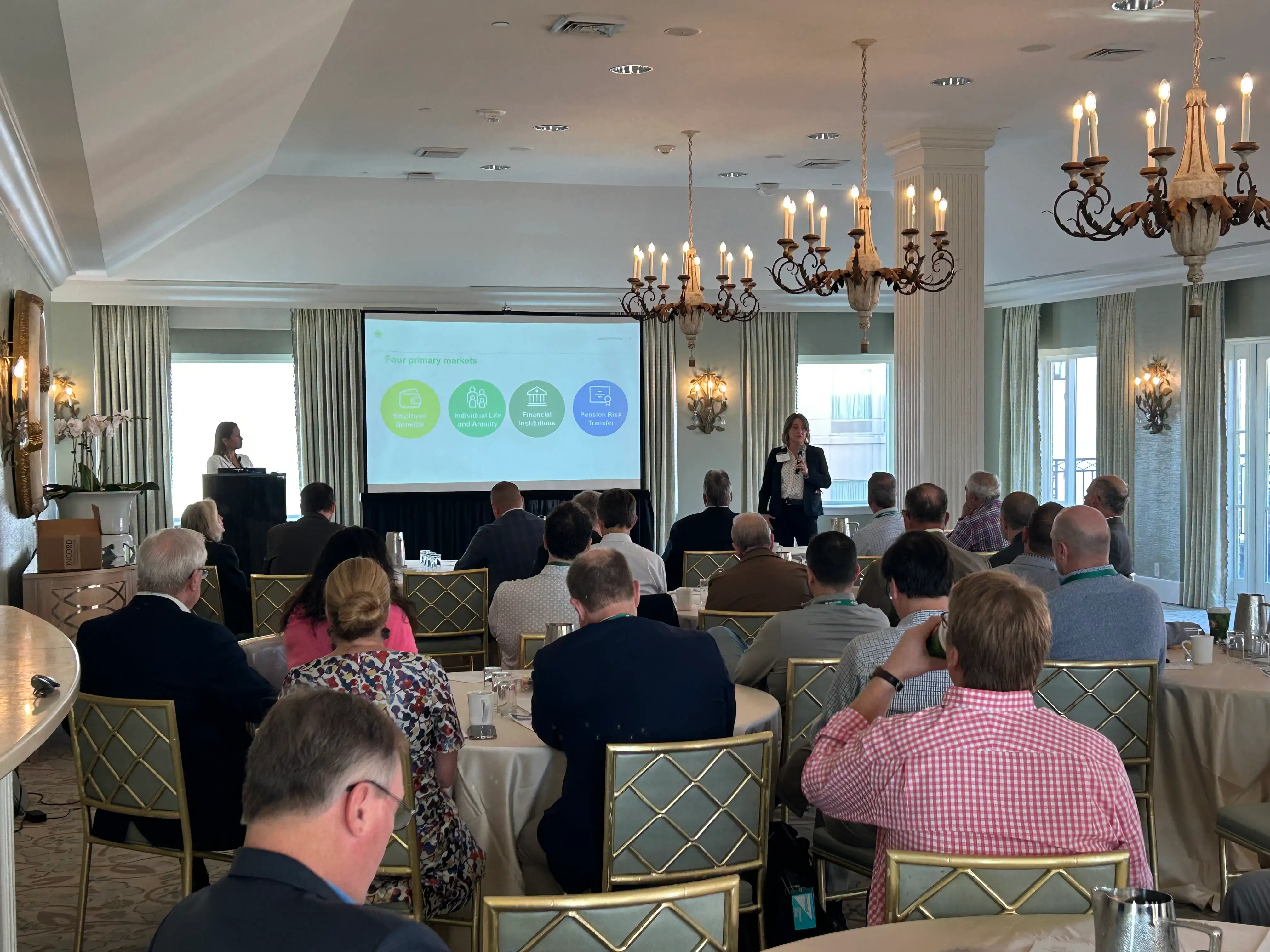

Business professionals discussing executive benefits, retention strategy, and nonqualified deferred compensation


The Employer’s Advantage: Retention and Cost Recovery


While the executive sees a powerful wealth-building tool, what do you, the business owner, see? You see a "Golden Handshake" that turns into a "Golden Handcuff."


By implementing a 401k mirror plan, you are creating a massive incentive for your key people to stay. If they leave prematurely, they may forfeit company contributions or vesting amounts. It’s one of the most effective ways to retain your key people with ownership-like benefits without actually giving up equity in your company.


Furthermore, many companies utilize "informal funding" strategies to offset the future liability of these plans. This is where the concept of cost recovery comes in. Through strategic use of Corporate Owned Life Insurance (COLI) or other assets, a company can actually recover the cost of the benefit over time. It’s a win-win: the executive gets the security they crave, and the company protects its balance sheet.


Integrating The Perfect Plan® Philosophy


At Schiff Executive Benefits, we don’t look at NQDC plans in a vacuum. We look at them through the lens of The Perfect Plan®.


What is The Perfect Plan®? It is our proprietary philosophy that ensures every benefit, every insurance policy, and every compensation structure works in harmony. It’s about building a financial foundation that is as robust as the business you’ve spent your life creating. Whether we are discussing annuities and income for life or the future of life insurance, the goal is always the same: clarity, security, and results.


We believe that your executive benefits should be as sophisticated as your business strategy. You wouldn't settle for a "standard" approach to your supply chain or your marketing, so why settle for a "standard" approach to your executive retention?


Senior executive in a blue suit representing leadership, trust, and advisory expertise


Is an NQDC Plan Right for You?


Ask yourself a few hard questions:


  • If your top three executives walked out tomorrow, what would happen to your stock price or your client base?

  • Are you currently able to save enough to maintain your current lifestyle once you step away from the daily grind?

  • Is your company taking full advantage of the tax-efficient strategies allowed under 409A?


If the answer to any of these makes you uneasy, it’s time to take a closer look at nonqualified deferred compensation plans. These aren't just for the Fortune 500 anymore. Mid-market companies are increasingly using NQDC plans to compete for the same talent pool, and the use of NQDC plans is at an all-time high.


Building Your Legacy


Business is often an unstable environment. Markets shift, regulations change, and competitors emerge. Amidst that uncertainty, your executive benefits should be the one thing that remains fixed and predictable. Our goal is to provide that guaranteed lifetime income foundation that allows you and your team to focus on what you do best: growing the business.


When Matt Schiff was named to the American College Alumni Board of Directors, it was a recognition of a career dedicated to these very principles. We bring that same level of commitment to every client engagement. We aren't just consultants; we are your partners in design, implementation, and long-term management.


Next Steps: Grab a Coffee and Let’s Talk


Two professionals meeting in an office to discuss executive benefits and 409A planning


Understanding NQDC plans doesn't have to be a multi-day seminar. In just under three minutes, you now know that these plans offer a way to bypass 401(k) limits, provide powerful tax deferral for your best people, and offer a strategic retention tool for your company: all while staying within the guardrails of 409A.


The real magic, however, happens in the customization. No two companies are the same, and no two "Perfect Plans" look identical.


Are you ready to realize your dream value? Are you ready to build it your way?


I invite you to sit back, grab your coffee, and join us for a conversation. We can dive into the specifics of your situation, look at your current plan design, and see if a 401k mirror plan is the missing piece of your executive puzzle. You’ve worked hard to build your team; let’s work together to make sure they: and you: are protected for the long haul.


The Perfect Plan<sup style=® Podcast banner for executive benefits insights and planning conversations">


Feel free to explore our blog for more insights, or reach out to us directly. We look forward to helping you navigate the complexities of executive benefits with the confidence that only comes from true expertise.


Learn more: our complete guide to NQDC plans.



In the world of business, success often creates its own set of challenges. It is a universal truth that the more an executive achieves, the more they find themselves bumping against ceilings designed for the average: not the exceptional. For the high-earning leaders driving your company’s growth, the standard 401(k) plan eventually becomes a bottleneck. When a top performer realizes they can only protect a fraction of their income for the future due to IRS contribution limits, the very tools meant to retain them begin to lose their edge.


This is where the 401(k) Mirror Plan: a sophisticated form of nonqualified deferred compensation (NQDC): comes into play. It is designed to pick up exactly where the qualified plan leaves off, restoring alignment between an executive’s value and their reward.


The "401(k) Gap": Why Traditional Plans Aren't Enough


For most employees, a 401(k) is the gold standard. However, for key talent, the IRS-mandated contribution limits (and the "highly compensated employee" testing) often mean they can only defer 3% to 5% of their total compensation. While their peers are saving 15% or more toward retirement, your top executives are left with a significant "retirement gap."


A 401(k) Mirror Plan solves this by allowing executives to defer a much higher percentage of their salary and bonus: often up to 75% or even 100%: into a plan that "mirrors" the look, feel, and investment options of the company’s existing 401(k).


Two business professionals in a collaborative discussion over a digital tablet in a bright, professional workspace, illustrating the ease and integration of the Mirror Plan.


Employer-Funded vs. Employee-Funded: A Dual Approach


The beauty of the 401(k) Mirror Plan lies in its flexibility. It isn't just a savings account for the executive; it is a strategic tool for the business owner.


1. Employee-Funded (The Deferral)


This allows the executive to manage their own tax liability. By deferring income now, they avoid current income tax on those dollars and the growth within the plan, paying taxes only when the funds are distributed (ideally in a lower tax bracket during retirement).


2. Employer-Funded (The Reward)


The company can use the mirror plan to provide "Restoration Matches." If an executive’s 401(k) match was capped because of IRS limits, the company can "restore" that match within the NQDC plan. Beyond simple restoration, companies often use these plans for discretionary contributions or Phantom Stock arrangements. This creates a powerful executive retention strategy, often referred to as "golden handcuffs," where benefits vest over time, ensuring your key people stay focused on the long-term success of the firm.


The Importance of Technical Precision: IRC 409A and 101(j)


When you move into the territory of nonqualified plans, the margin for error disappears. This is where IRC 409A becomes the most important acronym in your boardroom. Section 409A governs the timing of deferral elections and distributions; a single operational mistake can trigger immediate taxation and a 20% penalty for the executive.


At Schiff Executive Benefits, we don’t just read the rules: we were in the room when they were written. Our President, Matt Schiff, alongside Michael Goldstein, served as a ranking member of the AALU's NQDC Committee and helped draft the very laws that govern these plans today. This "insider" expertise is critical when designing a plan that must withstand IRS scrutiny.


We recently sat down with Dan Hogans, formerly of the IRS Treasury and a primary architect of the 409A regulations, on The Perfect Plan® Podcast to discuss these complexities. You can watch that interview here to understand why deep technical expertise is the only way to ensure your plan remains a benefit rather than a liability.


A close-up of a high-end fountain pen resting on a detailed financial report, symbolizing the precision and compliance required for 409A and 101(j) regulations.


Cost Recovery: The Employer’s Advantage


One of the most common questions business owners ask is: "How do we afford to promise these future benefits?"


Traditional 401(k) contributions are a straight expense to the company. However, a properly designed 401(k) Mirror Plan can be informally funded using Corporate Owned Life Insurance (COLI). This structure allows the employer to:


  • Offset the P&L impact of the deferred compensation liability.

  • Utilize tax-advantaged growth to fund the benefit payments.

  • Achieve full cost recovery, where the company is eventually reimbursed for every dollar spent on the plan, including the cost of money.


This turns a "cost" into an "asset" on the balance sheet, allowing the company to reward talent without draining long-term capital.


An Integrated Approach with Your Advisors


A 401(k) Mirror Plan does not exist in a vacuum. It must be woven into the fabric of your existing corporate structure and work in harmony with your CPA, Attorney, and TPA. We pride ourselves on being the technical "quarterback" for these solutions. We reverse-engineer the plan based on your specific goals: whether that is solving for a business buyout, protecting an employee’s family, or ensuring your top talent has 100% of the income they need when they retire.


We call this building The Perfect Plan®.


A group of diverse professionals sitting around a conference table in a high-rise office, representing the collaborative


Is Your Executive Team Protected?


If you haven't looked at your executive benefit structure in the last few years, you may be leaving your best people: and your company’s stability: exposed to unnecessary risk. Are you prepared for the "What Ifs"?


  1. What if your top talent leaves for a competitor who offers better deferral options?

  2. What if you are over-paying in taxes because you lack a sophisticated NQDC strategy?

  3. What if your current plan isn't actually compliant with 409A?


Restoring alignment and retention starts with a clear understanding of what your business is worth and how you want to reward those who help it grow.


Ready to see where you stand?
Take the first step toward securing your legacy and optimizing your executive rewards. Use our RISR Application to get a baseline valuation and see how a 401(k) Mirror Plan can fit into your broader corporate strategy.


Sit back, grab a coffee, and let’s talk about how to protect what you’ve built.


Restoring Alignment and Retention


Learn more: our complete guide to NQDC plans and how a 401(k) Mirror Plan works.


It has often been said that the best time to plant a tree was twenty years ago, and the second best time is today. In the world of executive leadership, time is the one asset that cannot be reclaimed, repurposed, or refinanced. For those standing on the five-year threshold of retirement, the view is often a mix of well-earned pride and a quiet, persistent anxiety.


You’ve spent decades building a legacy, navigating market shifts, and steering your organization toward success. But as the "Income Cliff" approaches: the moment your high-octane salary and bonus structure stop: the question shifts from "How much can I earn?" to "How much can I keep and spend?"


At Schiff Executive Benefits, we believe retirement shouldn't be a transition into uncertainty. It should be the realization of The Perfect Plan®. To get there, you need a roadmap that accounts for the technical complexities of your position and the personal goals of your lifestyle.


Restoring Alignment and Retention isn't just for your employees; it’s for your own future, too. Here is your strategic five-year countdown to a secure, guaranteed retirement.


Year 5: The Diagnostic Audit and the "Income Gap"


Close-up of an executive desk with a luxury watch and leather-bound planner representing time management and planning.


Five years out is the sweet spot. You aren't in a rush, but you have enough runway to correct course if the data doesn't align with your dreams. The primary goal this year is to identify your "Income Gap."


For high-earning executives, standard retirement models often fail. Why? Because your lifestyle isn't standard. You likely have multiple income streams: salary, bonuses, equity, and nonqualified plans: that will all behave differently when you step away.


  • Inventory Every Stream: Catalog your 401(k), IRAs, HSAs, and brokerage accounts. But more importantly, look at your executive benefit programs. Do you have a Traditional DB SERP or a Nonqualified Deferred Compensation (NQDC) plan?

  • Calculate the Lifestyle Cost: Be honest about what it costs to be you. Retirement often increases spending in the first few years as travel and leisure take center stage.

  • Identify the Cliff: Most executives face a 50% to 70% drop in cash flow the moment they retire. We call this the Income Cliff. Your goal in Year 5 is to determine exactly how large that gap is and what assets will be used to bridge it.


Year 4: The 409A and NQDC Deep Dive


Technical financial and legal documents on a dark desk representing IRS compliance and 409A regulations.


If Year 5 was about the "what," Year 4 is about the "how." Specifically, how do we handle the technical minefield of your deferred compensation?


This is where technical expertise becomes your greatest ally. Our President, Matt Schiff, was "in the room where it happened" when many of these regulations were being shaped. As a ranking member of the AALU's NQDC Committee alongside Michael Goldstein, Matt helped draft the frameworks for IRC 409A and 101(j) between 2003 and 2005.


When you are dealing with Section 409A, there is no room for error. A violation can lead to immediate income inclusion and a 20% penalty tax, plus interest.


  • Review Payout Elections: Under 409A, your distribution timing is usually locked in years in advance. Do your current elections align with your retirement date?

  • The 6-Month Rule: If you are a "specified employee" in a public company, 409A requires a six-month delay on distributions after you separate from service. Have you accounted for that half-year cash flow gap?

  • Mirroring the Market: Is your 401(k) Mirror performing? Year 4 is the time to ensure the informal funding: often Corporate Owned Life Insurance (COLI): is optimized to recover costs for the company while securing your benefits.


For a deeper dive into these technicalities, I highly recommend listening to Matt’s conversation with Dan Hogans (formerly of the IRS Treasury) on The Perfect Plan® Podcast. Understanding the intent behind the law is the only way to ensure 100% compliance.


Year 3: Protecting the Downside (LTC and COLI Riders)


By Year 3, your accumulation phase is winding down, and your protection phase must ramp up. The biggest threat to a successful executive retirement isn't market volatility: it’s an unplanned health event.


Most executives assume they will "self-insure" for Long-Term Care (LTC). While you may have the assets, why use your own dollars when you can leverage corporate-grade solutions?


  • LTC through a Rider: Many sophisticated COLI and split-dollar programs include riders for Long-Term Care. This allows the business to provide a benefit that protects your family's legacy without the "use it or lose it" downside of traditional insurance.

  • 100% Protection to Families: Ensure your Buy/Sell agreements and life insurance policies are updated. If something happens to you three years before the finish line, does your family get 100% of the value you’ve built?


Year 2: Valuation and Business Transition


If you are a business owner or a key partner, Year 2 is about the exit. You cannot successfully retire if your capital is trapped in an illiquid business.


  • Get a Real Number: Most owners over- or under-estimate their business value by 30%. Use a professional tool like our Business Valuation and Prospect Data Capture to get a clear, data-driven picture of what your "dream value" actually is.

  • Succession vs. Sale: Are you passing the torch to a junior executive or selling to a third party? This decision dictates your tax strategy and the timing of your final payouts.

  • Ownership Feel to Non-Owners: If you are staying on as a consultant, ensure the transition plan includes Phantom Stock or Restricted Executive Bonus plans for your successors to keep the ship steady while you depart.


Year 1: The Paycheck and Playcheck


The final 12 months are about execution. This is when we move from "Total Net Worth" to "Guaranteed Monthly Cash Flow." We call this Retirement Made Simple.


  • Fixed Dollar, Fixed Period: We help you structure your assets to provide a fixed dollar amount for a fixed period with a fixed rate of return. No more checking the ticker symbols every morning.

  • The Playcheck: Once your "essential" expenses are covered by guaranteed income (Social Security, Pensions, NQDC, and Annuities), every other dollar becomes your "Playcheck." This is the money for the lake house, the grandkids, and the travel.

  • The Final Stress Test: Review your plan against the five core "What If's":

    1. What if the business ends up with a widow?

    2. What if there's a forced buy-out?

    3. What if top talent leaves during your transition?

    4. What if the replacement cost for your role is higher than expected?

    5. What if you run out of retirement money?


Come Join Us


Serene high-end patio setting overlooking a lake with a cup of coffee representing a realized dream retirement.


Retirement shouldn't feel like a point of no return. It should feel like the start of your most productive and peaceful chapter yet. But a high-end retirement requires high-end engineering.


Whether you are five years out or five months out, the decisions you make today regarding your deferred compensation and guaranteed income will define the next thirty years.


Sit back, grab your coffee, and let’s look at your numbers. We’ve spent nearly a century (combined) helping executives like you realize their dream value. Visit our posts feed for more insights, or start your journey by checking your business valuation here.


We’re ready when you are.


The pursuit of wealth preservation is a complex game where only the architects truly understand the rules, which they often write in a language of their own. In the world of high-level executive benefits, there is a universal truth: traditional compensation models eventually hit a ceiling. Whether it is the limitations of qualified plans or the tax drag on personal investments, the "status quo" often fails to protect the professional legacy you have worked decades to build.

When standard tools fall short, we turn to more sophisticated structures. Among the most powerful: and technical: of these is Split Dollar Architecture. Often described as the "Swiss Army Knife" of executive wealth design, Split Dollar is not a product; it is an architectural framework. But like any complex structure, its stability depends entirely on the precision of its foundation: specifically regarding IRC 409A and Sarbanes-Oxley compliance.

At Schiff Executive Benefits, we specialize in "Restoring Alignment and Retention" by reverse-engineering these solutions to match your company's culture and intent. If you are looking for the blueprint for The Perfect Plan®, you must first understand the structural integrity of the Split Dollar masterclass.

The Foundation: Collateral Assignment and the Loan Regime


In its most effective modern form, Split Dollar operates under the "loan regime." Under a Collateral Assignment Split Dollar (CASD) arrangement, the executive owns a life insurance policy, and the employer pays the premiums. The employer structures these payments as a series of loans to the executive, securing each one through a collateral assignment of the policy’s cash value and death benefit.

The beauty of this design lies in its tax efficiency. Because the premium payments are treated as a bona fide loan, they are not currently taxable to the executive as income. The loan typically bears interest at the Applicable Federal Rate (AFR). When the executive passes away or the policy is surrendered, the employer is repaid the loan balance from the policy proceeds, while the remaining cash value or death benefit provides a significant, tax-advantaged windfall for the executive or their estate.

Minimalist Executive Boardroom reflecting sophisticated wealth architecture

The 409A Trap: When "Planned Forgiveness" Becomes a Liability


The technical "gotcha" that keeps many advisors up at night is how these loans interact with IRC 409A. This is an area where our President, Matt Schiff, has a unique vantage point. In 2003 and 2005, Matt was "in the room where it happened," serving as a ranking member of the AALU’s NQDC Committee alongside Michael Goldstein. Together, they helped draft the very laws that govern nonqualified deferred compensation today.

The danger arises when a company decides, from the beginning, that they plan to forgive the Split Dollar loan at a future date: perhaps upon the executive’s retirement or after ten years of service.

Under IRC 409A, the moment you create, in turn, a "legally binding right" to a future benefit, you have entered the world of deferred compensation. If the loan agreement or a side letter promises that the loan will be forgiven based on a service requirement, that forgiveness no longer counts as a simple loan repayment; instead, it becomes a deferral of compensation.

If this is not structured with extreme technical precision: ensuring compliance with 409A’s strict rules on payment triggers, timing, and "deferral elections": the executive could face an immediate tax bill on the present value of that forgiveness, plus a soul-crushing 20% penalty and premium interest. At Schiff Executive Benefits, we don't just "guess" at these rules; we work with the architects who helped write them to ensure your plan is bulletproof.

The Sarbanes-Oxley Wall: The NEO Prohibition


While Split Dollar is a powerhouse for private companies and partnerships, the landscape shifts dramatically for publicly traded entities. This is primarily due to Section 402 of the Sarbanes-Oxley Act (SOX).

Section 402 generally prohibits public companies from making or "arranging" personal loans to their directors and executive officers (often referred to as Named Executive Officers, or NEOs). Because Collateral Assignment Split Dollar is, by definition, a loan-regime arrangement, it creates a massive compliance wall for the top five employees in a public company.

Precision technical documents on a luxury executive desk

For these NEOs, implementing a new CASD loan is typically a non-starter. Even modifications to existing legacy plans can trigger a SOX violation if the modification is seen as a "new extension of credit."

We recently explored these nuances in a deep-dive conversation on The Perfect Plan® Podcast with Dan Hogans, formerly of the IRS Treasury. Dan was one of the primary authors of the 409A regulations, and our discussion on how SOX 402 sidelines public NEOs from certain split-dollar strategies is essential viewing for any corporate board member or GC. You can watch that specific episode here to see the level of technical expertise we bring to every engagement.

Reverse Engineering: The SEB Integrated Approach


Most brokers start with a product. By contrast, we start with the "What If."

  • What if you lose your top talent to a competitor?

  • Perhaps your senior executives face a massive tax gap in retirement?

  • What if your current benefit structure is actually creating a compliance liability?


Our goal-oriented reverse engineering process looks at the end-game first. We work as a bridge between your internal stakeholders and your existing team of advisors: your accountants, attorneys, and TPAs. We don't replace your trusted experts; we provide the specialized technical "overlay" that ensures your Executive Benefits and COLI strategies are fully optimized for cost recovery and compliance.

Collaborative professional advisors in a high-end architectural setting

In a masterclass of wealth design, there is no room for "good enough." Whether you are navigating the complexities of IRC 409A / NQDC Plans or looking to implement The REBA Blueprint, the architecture must be sound.

Building Your Legacy, Your Way


Business succession, retention, and retirement shouldn't be left to chance. If you are managing the wealth and welfare of a high-performance team, you deserve a partner who was "in the room" when the rules were written.

Are you curious about the current value of your business or how a Split Dollar Architecture arrangement could fit into your broader retention strategy? We invite you to sit back, grab a coffee, and join us for a preliminary look at your professional landscape.

Start your Business Valuation and Planning Analysis here to see what is possible.


Explore more insights on our blog feed.

Let’s build it your way. Let’s build it to last.

Modern minimalist executive office representing technical authority


Learn more: Compare the Section 162 Executive Bonus Plan as a simpler alternative to split dollar.


For most executives and business owners, the "finish line" of retirement is less of a tape-cutting ceremony and more of a technical cliff. For 30 or 40 years, you’ve been an accumulation machine. You’ve maxed out the 401(k), stayed loyal to the Nonqualified Deferred Compensation (NQDC) plan, and watched the numbers on the screen go up.


But as you get within 6 to 12 months of the day the direct deposit stops, a new question starts to crawl into the boardroom of your mind: How do I actually turn these digital numbers into a monthly paycheck I can’t outlive?


It’s one of the "5 What Ifs" we tackle every day at Schiff Executive Benefits: What if you run out of retirement money?


Transitioning from a "builder" to a "spender" is a psychological hurdle, but it's also a massive technical challenge. If you don’t "decant" your assets correctly, you could end up paying more to the IRS than to your lifestyle, or worse, find yourself in the "Income Cliff", where your spending remains high but your guaranteed income is dangerously low.


Let’s simplify it. Here are three steps to building an immediate paycheck and realizing your dream value through Retirement Made Simple.


Step 1: Inventory Your Buckets (And Watch the 409A Traps)


Before you can create income, you have to know what you’re working with. Most executives have two primary buckets: the 401(k) and the NQDC plan.


The 401(k) is the easy part. It’s flexible. You can roll it over, take systematic withdrawals, or use a portion of it to purchase a Guaranteed Income in Retirement vehicle.


The NQDC plan is the technical beast. This is where most people get tripped up. Because of IRC 409A regulations, your distribution elections are often set years in advance. If you chose a 10-year installment plan five years ago, you are largely locked into that schedule.


This is where technical expertise matters. Our founder, Matt Schiff, was literally "in the room where it happened." He helped draft these very laws (IRC 409A and 101(j)) in the early 2000s alongside Michael Goldstein as a member of the AALU’s NQDC Committee. We understand the "inside baseball" of these plans. If you want to hear more about that technical history, you should listen to Matt's discussion with Dan Hogans (formerly of the IRS Treasury) on The Perfect Plan® Podcast.


The Strategy: Map out your NQDC payouts first. Since they are taxed as ordinary income and aren't usually rollable into an IRA, they will form your "First Wave" of income. We look at these as the bridge that covers your early retirement years while your other assets continue to grow.


Modern architectural glass building symbolizing clarity and structure in executive retirement planning.


Step 2: Decant Assets into Guaranteed Streams (DIAs and Lifetime Annuities)


In the wine world, decanting is about letting the liquid breathe and reach its full potential. In retirement, decanting is about moving a portion of your "stagnant" accumulation (like a 401(k) or a brokerage account) into a distribution vehicle that guarantees a flow of cash.


For the immediate retiree (6–12 months out), we focus on two primary tools:


1. Retirement Income Lifetime Annuities


Think of this as a "Pension-on-Demand." You take a lump sum from your 401(k) or cash reserves and trade it for a monthly check that starts immediately. This is the bedrock of your Guaranteed Income in Retirement. It doesn't matter if the market drops 20% or if you live to be 110; the check keeps coming.


2. Deferred Income Annuities (DIAs)


If you don't need the money today but want to ensure you have a massive paycheck starting at age 75 or 80, a DIA is your "Longevity Insurance." It allows you to spend more of your other assets now, knowing that a "safety net" check is scheduled to kick in later.


By using these tools, we are Restoring Alignment and Retention of your personal wealth. You worked hard to retain talent for your company; now it's time to retain your own lifestyle.


Step 3: Establish the "Paycheck and Playcheck"


The secret to a stress-free retirement is separating your money into two mental and financial categories: the Paycheck and the Playcheck.


  • The Paycheck: This is your "Floor." It covers your mortgage, taxes, food, and basic healthcare. This should be funded entirely by guaranteed sources: Social Security, NQDC installments, and Lifetime Annuities. When your "Floor" is covered, the "What If" of running out of money disappears.

  • The Playcheck: This is the money you use for the country club, the trips to see the grandkids, and the hobbies you’ve put off for decades. This comes from your remaining invested portfolio, the part that can stay in the market to hedge against inflation because you don’t need it to keep the lights on.


This is Retirement Made Simple. When you know your base is covered, you can actually enjoy the "Playcheck" without checking the S&P 500 every morning at 9:31 AM.


Sophisticated minimalist boardroom scene with a leather portfolio and glass of water, representing a calm and structured retirement income strategy.


Why Now? The Point of No Return


If you are 6 months from retirement, you are in the "Red Zone." Every decision you make regarding your NQDC distribution or your 401(k) rollover has permanent tax and longevity implications.


At Schiff Executive Benefits, we don't just sell products; we reverse-engineer solutions based on your specific culture and goals. We work as your broker with any carrier and integrate with your existing team of advisors (your CPA, Attorney, and TPA) to ensure the plan is seamless.


Whether you are a business owner looking for a Life Insurance Buy/Sell Agreement or an executive trying to navigate the "Income Cliff," we’ve seen your situation before in our nearly 100 years of combined experience.


Ready to Build Your Paycheck?


Don't wait until the day you turn in your keys to figure out where your next check is coming from. Sit back, grab your coffee, and let’s look at the numbers together.


Take the first step toward your "Perfect Plan" today:
Use our Business Valuation and Income Tool to see exactly where you stand and what your "Playcheck" could look like.


You've spent your career building value for others. It’s time to start The Perfect Plan® for yourself.


Learn more: See how decanting assets turns a $1M+ portfolio into guaranteed retirement income.


Learn more: our complete guide to NQDC plans.



You can’t buy loyalty, but you can certainly lose it by failing to reward it. For most business owners, the greatest asset isn’t the machinery in the warehouse or the IP in the cloud: it’s the handful of key people who treat your business like it’s their own. But here is the classic dilemma: you want them to have that "ownership feel," yet you aren’t quite ready to hand over actual keys to the kingdom.


Giving away real equity is a permanent decision. It dilutes your control, complicates your cap table, and often brings minority shareholders into your kitchen when you’d rather cook alone.


This is where Phantom Stock steps in. It is the ultimate tool for Restoring Alignment and Retention. It allows you to reward your top talent with the economic upside of ownership without the legal and structural headaches of actual stock. In many cases, it becomes one of the most effective executive retention strategies a company can put in place.


What is Phantom Stock? (Alignment Without Dilution)


Phantom Stock is exactly what it sounds like: a contractual agreement that "mirrors" the value of your company’s shares. When the company’s value goes up, the value of the employee's "phantom" units goes up. When a triggering event occurs: like a sale, a fixed date, or retirement: the employee receives a cash payment equal to that value.


It provides the incentive of equity with the simplicity of a bonus. Your key executives get to participate in the "win" when you eventually sell or grow the business, but they don't get voting rights, they don't get a seat on your board, and they don't get to see your personal distributions.


At Schiff Executive Benefits, we specialize in reverse-engineering these solutions. We don't start with a product; we start with your goal. Are you trying to solve for one of the "5 What Ifs"? Specifically, are you worried about top talent leaving to a competitor or the high replacement cost of a senior executive? Phantom Stock is often the "Golden Handcuff" that makes staying the only logical choice for your best people.


A close-up of a designer fountain pen on a professional document, symbolizing the technical precision of Phantom Stock agreements.


The 409A Minefield: Why Expertise Matters


Now, let’s get into the weeds for a moment. Because Phantom Stock is a form of deferred compensation, it falls squarely under IRC Section 409A.


If you aren't familiar with 409A, here is the short version: if you get the timing of the payments wrong, or if the "valuation" of the phantom units isn't handled with surgical precision, the IRS won't just come for the company: they will come for your employee with a 20% penalty tax plus interest.


This is where we do things a little differently at Schiff. Our President, Matt Schiff, was actually "in the room where it happened." In 2003 and 2005, Matt helped draft the very laws that govern these plans: specifically IRC 409A and 101(j): as a ranking member of the AALU’s NQDC Committee alongside Michael Goldstein.


When we design a Deferred Compensation or NQDC plan, we aren't just guessing based on a textbook. We are applying the intent of the law as it was written. For companies evaluating nonqualified deferred compensation plans, that kind of firsthand technical perspective matters. For a deeper dive into the history of these regulations, I highly recommend checking out our discussion with Dan Hogans (formerly of the IRS Treasury) on The Perfect Plan® Podcast. We talk about the "History of Deferred Compensation" and how to keep your plan from becoming a liability.


Designing The Perfect Plan® for Your Culture


Every business culture is different. Some owners want to reward long-term service (Time-Based Vesting), while others want to reward specific milestones like EBITDA growth or a successful exit (Performance-Based Vesting).


Phantom Stock is incredibly flexible. You can choose:


  • Full-Value Units: The employee gets the total value of the "share" at payout.

  • Appreciation-Only Units: The employee only gets the "growth" from the day they were granted the units (similar to a Stock Appreciation Right).


The goal is to ensure the plan matches your intent. If your intent is to protect the business from one of life's "What Ifs": like a business buy-out or ensuring 100% protection for employee families: then the funding mechanism matters just as much as the plan document.


We often use Corporate Owned Life Insurance (COLI) as the engine under the hood. Why? Because COLI provides an informal funding mechanism that can offer full cost recovery for the employer. It allows the business to meet its future phantom stock obligations while protecting the balance sheet.


A modern architectural detail of a glass skyscraper, representing the stability and long-term structure of a well-funded executive benefit plan.


Why Business Valuation is Step One


You can't promise a "piece of the pie" if you don't know how big the pie is today. One of the biggest mistakes business owners make is setting up a Phantom Stock plan based on a "gut feeling" valuation.


If your valuation isn't defensible under 409A, you are building your retention strategy on a foundation of sand. That’s why we integrate directly with your existing team of advisors: your CPA, your attorney, and your TPA.


To help you get started, we use the RISR Business Valuation tool. It provides a data-driven baseline so you can see exactly what your business is worth today and how much "phantom equity" you can afford to share to keep your team aligned.


The "What If" That Keeps You Up at Night


Think about your top three executives. If they walked into your office tomorrow and resigned to start a competing firm, what would that do to the value of your business?


For many owners, that is the ultimate "What If." Phantom Stock changes the math for those executives. It turns them from "employees" into "partners in the outcome." It gives them a reason to stay through the hard years and a massive reward for the great years.


At Schiff Executive Benefits, we help you plan for all of life's "What If's" by building The Perfect Plan®. Whether you are a small business with 10 employees or a large corporation with 10,000, the principle is the same: alignment is the key to longevity.


Two high-level executives having a focused discussion in a modern, sun-drenched lounge, reflecting the alignment created by a successful Phantom Stock plan.


Ready to Explore the "Ownership Feel"?


Designing a Phantom Stock plan shouldn't be a stressful legal hurdle. It should be an exciting step toward securing your company’s future and rewarding the people who help you build it.


If you’re ready to see how a custom-engineered solution can work for your business, let’s talk. Sit back, grab your coffee, and let’s look at your goals. We’ll work alongside your current advisors to ensure your plan is compliant, cost-effective, and: most importantly: aligned with your vision.


If you want to keep exploring ideas around executive retention strategies and nonqualified deferred compensation plans, you can also browse more insights on our blog feed.


Click here to start your business valuation and see what’s possible.


Come join us at Schiff Executive Benefits, where we’re not just selling insurance( we’re building a legacy.)


Learn more: how Phantom Stock creates an ownership feel.


It is a universal truth in the corporate world that the higher you climb, the thinner the air becomes. You’ve spent decades building a career, earning a seat at the table, and commanding a salary of $150,000 or more. You’ve been diligent, too, tucking away $500,000 or more into your 401(k). You’ve checked the boxes. You’ve played by the rules.


But as you cross the threshold of 50 and start looking toward that 70-year-old horizon, a nagging question keeps you up at night: Is it enough retirement income?


The uncomfortable reality for high-earning executives is something we call the "Income Cliff." It’s the moment you realize that the traditional tools designed for the "average" employee, like the 401(k) and Social Security, are fundamentally ill-equipped to sustain the lifestyle you’ve worked so hard to build.


At Schiff Executive Benefits, we don't just guess at the solution. We reverse engineer it. Our mission is Restoring Alignment and Retention, and that starts with ensuring your transition from "working for money" to "money working for you" is guaranteed, not just hoped for.


The Math of the $150K Income Cliff


Let’s look at the numbers. If you’re earning $150,000 today, conventional wisdom says you need about 70-80% of that to maintain your lifestyle in retirement. That’s roughly $110,000 to $120,000 a year.


Now, look at your $500,000 nest egg. Using the standard "4% rule" for safe withdrawals, that account provides you with just $20,000 a year. Even if you max out your Social Security benefits, which replace a significantly smaller percentage of income for high earners, you’re likely looking at a total annual income of around $60,000.


That is a 50% pay cut on day one of your retirement.


A minimalist architectural glass walkway representing the transition and the gap in executive retirement income.


Does that feel like the "Golden Years" you were promised? Or does it feel like a cliff?


This is where The Perfect Plan® comes in. We don't believe your retirement income should be a math problem you hope to solve. We believe it should be a structure you design.


Beyond the 401(k): Retirement Made Simple


Most executives between 50 and 70, earning $150,000 or more and carrying $500,000+ in retirement savings, aren't looking for another complicated pitch. They are looking for a way to decant what they have built.


That word matters.


During your working years, your 401(k) lives in the accumulation phase. That is the saving season. The contribution season. The "grow it and hope the market cooperates" season. But retirement is different. Retirement is the distribution phase. That is the spending season. The income season. The season where your balance sheet has to become a paycheck.


And that is where many executives get stuck.


You may have done a good job accumulating assets, but have you built a system for decanting those assets into reliable monthly income? Have you moved from a maybe plan to a must plan?


We call this Retirement Made Simple, and it’s built on what we refer to as the "4 Fixes." In other words, this is the decanting process: taking a retirement account built for accumulation and repositioning it into a structure designed for dependable distribution and stronger retirement income.


  1. Fixed Dollar Amount: You know exactly how much retirement income you are receiving.

  2. Fixed Period: You know exactly when the payments start and how long they last.

  3. Fixed Rate of Return: No more wondering whether market swings will wreck the plan or undermine your fixed income strategy.

  4. Fixed Cash Flow: Your lifestyle is supported by a predictable income stream and more stable fixed income in the distribution phase.


That is the shift. From uncertain accumulation to intentional distribution. From a maybe plan to a must plan. From a pile of money to retirement income you can actually live on.


Securing Guaranteed Income in Retirement


Everybody wants growth when they are working. Everybody wants certainty when they stop. That is the real pivot.


Securing Guaranteed Income in Retirement is not about chasing one magic product. It is about building a retirement income structure that turns assets into dependable cash flow. For executives, that usually means taking the guesswork out of the distribution phase and replacing it with intentional design.


If your 401(k) gave you a solid accumulation story, great. But can it deliver guaranteed income in retirement on command? Can it create the kind of retirement income that lets you sleep at night instead of checking the market before breakfast?


This is why the distribution conversation matters so much. You are no longer just asking how to grow money. You are asking how to convert savings into retirement income that is predictable, durable, and aligned with the life you actually want to live. That is a different question. It deserves a different answer.


If you want a deeper look at how executives create Guaranteed Income in Retirement in Retirement Made Simple: Securing 100% Income for Your Executive Legacy, or how compensation limits can quietly shape the problem in Retirement Income and The $360,000 Compensation Cap, those are smart next reads.


The Paycheck and the Playcheck


When you transition out of your executive role, you don't just need to pay the mortgage. You want to enjoy the fruits of your labor. That’s why the Paycheck and Playcheck strategy is the core solution in this decanting conversation.


This idea has been championed by Tom Hegna, and it resonates because it is simple, honest, and deeply human. Tom has also appeared on The Perfect Plan® Podcast, where the conversation centers on the same question many executives quietly carry: Do I actually have enough guaranteed income to never outlive my money?


Think of it this way: you are not abandoning your 401(k). You are decanting it. You are moving from the "save and see" stage into a structure that can create guaranteed income in retirement, so you never outlive your money.


  • The Paycheck: This is your guaranteed base income. It covers essentials, addresses the "What If's," and creates the certainty most executives crave once they leave the accumulation phase behind.

  • The Playcheck: This is the income stream that gives you freedom. Travel. Family experiences. Legacy gifts. Margin. It is what allows retirement to feel like retirement.


For the executive age 50 to 70 with meaningful income and meaningful savings, the goal is not just growth anymore. The goal is decanting assets into a sustainable retirement income design. The Paycheck and Playcheck approach helps turn retirement dollars into a coordinated spending strategy built around guarantees, flexibility, and confidence.


And that brings us back to the real issue. Not theory. Not illustrations. Not abstract planning language. The real issue is whether your accumulated savings can be decanted into a reliable retirement income system that answers the 2:00 AM worry: Will this income last as long as I do?


By using sophisticated tools like Deferred Compensation (NQDC) or COLI-funded strategies, we can help structure that transition in a way that aligns with your goals, your tax picture, and your long-term cash flow needs.


A luxury leather bag and binoculars, symbolizing the 'Playcheck' and the freedom of a well-planned executive retirement.


The Expertise You Can Trust


Why does this matter coming from us? Because we were "in the room where it happened."


Our President, Matt Schiff, isn't just a consultant; he’s a ranking expert who helped shape the very laws that govern these plans. In 2003 and 2005, Matt served as a member of the AALU’s NQDC Committee alongside Michael Goldstein, where he helped draft the regulations for IRC 409A and IRC 101(j).


When we talk about compliance, technical expertise, and deep-level plan design, we aren't quoting a textbook. We’re quoting the rules we helped write. You can even hear Matt discuss these regulatory inner workings with Dan Hogans (formerly of IRS Treasury) on The Perfect Plan® Podcast.


In a world of "unstable" financial environments, wouldn't you rather work with the person who understands the blueprint of the building?


How We Bridge the Gap


For the executive between 50 and 70 earning $150k+ with $500k+ in retirement assets, the goal is often to decant money from a "tax-exposed" or market-dependent environment into a more "guaranteed" and usable income environment. We look at strategies like:


  • Deferred Income Annuity (DIA): Especially helpful for executives changing jobs or preparing for retirement who want to lock in future guaranteed income in retirement. A DIA can create a predictable floor of retirement income later, which makes the decanting process far more intentional.

  • Retirement Income Lifetime Annuity: Designed to help protect against downside risk while still offering market-linked upside potential with built-in "bumpers." In plain English, that means more stability than direct market exposure, with room for growth, stronger fixed income characteristics, and a better retirement income story.

  • Long-Term Care solutions: This addresses the 2:00 AM question many people do not say out loud: Who will take care of me? Traditional LTC can feel like car insurance. You pay annual premiums, and it only pays if you have a claim. Modern asset-based designs can allow you to reposition retirement dollars into solutions that protect both spouses and help ensure the care burden falls on professionals, not your family.

  • Split Dollar Programs: Using Collateral Assignment or Endorsement to provide massive benefits with minimal out-of-pocket costs.

  • 401(k) Mirrors: Allowing you to set aside significantly more than the measly IRS limits on traditional plans.

  • Restricted Executive Bonus: Creating "Golden Handcuffs" that reward your loyalty with a future guaranteed income stream.


The point is not simply to own more products. The point is to decant your retirement assets with purpose. To move from accumulation to distribution. To turn uncertainty into structure. To answer the question that really matters: Do I have enough guaranteed income in retirement to never outlive my money, and do I have a plan for care if life changes?


We don't just hand you a product. We work as a broker with any carrier and integrate with your existing team of advisors: your Accountant, Attorney, and TPA: to ensure that every piece of the puzzle fits.


An executive desk with high-end tools, representing the technical and regulatory expertise behind IRC 409A and 101(j) compliance.


Are You Ready to Fix Your Future?


If you are between 50 and 70, the clock is ticking on your ability to "fix" your cash flow. The "Income Cliff" is real, but it is also avoidable.


What keeps you up at night? Is it the fear of running out of retirement money? Is it the cost of replacing your current income? Whatever your "What If" is, we have a way to reverse engineer the answer.


Sit back, grab your coffee, and take a moment to look at your current trajectory. If it doesn't lead to a guaranteed "Paycheck and Playcheck" and dependable retirement income, it’s time for a different conversation.


Step 1: Get a clear picture of where you stand. Use our Business Valuation and Data Capture tool to see how your current assets measure up against your goals.


Step 2: Let's sit down and look at the blueprint. We aren't here to sell you a policy; we’re here to design your legacy.


Come join us at Schiff Executive Benefits, where we make Retirement Made Simple.


A modern, high-end boardroom, symbolizing the collaborative and consultative approach to executive benefit planning.


Learn more: Learn how decanting assets converts your nest egg into a lifetime paycheck.