
Hi, How Can We Help You?
  • Planning for all of life's "What Ifs".

Category Archives: Corporate Owned Life Insurance


They say the view from the top is spectacular, but they rarely mention that the wind is a whole lot stronger up there.


There is a common aphorism in the business world: "Success breeds complexity." For most executives and business owners, this isn't just a catchy phrase; it’s a daily reality. You’ve spent twenty or thirty years climbing the ladder, building a legacy, and reaching the zenith of your earning potential. By all traditional metrics, you’ve "made it."


Yet, for many in the 40-to-55-year-old demographic, this peak professional moment coincides with what we call the "Critical Convergence." It is the moment when your professional influence is at its highest, but your family’s financial and emotional security is at its most vulnerable.


Welcome to the Executive Sandwich.


The Weight of the "Critical Convergence"


The Executive Sandwich isn't just about being busy; it’s about being squeezed from both ends by the people you love most. On one side, you have children entering their most expensive years: think elite university tuitions, housing, and the "failure to launch" buffer. On the other side, you have aging parents whose health may be declining, requiring specialized care, assisted living, or significant financial oversight.


Nearly one in four adults in this age bracket is now providing financial support to both children and parents simultaneously. When you layer this on top of the high-end lifestyle costs consistent with executive status and the desperate need to maximize your own retirement contributions, the "squeeze" becomes a vice grip.


Have you ever stopped to ask yourself: What if I’m the one who runs out of retirement money because I was too busy funding everyone else’s life?


This is one of the core questions we address at Schiff Executive Benefits. In our mission of Restoring Alignment and Retention, we recognize that an executive who is financially stressed at home is an executive who cannot be fully present in the boardroom.


![Warm multigenerational family scene showing the sandwich generation squeeze]


The Financial Paradox of High Earners


It seems counterintuitive. How can someone making mid-to-high six figures (or seven figures) be at risk?


The reality is that the "401(k) Cap" creates a massive college funding gap for high earners. If you are limited in what you can put away in traditional tax-qualified plans, you are often forced to fund these "sandwich" expenses out of cash flow or after-tax savings.


When a $100,000-a-year tuition bill hits at the same time as a $10,000-a-month memory care bill for a parent, even a healthy executive salary starts to look thin. This is the decade where the "What Ifs" start to feel very real.


  1. What if you run out of retirement money? (The fear of the "wealth gap").

  2. What if top talent leaves? (The fear that you, as the engine of the business, are too burned out to lead).

  3. What if the business faces a buyout? (The fear that your personal financial "sandwich" makes you vulnerable during a transition).


The Human Toll: Burnout is a Business Liability


We can talk about the numbers all day, but we also have to talk about the person behind the desk. Research shows that 64% of "sandwich generation" professionals are at high risk for burnout. For women in the 40-54 age bracket, that number is even more staggering, with nearly half falling into the most severe burnout categories.


When an executive is struggling to balance a high-stakes career with caregiving responsibilities, the business suffers. We see it in unplanned absences, attrition, and a loss of institutional knowledge. In 2025 alone, nearly half a million women exited the US workplace due to caregiving pressures.


As a business owner, you have to ask: What is the cost of senior exec retirement or replacement efficiency? If your top people are leaving because they can't manage the "sandwich," your company is losing its most valuable asset: its human capital.


![Calm leadership reflection in a sunlit executive office or library]


Strategies for the Squeezed Executive


So, how do we fix it? How do we take an unstable financial environment and create a "security guarantee"?


At Schiff Executive Benefits, we don't believe in "one-size-fits-all" solutions. We look at the intersection of corporate health and personal legacy. For corporations and partnerships, this often involves sophisticated tools like Corporate Owned Life Insurance (COLI) and Non-Qualified Deferred Compensation (NQDC) plans.


The Power of COLI


Corporate Owned Life Insurance (COLI) is a powerful tool that allows a business to fund executive benefits while creating a tax-advantaged asset on the balance sheet. Unlike traditional plans, COLI doesn't have the same restrictive contribution limits, making it an ideal vehicle for bridging the retirement gap for those in the Executive Sandwich. It allows the company to support its mission of Restoring Alignment and Retention by providing the executive with a specialized benefit that addresses their unique family risks.


The Perfect Plan®


Everything we do is centered around The Perfect Plan®. This isn't just a catchy name; it’s our proprietary approach to ensuring that every piece of the financial puzzle fits together. Whether we are discussing buy/sell arrangements or 409A compliance, The Perfect Plan® is designed to ensure that the business can survive the "What Ifs."


For example, consider the "What If" of doing business with a widow. If a business partner passes away during their career peak: right in the middle of their family's riskiest decade: is the business prepared to buy out the heirs? Or are you about to find yourself in business with your late partner's spouse?


![Modern architectural shield protecting a home and office building as a financial security moat]


Why Now is the Point of No Return


As we celebrate our 20th Anniversary at Schiff Executive Benefits, we’ve seen how economic shifts can turn a manageable "sandwich" into a financial crisis. With the national debt rising and tax laws in a constant state of flux, the strategies that worked for the previous generation may not work for you.


You are in your peak earning years. This is the "make or break" decade for your legacy. You cannot afford to wait until the kids graduate or the inheritance clears to start planning. The "point of no return" is closer than you think.


If you are a business owner, you have a dual responsibility. You must protect your family from the "sandwich" while protecting your company from the loss of key talent who are facing the same pressures.


A Consultative Dialogue


I want you to take a second and think about what keeps you up at night. Is it the market volatility? Is it the thought of your top VP leaving for a competitor? Or is it the mounting pile of tuition bills and healthcare invoices sitting on your kitchen island?


These aren't just "personal problems." They are strategic business challenges.


When you work with a team of advisors who understand the nuances of executive benefits, you aren't just buying a policy; you are building a moat around your life's work.


Let’s Talk


The Executive Sandwich is a reality of modern success, but it doesn't have to be a recipe for disaster. By utilizing The Perfect Plan® and exploring strategies like COLI and tailored deferred compensation, you can navigate this "riskiest decade" with confidence.


You’ve worked too hard to let the "Critical Convergence" derail your future. It’s time to move from anxiety to security.


So, grab your coffee, sit back, and really look at your current plan. Is it actually protecting you? Or is it just a collection of various products that don't talk to each other?


If you’re ready to see how we can help align your corporate goals with your personal legacy, we’d love to have a conversation. You can explore more of our insights on our blog feed or reach out to us directly.


Let’s make sure your career peak is remembered for your achievements, not for the risks you didn't see coming.


Schiff Executive Benefits: Restoring Alignment and Retention.


For more information on our specific services and how we handle executive legacy planning, visit our services page.
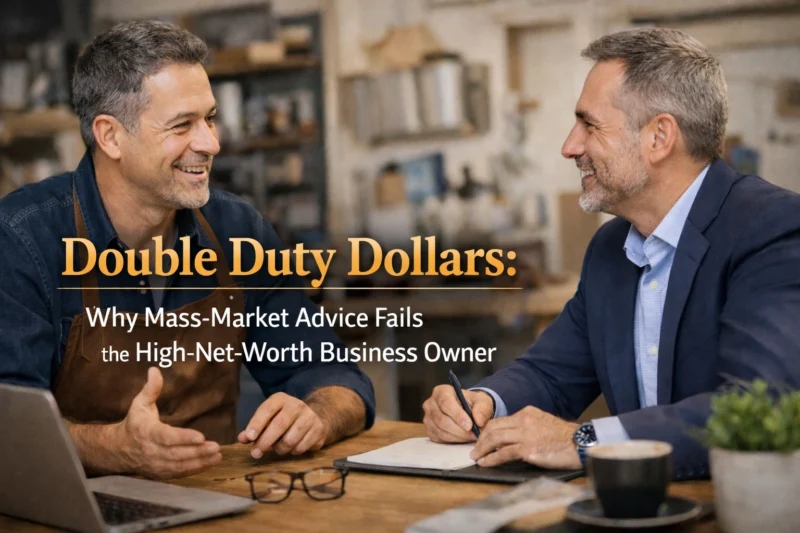




Money doesn’t come with an instruction manual, but it certainly comes with a lot of noise. If you’ve spent any time watching cable news or scrolling through financial blogs, you’ve heard the "experts" shouting the same scripts. They tell you to pay off your mortgage, max out your 401(k), and avoid insurance like the plague because "commissions are evil."


For 95% of the population, that advice is perfectly fine. It’s the financial equivalent of "eat your vegetables and go for a walk." It’s safe. It’s generic. And for a high-net-worth business owner, it’s a recipe for massive tax leakage and missed opportunities.


There is a fundamental truth in the world of high-level finance: What works for the masses will often fail the masters. If you are running a successful company, managing a complex balance sheet, and looking at a legacy that spans generations, you aren't playing the same game as the person Suze Orman is talking to. You need your money to work harder. You need what I call "Double Duty Dollars."


The Mass-Market Trap


Early in my career, I started to notice a pattern. I’d sit down with business owners who were incredibly savvy in their own industries but were following "safe" retail financial advice. They had millions sitting in taxable accounts, getting clipped by the IRS every single year. They had significant "What If" risks: what if a partner dies? What if they need long-term care? What if their top talent gets poached?: but they were trying to solve those problems with separate, inefficient buckets of money.


The mass-market advice says: "Buy term and invest the rest." That sounds great on a bumper sticker. But for a business owner, "investing the rest" in a taxable environment means you’re essentially volunteering to give the government a 30% to 40% cut of your growth every year.


I realized early on that the truly wealthy don't look at their assets as isolated piles of cash. They look for ways to make one dollar do the work of two or three. They look for the "wrapper."


A confident business owner in a modern office contemplating high-net-worth asset protection strategies.


What Are Double Duty Dollars?


The concept of Double Duty Dollars is actually quite simple, though the execution requires precision. Think about an asset you already own: perhaps a high-yield savings account, a bond portfolio, or a taxable brokerage account. That dollar is currently doing "Single Duty." It’s providing some growth or liquidity, but it’s also creating a tax bill, and it’s doing nothing to protect your business or your family.


Now, imagine taking that same dollar and putting a "wrapper" around it.


By using a Corporate Owned Life Insurance (COLI) structure or a similar strategic vehicle, you take that taxable asset and transform it. Suddenly, that single dollar is doing "Double Duty" (or even Triple Duty):


  1. Tax Efficiency: The asset now grows tax-deferred. When structured correctly, the gains can be accessed tax-free. You’ve just plugged the tax leak.

  2. The Death Benefit: That same dollar now provides a significant infusion of liquidity to the business or family upon your passing. This solves the "What If" of a business surviving a widow or funding a buy-out.

  3. Living Benefits (LTC): This is the one that keeps most people up at night. If you need long-term care, you can often access that same death benefit while you’re still alive to pay for it.


You haven't spent more money. You’ve just changed the nature of the money you already had. You’ve moved it from a "Single Duty" bucket to a "Double Duty" bucket.


Addressing the Stigma: Design Over Product


I know what some of you are thinking. "Matt, you’re talking about insurance. I’ve heard insurance is a bad investment."


I get it. The insurance industry has a bit of a reputation problem, and frankly, it’s often earned. Many people have been sold a "product" by a guy who was just looking for a commission. They were sold a "policy" that didn't fit their needs or wasn't structured for maximum efficiency.


But here is our mantra at Schiff Executive Benefits: Design Over Product.


A hammer is a product. In the hands of a toddler, it’s a disaster. In the hands of a master carpenter, it builds a mansion. The "product" (the insurance contract) is just the tool. The "design" is the architectural blueprint that ensures the tool is doing exactly what you need it to do: minimizing costs, maximizing tax-free growth, and providing the protection your specific business requires.


When we talk about Double Duty Dollars, we aren't talking about "buying a policy." We are talking about engineering a financial structure that provides Restoring Alignment and Retention. We are talking about using COLI to fund a 409A plan to keep your top talent from leaving for a competitor. We are talking about Split Dollar arrangements that provide massive value to executives without the immediate tax sting.


A financial advisor discussing customized executive benefit plans with a business owner couple.


The 5 "What Ifs" That Keep You Up At Night


As a business owner, your mind is constantly scanning the horizon for threats. We’ve distilled these anxieties into five core questions. These are the "What Ifs" that Double Duty Dollars are designed to answer:


  1. The Widow Factor: What happens if your business partner passes away? Are you prepared to run the company with their spouse as your new partner?

  2. The Buy-Out: If you need to exit, where is the liquidity coming from? Can the business survive a massive cash drain to buy out a departing owner?

  3. The Talent Drain: If your "right-hand person" leaves tomorrow, what does that cost you in lost revenue and replacement expenses?

  4. The Efficiency Gap: Are you funding executive retirements in the most cost-effective way possible, or are you just burning cash?

  5. The "Running Out" Fear: Will you actually have enough to maintain your lifestyle, or will a 10-year stint in long-term care wipe out the legacy you spent 40 years building?


Mass-market advice doesn't have a cohesive answer for these. It tells you to "save more." Double Duty Dollars tell you to "save smarter."


Moving Beyond the "Safe" Advice


If you’re still following the advice meant for someone with a $50,000 salary and a 15-year mortgage, you are leaving your business vulnerable. You are likely overpaying the IRS, and you are definitely leaving your "What If" risks unaddressed.


Think about the "wrapper" concept. If you have cash sitting on your corporate balance sheet or in your personal accounts that is currently being taxed, you have a candidate for Double Duty. By moving that asset into a designed structure, you aren't "spending" the money: you’re protecting it. You’re giving it a job description that includes growth, protection, and tax-free access.


This isn't just about wealth; it’s about certainty. It’s about knowing that whether you live a long, healthy life or face a sudden health crisis, your "Perfect Plan®" is already in motion.


Why Design Matters Now


We are living in an era of shifting tax codes and economic uncertainty. The national debt isn't getting smaller, and the likelihood of taxes going down for high-earners in the long run is, let's face it, slim.


The time to put the "wrapper" on your assets isn't when the crisis hits. It’s now, while you are healthy and your business is thriving. It’s about taking control of the narrative before the government or the market does it for you.


At Schiff Executive Benefits, we don't start with a product. We start with a conversation. We look at your "What Ifs," analyze your current asset structure, and then: and only then: do we look at the tools. Whether it's a Split Dollar arrangement for your key execs, an ESOP transition strategy, or a COLI-funded retirement plan, the goal is always the same: efficiency and protection.


Your Next Step


If you’ve reached a point where you realize the "safe" advice isn't doing the job anymore, it’s time to look at your dollars differently. You’ve worked too hard to build your business to let it be dismantled by inefficient planning or unforeseen risks.


Let’s stop the tax leakage. Let’s protect your top talent. Let’s make sure your legacy is secure.


Sit back, grab your coffee, and let’s talk about how to get your money doing Double Duty.


Are you ready to build The Perfect Plan®?


Click here to schedule a consultation with Schiff Executive Benefits and let’s start restoring alignment to your business and your future.


Ready to talk?


If you’re thinking about how to protect your business, retain your top talent, and bring more certainty to your long-term plan, let’s have a conversation.


Schedule your initial NQDC meeting


"An ounce of prevention is worth a pound of cure."


Benjamin Franklin said that over two centuries ago, and while he wasn’t specifically talking about nonqualified deferred compensation (NQDC), he might as well have been. In the world of executive benefits, the "cure" for a compliance failure isn't just expensive: it’s often catastrophic for the very people you are trying to reward.


If you are a CEO, a CFO, or a Board Member, what keeps you up at night? Is it the fear of losing your top talent to a competitor? Is it the complexity of your succession plan? Or is it the "What If" of an IRS audit landing on your desk and revealing that the benefit plans you put in place 15 or 20 years ago are actually ticking tax bombs?


We often see companies that established their executive benefit structures during the massive regulatory shift of 2008 and 2009. At the time, everyone scrambled to comply with the then-new IRC Section 409A rules. But here is the problem: a plan that was "compliant" on paper in 2008 has likely suffered from "operational drift" in the decades since.


If you want a surprisingly mainstream illustration of just how technical this gets, this short Suits clip is worth watching near the start of this conversation: https://youtu.be/tcx3zwhEIOw?si=9uCcfcCFS3AqfwdF. In the scene, Mike Ross correctly points out that backdating stock options is not automatically illegal by itself. The real legal landmines are the disclosure requirements and the downstream IRC Section 409A consequences. That’s exactly the point. 409A is so complex, so technical, and so unforgiving that it becomes a litmus test for a truly world-class legal mind. And for any company that has not had technical experts audit its plan design and administration, it is also a major source of hidden risk.


At Schiff Executive Benefits, we call this the 2008 Plan Trap. It’s the dangerous assumption that because a plan was set up correctly once, it remains healthy today.


The Ghost of 2008: Why 409A Still Matters


For those who need a refresher, Internal Revenue Code Section 409A was born out of the Enron scandal. It governs how and when deferred compensation is elected and paid out. The rules are notoriously rigid. By January 1, 2009, every nonqualified plan in America had to be amended to meet these strict requirements.


The penalties for missing the mark are some of the most punitive in the entire tax code. If a plan fails to comply with 409A: either in its written form or in how it is actually operated: the consequences include:


  1. Immediate Taxation: All amounts deferred under the plan (including all previous years' deferrals and earnings) become immediately taxable to the executive.

  2. 20% Penalty Tax: A flat 20% additional income tax is levied on the executive.

  3. Interest Penalties: The IRS tacks on premium interest rates for the underpayment of taxes.


Note that these penalties fall on the executive, not the company. Imagine telling your top performer: the person you are trying to "attract, retain, and reward": that because of an administrative error, they suddenly owe the IRS 60% or more of their total deferred savings. That is the ultimate way to ensure your top talent leaves, and it completely undermines our mission of Restoring Alignment and Retention.


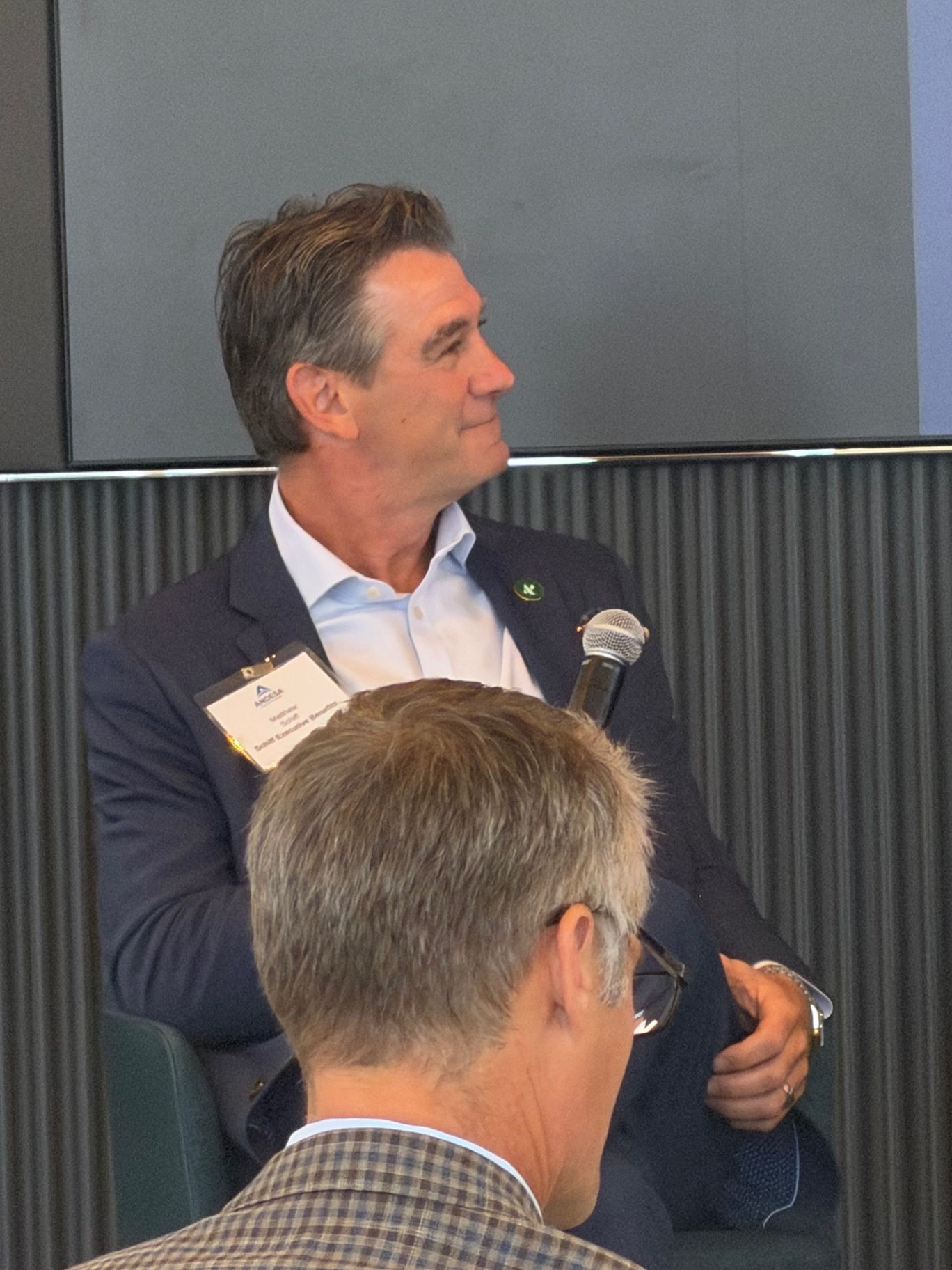
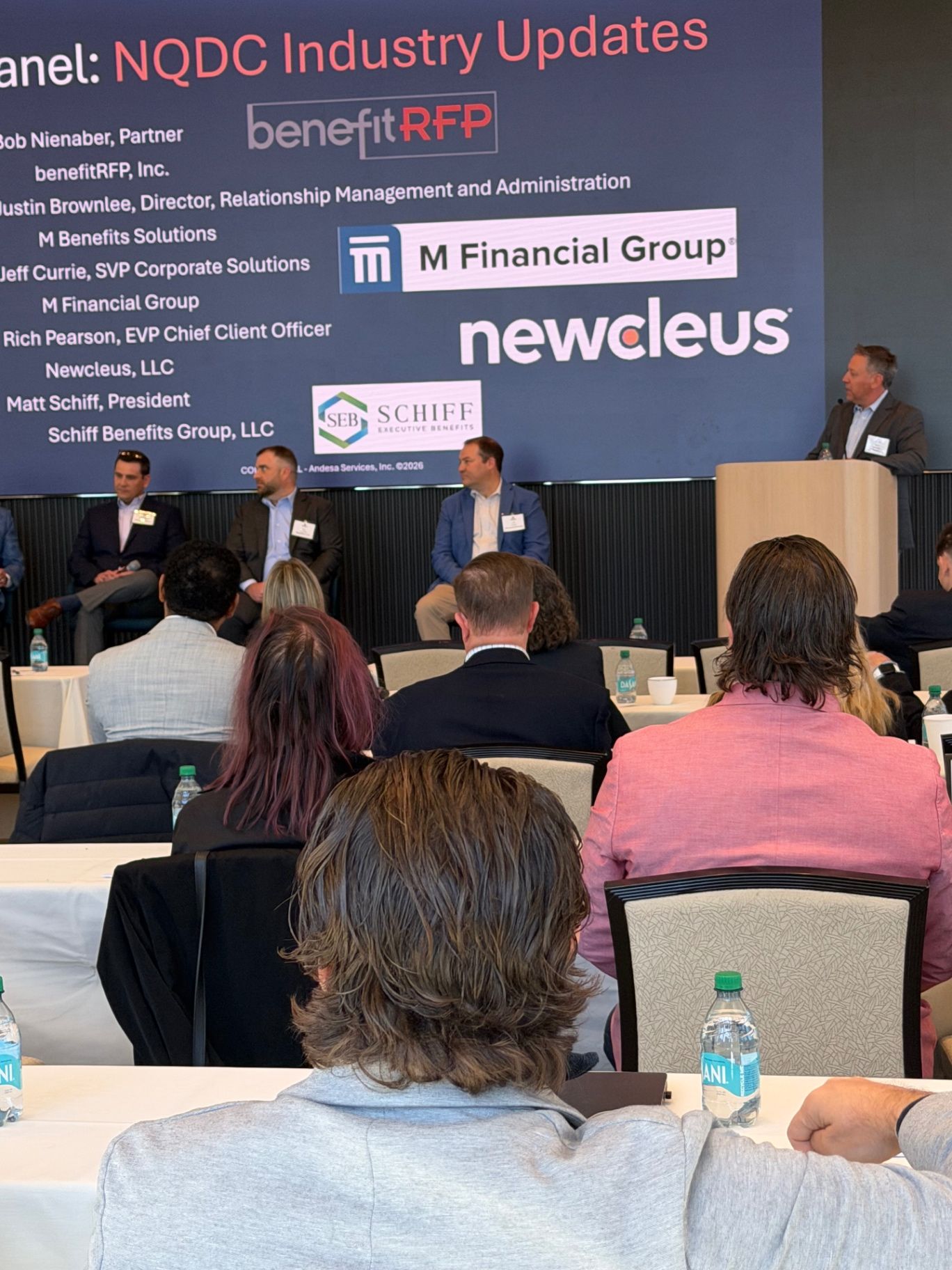
Matt Schiff Speaking NQDC Matt Schiff speaking at the NQDC Industry Updates panel in NYC.


The Danger of Operational Drift


During my time serving as a ranking member of the AALU's (now Finseca) NQDC Committee, I had the opportunity to help draft and provide feedback on these very regulations. I saw firsthand the intent behind the law. The goal was transparency and consistency.


However, 15 to 20 years is a long time in the corporate world. Administrators change, HR departments turn over, and CFOs retire. Over time, the "operational drift" begins.


You might have a plan document that says payouts occur upon "Separation from Service." But then, a retiring executive asks for their payout three months early to buy a vacation home, and a well-meaning HR manager approves it. That is a 409A violation.


Or perhaps your plan document defines "Disability" using a specific insurance carrier’s definition, but you changed carriers five years ago, and the new definition doesn’t match. That is a potential 409A violation.


When was the last time you actually audited the operation of your plan against the written document? If it was more than three years ago, you are likely caught in the trap.


The 101(j) Compliance Hole: A COLI Nightmare


While 409A is the big monster in the room, there is another technical pitfall that often haunts older plans: IRC Section 101(j).


Most executive benefit plans are informally funded using Corporate Owned Life Insurance (COLI). In 2006, Congress enacted Section 101(j) to ensure that employees were notified and consented to the company owning a policy on their life.


If you don’t have a signed "Notice and Consent" form before the policy is issued, the death benefit: which is normally tax-free: becomes fully taxable to the corporation.


We frequently audit plans from the 2006–2010 era and find that while the policies were purchased, the 101(j) documentation is either missing, unsigned, or lost in a filing cabinet from two mergers ago. If your COLI portfolio isn't 101(j) compliant, you aren't just losing a tax benefit; you are creating a massive liability for the business.


NQDC Panel NYC 2026 Panel discussion: NQDC Industry Updates at the 2026 National COLI Directors Meeting in NYC.


Why Older Plans Need a "Technical Audit" Today


If your plan is a teenager (15+ years old), it’s time for a checkup. Economic environments shift, and your business goals have likely evolved. The plan you designed when you had 50 employees may no longer serve a company of 500.


Beyond the threat of IRS penalties, there are strategic reasons to audit these legacy structures:


  • Tax Efficiency: Tax laws regarding corporate owned life insurance and deferred compensation have evolved. You might be using an "Old School" design that is significantly less efficient than current structures.

  • The "What If" Questions: Does your plan address what happens if a senior executive retires unexpectedly? Does it clearly define the replacement cost efficiency? (One of our core five "What Ifs").

  • Participant Communication: Do your executives actually understand the value of what they have? If they don't value it, it's not retaining them.


Professional review of executive benefit plan documents during a 409A compliance technical audit.


Moving Toward The Perfect Plan®


At Schiff Executive Benefits, we don't believe in "set and forget." We believe in constant alignment. When we step in to rescue a plan from the 2008 Trap, we guide clients through a transition to The Perfect Plan® structure.


What makes a plan "Perfect"? It’s a design that is:


  1. Technically Sound: Rigorous compliance with 409A and 101(j) so you can sleep at night.

  2. Flexible: Built to adapt to your company’s growth and changing tax landscapes.

  3. Transparent: Executives clearly see the wealth they are building, which keeps them locked into your organization’s long-term success.


We help you move away from the clunky, high-risk designs of the past and into a modern framework that actually delivers on its promise: realizing your dream value while protecting your legacy.


Are You Sitting on a Ticking Tax Bomb?


The IRS doesn't care if a mistake was accidental. They don't care if your previous consultant told you it was "fine." When an audit happens, the numbers speak for themselves.


Don't let a plan designed in 2008 become your biggest liability in 2026. Whether it’s a 401(k) excess plan, a 457(f) for a non-profit, or a complex COLI-funded deferred comp arrangement, the details matter.


You’ve spent years building your business and your reputation. Don't let a technicality in a 20-year-old document take a 20% bite out of your executives' hard-earned savings: or a massive chunk out of your corporate balance sheet.


Ready to talk?


If you haven't had a technical audit of your executive benefits in the last few years, let’s sit down and grab a coffee. We can look under the hood and see if your current structure is still aligned with your goals, or if you’re caught in the 2008 Plan Trap.


Come join us and schedule your NQDC initial meeting here.


Let’s ensure your plan is working for you, not against you. After all, your professional legacy is too important to leave to chance.


Learn more: 409A compliance, design, and strategy.


It is a universal, undeniable truth that the roles we play in our families eventually come full circle. We spend the first quarter of our lives being cared for by our parents, and if we are fortunate enough to reach our professional peak, we often spend the third quarter returning the favor.


For many high-achieving leaders, this isn’t just a personal transition; it’s a strategic collision. You are currently in what I call the Executive Sandwich.


In Part 1: The Executive Sandwich: Why Your Career Peak is Often Your Family’s Riskiest Decade, we explored how the height of your earning years is simultaneously the height of your financial vulnerability. In Part 2: Beyond the 401(k) Cap: Solving the Executive College Funding Gap, we looked at the pressure of launching the next generation. Today, we face the most emotionally taxing and financially unpredictable layer of the sandwich: caring for aging parents.


How do you provide the dignity and care your parents deserve without siphoning away the wealth you’ve spent decades building? How do you manage a C-suite schedule when a midnight phone call changes everything?


At Schiff Executive Benefits, we believe in Restoring Alignment and Retention, and that includes the alignment of your personal peace of mind with your professional legacy.


The Hidden Cost of Longevity


We often talk about market risk or interest rate risk, but for the modern executive, the greatest "What If" is often Longevity Risk.


In our framework of the "5 What Ifs," we frequently ask: What if you run out of money in retirement? But long before you face that question for yourself, you may face it for your parents. Modern medicine is a miracle, but it has created a financial paradox: our parents are living longer, but not necessarily healthier.


Matt Schiff - Professional Smile Blue Suit


The cost of long-term care: whether home health aides, assisted living, or skilled nursing: is rising at a rate that far outpaces general inflation. For an executive, the cost isn't just the invoice from the facility. It is the "opportunity cost" of your time and the potential "leakage" from your investment portfolio to cover gaps in their care.


Are you prepared to liquidate a portion of your estate to cover a $15,000-a-month nursing bill that could last five or ten years? Most executives aren't. They assume they can "cash flow" it, only to realize that doing so compromises their own retirement goals and the legacy they intended to leave for their children.


The Emotional Vice


Caregiving is a full-time job. When you are managing a global team or overseeing a complex merger, the emotional weight of a parent’s declining health can be paralyzing. You find yourself in a consultative dialogue with doctors, siblings, and care coordinators, all while trying to maintain the "authoritative presence" required in the boardroom.


I recently spoke with a client: let's call him David: a CEO who was in the middle of a major acquisition. His mother suffered a stroke. Suddenly, David wasn't just managing a billion-dollar deal; he was navigating Medicare gaps and searching for a memory care facility that didn't feel like a hospital. The stress didn't just affect his sleep; it affected his decision-making.


David’s story is not unique. It is the reality of the sandwich generation. The question is: do you have a plan that protects your focus as much as it protects your capital?


Executive reflecting on aging parents photo, highlighting the financial strain of the sandwich generation.


The Strategy: Shifting the Burden to the Business


One of the most overlooked solutions in executive wealth planning is the use of Long-Term Care (LTC) riders and business-paid policies.


Many executives assume that LTC is an individual expense, paid with after-tax dollars. However, for business owners and key executives, there is a much more efficient way.


1. The Business-Paid Deductible Policy


If structured correctly through a corporation or partnership, the business can pay the premiums for a Long-Term Care policy. In many cases, these premiums are tax-deductible to the business and are not considered taxable income to the executive. This is a powerful tool for attracting and retaining top talent who are feeling the squeeze of the sandwich generation.


2. COLI with LTC Riders


Corporate Owned Life Insurance (COLI) is a cornerstone of The Perfect Plan®. By adding a Long-Term Care rider to a COLI or specialized life insurance policy, you create a "multipurpose" asset. If you (or your parents, depending on the structure) need the care, the death benefit is accelerated to pay for those expenses tax-free. If the care is never needed, the death benefit remains intact for your heirs.


3. Protecting the Portfolio


By using an insurance-based solution, you create a "firewall" around your investments. Instead of selling stocks in a down market to pay for a home health aide, you leverage the insurance company's capital. This ensures that your personal legacy: your "dream value": remains untouched.


Longevity Risk and The Perfect Plan®


When we design The Perfect Plan®, we don't just look at your balance sheet; we look at your life’s timeline. We integrate these "What If" scenarios into a cohesive strategy.


If you are a business owner, providing LTC benefits to your senior executive team is one of the most empathetic and strategic moves you can make. It rewards your best people by solving a problem that keeps them up at night, ensuring they stay focused on the business because their home life is secure.


Modern Meeting Work Scene


Starting the Conversation: A Consultative Approach


Caring for aging parents requires more than financial products; it requires a team of advisors. You need to have honest, often difficult conversations today to avoid a crisis tomorrow.


Here are three steps you can take right now:


  • Audit Your Parents' Documents: Do they have a clear Power of Attorney and a Healthcare Proxy? Without these, your ability to manage their care will be legally hamstrung.

  • Evaluate the "Care Gap": Look at their current assets versus the cost of care in their area. Where is the shortfall?

  • Explore Hybrid Solutions: Look into life insurance policies with LTC riders. These are often more palatable than "use-it-or-lose-it" traditional LTC insurance because they guarantee a payout in one form or another.


The Point of No Return


The window of opportunity to put these protections in place is often smaller than we realize. Once a diagnosis is made or a health event occurs, many of the most efficient financial strategies are off the table.


Waiting is the greatest risk to your legacy. By acting now, you aren't just buying insurance; you are buying the ability to be a daughter or a son again, rather than just a care manager. You are buying the peace of mind to sit back, grab your coffee, and focus on the people who matter most.


At Schiff Executive Benefits, we specialize in navigating these complexities. Whether it’s through Trust Owned Life Insurance (TOLI) to manage estate taxes or building a robust executive benefit suite, our mission is to ensure that your success isn't eroded by the natural cycles of life.


Conclusion: Join the Conversation


The Executive Sandwich doesn't have to be a source of constant anxiety. With the right structure, it can be a season of your life where you demonstrate your values through your actions and your foresight.


If you’re feeling the pressure of the sandwich generation and want to see how The Perfect Plan® can protect your legacy while providing for your parents, I invite you to reach out. Let’s look at your specific "What Ifs" and build a plan that restores alignment to your world.


Come join us at our next NQDC Panel or listen to The Perfect Plan® Podcast for more insights into securing your professional and personal future.


Sit back, grab your coffee, and let’s start building it your way.


: Matt Schiff
President, Schiff Executive Benefits


To explore more about our strategies for executives and corporations, visit our services page.



In sports, as in business, the name on the front of the jersey is far more important than the name on the back. However, any coach will tell you that you can’t win the championship if your star players decide to take their talents to a rival team halfway through the season.


Success is never an accident. It is the result of high intention, sincere effort, intelligent direction, and skillful execution. At Tulane, we call it the "Roll Wave" spirit: that relentless drive to overcome the odds and build something lasting. In the corporate world, I call it The Tulane Strategy. It’s about more than just "benefits"; it’s about coaching your executive team to a win by aligning their personal success with the company’s long-term goals.


When we talk about executive benefits at Schiff Executive Benefits, we aren't just talking about spreadsheets and tax codes. We are talking about Restoring Alignment and Retention.


The Freeman School Mindset: Building for the Long Game


If you’ve ever walked through the Goldring/Woldenberg Business Complex at Tulane’s Freeman School of Business, you feel the weight of legacy and the energy of innovation. It’s where I learned that a business is only as strong as its leadership core.


Tulane Freeman School Business Complex


In the current economic climate, many business owners are looking at their roster and feeling a sense of unease. They see the "Top Talent Leaving" (one of our core 5 What Ifs) and wonder if their current playbook is enough to keep their key players on the field.


Are you playing defense, or are you coaching to win?


Most companies offer a standard 401(k) and call it a day. But for your top-tier executives, the standard plan often isn't enough. Due to IRS limits, your highest-paid people are often the ones most restricted in their ability to save for retirement. This is known as The 401(k) Cap Problem. When your stars realize they are being sidelined by contribution limits, they start looking for a team that will let them play the full game.


What Keeps You Up at Night?


As a business owner or CEO, you’ve likely asked yourself the hard questions. At SEB, we’ve distilled these into five thematic anchors that we call the "What Ifs." These aren't just hypothetical scenarios; they are the "fumbles" that can cost you the game:


  1. The Widow Question: What happens if your partner passes away and you find yourself in business with their spouse?

  2. The Buy-Out: How do you fund a buy-sell agreement without draining the company’s cash flow?

  3. The Talent Drain: What if your VP of Sales or your CTO is recruited by your biggest competitor tomorrow morning?

  4. The Retirement Gap: Are your senior executives actually on track to retire, or will their replacement costs cripple your bottom line?

  5. The Longevity Risk: Will you: and your team: run out of money in retirement because you didn't plan for the tax environment of the future?


If these questions keep you awake, you aren’t alone. But a good coach doesn’t just identify the problem; they design a play to overcome it.


The Perfect Plan®: Restoring Alignment


To win, you need a strategy that rewards performance while ensuring loyalty. This is where The Perfect Plan® comes into play.


The Perfect Plan® isn't a one-size-fits-all product. It is a consultative framework designed to restore the alignment between what the executive needs and what the company wants. Think of it as the "scholarship" that keeps the star athlete committed to the university. It’s a promise of future value that is earned through current performance.


Matt Schiff - Confident Blue Suit Standing


The Defensive Line: Corporate Owned Life Insurance (COLI)


In the corporate world, especially for non-banking entities, Corporate Owned Life Insurance (COLI) is a foundational tool. It provides a tax-efficient way to fund the promises you make to your executives. Whether it’s funding a Supplemental Executive Retirement Plan (SERP) or securing a buy-sell agreement, COLI acts as the defensive line that protects your company’s balance sheet from the unexpected.


When we implement a COLI strategy, we aren't just looking at the death benefit. We are looking at the cash value growth that can offset the liabilities of executive benefits. It’s about making the math work so you can focus on making the business work.


The Offensive Play: Non-Qualified Deferred Compensation (NQDC)


If COLI is the defense, then Non-Qualified Deferred Compensation (NQDC) is the offense. A well-structured NQDC plan (often referred to as a "Mirror Plan") allows your executives to defer a portion of their compensation: above and beyond 401(k) limits: on a pre-tax basis.


This does two things:


  1. It helps the executive solve their retirement gap.

  2. It creates "golden handcuffs" that keep them tied to your organization's success.


By incorporating vesting schedules, you ensure that your team stays together long enough to see the vision through to the end. You aren't just paying them to show up; you are coaching them to stay and win.


Leadership from the Sidelines to the C-Suite


I recently had the privilege of speaking at the NQDC Industry Updates panel in NYC. Sitting there with other industry leaders, it became clear that the challenges we face in 2026: market volatility, changing tax laws, and a hyper-competitive talent market: require a new kind of leadership.


Matt Schiff Speaking NQDC


It requires an authoritative yet empathetic approach. We understand that your business is your legacy. It’s not just about the numbers; it’s about the people who built those numbers with you.


When you look at your executive team, do you see a group of individuals, or do you see a championship team? A championship team has a shared vision and a shared reward. If your current benefits package feels like a "participation trophy" rather than a "championship ring," it might be time to redraw the playbook.


Realizing Your Dream Value


Every business owner has a "dream value" for their company: the point at which they can step away knowing the business is secure and their lifestyle is protected. But you can't reach that dream value if you are constantly stuck in a cycle of "recruit, train, lose, repeat."


By implementing The Perfect Plan®, you are building it your way. You are creating an environment where your top people feel valued, secured, and aligned with your long-term objectives.


As we look toward the future, the economic environment remains "unstable" at best. National debt is rising, and tax rates are a moving target. In this environment, doing nothing is the riskiest move you can make. It is the point of no return.


Come Join Us in the Winner’s Circle


At Schiff Executive Benefits, we don't just sell plans; we build partnerships. We want to act as your guide through the complexities of COLI, Split Dollar arrangements, and 401(k) mirror plans. We want to help you answer those "What If" questions with a confident, "We’ve got a plan for that."


Matt Schiff - Grand Staircase Wisdom Inscription


So, I invite you to take a breath. Sit back, grab your coffee, and think about your team. Are they positioned to win? Are you?


If you're ready to explore how the Tulane spirit of grit and strategy can transform your executive retention, let's talk. We’re here to help you restore alignment and ensure that when the final whistle blows, your team is the one holding the trophy.


Schiff Executive Benefits Full Logo


Ready to start coaching your team to a win?
Contact us today to learn more about how The Perfect Plan® can secure your company's future. You can also browse our latest insights and industry updates on our posts page.


Roll Wave!


The only thing more expensive than a highly compensated executive is a departed one. In the modern arms race for talent, we often talk about culture, purpose, and flexibility. But when you strip away the office perks, the foundation of any executive retention strategy is security. If your key people don't feel their family’s future is anchored, they’ll eventually look for a sturdier harbor.


For years, the "anchor" for many firms was a standard group term life policy or a basic executive carve-out. But as executive salaries and the cost of living have skyrocketed, those old underwriting limits haven't just become outdated: they’ve become a liability. We’ve seen it time and again: a CEO or EVP realizes their total coverage barely covers two years of their current lifestyle, and suddenly, they’re listening to recruiters.


At Schiff Executive Benefits, we specialize in what we call the "reverse engineering" approach. We don't start with a product; we start with the "What Ifs." Specifically, what if your top talent leaves because they found a better "safety net" elsewhere? Or worse, what if you have to face their widow or widower and explain why the coverage was capped at a fraction of their value?


The good news? The insurance landscape has shifted dramatically. If you haven't looked at your executive underwriting limits in the last 24 months, you’re likely operating on old data. Here are five things you need to know about the new frontier of executive coverage.


1. The $10M+ Ceiling: Guaranteed Issue (GI) is Growing Up


In the "old days": which, in our industry, was about five years ago: getting $2 million or $3 million in life insurance without a medical exam was considered a win. If an executive wanted more, they had to prepare for the "parmed" exam: blood draws, physicals, and weeks of waiting.


Today, the game has changed. For groups of a certain size, we are seeing Guaranteed Issue (GI) limits climb to $5 million, $10 million, and in some specialized cases, even higher. This means that if you have a group of executives, the carrier "guarantees" the issue of these high-limit policies without asking a single medical question.


Why does this matter? Because high-performers are busy. They don't want to spend their Tuesday morning with a nurse in the conference room. By leveraging multi-life programs, we can secure substantial death benefits that actually move the needle for a high-net-worth individual, all while bypassing the traditional friction of individual underwriting. This is a core component of how we help clients build The Perfect Plan®.


2. From Biology to Business: The Shift to Financial Underwriting


One of the most significant shifts we’ve navigated recently is the move toward Financial Underwriting over medical scrutiny. In the past, carriers were obsessed with your cholesterol levels. Today, they are more interested in your "Why."


If an executive is looking for $15 million in coverage, the underwriter isn't just looking at their heart rate; they are looking at their income, their assets, and their value to the company. This is where "justifying the need" comes into play. We help firms document the economic loss the company would suffer: or the gap in the executive's personal estate plan: to satisfy the "financial" side of the house.


When we use Corporate Owned Life Insurance (COLI) to fund these benefits, the financial justification is built into the plan design. It’s no longer about whether you’re a marathon runner; it’s about whether the coverage amount makes sense relative to your professional impact.


Financial reports and glasses on a mahogany desk representing executive financial underwriting limits.


3. Simplified Issue (SI): The "Fluidless" Revolution


Even when a group doesn't qualify for full Guaranteed Issue, we rarely have to resort to the "old way." The rise of Simplified Issue (SI) or "fluidless" underwriting has been a godsend for executive convenience.


Modern algorithms and access to digital health records mean that many carriers can now offer millions in coverage based on a digital application and a phone interview. No needles, no vials, no waiting six weeks for a lab report. This speed is a massive advantage when you’re trying to close a new executive hire or finalize a buy/sell agreement.


If you’re still putting your board of directors through the medical wringer, you’re using a 1990s solution for a 2026 problem. We advocate for these "low-touch, high-value" paths whenever possible to keep the momentum of the plan moving forward.


4. Portability: Why Executives Love Individual Ownership (REBA)


One of the "5 What Ifs" we constantly talk about is: What if your top talent leaves? Usually, when an executive leaves a company, their group term insurance stays behind. They’ve spent ten years building a career, and they walk out the door with zero life insurance coverage.


This is why we’ve seen a massive surge in Restricted Executive Bonus Arrangements (REBA).


A REBA uses an individual policy, often funded by the employer, but owned by the executive. Because the underwriting is handled at the individual level (often using the SI or GI methods mentioned above), the policy is portable. If the executive retires or moves on, they take the policy: and the death benefit: with them.


From the company’s perspective, you can still add "golden handcuffs" by placing a restrictive covenant on the policy's cash value. This creates a "win-win":


  • The Executive gets a high-limit, permanent policy they own.

  • The Employer gets a powerful retention tool that "restores alignment."


It’s about moving away from "renting" coverage through group term and toward "owning" a piece of their financial legacy. You can hear more about these structures on The Perfect Plan® Podcast.


5. The "Spread of Risk" Benefit for Large Firms


Insurance, at its heart, is a game of math. For larger firms, the "Spread of Risk" allows for much more aggressive underwriting. When a carrier looks at a group of 50 or 100 executives, they aren't worried about one person having a health hiccup; they are looking at the law of large numbers.


This "multi-life" approach allows us to negotiate terms that would be impossible for an individual. We can often secure higher limits, lower internal costs, and better policy riders because the carrier is taking on a "portfolio" of risk rather than a single life.


This is particularly relevant for partnerships and professional service firms. By treating the executive suite as a single "risk pool," we can often eliminate the "uninsurable" executive problem. We’ve had cases where an executive who was previously declined for individual coverage was able to get $5M+ in coverage because they were part of a multi-life GI program.


Restoring Alignment and Retention


At the end of the day, these technical shifts in underwriting aren't just "industry news." They are tools you can use to answer the questions that keep you up at night.


  • What if your senior exec retires, and the cost of replacement is double what you expected?

  • What if a key partner passes away and the buy-out funding is insufficient?


We don't just sell insurance; we design systems to protect your professional legacy. We look at your current plan, find the gaps where underwriting limits are choking your goals, and then we "reverse engineer" a solution that fits your specific culture.


Whether you’re looking at COLI to fund a deferred comp plan or exploring how to modernize your buy/sell funding, the goal is always the same: Restoring Alignment and Retention.


If you’re wondering if your current limits are leaving you: and your team: exposed, let’s have a conversation. No pressure, no "hard sell." Just a look at the math and a discussion about your "What Ifs."


Sit back, grab your coffee, and reach out to us. We’d love to help you build your version of The Perfect Plan®.


Ready to talk?


If you’re thinking through one of those big “What If” questions—top talent leaving, retirement readiness, or whether your current benefit structure is really doing its job—let’s talk it through.


Schedule an initial meeting.


To stay updated on the latest in executive benefits, tax-efficient strategies, and talent retention, check out our full video library or browse our latest posts.


They say that building a business is like raising a child: it takes years of sleepless nights, total devotion, and a fair amount of luck. But here is the undeniable truth that most entrepreneurs ignore until it is too late: it is much easier to build a business than it is to keep one together when life goes sideways.


As business owners, we spend 99% of our time focused on growth, culture, and the bottom line. We rarely want to talk about the "What Ifs." But those "What Ifs" are the very things that can dismantle a lifetime of work in a single afternoon. At Schiff Executive Benefits, we focus on Restoring Alignment and Retention, and nowhere is that alignment more critical than in your Buy/Sell arrangement.


If you don’t have a plan, or if your plan is a dusty document sitting in a drawer from ten years ago, you aren't just taking a risk: you are gambling with your legacy.


The Emotional Reality: Who Is Sitting in That Chair?


Let’s skip the legal jargon for a second and talk about the real world. Imagine it’s Monday morning. You walk into the office, grab your coffee, and head to your partner’s office. But your partner isn't there. Instead, sitting in that chair is your partner’s spouse.


They are grieving, they are overwhelmed, and they have just inherited 50% of your company.


Now, you love your partner, and you probably like their spouse. But do you want to be in business with them? Do they understand the nuances of your industry? Do they share your vision for the next five years? Most importantly, they likely need liquidity: they need the income your partner used to bring home. But the business needs that cash to stay afloat and grow.


Suddenly, your best friend’s spouse has become your most difficult board member. This is the first of our "Five What Ifs," and it is the one that keeps most owners up at night.


Or consider a different "What If": An unsolicited buyout from a competitor. Your partner decides they want out, and instead of selling back to you, they find a "strategic buyer": the very person you’ve been competing with for a decade. Now, your greatest rival has a seat at your table and access to your trade secrets.


How does that feel? It feels like a loss of control. And in business, control is everything.


Business partners discussing legacy planning and their Buy/Sell agreement in a modern office.


The Trap of the "Generic" Buy/Sell Agreement


Most business owners believe they are covered because they have a Buy/Sell agreement tucked away in a file. But let me ask you: When was the last time you looked at it? Does it reflect the actual value of your business today?


Many agreements are "form" documents provided by a lawyer years ago. They often lack a clear valuation methodology or, worse, they aren't funded. A Buy/Sell agreement without a funding mechanism is just a polite piece of paper. It tells you that you have to buy out your partner, but it doesn't tell you where the millions of dollars are going to come from to make that happen.


Without proper funding, you are forced to choose between three bad options:


  1. Draining Company Cash: Killing your working capital and stalling growth.

  2. Taking on Debt: Going to the bank at a time of crisis to borrow money for a buyout.

  3. Selling Assets: Fire-selling parts of the business to cover the cost.


The Technical Edge: Reverse-Engineering the Solution


At Schiff Executive Benefits, we don't start with products. We start with your intent. We look at your company culture and the specific goals of the owners. We use a process we call The Perfect Plan® to ensure that every piece of the puzzle fits together.


The SEB Executive Benefits Design Checklist (a.k.a. “Let’s Stop Guessing”)


Here’s a universal truth: most benefit and succession plans don’t fail because the math is wrong. They fail because the motivations are misaligned.


So before we talk about funding mechanisms and legal language, we run what we call the SEB Executive Benefits Design checklist. It’s a diagnostic. Not a sales pitch. Think of it like a pre-flight checklist—because “we’ll figure it out on the way down” is not a strategy.


We put two columns on the table:


What the employer typically needs:


  • Deductions / cost efficiency (or at least a clear path to cost recovery)

  • Retention (handcuffs… but the friendly, culture-approved kind)

  • Control (who’s in, who’s out, and what happens when life happens)


What the employee typically wants:


  • Tax-free income (especially when it matters most)

  • Long Term Care (LTC) benefits (because aging is undefeated)

  • No caps (because top performers don’t love being told “that’s the limit”)


Then we ask the questions that actually move the needle:


  • If you’re paying for this, what behavior are you buying?

  • If they’re staying for this, what promise are they counting on?

  • If the “What Ifs” show up early, does this plan still do what it said it would do?


When those two columns line up—employer needs and employee wants—you don’t just get a plan that looks good on paper. You get The Perfect Plan®. And yes, it’s as rare (and valuable) as it sounds.


1. The Valuation Piece


You cannot protect what you haven't valued. Most owners have a "gut feeling" about what their business is worth, but that doesn't hold up in court or with the IRS. To get started, you need an objective baseline. I encourage you to use our tool to start your own Business Valuation right now. Knowing your number is the first step toward security.


2. Trigger Events


A good agreement covers more than just death. It needs to address disability, retirement, divorce, and even personal bankruptcy. What happens if a partner is permanently disabled? Who decides when they are "disabled enough" to trigger a buyout? We help you define these terms so there is no ambiguity when emotions are running high.


3. Funding with COLI (Corporate Owned Life Insurance)


This is where technical expertise meets practical execution. One of the most efficient ways to fund a Buy/Sell arrangement is through Corporate Owned Life Insurance (COLI).


COLI allows the company to own policies on the lives of the owners. If a "What If" occurs, the death benefit provides immediate, tax-free liquidity to the company. The company then uses that cash to buy out the heirs. The family gets the money they need, and you get 100% control of the business back.


But it goes deeper than that. Properly structured COLI can provide cost recovery. The cash value growth within the policy can help offset the costs of the premiums over time, and in some cases, even provide a way to fund an owner's retirement if they don't pass away while active in the business. It’s about making the company's balance sheet work harder for you.


Expanding the Horizon: ESOPs and The Dilemma


Sometimes, the best exit strategy isn't a simple partner buyout. We often talk about "The Business Owner's Dilemma," a concept popularized by Ali Nasser. In our discussions on The Perfect Plan® Podcast, we dive deep into the tension between business wealth and personal freedom. Are you building a business that owns you, or a business that fuels your life?


For some companies, an Employee Stock Ownership Plan (ESOP) is a powerful alternative. I recently had a great conversation with Dan Zugell on ESOPs, which you can find in our podcast channel and on our YouTube channel. An ESOP can provide a market for your shares, incredible tax advantages, and a way to reward the people who helped you build the company: all while you maintain a level of control during the transition.


Whether it’s a standard Buy/Sell or a more complex ESOP structure, the goal remains the same: ensuring that the transition happens on your terms, not because of a crisis.


Why "Wait and See" Is Not a Strategy


I’ve sat across the table from many owners who say, "Matt, we’ll figure it out when the time comes. We’re all healthy, and we’re all friends."


That is a dangerous sentiment. Business is unstable enough as it is. Why leave the most important transaction of your life to chance? The national debt is rising, tax laws are in constant flux, and market trends can shift overnight. You need a "security" that acts as a guarantee against these external forces.


By implementing a properly designed Buy/Sell arrangement funded by COLI, you are effectively "de-risking" your legacy. You are ensuring that if the unthinkable happens, the business stays intact, the employees stay employed, and the families are taken care of.


A business owner and advisors collaborating on a de-risked corporate succession strategy.


Your Next Steps: Building Your Way


So, where do you go from here?


First, sit back, grab a coffee, and think about those "What Ifs." If your partner wasn't there tomorrow, what happens to your desk? What happens to your bank line of credit?


Second, get a real number. Go to our Business Valuation tool and start the process. It’s confidential and provides the clarity you need to move from anxiety to action.


Third, let’s talk. At Schiff Executive Benefits, we aren't just selling insurance policies; we are architects of The Perfect Plan®. We work alongside your team of advisors: your CPAs and attorneys: to make sure the technical design of your Buy/Sell matches the emotional intent of your heart.


Your professional legacy is too important to be left to a "standard" agreement. Let's make sure your plan is as unique as the business you’ve built. Come join us in the process of Restoring Alignment and Retention for your company.


Are you ready to realize your dream value and build it your way? Let’s get started.


Learn more: planning your business succession.


Efficiency is not just a goal in the insurance industry; it is a prerequisite for survival. There is an old adage in our business that "capital follows the path of least resistance and greatest efficiency." Yet, for many insurance carriers, significant portions of their surplus capital remain trapped in traditional, tax-inefficient investment vehicles that barely keep pace with inflation after the tax man takes his cut.


If you are leading an insurance company, you know the pressure: the constant tug-of-war between maintaining robust Risk-Based Capital (RBC) ratios and the need to generate yields that can actually offset the rising costs of attracting and retaining elite executive talent. You might find yourself asking: What if our surplus capital could work twice as hard without increasing our regulatory burden? Or more pointedly: What if we could fund our executive retirement obligations with the very same dollars we use to optimize our balance sheet?


This is where Insurance Company Owned Life Insurance, or iCOLI, enters the conversation. It is a specialized application of COLI tailored specifically for the unique regulatory and tax environment of insurance carriers.


The Problem: The Hidden Drag on Surplus Capital


Insurance companies are often their own worst enemies when it comes to asset allocation. Because of stringent regulatory requirements, a large portion of surplus is typically parked in high-grade corporate bonds or Treasuries. While safe, these assets are fully taxable, and their "drag" on the bottom line is often underestimated.


Consider a carrier holding $100 million in a taxable investment account. If that account earns an average of 8% over 20 years, it grows to approximately $466 million. However, at a 21% corporate tax rate, that carrier will hand over roughly $76.9 million in taxes.


Beyond the tax burden, there is the issue of executive benefits. In an industry where the competition for top-tier underwriting and actuarial talent is fierce, the cost of funding Supplemental Executive Retirement Plans (SERPs) and deferred compensation arrangements continues to climb. How do you cover these liabilities without eroding the capital you need for growth and claims-paying ability?


The Solution: iCOLI as a Strategic Engine


iCOLI is not just an insurance product; it is a corporate financing tool. At its core, iCOLI involves the insurance company purchasing life insurance policies on a select group of senior executives. The company is the owner and beneficiary, and the internal cash value of the policy grows on a tax-deferred basis.


By shifting a portion of surplus capital into an iCOLI program, carriers can achieve three primary objectives:


  1. Capital Optimization: Significantly reducing RBC charges.

  2. Yield Enhancement: Accessing alternative investment classes with tax-free growth.

  3. Cost Recovery: Creating a dedicated asset to offset executive benefit liabilities.


Insurance executives discussing iCOLI strategies for capital optimization and yield enhancement in a boardroom.


1. Optimizing Capital through RBC Advantages


For an insurance carrier, the Risk-Based Capital ratio is the ultimate scorecard. Traditional investments carry varying degrees of capital charges that can tie up your "free" capital.


One of the most compelling reasons carriers adopt iCOLI is the favorable regulatory treatment. For Life and Health (L&H) insurance companies, iCOLI typically receives a 0% RBC charge. For Property and Casualty (P&C) insurers, the charge is often as low as 5%.


When you compare this to the much higher charges associated with equities or even certain lower-rated bond portfolios, the math becomes clear. By utilizing iCOLI, you are essentially freeing up capital that can be deployed elsewhere in your business, whether that’s for acquisitions, technology upgrades, or expanding your book of business. It is a way of building it your way, ensuring your balance sheet reflects your long-term strategic goals rather than just regulatory necessity.


2. Improving Investment Yields


iCOLI programs offer access to specialized investment vehicles that are often unavailable through traditional corporate accounts. Through Insurance-Dedicated Funds (IDFs) and Separately Managed Accounts (SMAs), carriers can diversify into:


  • Private Equity and Hedge Funds

  • Private Credit

  • Real Estate

  • Alternative Credit Strategies


Because these investments are held within the iCOLI "wrapper," the earnings grow tax-deferred. Furthermore, the carrier can reallocate assets within the policy without triggering a taxable event. This flexibility allows for a more aggressive or diverse investment posture without the usual tax friction that hampers traditional surplus accounts.


3. Offsetting Executive Benefit Costs: Addressing the "What Ifs"


At Schiff Executive Benefits, we often talk about the five "What Ifs" that keep leaders up at night. For insurance executives, two of those questions are particularly relevant:


  • What if our top talent leaves for a competitor?

  • What if the cost of replacing or retiring a senior executive becomes prohibitively expensive?


Executive retention is about Restoring Alignment and Retention. When you offer a robust deferred compensation plan or a SERP, you are creating a "golden handcuff" that aligns the executive's long-term interests with the company's success. However, these plans create a liability on the balance sheet.


iCOLI provides the perfect "match." The tax-advantaged growth within the iCOLI policies generates monthly bookable income that can directly offset the accrual of these benefit liabilities. In many cases, the death benefit eventually received by the company provides a full recovery of all costs associated with the benefit plan, including the "cost of money."


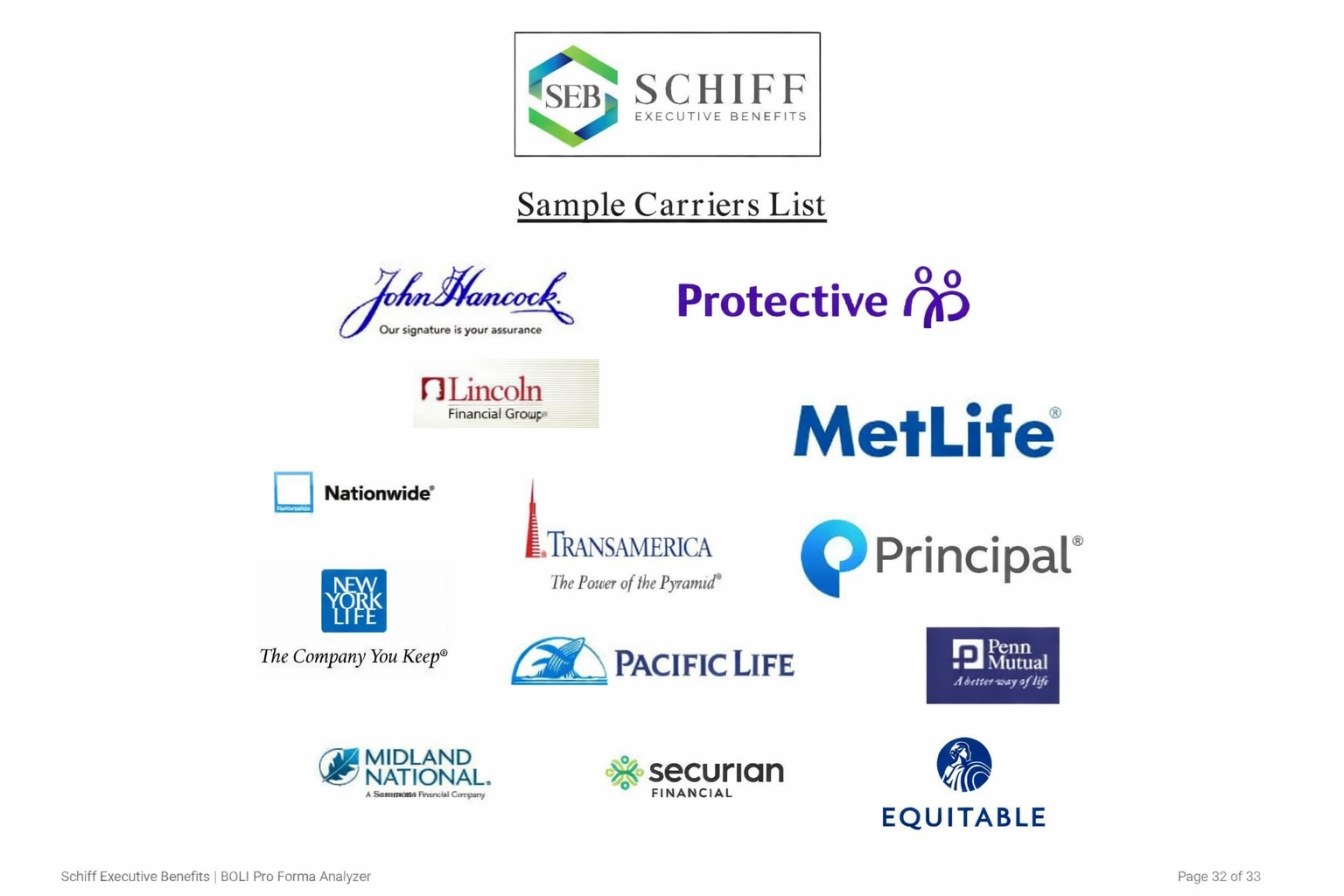
Visual display of leading insurance and financial carriers Schiff Executive Benefits works with


The Importance of a Carrier-Agnostic Approach


If you are an insurance company, you might be tempted to "buy from yourself." While internalizing the business seems logical, it often leads to concentration risk and potential conflict of interest from a fiduciary and regulatory perspective.


This is where the Schiff Executive Benefits team provides unique value. We believe in providing carrier-agnostic solutions. We work with an extensive list of top-tier carriers, from John Hancock and MetLife to Pacific Life and Prudential, to ensure that the iCOLI program is structured with the best possible pricing, transparency, and investment options.


Our process is part of The Perfect Plan®, a comprehensive framework designed to ensure that every executive benefit and capital optimization strategy is integrated, compliant, and performing at peak efficiency. We don't just "sell a policy"; we help you design a strategic asset that fits into your broader financial ecosystem.


Regulatory and Accounting Considerations


Implementing an iCOLI program is not a "set it and forget it" endeavor. It requires rigorous pre-purchase analysis and ongoing administration to meet NAIC and state-specific regulatory standards.


  • Insurable Interest: You must ensure that the executives being insured meet the criteria for insurable interest in your specific jurisdiction.

  • IRC 101(j) Compliance: This is a critical technical standard for iCOLI programs. To preserve the income-tax-free treatment of death benefits, the employer must satisfy the notice and consent requirements before policy issue and confirm the insured falls within an eligible employee class under the statute. Ongoing documentation and coordination with your legal, tax, and HR advisors are essential.

  • FASB/GAAP Compliance: The accounting for iCOLI can be complex, involving the reporting of the Cash Surrender Value (CSV) as an asset and the changes in CSV as other operating income.

  • Transparency: As with any institutional program, transparency in fees, mortality costs, and investment management is paramount.


In practice, that means the compliance work cannot be an afterthought. If notice, consent, and recordkeeping are mishandled, the tax advantages that make iCOLI so attractive can be materially compromised.


We often guide our clients through a ten-step pre-purchase assessment, which includes employee benefit liability calculations, 101(j) review, and financial modeling to ensure the program is right-sized for the organization’s needs.


Why Now? The Point of No Return


The economic environment of 2026 is one of rapid change. With shifting tax policies and a volatile market, the cost of "waiting" is higher than ever. Every year surplus capital sits in a tax-inefficient environment is a year of lost compounding that can never be recovered.


We are seeing more U.S. insurance companies: over 350 at the last count: utilizing iCOLI assets to bolster their financial positions. Some major carriers now hold iCOLI assets exceeding $1 billion. They have recognized that in an unstable financial environment, having a secure, tax-advantaged capital engine is not a luxury: it’s a necessity.


Closing Thoughts: Sit Back, Grab Your Coffee


Navigating the intersection of capital optimization and executive retention doesn't have to be a source of anxiety. It should be a source of confidence. When you align your capital strategy with your people strategy, you aren't just managing a business; you are securing a legacy.


Are you maximizing the potential of your surplus capital? Are your executive benefits structured to withstand the next decade of market shifts?


If these questions are on your mind, we invite you to explore our video library or listen to The Perfect Plan® Podcast for deeper insights into these strategies. Better yet, let’s have a conversation.


Come join us for a consultative review of your current holdings. We’ll help you determine if an iCOLI program is the missing piece in your capital puzzle.


Schiff Executive Benefits contact information and commitment statement


Restoring Alignment and Retention. It’s what we do. It’s what The Perfect Plan® is built for.


Sit back, grab your coffee, and let’s talk about how to make your capital work as hard as you do.


It is often said that a business is only as strong as the foundation upon which it is built. You have spent decades pouring your sweat, late nights, and creative energy into your company. You have survived market crashes, global shifts, and the daily grind of management. But here is an undeniable truth: building a business is a labor of love, yet leaving one should not be a labor of grief.


For many business owners, the "exit" feels like a distant shore. However, the reality of business succession is that it often happens when we least expect it. Whether it is a sudden health crisis or a partner deciding to walk away, the stability of your legacy depends entirely on a document that is likely sitting in a dusty drawer: your buy-sell agreement.


Are you certain that document will protect your family? Does it guarantee that you won't end up in business with a widow? Or worse, does it inadvertently hand over your hard-earned equity to the IRS?


At Schiff Executive Benefits, our mission is Restoring Alignment and Retention. We believe that a plan is only as good as its execution. Today, let’s walk through the common pitfalls that keep business owners up at night and how you can secure your professional legacy.


The "What If" Reality Check


We often ask our clients five core "What If" questions. Two of them are particularly relevant here:


  1. What if you end up in business with your partner’s spouse?

  2. What if you need a business buy-out tomorrow but don’t have the cash?


If you don't have a properly structured and funded agreement, these aren't just hypothetical scenarios: they are impending financial disasters. A buy-sell agreement is essentially a "business will." It dictates who can buy the departing owner's share, at what price, and where the money will come from. Without it, or with a flawed one, you are inviting litigation and chaos into your boardroom.


Business partners discussing a buy-sell agreement and succession planning in a modern office.


Mistake #1: The Ownership Trap (Redemption vs. Cross-Purchase)


One of the most frequent business owner issues we see involves the choice between an Entity-Purchase (Redemption) agreement and a Cross-Purchase agreement. While both aim to solve the same problem, their tax and legal implications are worlds apart.


The Redemption Model


In a redemption or entity-purchase agreement, the business itself buys the life insurance policy on each owner. When an owner passes away, the company receives the death benefit and uses it to buy back the shares.


  • The Pro: It is simple. Only one policy per owner is needed.

  • The Con: The surviving owners do not receive a "step-up" in tax basis. If you eventually sell the company, your tax bill could be significantly higher because your cost basis in the shares remained the same, even though you now own a larger percentage of the company.


The Cross-Purchase Model


In a cross-purchase agreement, the owners buy policies on each other.


  • The Pro: When a partner dies, you receive the insurance proceeds personally (tax-free) and use them to buy the deceased partner’s shares. This gives you a "step-up" in basis, potentially saving you millions in future capital gains taxes.

  • The Con: It can become administratively complex if there are many partners. If you have four partners, you might need 12 separate policies to cover everyone.


Which is right for you? There is no one-size-fits-all answer. Often, we utilize a cross-purchase partnership or a "Trusteed" cross-purchase to simplify the administration while retaining the tax benefits. Failing to analyze this choice is a mistake that often isn't discovered until it's too late to fix.


Mistake #2: The IRC 101(j) Compliance Trap


This is the "Life Insurance Warning" that many generalist advisors miss. Under Internal Revenue Code Section 101(j), if a business owns a life insurance policy on an employee (including owner-employees), specific notice and consent requirements must be met before the policy is issued.


If you fail to comply with 101(j), the death benefit: which you expected to be tax-free: could be treated as taxable income. Imagine needing $5 million to buy out a partner, receiving the check, and then realizing the IRS wants 37% of it.


This is what we call the "Employer-Owned Life Insurance" trap. Compliance requires:


  • Informing the insured in writing that the employer intends to insure their life.

  • Disclosing the maximum face amount for which the employee could be insured.

  • Obtaining written consent from the employee.


At Schiff Executive Benefits, we specialize in navigating these regulatory waters to ensure your COLI (Corporate Owned Life Insurance) strategies remain a source of security, not a tax liability.


Mistake #3: Using a Stale Valuation


When was the last time you valued your company? If your buy-sell agreement uses a fixed dollar amount from 2018, you are playing a dangerous game.


If the business has grown, the surviving partners may be getting a "steal," leaving the deceased partner’s family under-compensated and likely to sue. If the value has dropped, the company might be forced to overpay, potentially bankrupting the business.


We recommend a dynamic valuation formula or a requirement for an annual appraisal. Your legacy deserves an accurate price tag. Business values fluctuate; your agreement must be agile enough to keep pace.


Legal documents and business valuation papers on an executive desk for a buy-sell agreement review.


Mistake #4: The Funding Gap


A buy-sell agreement without funding is just a piece of paper with good intentions. How will you come up with the cash to buy out a partner?


  • Cash on hand? Most businesses don't keep millions in idle cash.

  • A bank loan? Banks are often hesitant to lend to a company that just lost a key partner.

  • Installment payments? This puts a massive strain on future cash flow and leaves the departing family at risk if the business fails.


This is where life insurance buy/sell agreements shine. Life insurance provides immediate, tax-free liquidity at the exact moment it is needed. It creates the "certainty" in an uncertain time. By using COLI or personal policies, you ensure that the surviving partners keep the business and the departing family gets their fair value immediately.


The Power of The Perfect Plan®


Navigating these complexities requires more than just an insurance agent; it requires a team of advisors who understand the intersection of law, tax, and corporate finance. This is the philosophy behind The Perfect Plan®.


We don't just sell policies; we help you engineer a succession strategy that stands the test of time. We look at the "point of no return": the moment when a triggering event occurs: and we work backward to ensure every piece of the puzzle is in place today.


Have you considered what happens if a partner becomes disabled rather than passing away? Most buy-sell agreements are silent on disability, yet the statistical likelihood of long-term disability is far higher than premature death. Our team at Schiff Executive Benefits looks at the holistic picture to ensure no "What If" goes unanswered.


Take the Next Step


The unstable nature of today's economic environment means that waiting "until next year" to review your succession plan is a risk you cannot afford. Economic shifts and tax law changes are happening at an accelerated pace.


Are you making these common mistakes?


  • Is your agreement funded?

  • Is it 101(j) compliant?

  • Does it offer a step-up in basis?

  • Is the valuation current?


If you aren't 100% sure of the answers, it's time for a professional review.


Financial advisors reviewing business succession and executive benefits plans in a boardroom.


Sit back, grab your coffee, and let’s have a conversation about your professional legacy. We invite you to join us for a consultative review where we can explore how to bring your buy-sell agreement into alignment with your current goals.


Don't let the foundation you've built crumble because of a technicality. Let's work together to ensure your business continues to thrive, your partners stay protected, and your family is provided for: exactly the way you intended.


Restoring Alignment and Retention. It’s not just our tagline; it’s our promise to you.


Ready to secure your future? Contact us today to learn more about how we can help you implement The Perfect Plan®.


Learn more: planning your business succession.