
Hi, How Can We Help You?
  • Planning for all of life's "What Ifs".

Category Archives: Executive Benefits


In a world that often prizes the "new and flashy," there is an undeniable truth that remains constant: stability is the bedrock of any successful long-term strategy. For a business, stability isn't just about this quarter's earnings; it’s about ensuring that the promises you make today: to your family, your partners, and your key executives: can be kept decades from now.


When we look at the various types of products available in the market for informal funding of executive benefits, Whole Life insurance stands as the "Old Guard." It is the architectural foundation upon which many of the most secure Corporate Owned Life Insurance (COLI) and Bank Owned Life Insurance (BOLI) programs are built.


If you are looking for a financial vehicle that eliminates the "what ifs" of market volatility, Whole Life is often the answer.


The Mechanics of Permanence


Whole Life is exactly what it sounds like: permanent life insurance designed to cover the insured for their entire life. Unlike term insurance, which expires, or universal life products, which may have flexible premiums that can fluctuate, Whole Life is defined by its rigidity: and in the corporate world, that rigidity is its greatest strength.


The core features of a Whole Life policy include:


  • Guaranteed Cash Value Growth: The cash value in a Whole Life policy grows according to a set schedule. It doesn't matter what the S&P 500 does tomorrow; your cash value is contractually guaranteed to increase every year.

  • Fixed Premiums: Your premiums are locked in from day one. They will never increase, regardless of the economy or the health of the insured. This allows for precise long-term budgeting for deferred compensation plans.

  • Dividends (The Performance Kicker): While not guaranteed, "participating" Whole Life policies from mutual insurance companies often pay annual dividends. These dividends can be used to purchase additional insurance, reduce premiums, or boost the cash value even further.


An executive team in a high-end boardroom discussing long-term corporate strategy and risk management.


The "Sleep Well at Night" Factor


For the risk-averse corporate buyer, Whole Life offers what we call the "sleep well at night" factor. When a company uses life insurance to fund a Supplemental Executive Retirement Plan (SERP), they are essentially creating a liability on their balance sheet. They are promising an executive a future payment.


If you fund that promise with a volatile asset, you are taking on "asset-liability mismatch" risk. If the market crashes the year your executive retires, you may find yourself short on the funds needed to pay the benefit.


Whole Life eliminates that mismatch. Because the growth is guaranteed, you can "reverse engineer" your Perfect Plan® with mathematical certainty. You know exactly what the asset will be worth at any given point in the future, ensuring you can meet your obligations to your top talent without straining the company’s cash flow.


The Role of Whole Life in COLI and BOLI


In the realm of Bank Owned Life Insurance (BOLI), Whole Life is a staple. Banks are highly regulated entities that value capital preservation above almost all else. The guaranteed nature of Whole Life cash values aligns perfectly with a bank’s Tier 1 capital requirements.


For corporations, Whole Life serves as a powerful engine for full cost recovery. When we design a plan at Schiff Executive Benefits, our goal is often to ensure the company recovers every dollar spent on the benefit, every dollar of premium paid, and even the "opportunity cost" of those funds. The predictable, tax-advantaged growth of Whole Life makes this math not just possible, but repeatable.


A close-up of a compass on a map, representing the clear direction and guidance provided by a well-structured insurance plan.


Regulatory Expertise: Being in the "Room Where It Happened"


When you are dealing with permanent products like Whole Life, compliance is not optional. You need an advisor who understands the "why" behind the regulations.


Matt Schiff, the President of Schiff Executive Benefits, doesn't just read the laws; he helped write them. In 2003 and 2005, Matt served as a ranking member of the AALU's NQDC Committee alongside Michael Goldstein. Together, they helped draft the very regulations that govern IRC 409A (which dictates how deferred compensation is taxed) and IRC 101(j) (which covers employer-owned life insurance).


This "insider" expertise is why we focus so heavily on ensuring your programs are designed to satisfy every government requirement. To hear more about the history of these regulations directly from the source, we invite you to watch Matt’s conversation with Dan Hogans (formerly of the IRS Treasury) on The Perfect Plan® Podcast.


Solving the Five "What Ifs"


Every business owner we meet is haunted by the same five questions. Whole Life is a versatile tool that provides answers to almost all of them:


  1. What if you end up in business with a widow? Whole Life can fund buy-sell agreements with a guaranteed death benefit.

  2. What if there is a business buy-out? The accumulated cash value provides the liquidity needed for a smooth transition.

  3. What if your top talent leaves? A Whole Life-funded NQDC plan creates "Golden Handcuffs" that reward the executive for staying.

  4. What if you need to replace a senior executive? The tax-free death benefit provides the capital to recruit and train a successor.

  5. What if you run out of retirement money? The policy's cash value can be accessed tax-efficiently to provide a "guaranteed paycheck and a playcheck."


A professional handshake between two executives, symbolizing the trust and retention built through executive benefit programs.


Restoring Alignment and Retention


At Schiff Executive Benefits, we believe that the best plans are those that align the interests of the business owner with the interests of their key people. We call this Restoring Alignment and Retention.


Whole Life is not the only tool in our belt, but for companies that value certainty, guarantees, and a "set it and forget it" approach to financial security, it is often the most appropriate.


If you’re ready to see how the mathematical certainty of Whole Life can strengthen your business, we invite you to take the first step. Use our Business Valuation Tool to see what your company is worth today, then let’s sit down, grab a coffee, and build your Perfect Plan®.


Come join us at The Perfect Plan® and let’s start planning for all of life's "What Ifs."



In the world of financial planning, there is a universal truth: risk and reward are the two sides of the same coin. For business owners and executives, the challenge is often finding a way to capture market growth without exposing the company's balance sheet: or their own retirement security: to the volatile whims of a market crash.


Indexed Universal Life (IUL) was designed specifically to address this tension. It is a permanent life insurance product that offers a unique middle ground: the opportunity for cash value growth linked to the performance of a stock market index, but with a built-in safety net that prevents losses during a market downturn.


What is Indexed Universal Life (IUL)?


At its core, IUL is a form of permanent life insurance. Like other universal life policies, it offers flexible premiums and a death benefit. However, the way interest is credited to the policy's cash value is what sets it apart.


Instead of a fixed interest rate (like Whole Life) or direct investment in the market (like Variable Universal Life), an IUL policy links its interest credits to a specific equity index, such as the S&P 500.


The Mechanics: Floors and Caps


The most compelling feature of IUL is the "floor." Most IUL policies come with a 0% floor, meaning that even if the underlying index drops by 20% in a given year, your policy’s cash value will not decrease due to market performance. Your "worst-case scenario" regarding market crediting is simply staying flat for that period.


To offer this protection, insurance carriers typically implement a "cap" or a "participation rate."


  • The Cap: The maximum interest rate the policy can earn in a single segment. If the index grows by 15% and your cap is 10%, you receive 10%.

  • Participation Rate: The percentage of the index's growth that is credited to your account.


This structure allows for a "smoothed" growth curve: eliminating the deep valleys of market crashes while still participating in the peaks of market rallies.


A digital display of stock market indices reflecting the growth potential of IUL


IUL as a Funding Vehicle for Executive Benefits


For companies looking to attract, retain, and reward talent, IUL is a powerful tool when used within a Corporate Owned Life Insurance (COLI) or Bank Owned Life Insurance (BOLI) framework.


When a business implements a Nonqualified Deferred Compensation (NQDC) plan or a SERP, they are creating a future liability. To "informally fund" that liability, many businesses purchase IUL policies on the lives of their key executives.


Why IUL for COLI?


  1. Tax-Deferred Growth: The cash value within the IUL grows tax-deferred, allowing the company to build an asset that grows more efficiently than a taxable brokerage account.

  2. Asset Class Diversification: IUL provides a unique asset class for the company’s balance sheet: one that has a low correlation to other traditional investments because of the downside protection.

  3. Cost Recovery: Eventually, the tax-free death benefit paid to the company can provide full cost recovery for the premiums paid and the benefits distributed to the executive. This is the heart of The Perfect Plan®.


Two business professionals in a high-rise office discussing executive retention and benefit strategies


The Importance of Technical Expertise: IRC 101(j) and 409A


Choosing the right product is only half the battle. How that product is structured and documented is where many plans fail. Because IUL is often used to fund executive benefits, it must comply with strict federal regulations.


At Schiff Executive Benefits, we don't just "sell policies": we reverse-engineer solutions based on these complex codes. Our President, Matt Schiff, was literally "in the room where it happened." As a ranking member of the AALU's NQDC Committee, Matt helped draft the very laws that govern these plans today, including IRC 409A (regarding deferred compensation) and IRC 101(j) (regarding corporate-owned life insurance).


Failing to comply with 101(j) can turn a tax-free death benefit into a fully taxable event, devastating the financial logic of the plan. This is why we emphasize an integrated approach, working alongside your existing CPA and Attorney to ensure every "What If" is accounted for. For more on this, we recommend listening to Matt’s discussion with Dan Hogans, formerly of the IRS Treasury, on The Perfect Plan® Podcast.


Is IUL Right for Your Business?


Indexed Universal Life offers a sophisticated balance of growth and security. It’s an ideal choice for businesses that want market-linked performance to fund deferred compensation liabilities without the "haircut" of a market crash.


However, IUL is not a "one-size-fits-all" product. The caps, participation rates, and internal costs vary significantly between carriers. Our role is to act as your broker and consultant, analyzing the market to find the carrier and the structure that matches your company culture and long-term goals.


Start Planning Today


Whether you are looking to protect your top talent from leaving or ensuring you don't run out of retirement money, the first step is understanding the value of your business and the cost of your liabilities.


Click here to use our Business Valuation tool and see where you stand.


Sit back, grab your coffee, and let’s discuss how we can restore alignment and retention in your organization.


A modern corporate building representing the stability and institutional strength of COLI and BOLI programs


In the high-stakes world of executive retention, flexibility isn't just a luxury: it’s a survival mechanism. Business environments shift, markets oscillate, and the needs of your top talent evolve. If your benefit strategy is anchored to a static, rigid product, you may find yourself drifting off course when the winds of the economy change.


Variable Universal Life (VUL) is often positioned as the "Swiss Army Knife" of corporate-owned life insurance (COLI) and executive benefits. It offers the permanent protection of life insurance, the flexibility of adjustable premiums, and the growth potential of market-based sub-accounts. But with great potential comes great responsibility: and significant risk.


At Schiff Executive Benefits, we believe in reverse-engineering solutions based on your specific goals. VUL is a powerful engine, but it requires a skilled navigator at the helm to ensure it serves the intended purpose of The Perfect Plan®.


What is Variable Universal Life?


At its core, Variable Universal Life is a form of permanent life insurance. Unlike Whole Life, which offers guaranteed cash value growth and fixed premiums, VUL is designed for the business owner or executive who wants more control over how their capital is deployed.


The "Variable" in VUL refers to the ability to invest the policy's cash value in a variety of sub-accounts. These sub-accounts function similarly to mutual funds, allowing you to allocate funds across stocks, bonds, and money market instruments. This means the cash value (and sometimes the death benefit) will fluctuate based on the performance of these underlying investments.


The "Universal" part refers to the flexibility of the policy. Within certain IRS limits, you can adjust your premium payments and even the death benefit amount as your corporate needs change.


A close-up of a digital stock market chart showing upward growth, representing the market potential of VUL sub-accounts.


The Upside: Why Corporations Choose VUL


For many of our clients, VUL is the preferred vehicle for informally funding Deferred Compensation (NQDC) plans. Here is why:


1. Market-Linked Growth Potential


In a low-interest-rate environment, traditional fixed-income products may not generate the returns necessary to keep pace with the rising costs of executive benefit obligations. VUL allows the corporation to seek higher returns by investing in equities. When the market performs well, the cash value can grow significantly, providing more "fuel" to fund the benefits promised to key leaders.


2. Tax-Deferred Accumulation


One of the most significant advantages of VUL within a corporate environment is the tax treatment. Growth within the sub-accounts is tax-deferred. This allows the company to reallocate investments within the policy without triggering immediate capital gains taxes: a crucial feature for long-term strategies like Corporate Owned Life Insurance (COLI).


3. The Power of the Tax-Free Death Benefit


As we often discuss when addressing the "5 What Ifs," the ultimate cost-recovery mechanism for any executive benefit plan is the death benefit. Because VUL provides a permanent death benefit that is generally received income tax-free by the corporation, it can be used to recover every dollar spent on the executive's retirement, plus the cost of the insurance itself.


The Downside: Understanding the Market Risk


If a product sounds too good to be true, it usually means you haven't looked at the risk profile yet. VUL is not for the faint of heart.


  • No Guarantees: Unlike Indexed Universal Life (IUL), which usually provides a "floor" to protect against market losses, VUL is fully exposed to the market. If the sub-accounts lose 20%, your cash value loses 20%.

  • The Risk of Underfunding: If market performance is poor, the internal costs of the insurance (which increase as the insured gets older) may eat away at the remaining cash value. This can create a "death spiral" where the policy requires massive cash infusions just to keep it from lapsing.

  • Complexity and Management: VUL is not a "set it and forget it" product. It requires active monitoring of investment allocations and regular in-force illustrations to ensure the policy remains on track to meet its goals.


A professional advisor explaining complex financial documents to a client in a sunlit office, emphasizing the need for expert guidance.


Strategic Fit: When Does VUL Make Sense?


In our nearly 100 years of combined experience, we’ve found that VUL is most effective when it is part of a broader, integrated approach. It makes sense for your organization if:


  1. You have a long time horizon: VUL needs time (usually 15-20+ years) to weather market cycles and allow the tax-deferred growth to overcome the internal costs.

  2. You are funding high-level talent: VUL is frequently used in Split Dollar Programs or 401k Mirror plans where the goal is to provide top-tier executives with significant upside.

  3. You have the discipline for policy management: This is where we come in. At Schiff Executive Benefits, we don't just sell you a policy; we manage the lifecycle of the plan.


The "In the Room" Advantage: Compliance and Expertise


When dealing with VUL and other NQDC funding vehicles, compliance is non-negotiable. Our President, Matt Schiff, wasn't just studying these laws: he helped shape them. As a ranking member of the AALU’s NQDC Committee, Matt worked alongside Michael Goldstein to help draft the regulations for IRC 409A and 101(j).


This "insider" expertise is what separates a standard broker from a strategic consultant. We ensure your VUL-funded programs are designed to comply with the rigorous Top Hat filing requirements and notice/consent rules that govern COLI. You can hear more about these technical nuances in Matt's podcast interview with Dan Hogans, formerly of the IRS Treasury.


Addressing the "5 What Ifs" with VUL


A well-structured VUL policy should act as a safeguard against the uncertainties that keep business owners awake at night:


  • Business with a widow: Can the policy provide the liquidity needed for a smooth transition?

  • Business buy-out: Is there enough cash value or death benefit to fund a buy-sell agreement?

  • Top talent leaving: Does the VUL-funded NQDC plan create enough of a "Golden Handshake" to keep your best people from looking elsewhere?

  • Senior exec retirement: Will the policy provide the supplemental income needed to maintain their lifestyle?

  • Running out of retirement money: VUL's growth potential is specifically designed to hedge against the risk of outliving your assets.


A calm, retired couple walking along a beach at sunset, symbolizing the peace of mind that comes from a secured retirement plan.


Restoring Alignment and Retention


At the end of the day, Variable Universal Life is just a tool. Whether it is the right tool for your company depends on your risk tolerance, your corporate culture, and your long-term vision.


Are you looking to build an "Ownership Feel" for your non-owners? Or are you focused on 100% protection for your executive families? We help you navigate these choices by reverse-engineering the solution to fit your unique goals.


If you are ready to see how VUL or other specialized products fit into your firm’s future, let’s start with the facts. Knowing the value of your business and the cost of your "What Ifs" is the first step toward The Perfect Plan®.


Ready to evaluate your current executive strategy?
Click here to access our Business Owner Valuation tool and start the conversation today.


For more insights on the different types of products available in the market, visit our full blog feed.


In the competitive landscape of modern business, the greatest asset any company possesses is not its technology, its intellectual property, or its equipment. It is its people. But for many business owners: particularly those operating as S-corps, partnerships, or LLCs: finding the right way to reward those people while keeping the business’s bottom line healthy can feel like a riddle without an answer.

How do you provide a significant benefit to your top talent that is immediately deductible to the business, relatively simple to administer, and entirely flexible?

Fortunately, the answer often lies within a specific corner of the tax code: IRC Section 162. Known more commonly as a Section 162 Bonus Plan (or an Executive Bonus Plan), this strategy is one of the most effective, yet underutilized, tools in the executive benefits toolkit.

At Schiff Executive Benefits, our mission is "Restoring Alignment and Retention." We believe that when the goals of the company and the goals of the key executive are aligned, everyone wins. The Section 162 Bonus Plan is a cornerstone of that philosophy.

What is a Section 162 Bonus Plan?


At its simplest, a Section 162 Bonus Plan is an arrangement where an employer pays the premiums on a life insurance policy owned by a key employee.

Under IRC Section 162, businesses are permitted to deduct "ordinary and necessary" expenses paid or incurred during the taxable year in carrying on any trade or business. This includes a reasonable allowance for salaries or other compensation for personal services actually rendered.

In this specific plan, the "bonus" given to the employee is the premium payment for a permanent life insurance policy. Because the employee owns the policy and the employer has no rights to the cash value or the death benefit, the IRS views these premium payments as taxable compensation to the employee and a deductible business expense for the employer.

A business executive reviewing financial documents and tax forms in a bright, modern office setting.

How the Executive Bonus Plan Works: A Step-by-Step Breakdown


The mechanics of a Section 162 Executive Bonus Plan are remarkably straightforward compared to more complex nonqualified deferred compensation (NQDC) arrangements:

  1. Selection: The employer selects the specific key employee(s) they wish to reward. Unlike a 401(k) or other qualified plans, Section 162 plans can be highly discriminatory. You can choose one person or twenty: there are no participation requirements.

  2. Application: The employee applies for a permanent life insurance policy (such as Whole Life or Indexed Universal Life). The employee is the owner and the insured, and they designate their own beneficiaries.

  3. Premium Payment: The employer pays the premium directly to the insurance carrier (or bonuses the cash to the employee to pay it).

  4. Tax Treatment: The employer deducts the premium as a compensation expense. The employee reports the premium amount as W-2 taxable income.

  5. The "Double Bonus" Option: Many employers choose to provide a "tax gross-up": essentially a second bonus to cover the income taxes the employee owes on the premium bonus. As a result, the benefit becomes "cost-free" to the executive.


Why Choose Section 162 Over a REBA?


You may have heard us talk about Restricted Executive Bonus Arrangements (REBA). Although both rest on the foundation of IRC Section 162, they serve different purposes.

A REBA includes a "restrictive endorsement." This is a legal agreement that prevents the employee from accessing the policy’s cash value or surrendering the policy for a set number of years without the employer's consent. It creates what we call "golden handcuffs."

A straight Section 162 Bonus Plan, by contrast, is the "simple" version. There is no restrictive endorsement. The employee has immediate, full ownership and access to the policy’s benefits.

Why choose the simpler version?

  • Immediate Reward: It provides a tangible, owned asset to the employee from day one.

  • Simplicity: There are no legal endorsements to file or track.

  • Portability: If the employee leaves, they take the policy with them (and keep paying the premiums themselves if they choose). This makes it a very attractive "reward" for long-standing loyalty rather than a "threat" to keep them from leaving.


The Perfect Solution for Pass-Through Entities


One of the biggest challenges for owners of S-corps, Partnerships, and LLCs is that they often cannot participate in traditional deferred compensation (NQDC) plans on a pre-tax basis.

Because the income of a pass-through entity flows directly to the owners' personal tax returns, "deferring" income usually doesn't provide the same tax arbitrage it does in a C-corp. However, a Section 162 Bonus Plan allows the business to deduct the cost of premiums for key employees (who are not owners), helping the business manage its taxable income while building a powerful benefit for the team that makes the business run.

As we often discuss on The Perfect Plan®, achieving true financial security requires planning for all of life's "What Ifs." In fact, a single Section 162 plan addresses several at once: providing 100% protection to employee families through the death benefit and potential supplemental retirement income through cash value growth.

Two professional partners shaking hands after a successful strategic planning meeting.

The Technical Edge: Why Schiff Executive Benefits?


When you are dealing with executive benefits and the Internal Revenue Code, expertise isn't just a "nice to have": it's a requirement.

Our President, Matt Schiff, brings a level of authority to these discussions that few in the industry can match. In the early 2000s, Matt was "in the room where it happened." As a ranking member of the AALU's NQDC Committee, Matt worked alongside industry legends like Michael Goldstein to help draft the very laws that govern these plans today, including IRC 409A and 101(j).

This technical pedigree ensures that when we design a Section 162 plan, it isn't just a "product sale." It is a compliant, strategically sound arrangement designed to withstand regulatory scrutiny. In fact, a major benefit of the Section 162 Bonus Plan is that it typically avoids the heavy compliance burdens of 409A and doesn't require a "Top Hat" filing with the Department of Labor, because it is considered current compensation rather than a retirement plan.

However, you must still ensure compliance with IRC 101(j) regarding employer-owned life insurance notice and consent if there is any employer involvement in the process. We ensure those boxes are checked.

Benefits at a Glance


  • For the Employer:

    • Immediate tax deduction for premiums paid.

    • Ability to discriminate (reward only the people you choose).

    • No ERISA or 401(k) testing requirements.

    • No 409A compliance or Top Hat filings.

    • Simple to set up and maintain.


  • For the Executive:

    • Immediate ownership of a permanent life insurance policy.

    • Tax-deferred growth of cash value.

    • Potentially tax-free supplemental retirement income (through policy loans/withdrawals).

    • Self-completing benefit (the death benefit protects their family immediately).

    • Portability: the policy stays with them even if they change careers.


A business executive looking thoughtfully out an office window, representing long-term vision and security.

Is a Section 162 Plan Right for Your Business?


Every business has a unique culture and a unique set of goals. At Schiff Executive Benefits, we don't believe in "off-the-shelf" solutions. We start by asking the "What Ifs":

  • What if your top salesperson left tomorrow?

  • Or what if your key executive passed away unexpectedly?

  • What if you could provide a life-changing benefit to your most loyal people without creating a permanent liability on your balance sheet?


Ultimately, if you are looking for a way to attract, retain, and reward talent that is simpler than a Traditional SERP but more substantial than a standard bonus, the Section 162 Bonus Plan may be the "Perfect Plan" for your needs.

To hear more about how we think about these structures, I encourage you to listen to Matt Schiff’s interview on The Perfect Plan® Podcast with Dan Hogans (formerly of the IRS Treasury), where they dive deep into the nuances of executive compensation.

Take the Next Step


Ready to see how a Section 162 Bonus Plan fits into your business strategy? We use a data-driven approach to help you realize the true value of your business and your key talent.

Click here to use our RISR tool and begin your business valuation and talent assessment today.

Let's work together to restore alignment and retention in your organization. Grab your coffee, sit back, and let's build something that lasts.


Learn more: See how this fits into the bigger picture in our guide to executive benefits for business owners.


In the world of executive leadership, there is a universal truth that often goes unsaid: success doesn't always scale. You can climb to the very top of the corporate ladder, drive millions in revenue, and manage thousands of people, only to find that the very systems designed to reward you: like the standard 401(k): simply cannot keep up with your trajectory.


For many high-earners, the "retirement income gap" isn't just a possibility; it’s a mathematical certainty. Because of IRS limits on qualified plans, your top talent often faces an "income cliff" where their retirement lifestyle will be funded by a fraction of their working income.


At Schiff Executive Benefits, we believe that if you’ve built a legacy for a company, you shouldn’t have to downsize your own. That is where the Supplemental Executive Retirement Plan (SERP) comes in. It is more than just a benefit; it is a custom-engineered pension designed to restore alignment between an executive’s contribution and their long-term security.


The Income Gap: Why Your Top Talent is Falling Short


Most business owners assume their 401(k) or standard profit-sharing plan is enough. However, once an executive’s compensation crosses a certain threshold, those plans become highly inefficient. IRS Section 401(a)(17) limits the amount of compensation that can be considered for qualified plans, and Section 415 limits the total annual contributions.


The result? While your mid-level managers might see a 60% to 80% replacement of their income in retirement, your C-suite might only see 20% or 30%. This gap creates a massive retention risk. If a competitor offers a way to fill that gap, your best people will notice.


A SERP is a nonqualified deferred compensation (NQDC) plan that allows the company to provide additional retirement benefits to a select group of management or highly compensated employees. It is the "security" that ensures your key people can retire with the same dignity they brought to their roles.


Design Your Pension: The Power of Choice


The beauty of a SERP lies in its flexibility. Unlike qualified plans, which are governed by rigid ERISA non-discrimination rules, a SERP allows for "The Perfect Plan®" design. You can choose exactly who participates, how much they receive, and what conditions must be met to earn the benefit.


When we sit down with clients to reverse-engineer a solution, we focus on several key design choices:


1. Defined Benefit vs. Defined Contribution


  • Defined Benefit (DB) SERP: This is the "true" pension. The company promises to pay a specific amount: either a fixed dollar amount or a percentage of final pay: for a set period (like 15 years) or for the rest of the executive's life. It provides the highest level of security for the employee.

  • Defined Contribution (DC) SERP: The company credits a specific amount to an account each year. The final benefit depends on the cumulative contributions and the "interest" or growth credited to the account. This gives the employer more predictable costs while still offering a substantial reward.


2. Restoration vs. Enhancement


  • Restoration Plans: These are designed to simply "make the executive whole" by providing the benefits they would have received in the qualified plan if the IRS limits didn't exist.

  • Enhancement Plans: These go further, providing a "Golden Handcuff" that rewards long-term tenure or specific performance milestones, often aiming for a total retirement income target (e.g., 70% of final pay).


3. Vesting and "Golden Handcuffs"


How do you ensure your top talent stays for the long haul? You design the vesting schedule to match your retention goals. You might choose "cliff vesting," where the executive gets nothing if they leave before 10 years, or a graded schedule that rewards them incrementally. This creates a powerful incentive to stay through the "What If's" of the business cycle.


An executive reviewing blueprints, symbolizing the custom design and choice involved in a SERP


Triggers: Planning for the "What If's"


A well-designed SERP doesn't just wait for age 65. It accounts for all of life’s uncertainties. We ensure the plan document clearly defines the triggers for payment, including:


  • Retirement: The primary goal, often with "early retirement" provisions.

  • Death: Providing 100% protection to the employee's family if they don't make it to retirement.

  • Disability: Ensuring income when it is needed most.

  • Change of Control: Protecting the executive’s hard-earned benefits if the company is sold or merged.


The Expert Advantage: "In the Room Where It Happened"


When you are dealing with SERPs, you are operating in the complex world of IRC Section 409A and 101(j). These aren't just acronyms; they are the rules of the game, and the penalties for getting them wrong are catastrophic for the executive.


This is where Schiff Executive Benefits stands apart. Our President, Matt Schiff, doesn't just "know" these laws: he was "in the room where it happened." As a ranking member of the AALU's NQDC Committee, Matt worked alongside Michael Goldstein to help draft the very frameworks for 409A and 101(j) back in 2003 and 2005.


We don't guess; we know the intent behind the regulations. In fact, Matt recently sat down with Dan Hogans, a former IRS Treasury official and the primary architect of 409A, on The Perfect Plan® Podcast. Their conversation dives deep into the compliance traps that many firms miss. When you work with us, you are getting advice from the source.


A professional setting with legal documents, highlighting the technical expertise and compliance required for 409A and 101(j)


Funding the Promise: COLI and Cost Recovery


A SERP is an unfunded promise from the company. However, smart companies don't just leave that liability on the balance sheet. They use Corporate Owned Life Insurance (COLI) as an informal funding vehicle.


By using COLI, the employer can:


  • Offset the P&L impact: The cash value growth inside the policy can offset the accruing SERP liability.

  • Full Cost Recovery: If structured correctly, the death benefit eventually returns every dollar the company paid in benefits, plus the cost of the insurance premiums, and even a factor for the "use of money."


It turns a "cost" into a strategic asset that protects the company and the executive simultaneously.


Restoring Alignment and Retention


Are your best people happy? Or are they quietly wondering if their current path leads to the retirement they’ve envisioned?


Building a SERP is about more than just numbers; it’s about realizing your dream value and building your legacy your way. It’s about ensuring that those who have contributed the most to your company’s success are the ones most protected by it.


If you’re ready to see how a custom-designed SERP can fill the gap for your leadership team, we invite you to start with a clear picture of where you stand. Use our RISR tool to capture your data and value, or simply reach out.


Sit back, grab your coffee, and let's discuss how we can help you plan for the "What If's" and restore alignment to your executive team.


A warm, inviting cup of coffee on a professional desk, symbolizing a low-pressure invitation to discuss executive benefits


Ready to see the math behind your legacy?
Get your Business Valuation and Gap Analysis via RISR here.


Learn more: executive retention programs.


There is an old, undeniable truth in the business world: your company is only as strong as the people who keep the gears turning when you aren’t in the room. You’ve spent years building a culture, a brand, and a balance sheet, but the ultimate "What If" that keeps most owners up at night is the departure of their top talent.

When your most valuable executive: the one who holds the key relationships or the technical "secret sauce": is approached by a competitor with a larger checkbook, what is stopping them from walking out the door? For many, the answer is "not enough."

Traditional retirement tools like the 401(k) are excellent for the rank-and-file, but for your high-earners, they are woefully inadequate. The "150k Income Cliff" is real, and the IRS-mandated contribution limits mean your best people are often the least prepared for retirement on a percentage-of-income basis. Ultimately, this is where the Employer-Funded Nonqualified Deferred Compensation (NQDC) plan becomes the ultimate strategic anchor.

What is an Employer-Funded NQDC?


Unlike an employee-funded 401(k) mirror, where the executive defers their own salary, an employer-funded NQDC is a discretionary benefit. It is 100% company-paid. Think of it as a "Performance Reward" or "Retention Bonus" that is earned today but paid tomorrow.

Because these plans are "nonqualified," they do not fall under the restrictive non-discrimination rules of ERISA. In plain English: you can play favorites. You can choose to provide this benefit to your CEO and VP of Sales while excluding everyone else. This allows you to "reverse engineer" a solution that matches your company culture and intent perfectly.

The Power of the "Golden Handcuff"


The primary goal of a discretionary NQDC is simple: Restoring Alignment and Retention. By utilizing custom vesting schedules, you create what we call "Golden Handcuffs."

  • Cliff Vesting: The executive must stay for a fixed period (e.g., 5 or 10 years) to receive any of the benefit. If they leave on day 364 of year 4, they get nothing.

  • Graded Vesting: The executive earns a percentage of the benefit each year (e.g., 20% per year over 5 years).


These schedules ensure that the cost of leaving your company is high. When a competitor tries to poach your top talent, they aren’t just competing with your salary; they have to account for the hundreds of thousands of dollars in unvested NQDC benefits the executive would be leaving on the table.

A professional executive at a desk, reviewing complex financial documents, reflecting the technical precision required for NQDC plan design.

Tax Treatment and the Employer Advantage


One of the most common questions we hear is: "How does this affect my bottom line?"

Notably, from a tax perspective, employer-funded NQDC plans offer a unique "Wait and See" approach:

  1. For the Employer: You do not receive a tax deduction when you credit the money to the executive’s account. You receive the deduction in the year the benefit is actually paid out to the employee.

  2. For the Employee: They pay no income tax on the contributions or the growth until they receive the money (typically at retirement). However, FICA (Social Security and Medicare) taxes are generally due at the time of vesting.

  3. Cost Recovery: Many companies choose to informally "fund" these liabilities using Corporate Owned Life Insurance (COLI). In turn, this allows the company to offset the cost of the plan and, in many cases, achieve full cost recovery upon the executive's death, essentially making the plan "cost-neutral" over the long term.


The "In the Room" Expertise: IRC 409A and 101(j)


When you are dealing with deferred compensation, you are walking through a regulatory minefield. Specifically, IRC Section 409A and 101(j) govern how these plans must be structured and documented.

This isn't just "technical jargon" to us: it's personal. Our President, Matt Schiff, was literally "in the room where it happened." As a ranking member of the AALU's NQDC Committee, Matt helped draft these very laws alongside Michael Goldstein in 2003 and 2005. When we say we ensure your plan is compliant, we aren't just reading a manual; we helped write the rulebook.

A failure to comply with 409A can result in a 20% penalty tax on the executive, plus interest. You don't want to be the one explaining that to your top talent. You can hear more about these regulatory nuances and the history of these laws on The Perfect Plan® Podcast, where Matt discusses these topics with industry giants like Dan Hogans (formerly of IRS Treasury).

Two business professionals shaking hands in a bright, modern office, symbolizing the trust and long-term commitment fostered by employer-funded benefits.

Solving the Five "What Ifs"


We frame every executive benefit strategy through the lens of our core "What If" questions. An employer-funded NQDC plan addresses several of these directly:

  1. Top talent leaving: As discussed, the vesting schedules create a powerful retention tool.

  2. Senior exec retirement/replacement cost efficiency: By pre-funding the retirement obligation through COLI or other vehicles, you ensure the company has the cash flow to pay the benefit and hire a successor when the time comes.

  3. Running out of retirement money: For the executive, this provides a "Fixed Cash Flow" and a predictable retirement supplement that 401(k) limits don't cap.


Building The Perfect Plan®


At Schiff Executive Benefits, we don't believe in "off-the-shelf" products. Instead, we start with your goals and reverse engineer the solution. Whether you are a small business with 10 employees or a large corporation with 10,000, the goal is the same: to help you attract, retain, and reward the people who make your business possible.

Are you ready to stop worrying about your top talent leaving, and to provide a benefit that truly matches the value your executives bring to the table?

We invite you to sit back, grab your coffee, and let’s start a conversation. We work as an integrated team alongside your existing Accountant, Attorney, and TPA to ensure every "i" is dotted and every "t" is crossed.

Realize your dream value. Build it your way.

Find out what your business is worth and start your plan today with our RISR assessment.

For a deeper dive into how these plans integrate with your broader strategy, visit our Complete Guide to NQDC.

A serene landscape of a mountain path, representing the long-term journey and security provided by a well-designed executive benefit plan.


Learn more: our complete guide to NQDC plans.


They say that a rising tide lifts all boats, but in the world of executive retirement planning, many top-tier leaders find their boats anchored to the bottom by IRS contribution limits.

If you are a high-earning executive or a business owner, you likely already know the frustration. You want to save more for your future, but your standard 401(k) plan has a "ceiling" that stops you long before you’ve reached your goals. For the people driving the most value in your organization, the 401(k) isn't just a benefit: it’s a bottleneck.

At Schiff Executive Benefits, we specialize in Restoring Alignment and Retention. We believe you shouldn't penalize your most valuable people for their success. That’s why we design and implement the 401(k) Mirror Plan: a sophisticated, employee-funded Nonqualified Deferred Compensation (NQDC) strategy that allows your top talent to defer salary and bonuses far beyond the constraints of qualified plans.

What is a 401(k) Mirror Plan?


A 401(k) Mirror Plan is essentially a "shadow" version of your existing qualified retirement plan. It is designed to look, feel, and act like a traditional 401(k), but without the restrictive IRS contribution caps.

While a standard 401(k) is governed by strict ERISA "qualified" rules that mandate broad participation and low contribution limits, a Mirror Plan is a "nonqualified" arrangement. This means it can be offered exclusively to a select group of management or highly compensated employees (often referred to as a "Top Hat" group).

The "Mirror" name comes from the fact that the investment options, enrollment experience, and even the employer matching logic can be designed to match your existing 401(k) perfectly. It provides a seamless experience for the executive while unlocking significant tax-planning opportunities.

A conceptual image of a modern building reflected in a glass surface, symbolizing the

How the 401(k) Mirror Plan Works


The mechanics of a Mirror Plan are straightforward for the participant but require deep technical expertise behind the scenes to ensure compliance.

  1. Voluntary Deferrals: Eligible executives elect to defer a portion of their base salary or annual bonus into the plan. Unlike a 401(k), these deferrals are not limited to $23,000 or $30,000 (depending on age). An executive could choose to defer 50%, 75%, or even more of their total compensation.

  2. Tax Deferral: The amounts deferred are not subject to federal or state income tax in the year they are earned. Instead, the executive pays taxes only when the funds are eventually distributed, usually during retirement when the individual may sit in a lower tax bracket.

  3. Investment "Earnings": While the plan is technically "unfunded" (it remains a bookkeeping entry on the company’s balance sheet), the company credits the executive's account with "earnings" based on the performance of reference investments: typically the same mutual funds available in the company’s 401(k) lineup.

  4. Employer Match: To further incentivize retention, the employer can choose to "mirror" the match that the executive would have received in the 401(k) if they hadn't been capped by IRS limits.


Why Technical Expertise Matters: The Schiff Advantage


You cannot talk about NQDC plans without talking about IRC Section 409A. After all, this is the federal law that governs how and when a company can pay out deferred compensation. As a result, mistakes here are catastrophic, often triggering a 20% penalty tax plus interest for the employee.

When you work with Schiff Executive Benefits, you aren't just getting a broker; you are getting the "insider" perspective. Our President, Matt Schiff, was literally "in the room where it happened." As a ranking member of the AALU's NQDC Committee, Matt worked alongside industry legends like Michael Goldstein and Dan Hogans (formerly of the IRS Treasury) to help draft the laws that govern these plans today.

We don't just read the regulations; we helped write them. This ensures that every Perfect Plan® we build is ironclad against regulatory scrutiny. You can hear more about this history and the technical nuances of these plans on The Perfect Plan® Podcast.

Benefits for the Executive: Freedom and Flexibility


For the key executive, the 401(k) Mirror Plan is the ultimate tool for wealth accumulation and tax diversification.

  • Unlimited Savings Potential: Break free from the 401(k) contribution limits and save what is actually required to maintain your lifestyle in retirement.

  • Flexible Payout Options: Unlike a 401(k), where you generally wait until 59½ to avoid penalties, an NQDC plan allows you to schedule "in-service" distributions. Want a payout in 10 years to fund a child’s law school tuition? We can build that into the plan.

  • Pre-Tax Growth: Because you are investing "gross" dollars rather than "net" dollars, your account has the potential to grow significantly faster due to the power of tax-deferred compounding.


A person using a calculator and looking at financial charts, representing the tax-planning benefits and growth potential of the mirror plan.

Benefits for the Employer: Recruitment and Retention


Today, in a competitive talent market, the question isn't just "What are you paying them?" It’s "How are you helping them keep what they earn?"

  • The "Golden Handcuffs": By offering a Mirror Plan with specific vesting schedules on employer contributions, you create a powerful incentive for your top talent to stay for the long haul.

  • No Direct Cost Structure: Since the plan is employee-funded, the primary "cost" to the employer is the administrative setup and the future liability.

  • Cost Recovery via COLI: To ensure the company can meet its future obligation to pay out these benefits without straining cash flow, we often recommend "informally funding" the plan using Corporate Owned Life Insurance (COLI). In turn, this allows the company to offset the costs of the plan and, in many cases, achieve full cost recovery.

  • Alignment: When executives have a significant portion of their net worth tied to the long-term health of the company through a deferred compensation account, their goals align perfectly with the shareholders.


Navigating the "What If's"


At Schiff Executive Benefits, we reverse engineer every solution based on your specific goals. We focus on the "What If's" that keep business owners up at night:

  1. What if my top talent is recruited away by a competitor offering a better tax-planning vehicle?

  2. What if my key executives can't afford to retire because of 401(k) caps, leading to "career blocking" for the next generation of leaders?


The 401(k) Mirror Plan addresses these head-on. It is a cornerstone of The Perfect Plan®: a strategy designed to ensure your business remains a destination for the best in the industry.

A professional business meeting with people shaking hands, signifying the agreement and retention achieved through executive benefit plans.

Is a 401(k) Mirror Plan Right for You?


Every business is different. Whether you are a small partnership or a large corporation, the structure of your nonqualified deferred compensation plan must reflect your unique culture and financial objectives.

If you are tired of the "income cliff" that happens when your qualified plan contributions stop, or if you are an employer looking for a cost-effective way to reward your most valuable assets, it's time to have a conversation.

Let us help you plan for all of life's "What If's" with the technical expertise and personalized touch that only a firm with nearly a century of combined experience can provide.

Ready to see how a 401(k) Mirror Plan fits into your business valuation and retention strategy?

Click here to begin your Business Valuation and Executive Alignment Assessment via RISR.

Sit back, grab your coffee, and let’s build The Perfect Plan® together.


The only constant in the world of high-stakes business is change, yet one truth remains universal: your business is only as strong as the people who lead it. For decades, the most successful organizations have understood that attracting and retaining top-tier talent isn't just about a competitive salary: it’s about creating a sense of ownership and securing a legacy.

But as you scale, the tools you use to build that security become increasingly complex. You move from simple "handshakes" to sophisticated financial structures. Among these, few are as powerful: or as misunderstood: as Split Dollar life insurance. When built correctly, it is a masterpiece of financial engineering. When built poorly, it can trigger a regulatory nightmare.

At Schiff Executive Benefits, we specialize in reverse-engineering these solutions to ensure they match your company culture and intent while "Restoring Alignment and Retention." To navigate this landscape, you need to understand the "architecture" of the plan: the interaction between tax regimes, the impact of the Sarbanes-Oxley Act (SOX), and the technical nuances of Internal Revenue Code (IRC) Section 409A.

The Two Foundations: Collateral Assignment vs. Endorsement


Think of a Split Dollar arrangement as a partnership between an employer and a key executive to share the costs and benefits of a life insurance policy. However, the way you structure that partnership determines everything from who owns the policy to how the IRS views the transaction.

1. The Loan Regime (Collateral Assignment)


In a Collateral Assignment Split Dollar (CASD) arrangement, the executive owns the policy. The employer pays the premiums, but those payments are treated as a series of loans to the executive. To secure the repayment of these loans, the executive assigns the policy’s cash value or death benefit to the employer as collateral.

This is often the preferred route for private companies because it allows for a more efficient transfer of wealth. However, because it is technically a loan, it must follow the rules of IRC Section 7872, requiring a market-rate interest or the imputation of income to the executive.

2. The Economic Benefit Regime (Endorsement)


In an Endorsement Split Dollar arrangement, the employer owns the policy. The employer "endorses" a portion of the death benefit to the executive’s beneficiaries. Here, the executive is not receiving a loan; they are receiving a taxable "economic benefit" (the value of the current life insurance protection).

While this is simpler from a documentation standpoint, it is often less flexible for long-term retirement planning than the loan-regime approach.

Architectural shot of a modern glass and steel office building, symbolizing the structural integrity required in benefit design.

The SOX 402 Hurdle: A Warning for Public Companies


If you are a decision-maker at a public company (or a company planning to go public), the architecture of your Split Dollar plan faces a significant regulatory roadblock: Section 402 of the Sarbanes-Oxley Act.

Passed in the wake of major corporate scandals, SOX Section 402 made it unlawful for any public issuer to extend or maintain credit in the form of a "personal loan" to any director or executive officer. Because a Collateral Assignment Split Dollar plan is legally structured as a loan, it falls squarely into the crosshairs of this prohibition.

For the top five employees in a public company, the loan-regime approach is generally a "no-go." Implementing a CASD plan for these individuals could lead to severe legal and civil penalties. In these environments, we typically pivot toward Endorsement structures or other Non-Qualified Deferred Compensation (NQDC) models that avoid the "loan" definition entirely.

409A and the Strategic Loan: Planning for the "What If"


One of the most attractive features of a Split Dollar loan is the possibility of loan forgiveness. Imagine a scenario where, after 15 years of exceptional service, the company forgives the executive's debt, effectively turning the life insurance policy into a tax-efficient retirement windfall.

However, if you don't plan for this from the start, you are walking into a trap set by IRC Section 409A.

Section 409A governs nonqualified deferred compensation. If a company decides on a whim to forgive a Split Dollar loan at retirement, the IRS may view that forgiveness as a "deferral of compensation." If the arrangement wasn't drafted to comply with 409A from day one, the executive could face immediate income inclusion, a 20% penalty tax, and premium interest charges.

"In the Room Where It Happened"


This is where technical expertise becomes your greatest asset. Our President, Matt Schiff, doesn't just read these laws; he was "in the room" when they were being shaped. In 2003 and 2005, Matt served as a ranking member of the AALU’s NQDC Committee alongside Michael Goldstein. Together, they helped draft the very laws: IRC 409A and 101(j): that govern these plans today.

When we talk about "Split Dollar Architecture," we aren't just following a template. We are using the same deep technical insight that helped establish the regulatory framework.

An executive desk with professional documents and a high-end pen, reflecting the technical and regulatory precision required for 409A compliance.

The History of Deferred Compensation


To truly understand why these rules exist, it helps to look back at the history of the industry. We recently sat down with Dan Hogans, formerly of the IRS Treasury and one of the primary architects of the 409A regulations, to discuss how we got here.

You can watch that full conversation, "The History of Deferred Compensation," on The Perfect Plan® Podcast. It’s a masterclass in how regulatory shifts changed the way businesses protect their key people.

At Schiff Executive Benefits, we integrate these lessons into every Perfect Plan® we design. Whether it's ensuring 100% protection for employee families or creating a 100% income stream in retirement, the goal is always the same: security through precision.

Why "Reverse Engineering" Matters


Most brokers start with a product. They have a policy they want to sell, and they try to fit your company into it. We take the opposite approach. We reverse-engineer the solution based on your specific goals.

  • Are you a public company? We avoid the SOX 402 traps.

  • Are you a private firm looking for a "Golden Handshake"? We structure the CASD with 409A-compliant forgiveness triggers.

  • Are you worried about cost recovery? We design the Cost Recovery Engine to ensure the business eventually receives every dollar it put into the plan.


We work as an integrated part of your advisory team, collaborating with your accountants and attorneys to ensure that the plan we build today doesn't become a liability tomorrow.

Two professionals in a modern collaborative space, highlighting the integrated approach of working with existing advisors.

Realizing Your Dream Value


Your business is your legacy. The people who help you build it deserve a plan that is as robust and well-thought-out as the company itself.

Are you asking the right "What If" questions?

  1. What if your top talent leaves for a competitor tomorrow?

  2. What if a senior executive retires and the replacement cost exceeds your budget?

  3. What if you could provide "Ownership Feel" to non-owners without giving away equity?


The answers to these questions lie in the architecture of your benefits. By utilizing The Perfect Plan®, you aren't just buying insurance; you are implementing a strategic retention tool that scales with your success.

Come Join Us


Navigating SOX, 409A, and Split Dollar regimes can feel like walking through a minefield. But you don't have to do it alone. Sit back, grab your coffee, and let’s look at how we can reinforce your company's foundation.

Whether you are a small business with 10 employees or a large corporation with 10,000, the principles of retention and alignment remain the same.

Ready to see what your business is truly worth and how you can protect it?

Get your professional business valuation here using the RISR tool.

Let’s build something that lasts.

A premium, minimalist library representing the peace of mind and long-term legacy provided by a well-architected executive benefit plan.


Learn more: 409A compliance, design, and strategy and Split Dollar architecture for executive wealth.


### **Technical Definition: Business Valuation (for Executive Planning)**
In the context of executive benefits and succession planning, **Business Valuation** is the formal process of determining the economic value of a whole business or company unit. This valuation serves as the "strike price" or baseline for synthetic equity plans and buy-sell triggers.

Key Technical Attributes:


  • Methodologies: Commonly determined via Asset-Based, Market Comparison, or Discounted Cash Flow (DCF) approaches. For private companies, a multiple of EBITDA (Earnings Before Interest, Taxes, Depreciation, and Amortization) is a standard benchmark.

  • Compliance: For tax-advantaged executive plans (like Phantom Stock), valuations must often meet IRC Section 409A safe harbor standards to avoid "cheap stock" tax penalties.

  • Trigger Events: A formal valuation is required during "Change in Control" events, partnership buy-outs, or when settling NQDC liabilities upon an executive's separation from service.


It is a universal truth in the world of commerce that your business is more than just a source of income; for most owners, it is their life’s work, their greatest passion, and: by far: their biggest asset. You’ve spent years, perhaps decades, building something from the ground up. You’ve weathered economic shifts, navigated late-night anxieties, and celebrated the hard-won victories that come with entrepreneurship.


But as you look toward the future, a critical question likely keeps you up at night: What is it all actually worth?


Whether you are five years or fifteen years away from a Business Transition, understanding the true value of your business is the starting point for every strategic decision you make. However, valuation is only one side of the coin. The other side: the side that often determines if a sale actually crosses the finish line: is the alignment and retention of the people who help you run it.


At Schiff Executive Benefits, we help business owners navigate the "What Ifs" of their professional legacy. Today, we’re diving into how a clear business valuation serves as the foundation for a retention strategy that supports Succession Planning, ensures your key talent is aligned for a future sale, and, just as importantly, stays to provide continuity long after the ink has dried.


The Starting Point in Business Transition: Knowing Your Number


You can’t manage what you don’t measure. Most business owners have a "gut feeling" about what their company is worth, but in a professional transaction, gut feelings don’t hold up under due diligence. A formal valuation is the baseline for your retirement planning, your estate strategy, and your executive benefit design.


Knowing your business's worth allows you to answer the first of our core "What If" questions: What if I want to execute a business buy-out or sale? Without a clear number, you are flying blind.


We believe that every owner should have access to high-quality valuation data without the initial hurdle of a multi-week, high-cost consulting engagement. That is why we provide a streamlined Business Valuation Tool right here on our site. It allows you to generate a secure report that gives you a professional snapshot of your company’s value.


Professional business valuation report displayed on a modern tablet in a boardroom


Once you have that number, the real work begins. You see, a business is only worth its valuation if the "engine" continues to run. And in most successful companies, that engine is powered by a small, select group of key executives.


The Alignment Gap: Why Valuation Isn’t Enough for Succession Planning


Imagine you are a prospective buyer looking at two identical companies. Both have the same revenue, the same margins, and the same market share.


  • Company A has a CEO and a key management team who are there for the paycheck and could walk out the door the day the sale closes.

  • Company B has a management team that is contractually and financially aligned with the company’s long-term growth. They have "skin in the game" and a vested interest in the business’s success over the next five to ten years.


Which company would you pay a premium for?


This is where many owners fall short. They focus on the balance sheet but ignore the executive alignment. If your key talent leaves because they are uncertain about their future under new ownership, your business valuation can plummet overnight. This addresses another critical "What If": What if my top talent leaves right when I need them most?


Phantom Stock: The Bridge to a Successful Sale


To bridge the gap between today’s valuation and tomorrow’s sale, we often turn to a powerful tool: Phantom Stock.


Phantom Stock is a written contractual agreement that mimics actual stock ownership without the legal and administrative headaches of handing over real equity. It allows you to grant "units" to your key employees that track the value of the company.


Two executives shaking hands in a modern glass boardroom representing aligned interests


Here is how it works as a retention and sale-alignment tool:


  1. Granting Units: You assign a specific number of phantom shares to your key executives based on the current valuation.

  2. Vesting and Growth: As the business grows in value (tracked by your valuation tool), the value of those phantom units grows.

  3. The Sale Trigger: You can structure the plan so that a "Change of Control" (a sale) triggers a payout. This ensures that when you win, they win.

  4. Golden Handcuffs: By incorporating vesting schedules, you create a powerful incentive for them to stay through the transition period.


This creates what we call an "Ownership Feel" for non-owners. It aligns their daily decisions with your long-term goal: increasing the enterprise value for an eventual exit.


Ensuring Continuity: The Buyer’s Perspective


When a buyer looks at your company, they aren't just buying your equipment or your customer list; they are buying your future cash flow. That cash flow is dependent on continuity.


A buyer will often require that key employees stay on for two to three years post-sale to ensure a smooth transition. If you haven't planned for this, you might find yourself in a difficult spot where the buyer withholds part of the purchase price (an earn-out) based on employee retention.


By implementing a Phantom Stock plan or a Restricted Executive Bonus Arrangement (REBA), you provide the buyer with the security they need. You are essentially telling the buyer, "Don't worry, the people who built this success are financially incentivized to stay and help you grow it further."


This is the essence of Restoring Alignment and Retention. You are aligning the owner's exit goals with the employee's career goals and the buyer's growth goals.


The Technical Edge: The Perfect Plan®


Designing these programs requires more than just a good idea; it requires deep technical expertise to ensure compliance with government regulations like IRC 409A. If a Phantom Stock plan is structured incorrectly, it can lead to immediate tax penalties for your employees: the exact opposite of a "retention" tool.


This is why we developed The Perfect Plan®. It is our proprietary process for reverse-engineering executive benefits. We don't start with a product; we start with your goal.


  • Do you want to sell in 5 years?

  • Do you want to transfer the business to your children?

  • Do you want to ensure your spouse is taken care of if something happens to you?


We look at the tax implications, the funding mechanisms (often using Corporate Owned Life Insurance or COLI for cost recovery), and the legal framework to ensure the plan is "Perfect" for your specific culture and intent.


Fountain pen and legal documents emphasizing regulatory compliance in executive benefit design


Don't Leave Your Legacy to Chance


Running a business is hard enough. Planning for the day you leave it shouldn't be. By starting with a clear valuation and layering in a strategic retention plan, you strengthen your Business Transition strategy, support smarter Succession Planning, protect your biggest asset, and ensure that your key people are standing right beside you when you cross the finish line.


Whether you are looking for a 401K Mirror to allow executives to defer more income or a robust Phantom Stock plan to prepare for a sale, the time to start is now.


Your legacy isn't just about the numbers on a balance sheet; it's about the people who helped you write the story. Let’s make sure they are aligned for the next chapter.


Confident team of executives walking through a corporate lobby symbolizing continuity after a business transition


Ready to see what your business is worth?
Sit back, grab your coffee, and use our Business Valuation tool today. Once you have your number, come join us for a conversation about how to protect it.


To explore more strategies on executive alignment and retention, visit our latest articles and insights here.


Learn more: Read our complete guide on how an ESOP lets you monetize your largest asset for a full overview of Employee Stock Ownership Plans.


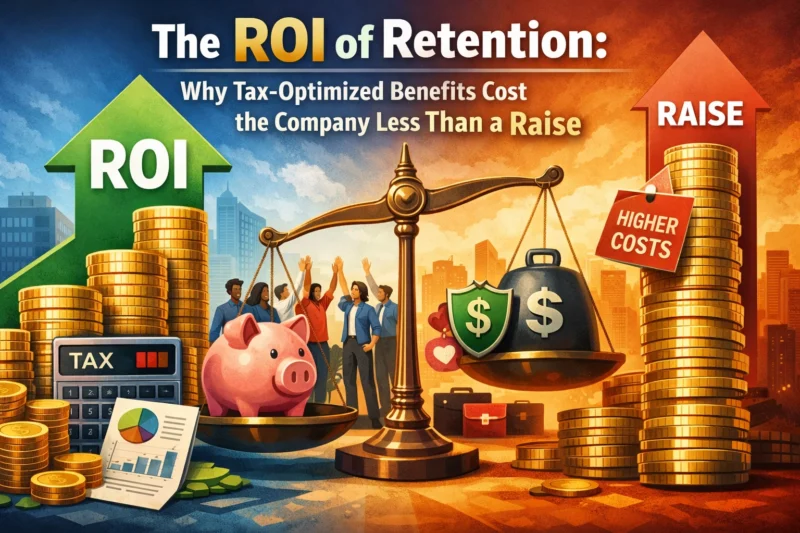
In business, it is an undeniable truth that it isn’t what you make: it’s what you keep. This principle applies to your personal wealth, your company’s bottom line, and, perhaps most importantly, your key employees’ take-home pay. Every business owner has felt the sting of the "Retention Hamster Wheel." You have a superstar: someone who knows your systems, your clients, and where the bodies are buried. They come to you with a job offer from a competitor for 15% more than their current salary. You want to keep them, so you match it. But here is the problem: to give that employee a $20,000 raise, it actually costs your company significantly more than $20,000, and the employee sees significantly less than $20,000 after the IRS takes its cut. Are you simply funding the government’s coffers while trying to save your own culture? There is a better way.


The Friction of the Traditional Raise


When you increase a key executive’s salary, you are choosing the least tax-efficient way to move capital from the business to the individual. First, the company pays payroll taxes on that increase. Then, the employee pays ordinary income tax: often at the highest marginal rate: plus state and local taxes. By the time that "raise" hits their bank account, it has been eroded by 40% or more. Worse yet, a raise offers very little in the way of "Golden Handcuffs." Once a salary is increased, it becomes the new baseline. It doesn’t necessarily incentivize the employee to stay for the next five or ten years; it just makes them more expensive today. What if you could provide a benefit that feels more valuable to the employee, costs the company less in the long run, and creates a powerful incentive for them to stay until retirement? Financial blueprint for NQDC and Phantom Stock plan design


Enter Tax-Optimized Executive Benefits


At Schiff Executive Benefits, we focus on moving away from "tax-heavy" compensation and toward "tax-optimized" wealth building. By using specialized structures, we can bypass the limitations of traditional 401(k) plans and create meaningful value for your inner circle.


1. Non-Qualified Deferred Compensation (NQDC)


Think of an NQDC plan as a "401(k) Mirror." For your highest earners, the standard IRS contribution limits are often a drop in the bucket. An NQDC plan allows them to defer a much larger portion of their compensation, pre-tax, into a plan where it can grow tax-deferred. For the company, this creates a liability on the books, but one that is tied to the employee’s continued service.


2. Phantom Stock Plans


You want your key people to think like owners, but you don't necessarily want to dilute your actual equity. Phantom Stock mimics the appreciation of your company's value. When the company hits certain milestones or the employee reaches a specific tenure, they receive a cash bonus equivalent to the "value" of the shares. It aligns their interests with yours without the legal headaches of actual stock transfers.


3. Split-Dollar Life Insurance


This is perhaps the ultimate "win-win." The company pays the premiums on a life insurance policy for the executive. The executive gets a massive death benefit for their family and, eventually, access to tax-free cash flow from the policy’s cash value. The company, meanwhile, is eventually reimbursed for every cent it paid in premiums. Hourglass on luxury desk representing full cost recovery model for executive benefits


The Full Cost Recovery Model: The Business Owner’s Secret


The biggest difference between a "raise" and a "benefit" is what happens to the money after it leaves your hand. When you pay a salary, that money is gone forever. It is a pure expense. However, many of the strategies we design for our clients utilize the Full Cost Recovery model. By using Corporate Owned Life Insurance (COLI) as the informal funding vehicle for these benefits, the business can actually recover the cost of the program. Here is how it works:


  1. The company establishes an executive benefit (like an NQDC).

  2. The company purchases a life insurance policy on the executive to fund that future liability.

  3. As the policy grows, it provides the liquidity to pay the benefit.

  4. Upon the executive’s eventual passing (even long after retirement), the death benefit is paid to the company tax-free, reimbursing the business for the premiums paid and the benefits distributed.


In this scenario, the "cost" of the benefit isn’t the cash outlay: it’s the opportunity cost of the money. Compare that to a salary increase, which is an absolute loss of capital. When you look at the math, tax-optimized benefits don't just cost less; they can eventually become cost-neutral.


The ROI of Peace of Mind


Financial stress is a silent killer of productivity. Research suggests that financial anxiety costs American employers billions annually in lost focus and engagement. By providing your key talent with a structured path to wealth that isn't eroded by immediate taxation, you aren't just giving them money: you're giving them security. When an executive knows their retirement is secure and their family is protected through a customized executive benefit solution, they aren't looking for the exit. They are looking at how to help you grow the business. Does your current compensation strategy feel like a sieve, where capital is constantly leaking out to the IRS? Are you worried that your best people are one headhunter call away from leaving? Executive expertise in tax-optimized benefit strategies for retention


Building Your Perfect Plan®


We live in an era of economic uncertainty. With national debt rising and tax laws in a constant state of flux, relying on "the way we’ve always done it" is a recipe for stagnation. You need a team of advisors who understand the technical nuances of the tax code and the human nuances of your business culture. At Schiff Executive Benefits, we don't believe in off-the-shelf products. We believe in The Perfect Plan®: a methodology designed to align your corporate goals with the personal financial needs of your leadership team. Whether you are looking to protect your business through a modernized buy/sell agreement or you want to ensure your top performers never have a reason to leave, the strategy must be tax-efficient to be effective.


Take the Next Step


You’ve worked too hard to build your business to let tax inefficiency and talent turnover hold you back. It’s time to stop overpaying for "raises" that don't produce a return and start investing in benefits that build long-term value. Let’s look at the math together. We can help you analyze your current payroll and benefit structure to see where the leaks are and how to plug them. Schedule a consultation with Matt Schiff via our Calendly link here to discuss how we can implement a tax-optimized retention strategy for your company. Grab a coffee, sit back, and let’s talk about how to protect your legacy and your people. The Perfect Plan Podcast banner with Matthew E. Schiff Want to hear more about these strategies in action? Check out The Perfect Plan® Podcast where we dive deep into the technical and emotional aspects of executive wealth and business succession.


Learn more: See why a Section 162 Bonus Plan can cost the company less than a raise.