Hi, How Can We Help You?
  • Planning for all of life's "What Ifs".

Author Archives: Matt Schiff


It is often said that the view from the top is the best, but nobody mentions how thin the air gets once you arrive. In the world of executive leadership, there is a universal, undeniable truth: success usually comes with a heavy price. We spend decades climbing the ladder, honing our craft, and building our reputations, only to find that when we reach the peak of our earning power, our personal lives become more complex and fragile than ever before.


Welcome to the "Executive Sandwich."


If you are between the ages of 40 and 55, you are likely living this reality right now. You are at the height of your professional influence. You are the "top talent" your company wants to retain. You are making the big decisions. But at home, you are squeezed. You are simultaneously supporting children who are heading toward expensive university years and aging parents who require increasing levels of care and financial support.


This decade: the one where you should be "winning": is often the most financially and emotionally risky period for your family. At Schiff Executive Benefits, we call this the critical convergence. It’s the moment where your professional legacy and your personal security either align or collide.


The Career Peak Becomes a Breaking Point


Research shows that the "sandwich generation": those supporting both generations: is facing a structural crisis. This isn't just about being tired after a long day of meetings; it’s about a fundamental destabilization of the workforce. For executives, particularly women in leadership who represent 46% of the highest burnout category, the timing couldn't be worse.


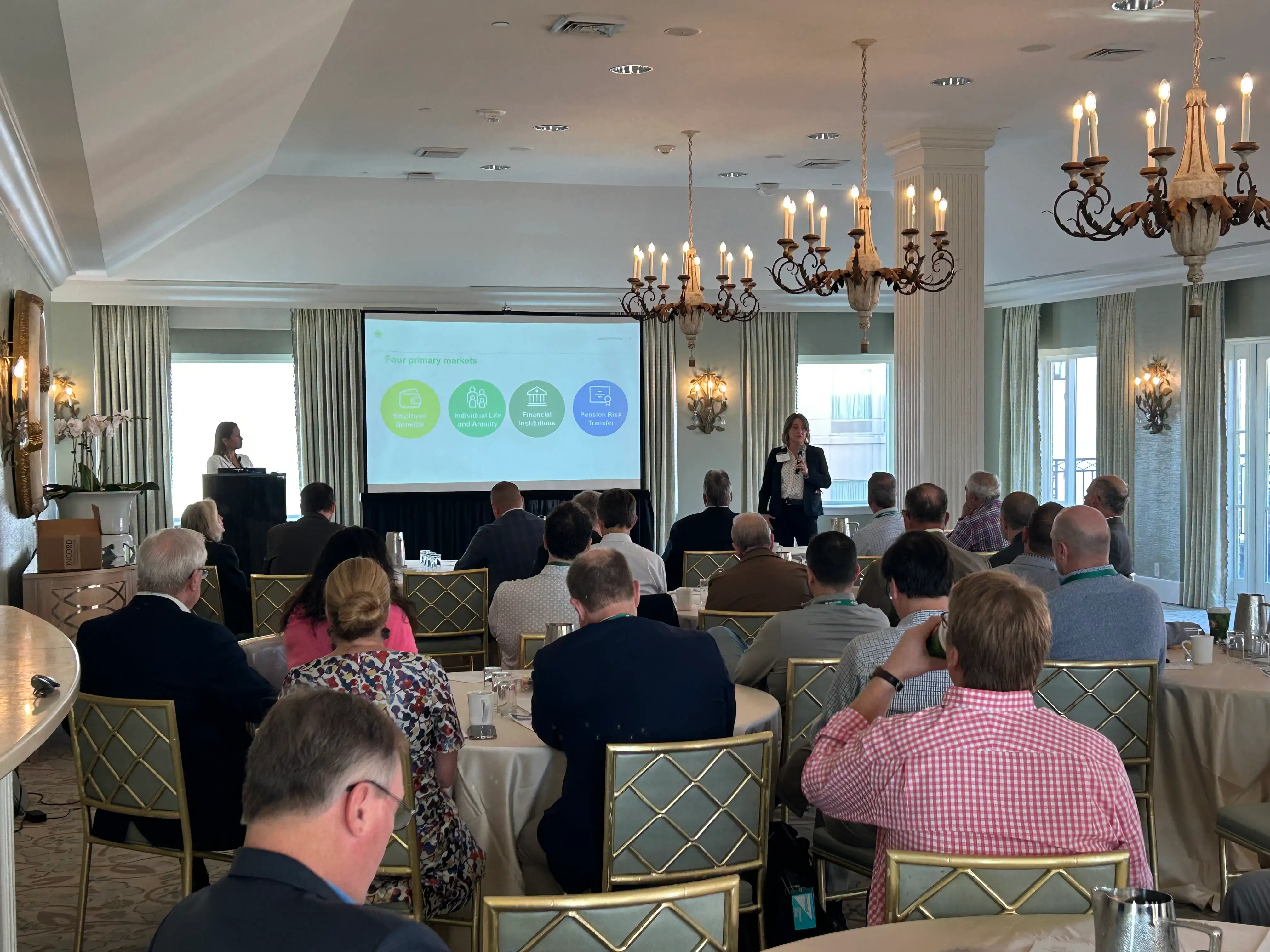
Matt Schiff speaking at a recent NQDC industry panel


When you are the linchpin of an organization, your "What Ifs" aren't just personal anxieties: they are corporate liabilities. If the strain of the "sandwich" leads to burnout or an early exit, the ripple effects are felt across the entire company. We often ask our clients: What happens if your top talent leaves? Not because they want a better paycheck elsewhere, but because they simply can no longer balance the weight of their dual caregiving roles with the demands of the C-suite.


The Dual Financial Squeeze: High Earnings, Higher Liabilities


It’s a paradox. You’ve never made more money, yet you’ve never felt more "squeezed." Nearly one in four adults in this age bracket provides financial support to both children and parents simultaneously.


Think about the math for a moment. You are funding:


  • High-end lifestyle costs consistent with your executive status.

  • Tuition and housing for college-aged children.

  • Unpredictable and substantial healthcare expenses for aging parents.

  • Your own retirement "catch-up" contributions.


This is where the "The 5 What-Ifs" that keep business owners and executives awake at night become painfully relevant. Specifically, the fear of running out of retirement money. When you are spending $1,000 more per month on caregiving-related healthcare than your peers, that’s money coming directly out of your future freedom.


How do you protect your family’s lifestyle while ensuring your own retirement doesn't become the casualty of your parents’ longevity or your children’s education?


Executive planning for retirement while supporting children and aging parents in a home office.


Restoring Alignment and Retention


At Schiff Executive Benefits, our mission is "Restoring Alignment and Retention." We believe that the solution to the Executive Sandwich isn't just "working harder" or "saving more" in a standard 401(k). For the high-earning executive, standard plans often fall short due to contribution limits and tax inefficiencies.


This is where The 401(k) cap problem becomes a major hurdle. If you are limited in what you can put away, you are essentially being penalized for your success. To solve this, we look toward more sophisticated structures like Corporate Owned Life Insurance (COLI) and Non-Qualified Deferred Compensation (NQDC) plans.


The Power of the Mirror Plan®


To bridge the gap between your current peak earnings and your future needs, we often implement what we call a "Mirror Plan®." This allows executives to defer a much larger portion of their income, often with company matching, to ensure that the "Sandwich" years don't deplete their long-term wealth.


By using COLI strategies, a company can informally fund these promises to their key people. It creates a win-win: the executive gets the security they need to stay focused on the business, and the company ensures their most valuable human capital stays put.


The "What Ifs" That Matter Most Right Now


When we sit down with executives to design The Perfect Plan®, we walk through the specific scenarios that keep them up at 2:00 AM. In the context of the "Executive Sandwich," three of our core "What If" questions take center stage:


  1. Running out of retirement money: Are you spending your "peak wealth" on everyone but yourself?

  2. Top talent leaving: If you are a business owner, are your key managers so stressed by their "sandwich" responsibilities that they are looking for the exit?

  3. Senior exec retirement/replacement cost: Can the business afford the loss of institutional knowledge if someone has to leave to care for a parent?


These aren't just theoretical problems. They are the reality of the 2026 workforce. Organizations that ignore the personal pressures on their leaders are organizations that are destined to lose them.


Professionals discussing executive benefits and long-term planning


Building Your Way Out of the Squeeze


The goal isn't just to survive this decade; it’s to thrive through it. You’ve spent your life building something of value. Whether you are looking at Split Dollar arrangements or exploring how NQDC Industry Updates might provide new tax-advantaged ways to save, the focus must be on creating a moat around your family’s future.


We often see executives who are so busy managing everyone else's lives: their CEO’s expectations, their children’s schedules, their parents’ doctor appointments: that they forget to manage their own financial security. They are the "Chief Caregiver" of a multi-generational enterprise, but they have no "Perfect Plan®" for themselves.


Ask yourself these questions:


  • If your income stopped today because you had to become a full-time caregiver, how long would your current lifestyle last?

  • Does your current executive benefits package actually account for the reality of your "sandwich" decade?

  • Is your business prepared to handle the "What If" of your absence?


A Consultative Path Forward


At Schiff Executive Benefits, we don't just sell products; we provide the blueprint for a professional legacy. We understand that you aren't just a "resource" to your company; you are the foundation of your family.


As we celebrate our 20th Anniversary, we’ve seen hundreds of executives navigate this riskiest decade. We’ve seen the stress that comes from uncertainty, and we’ve seen the peace that comes from a structured, strategic approach to executive benefits.


The pressure of the "Executive Sandwich" is real, but it doesn't have to be defining. By identifying the specific anxieties: tax burdens, retirement gaps, and the "What Ifs" of succession: we can position your executive benefits as the ultimate security guarantee.


Come Join Us


You don't have to carry the weight of the sandwich alone. Whether you are a business owner looking to protect your leadership team or an executive looking to protect your own future, it’s time to move from "uncertainty" to "The Perfect Plan®."


Sit back, grab your coffee, and let’s look at the numbers. Let’s talk about how we can restore alignment in your career and your life. Your peak years should be the most rewarding, not the most precarious.


If you’re ready to start the conversation, reach out to us today. Let’s build your legacy, your way.


It is a universal, undeniable truth that the roles we play in our families eventually come full circle. We spend the first quarter of our lives being cared for by our parents, and if we are fortunate enough to reach our professional peak, we often spend the third quarter returning the favor.


For many high-achieving leaders, this isn’t just a personal transition; it’s a strategic collision. You are currently in what I call the Executive Sandwich.


In Part 1: The Executive Sandwich: Why Your Career Peak is Often Your Family’s Riskiest Decade, we explored how the height of your earning years is simultaneously the height of your financial vulnerability. In Part 2: Beyond the 401(k) Cap: Solving the Executive College Funding Gap, we looked at the pressure of launching the next generation. Today, we face the most emotionally taxing and financially unpredictable layer of the sandwich: caring for aging parents.


How do you provide the dignity and care your parents deserve without siphoning away the wealth you’ve spent decades building? How do you manage a C-suite schedule when a midnight phone call changes everything?


At Schiff Executive Benefits, we believe in Restoring Alignment and Retention, and that includes the alignment of your personal peace of mind with your professional legacy.


The Hidden Cost of Longevity


We often talk about market risk or interest rate risk, but for the modern executive, the greatest "What If" is often Longevity Risk.


In our framework of the "5 What Ifs," we frequently ask: What if you run out of money in retirement? But long before you face that question for yourself, you may face it for your parents. Modern medicine is a miracle, but it has created a financial paradox: our parents are living longer, but not necessarily healthier.


Matt Schiff - Professional Smile Blue Suit


The cost of long-term care: whether home health aides, assisted living, or skilled nursing: is rising at a rate that far outpaces general inflation. For an executive, the cost isn't just the invoice from the facility. It is the "opportunity cost" of your time and the potential "leakage" from your investment portfolio to cover gaps in their care.


Are you prepared to liquidate a portion of your estate to cover a $15,000-a-month nursing bill that could last five or ten years? Most executives aren't. They assume they can "cash flow" it, only to realize that doing so compromises their own retirement goals and the legacy they intended to leave for their children.


The Emotional Vice


Caregiving is a full-time job. When you are managing a global team or overseeing a complex merger, the emotional weight of a parent’s declining health can be paralyzing. You find yourself in a consultative dialogue with doctors, siblings, and care coordinators, all while trying to maintain the "authoritative presence" required in the boardroom.


I recently spoke with a client: let's call him David: a CEO who was in the middle of a major acquisition. His mother suffered a stroke. Suddenly, David wasn't just managing a billion-dollar deal; he was navigating Medicare gaps and searching for a memory care facility that didn't feel like a hospital. The stress didn't just affect his sleep; it affected his decision-making.


David’s story is not unique. It is the reality of the sandwich generation. The question is: do you have a plan that protects your focus as much as it protects your capital?


Executive reflecting on aging parents photo, highlighting the financial strain of the sandwich generation.


The Strategy: Shifting the Burden to the Business


One of the most overlooked solutions in executive wealth planning is the use of Long-Term Care (LTC) riders and business-paid policies.


Many executives assume that LTC is an individual expense, paid with after-tax dollars. However, for business owners and key executives, there is a much more efficient way.


1. The Business-Paid Deductible Policy


If structured correctly through a corporation or partnership, the business can pay the premiums for a Long-Term Care policy. In many cases, these premiums are tax-deductible to the business and are not considered taxable income to the executive. This is a powerful tool for attracting and retaining top talent who are feeling the squeeze of the sandwich generation.


2. COLI with LTC Riders


Corporate Owned Life Insurance (COLI) is a cornerstone of The Perfect Plan®. By adding a Long-Term Care rider to a COLI or specialized life insurance policy, you create a "multipurpose" asset. If you (or your parents, depending on the structure) need the care, the death benefit is accelerated to pay for those expenses tax-free. If the care is never needed, the death benefit remains intact for your heirs.


3. Protecting the Portfolio


By using an insurance-based solution, you create a "firewall" around your investments. Instead of selling stocks in a down market to pay for a home health aide, you leverage the insurance company's capital. This ensures that your personal legacy: your "dream value": remains untouched.


Longevity Risk and The Perfect Plan®


When we design The Perfect Plan®, we don't just look at your balance sheet; we look at your life’s timeline. We integrate these "What If" scenarios into a cohesive strategy.


If you are a business owner, providing LTC benefits to your senior executive team is one of the most empathetic and strategic moves you can make. It rewards your best people by solving a problem that keeps them up at night, ensuring they stay focused on the business because their home life is secure.


Modern Meeting Work Scene


Starting the Conversation: A Consultative Approach


Caring for aging parents requires more than financial products; it requires a team of advisors. You need to have honest, often difficult conversations today to avoid a crisis tomorrow.


Here are three steps you can take right now:


  • Audit Your Parents' Documents: Do they have a clear Power of Attorney and a Healthcare Proxy? Without these, your ability to manage their care will be legally hamstrung.

  • Evaluate the "Care Gap": Look at their current assets versus the cost of care in their area. Where is the shortfall?

  • Explore Hybrid Solutions: Look into life insurance policies with LTC riders. These are often more palatable than "use-it-or-lose-it" traditional LTC insurance because they guarantee a payout in one form or another.


The Point of No Return


The window of opportunity to put these protections in place is often smaller than we realize. Once a diagnosis is made or a health event occurs, many of the most efficient financial strategies are off the table.


Waiting is the greatest risk to your legacy. By acting now, you aren't just buying insurance; you are buying the ability to be a daughter or a son again, rather than just a care manager. You are buying the peace of mind to sit back, grab your coffee, and focus on the people who matter most.


At Schiff Executive Benefits, we specialize in navigating these complexities. Whether it’s through Trust Owned Life Insurance (TOLI) to manage estate taxes or building a robust executive benefit suite, our mission is to ensure that your success isn't eroded by the natural cycles of life.


Conclusion: Join the Conversation


The Executive Sandwich doesn't have to be a source of constant anxiety. With the right structure, it can be a season of your life where you demonstrate your values through your actions and your foresight.


If you’re feeling the pressure of the sandwich generation and want to see how The Perfect Plan® can protect your legacy while providing for your parents, I invite you to reach out. Let’s look at your specific "What Ifs" and build a plan that restores alignment to your world.


Come join us at our next NQDC Panel or listen to The Perfect Plan® Podcast for more insights into securing your professional and personal future.


Sit back, grab your coffee, and let’s start building it your way.


: Matt Schiff
President, Schiff Executive Benefits


To explore more about our strategies for executives and corporations, visit our services page.


They say that a bird in the hand is worth two in the bush, but when you are standing at the threshold of retirement, you start wondering exactly which bush you should reach into first. For decades, you’ve been focused on one thing: accumulation. You’ve watched the numbers grow, checked your statements, and contributed to your 401(k) with the discipline of a marathon runner.


But then, the finish line appears. Suddenly, the game changes. You aren't just putting money away anymore; you have to figure out how to take it out without the tax man taking a massive bite or, even worse, running out of it before you run out of breath.


At Schiff Executive Benefits, we often talk about the five core "What If" questions that keep executives and business owners up at night. The big one we’re tackling today is the fifth: What if you run out of retirement money?


Solving that "What If" isn't just about how much you’ve saved; it’s about the design of your retirement paycheck.


The Story of Ruth: A Study in Transition


To make this real, let’s look at a case study we recently handled. Let’s call her Ruth. Ruth is a single nurse who spent her entire career caring for others. She’s been incredibly diligent, building up a solid nest egg. But as she approached her mid-60s, she felt a sense of paralysis.


Ruth had several different "buckets" of money, but no clear map on how to spend them. She was worried about whether she should take Social Security now or later. She was worried about her traditional IRA vs. her Roth. And as a single person, she was particularly concerned about the long-term: who would care for her if her health declined?


Ruth’s situation is common. Whether you are a high-level executive or a dedicated professional like Ruth, the transition from "saver" to "spender" is a psychological and mathematical hurdle. We needed to create The Perfect Plan® for her, one that turned her pile of assets into a predictable, sustainable stream of income.


Matt Schiff - Professional Smile


Understanding Your Tax Buckets


Before you can decide where your income should come from first, you have to categorize your assets. Not all dollars are created equal. In the eyes of the IRS, they live in very different neighborhoods:


  • The Pre-Tax Bucket (Traditional IRA/401(k)): This is where most people have the bulk of their savings. It’s "forever taxed" money. Every dollar you take out is taxed as ordinary income.

  • The Tax-Free Bucket (Roth IRA/401(k)): This is the holy grail. You’ve already paid taxes on this money, so it grows and comes out tax-free.

  • The Non-Qualified Bucket (Brokerage Accounts): This is money sitting in stocks, bonds, or mutual funds outside of a retirement account. You only pay taxes on the gains (capital gains), not the "cost basis" (the money you originally put in).

  • The Cash Bucket (Bank Accounts/CDs): Highly liquid, but the interest is taxed annually. In a low-interest environment, this bucket often loses purchasing power to inflation.


The goal of Retirement Paycheck Design is to coordinate these buckets so you aren't paying more to Uncle Sam than is absolutely necessary.


The Social Security Tug-of-War: 62 vs. 67 vs. 70


One of the first questions Ruth asked was, "When should I start my Social Security?"


There is a lot of "conventional wisdom" out there, but "conventional" rarely means "perfect." Here is how we look at the Social Security timeline:


Age 62: The Liquidity Play


Taking Social Security at 62 gives you immediate cash flow. For some, this is a "protection" move. If you have concerns about your health or you want to preserve your investment principal during a market downturn, taking it early might make sense. However, you are locking in a permanently reduced benefit, roughly 30% less than your full retirement age amount.


Age 67: The Full Retirement Age (FRA)


For most people retiring today, this is the "baseline." You get 100% of your promised benefit.


Age 70: The Max Benefit


If you wait until 70, your benefit increases by about 8% for every year you delay past your FRA. This is a massive "guaranteed" return that is hard to find anywhere else. However, there’s a catch: to wait until 70, you have to live off your other assets for those intervening years. You are essentially "spending down" your IRAs or brokerage accounts to "buy" a higher Social Security check later.


For Ruth, we had to weigh the math. Does she drain her liquid investments now to get a bigger check at 70? Or does she take the check now to keep her investments growing? There is no one-size-fits-all answer, which is why a customized design is essential.


Executive desk with financial planning documents for retirement income and Social Security strategy.


Beware the Age 73 "Tax Bomb"


There is a ticking clock in your retirement plan called the Required Minimum Distribution (RMD). Currently, once you hit age 73 (and moving to 75 in the future), the government forces you to take money out of your pre-tax accounts.


If you’ve been a great saver and your IRA has grown to $2 million or $3 million, those mandatory withdrawals can be huge. They can push you into a higher tax bracket, increase the cost of your Medicare premiums, and make your Social Security benefits more taxable.


We call this the RMD Tax Bomb. One of the primary goals of our design process is to "defuse" this bomb by strategically taking distributions before you are forced to, or by utilizing Roth conversions during lower-income years.


Managing the Silent Killer: Inflation


Ruth was worried about inflation, and rightly so. But we look at inflation through two different lenses: fixed costs and rising lifestyle costs.


  1. Fixed Costs: If Ruth has a mortgage with a fixed 3% interest rate, her "inflation" on that expense is effectively 0%. The payment stays the same while the value of the dollar drops.

  2. Rising Costs: Healthcare and general lifestyle expenses (travel, dining, gas) do not stay fixed. Healthcare inflation, in particular, often runs much higher than the standard Consumer Price Index (CPI).


In Ruth’s design, we ensured that her guaranteed income sources (Social Security and potential annuities) covered her fixed "must-pay" bills, while her investment portfolio was positioned to provide the "inflation-adjusted" raises she would need for her lifestyle over the next 20 to 30 years.


The Single Professional’s Risk: Long-Term Care


As a single nurse, Ruth knew better than anyone that "hope is not a strategy" when it comes to aging. Without a spouse to provide "informal" care at home, the financial burden of a long-term care event is much higher for singles.


We incorporated a strategy that looked at her assets not just as an income source, but as a reserve for care. By Restoring Alignment and Retention of her capital, we could ensure that if she ever needed help, she wouldn't have to rely on the state or be a burden on her extended family.


Modern Meeting Work Scene


Designing Your Perfect Plan®


Retirement shouldn't feel like a series of stressful guesses. It should feel like a well-earned victory lap. Whether you are concerned about your own retirement or you are an employer looking at how to attract, retain, and reward the top talent in your firm by helping them solve these same problems, the framework remains the same.


We help executives and professionals navigate the complexities of:


If you are wondering which bucket you should dip into first, don't guess. The difference between an accidental retirement and a designed one can be hundreds of thousands of dollars in taxes saved and a lifetime of peace of mind.


At Schiff Executive Benefits, we specialize in helping you find that clarity. We invite you to explore our services and video library to see how we’ve helped others in your shoes.


Ready to talk about your specific situation?


Sit back, grab your coffee, and let’s start a conversation. We can help you design a paycheck that lasts as long as you do.


Ready to talk? Click here to schedule your initial meeting.


Restoring Alignment and Retention.


Disclaimer: This blog post is for educational purposes only and does not constitute financial, legal, or tax advice. Please consult with your professional advisors before making any significant financial decisions.


A parent’s greatest ambition is to provide a better life for their children than the one they had. It is a universal, undeniable truth that spans generations and tax brackets. We work late, we climb the corporate ladder, and we navigate high-stakes environments, often with the singular goal of ensuring our children have every opportunity: starting with a world-class education.


But for the modern executive, that ambition often runs head-first into a "math problem" that most people don’t even realize exists.


In Part 1 of our "Sandwich Generation" series, we looked at the emotional and financial toll of caring for aging parents while raising children. Today, in Part 2, we are getting tactical. We are looking upward at the looming cost of higher education and how the current legislative environment actually penalizes the highest earners in the room.


If you are an executive making $450,000 or more, you aren't just facing higher tuition bills; you are facing a structural disadvantage in how you are allowed to save for them.


The 401(k) Math Problem: A 10% Disadvantage


Most people view the 401(k) as the gold standard of retirement and savings. For the average American worker, it is. If an employee earns $150,000 a year and contributes the 2026 limit of $24,500 (plus any catch-up contributions), they are shielding roughly 16% of their income from taxes and growing it for the future.


Now, let’s look at the C-suite.


If you are an executive earning $460,000, that same $24,500 contribution represents only about 5% of your income. While your peers are saving 15% to 20% of their earnings in a tax-advantaged environment, you are capped at 5%. The remaining 95% of your income is subject to the highest marginal tax rates.


This creates a massive "Savings Gap." When the time comes to write a check to Tulane, Harvard, or Michigan, most executives are forced to do so with "expensive" dollars: money that has already been taxed at 37% or higher.


Furthermore, if you try to tap into your 401(k) to cover a tuition spike, you aren't just hit with the tax; you’re hit with a 10% early withdrawal penalty if you are under age 59½. For the Sandwich Generation executive, whose children hit college age while they are in their peak earning years (usually their 40s or 50s), the 401(k) is a locked box that is too small to begin with.


An executive reviewing university brochures while considering college funding strategies beyond the 401k cap.


The 401(k) Mirror Plan: A Pre-Tax Tuition Solution


At Schiff Executive Benefits, we focus on Restoring Alignment and Retention. One of the most powerful ways to do that is through a Nonqualified Deferred Compensation (NQDC) plan, often referred to as a "Mirror Plan."


A Mirror Plan allows executives to defer a much larger percentage of their compensation: sometimes up to 80% or 90%: into a tax-deferred account. Unlike a 401(k), there are no IRS-mandated contribution caps on NQDC plans. If you need to save $100,000 a year for your children’s education, a Mirror Plan allows you to do that with pre-tax dollars.


But the real "magic" for college funding lies in the Specific Date Withdrawal feature.


Navigating 409A: The Specific Date Strategy


Under Internal Revenue Code Section 409A, NQDC plans allow participants to schedule distributions for specific times. Unlike a 401(k), where you generally have to wait until retirement or 59½ to avoid penalties, an NQDC plan can be structured to pay out while you are still working.


Imagine your daughter is 10 years old. You know that in eight years, you will need to start paying tuition. Under a Mirror Plan, you can elect to defer a portion of your salary or bonus today and schedule that distribution to hit your bank account in exactly eight years.


The benefits are twofold:


  1. Pre-Tax Funding: You are funding the "College Fund" with gross dollars, not net dollars. This significantly increases your "buying power" for tuition.

  2. No 10% Penalty: Because these plans are designed for flexibility, you avoid the early withdrawal penalties associated with traditional retirement accounts.


It is a tactical, solution-oriented way to ensure that your "Sandwich" years don't result in you running out of retirement money: one of the core "What Ifs" we help business owners and executives solve.


Matt Schiff Speaking NQDC


Why Companies Offer the "College Funding" Benefit


You might ask, "Why would my company set this up for me?"


The answer is simple: Executive Retention.


In today’s market, losing a top-tier executive costs a company significantly more than just their salary. It costs institutional knowledge, client relationships, and momentum. By offering a Mirror Plan, a company provides a "Golden Handshake" that solves the executive's most pressing personal anxiety: paying for their children’s future without sacrificing their own retirement.


When a company helps an executive solve the "401(k) Math Problem," they aren't just providing a benefit; they are building a bridge of loyalty. We call this The 401(k) Cap Problem: How a Mirror Plan Rewards Your Best People.


Integrating the Mirror Plan into The Perfect Plan®


At Schiff Executive Benefits, we don't look at these tools in a vacuum. A Mirror Plan is one piece of a larger puzzle we call The Perfect Plan®.


Whether we are discussing Corporate Owned Life Insurance (COLI) to informally fund these obligations or structured buy/sell arrangements, the goal is always the same: clarity.


We often see executives who are "over-funded" in their 401(k) but "under-saved" for their specific life goals. They have the assets, but they don't have the liquidity or the tax efficiency they need when the tuition bill arrives.


By utilizing a Mirror Plan, you can keep your 401(k) on track for your 70s while using your deferred compensation to handle your 50s.


Executive couple meeting with a consultant to discuss a Mirror Plan for retirement and education savings.


The Professional’s Legacy


We often talk about the "5 What Ifs" that keep business owners awake at night. When it comes to the Sandwich Generation, the fear of Senior exec retirement/replacement cost efficiency and running out of retirement money are top of mind.


But there is a deeper, more personal "What If": What if I can't provide the same level of education for my kids that my parents provided for me?


Economic shifts and rising tuition costs have made the "standard" path: saving in a 529 and maxing out a 401(k): insufficient for high earners. You need a strategy that reflects your income level. You need a strategy that recognizes that as an executive, the rules of the game are different for you.


Tactical Summary for the Executive


If you are looking at your 401(k) and realizing it won't cover the gap, consider these steps:


  • Audit your "Savings Gap": Calculate what percentage of your total income is actually protected by tax-advantaged accounts. If it's less than 10%, you have a cap problem.

  • Review the Plan Documents: Does your company offer an NQDC or Mirror Plan? If so, does it allow for "In-Service" or "Specific Date" distributions?

  • Coordinate with your Team: Ensure your tax advisor and financial consultant are looking at your deferrals as part of a holistic education funding strategy, not just a retirement strategy.


Join the Conversation


Solving the college funding gap is about more than just numbers; it’s about peace of mind. It’s about knowing that while you are leading your company toward its goals, your family’s future is being secured with the same level of executive precision.


If you are a business owner looking to reward your top talent, or an executive trying to navigate the "Sandwich" years, we invite you to sit back, grab your coffee, and explore how we can help.


Check out our latest insights on The Perfect Plan® Podcast or reach out to our team to discuss how a Mirror Plan can work for your organization.


Stay tuned for Part 3 of our series, where we will dive into the "Downstage" of the Sandwich: Caring for Aging Parents without Derailing Your Corporate Legacy.


Restoring Alignment and Retention


A parent’s greatest ambition is to provide a better life for their children than the one they had. It is a universal, undeniable truth that spans generations and tax brackets. We work late, we climb the corporate ladder, and we navigate high-stakes environments, often with the singular goal of ensuring our children have every opportunity: starting with a world-class education.


But for the modern executive, that ambition often runs head-first into a "math problem" that most people don’t even realize exists.


In Part 1 of our "Sandwich Generation" series, we looked at the emotional and financial toll of caring for aging parents while raising children. Today, in Part 2, we are getting tactical. We are looking upward at the looming cost of higher education and how the current legislative environment actually penalizes the highest earners in the room.


If you are an executive making $450,000 or more, you aren't just facing higher tuition bills; you are facing a structural disadvantage in how you are allowed to save for them.


The 401(k) Math Problem: A 10% Disadvantage


Most people view the 401(k) as the gold standard of retirement and savings. For the average American worker, it is. If an employee earns $150,000 a year and contributes the 2026 limit of $24,500 (plus any catch-up contributions), they are shielding roughly 16% of their income from taxes and growing it for the future.


Now, let’s look at the C-suite.


If you are an executive earning $460,000, that same $24,500 contribution represents only about 5% of your income. While your peers are saving 15% to 20% of their earnings in a tax-advantaged environment, you are capped at 5%. The remaining 95% of your income is subject to the highest marginal tax rates.


This creates a massive "Savings Gap." When the time comes to write a check to Tulane, Harvard, or Michigan, most executives are forced to do so with "expensive" dollars: money that has already been taxed at 37% or higher.


Furthermore, if you try to tap into your 401(k) to cover a tuition spike, you aren't just hit with the tax; you’re hit with a 10% early withdrawal penalty if you are under age 59½. For the Sandwich Generation executive, whose children hit college age while they are in their peak earning years (usually their 40s or 50s), the 401(k) is a locked box that is too small to begin with.


An executive reviewing university brochures while considering college funding strategies beyond the 401k cap.


The 401(k) Mirror Plan: A Pre-Tax Tuition Solution


At Schiff Executive Benefits, we focus on Restoring Alignment and Retention. One of the most powerful ways to do that is through a Nonqualified Deferred Compensation (NQDC) plan, often referred to as a "Mirror Plan."


A Mirror Plan allows executives to defer a much larger percentage of their compensation: sometimes up to 80% or 90%: into a tax-deferred account. Unlike a 401(k), there are no IRS-mandated contribution caps on NQDC plans. If you need to save $100,000 a year for your children’s education, a Mirror Plan allows you to do that with pre-tax dollars.


But the real "magic" for college funding lies in the Specific Date Withdrawal feature.


Navigating 409A: The Specific Date Strategy


Under Internal Revenue Code Section 409A, NQDC plans allow participants to schedule distributions for specific times. Unlike a 401(k), where you generally have to wait until retirement or 59½ to avoid penalties, an NQDC plan can be structured to pay out while you are still working.


Imagine your daughter is 10 years old. You know that in eight years, you will need to start paying tuition. Under a Mirror Plan, you can elect to defer a portion of your salary or bonus today and schedule that distribution to hit your bank account in exactly eight years.


The benefits are twofold:


  1. Pre-Tax Funding: You are funding the "College Fund" with gross dollars, not net dollars. This significantly increases your "buying power" for tuition.

  2. No 10% Penalty: Because these plans are designed for flexibility, you avoid the early withdrawal penalties associated with traditional retirement accounts.


It is a tactical, solution-oriented way to ensure that your "Sandwich" years don't result in you running out of retirement money: one of the core "What Ifs" we help business owners and executives solve.


Matt Schiff Speaking NQDC


Why Companies Offer the "College Funding" Benefit


You might ask, "Why would my company set this up for me?"


The answer is simple: Executive Retention.


In today’s market, losing a top-tier executive costs a company significantly more than just their salary. It costs institutional knowledge, client relationships, and momentum. By offering a Mirror Plan, a company provides a "Golden Handshake" that solves the executive's most pressing personal anxiety: paying for their children’s future without sacrificing their own retirement.


When a company helps an executive solve the "401(k) Math Problem," they aren't just providing a benefit; they are building a bridge of loyalty. We call this The 401(k) Cap Problem: How a Mirror Plan Rewards Your Best People.


Integrating the Mirror Plan into The Perfect Plan®


At Schiff Executive Benefits, we don't look at these tools in a vacuum. A Mirror Plan is one piece of a larger puzzle we call The Perfect Plan®.


Whether we are discussing Corporate Owned Life Insurance (COLI) to informally fund these obligations or structured buy/sell arrangements, the goal is always the same: clarity.


We often see executives who are "over-funded" in their 401(k) but "under-saved" for their specific life goals. They have the assets, but they don't have the liquidity or the tax efficiency they need when the tuition bill arrives.


By utilizing a Mirror Plan, you can keep your 401(k) on track for your 70s while using your deferred compensation to handle your 50s.


Executive couple meeting with a consultant to discuss a Mirror Plan for retirement and education savings.


The Professional’s Legacy


We often talk about the "5 What Ifs" that keep business owners awake at night. When it comes to the Sandwich Generation, the fear of Senior exec retirement/replacement cost efficiency and running out of retirement money are top of mind.


But there is a deeper, more personal "What If": What if I can't provide the same level of education for my kids that my parents provided for me?


Economic shifts and rising tuition costs have made the "standard" path: saving in a 529 and maxing out a 401(k): insufficient for high earners. You need a strategy that reflects your income level. You need a strategy that recognizes that as an executive, the rules of the game are different for you.


Tactical Summary for the Executive


If you are looking at your 401(k) and realizing it won't cover the gap, consider these steps:


  • Audit your "Savings Gap": Calculate what percentage of your total income is actually protected by tax-advantaged accounts. If it's less than 10%, you have a cap problem.

  • Review the Plan Documents: Does your company offer an NQDC or Mirror Plan? If so, does it allow for "In-Service" or "Specific Date" distributions?

  • Coordinate with your Team: Ensure your tax advisor and financial consultant are looking at your deferrals as part of a holistic education funding strategy, not just a retirement strategy.


Join the Conversation


Solving the college funding gap is about more than just numbers; it’s about peace of mind. It’s about knowing that while you are leading your company toward its goals, your family’s future is being secured with the same level of executive precision.


If you are a business owner looking to reward your top talent, or an executive trying to navigate the "Sandwich" years, we invite you to sit back, grab your coffee, and explore how we can help.


Check out our latest insights on The Perfect Plan® Podcast or reach out to our team to discuss how a Mirror Plan can work for your organization.


Stay tuned for Part 3 of our series, where we will dive into the "Downstage" of the Sandwich: Caring for Aging Parents without Derailing Your Corporate Legacy.


Official SEB Mini Logo


Restoring Alignment and Retention.


It is often said that the view from the top is the best, but nobody mentions how thin the air gets once you arrive. In the world of executive leadership, there is a universal, undeniable truth: success usually comes with a heavy price. We spend decades climbing the ladder, honing our craft, and building our reputations, only to find that when we reach the peak of our earning power, our personal lives become more complex and fragile than ever before.


Welcome to the "Executive Sandwich."


If you are between the ages of 40 and 55, you are likely living this reality right now. You are at the height of your professional influence. You are the "top talent" your company wants to retain. You are making the big decisions. But at home, you are squeezed. You are simultaneously supporting children who are heading toward expensive university years and aging parents who require increasing levels of care and financial support.


This decade: the one where you should be "winning": is often the most financially and emotionally risky period for your family. At Schiff Executive Benefits, we call this the critical convergence. It’s the moment where your professional legacy and your personal security either align or collide.


The Career Peak Becomes a Breaking Point


Research shows that the "sandwich generation": those supporting both generations: is facing a structural crisis. This isn't just about being tired after a long day of meetings; it’s about a fundamental destabilization of the workforce. For executives, particularly women in leadership who represent 46% of the highest burnout category, the timing couldn't be worse.


Matt Schiff speaking at a recent NQDC industry panel


When you are the linchpin of an organization, your "What Ifs" aren't just personal anxieties: they are corporate liabilities. If the strain of the "sandwich" leads to burnout or an early exit, the ripple effects are felt across the entire company. We often ask our clients: What happens if your top talent leaves? Not because they want a better paycheck elsewhere, but because they simply can no longer balance the weight of their dual caregiving roles with the demands of the C-suite.


The Dual Financial Squeeze: High Earnings, Higher Liabilities


It’s a paradox. You’ve never made more money, yet you’ve never felt more "squeezed." Nearly one in four adults in this age bracket provides financial support to both children and parents simultaneously.


Think about the math for a moment. You are funding:


  • High-end lifestyle costs consistent with your executive status.

  • Tuition and housing for college-aged children.

  • Unpredictable and substantial healthcare expenses for aging parents.

  • Your own retirement "catch-up" contributions.


This is where the "The 5 What-Ifs" that keep business owners and executives awake at night become painfully relevant. Specifically, the fear of running out of retirement money. When you are spending $1,000 more per month on caregiving-related healthcare than your peers, that’s money coming directly out of your future freedom.


How do you protect your family’s lifestyle while ensuring your own retirement doesn't become the casualty of your parents’ longevity or your children’s education?


Executive planning for retirement while supporting children and aging parents in a home office.


Restoring Alignment and Retention


At Schiff Executive Benefits, our mission is "Restoring Alignment and Retention." We believe that the solution to the Executive Sandwich isn't just "working harder" or "saving more" in a standard 401(k). For the high-earning executive, standard plans often fall short due to contribution limits and tax inefficiencies.


This is where The 401(k) cap problem becomes a major hurdle. If you are limited in what you can put away, you are essentially being penalized for your success. To solve this, we look toward more sophisticated structures like Corporate Owned Life Insurance (COLI) and Non-Qualified Deferred Compensation (NQDC) plans.


The Power of the Mirror Plan®


To bridge the gap between your current peak earnings and your future needs, we often implement what we call a "Mirror Plan®." This allows executives to defer a much larger portion of their income, often with company matching, to ensure that the "Sandwich" years don't deplete their long-term wealth.


By using COLI strategies, a company can informally fund these promises to their key people. It creates a win-win: the executive gets the security they need to stay focused on the business, and the company ensures their most valuable human capital stays put.


The "What Ifs" That Matter Most Right Now


When we sit down with executives to design The Perfect Plan®, we walk through the specific scenarios that keep them up at 2:00 AM. In the context of the "Executive Sandwich," three of our core "What If" questions take center stage:


  1. Running out of retirement money: Are you spending your "peak wealth" on everyone but yourself?

  2. Top talent leaving: If you are a business owner, are your key managers so stressed by their "sandwich" responsibilities that they are looking for the exit?

  3. Senior exec retirement/replacement cost: Can the business afford the loss of institutional knowledge if someone has to leave to care for a parent?


These aren't just theoretical problems. They are the reality of the 2026 workforce. Organizations that ignore the personal pressures on their leaders are organizations that are destined to lose them.


Professionals discussing executive benefits and long-term planning


Building Your Way Out of the Squeeze


The goal isn't just to survive this decade; it’s to thrive through it. You’ve spent your life building something of value. Whether you are looking at Split Dollar arrangements or exploring how NQDC Industry Updates might provide new tax-advantaged ways to save, the focus must be on creating a moat around your family’s future.


We often see executives who are so busy managing everyone else's lives: their CEO’s expectations, their children’s schedules, their parents’ doctor appointments: that they forget to manage their own financial security. They are the "Chief Caregiver" of a multi-generational enterprise, but they have no "Perfect Plan®" for themselves.


Ask yourself these questions:


  • If your income stopped today because you had to become a full-time caregiver, how long would your current lifestyle last?

  • Does your current executive benefits package actually account for the reality of your "sandwich" decade?

  • Is your business prepared to handle the "What If" of your absence?


A Consultative Path Forward


At Schiff Executive Benefits, we don't just sell products; we provide the blueprint for a professional legacy. We understand that you aren't just a "resource" to your company; you are the foundation of your family.


As we celebrate our 20th Anniversary, we’ve seen hundreds of executives navigate this riskiest decade. We’ve seen the stress that comes from uncertainty, and we’ve seen the peace that comes from a structured, strategic approach to executive benefits.


The pressure of the "Executive Sandwich" is real, but it doesn't have to be defining. By identifying the specific anxieties: tax burdens, retirement gaps, and the "What Ifs" of succession: we can position your executive benefits as the ultimate security guarantee.


Come Join Us


You don't have to carry the weight of the sandwich alone. Whether you are a business owner looking to protect your leadership team or an executive looking to protect your own future, it’s time to move from "uncertainty" to "The Perfect Plan®."


Sit back, grab your coffee, and let’s look at the numbers. Let’s talk about how we can restore alignment in your career and your life. Your peak years should be the most rewarding, not the most precarious.


If you’re ready to start the conversation, reach out to us today. Let’s build your legacy, your way.


Matt Schiff
President, Schiff Executive Benefits
Restoring Alignment and Retention


In sports, as in business, the name on the front of the jersey is far more important than the name on the back. However, any coach will tell you that you can’t win the championship if your star players decide to take their talents to a rival team halfway through the season.


Success is never an accident. It is the result of high intention, sincere effort, intelligent direction, and skillful execution. At Tulane, we call it the "Roll Wave" spirit: that relentless drive to overcome the odds and build something lasting. In the corporate world, I call it The Tulane Strategy. It’s about more than just "benefits"; it’s about coaching your executive team to a win by aligning their personal success with the company’s long-term goals.


When we talk about executive benefits at Schiff Executive Benefits, we aren't just talking about spreadsheets and tax codes. We are talking about Restoring Alignment and Retention.


The Freeman School Mindset: Building for the Long Game


If you’ve ever walked through the Goldring/Woldenberg Business Complex at Tulane’s Freeman School of Business, you feel the weight of legacy and the energy of innovation. It’s where I learned that a business is only as strong as its leadership core.


Tulane Freeman School Business Complex


In the current economic climate, many business owners are looking at their roster and feeling a sense of unease. They see the "Top Talent Leaving" (one of our core 5 What Ifs) and wonder if their current playbook is enough to keep their key players on the field.


Are you playing defense, or are you coaching to win?


Most companies offer a standard 401(k) and call it a day. But for your top-tier executives, the standard plan often isn't enough. Due to IRS limits, your highest-paid people are often the ones most restricted in their ability to save for retirement. This is known as The 401(k) Cap Problem. When your stars realize they are being sidelined by contribution limits, they start looking for a team that will let them play the full game.


What Keeps You Up at Night?


As a business owner or CEO, you’ve likely asked yourself the hard questions. At SEB, we’ve distilled these into five thematic anchors that we call the "What Ifs." These aren't just hypothetical scenarios; they are the "fumbles" that can cost you the game:


  1. The Widow Question: What happens if your partner passes away and you find yourself in business with their spouse?

  2. The Buy-Out: How do you fund a buy-sell agreement without draining the company’s cash flow?

  3. The Talent Drain: What if your VP of Sales or your CTO is recruited by your biggest competitor tomorrow morning?

  4. The Retirement Gap: Are your senior executives actually on track to retire, or will their replacement costs cripple your bottom line?

  5. The Longevity Risk: Will you: and your team: run out of money in retirement because you didn't plan for the tax environment of the future?


If these questions keep you awake, you aren’t alone. But a good coach doesn’t just identify the problem; they design a play to overcome it.


The Perfect Plan®: Restoring Alignment


To win, you need a strategy that rewards performance while ensuring loyalty. This is where The Perfect Plan® comes into play.


The Perfect Plan® isn't a one-size-fits-all product. It is a consultative framework designed to restore the alignment between what the executive needs and what the company wants. Think of it as the "scholarship" that keeps the star athlete committed to the university. It’s a promise of future value that is earned through current performance.


Matt Schiff - Confident Blue Suit Standing


The Defensive Line: Corporate Owned Life Insurance (COLI)


In the corporate world, especially for non-banking entities, Corporate Owned Life Insurance (COLI) is a foundational tool. It provides a tax-efficient way to fund the promises you make to your executives. Whether it’s funding a Supplemental Executive Retirement Plan (SERP) or securing a buy-sell agreement, COLI acts as the defensive line that protects your company’s balance sheet from the unexpected.


When we implement a COLI strategy, we aren't just looking at the death benefit. We are looking at the cash value growth that can offset the liabilities of executive benefits. It’s about making the math work so you can focus on making the business work.


The Offensive Play: Non-Qualified Deferred Compensation (NQDC)


If COLI is the defense, then Non-Qualified Deferred Compensation (NQDC) is the offense. A well-structured NQDC plan (often referred to as a "Mirror Plan") allows your executives to defer a portion of their compensation: above and beyond 401(k) limits: on a pre-tax basis.


This does two things:


  1. It helps the executive solve their retirement gap.

  2. It creates "golden handcuffs" that keep them tied to your organization's success.


By incorporating vesting schedules, you ensure that your team stays together long enough to see the vision through to the end. You aren't just paying them to show up; you are coaching them to stay and win.


Leadership from the Sidelines to the C-Suite


I recently had the privilege of speaking at the NQDC Industry Updates panel in NYC. Sitting there with other industry leaders, it became clear that the challenges we face in 2026: market volatility, changing tax laws, and a hyper-competitive talent market: require a new kind of leadership.


Matt Schiff Speaking NQDC


It requires an authoritative yet empathetic approach. We understand that your business is your legacy. It’s not just about the numbers; it’s about the people who built those numbers with you.


When you look at your executive team, do you see a group of individuals, or do you see a championship team? A championship team has a shared vision and a shared reward. If your current benefits package feels like a "participation trophy" rather than a "championship ring," it might be time to redraw the playbook.


Realizing Your Dream Value


Every business owner has a "dream value" for their company: the point at which they can step away knowing the business is secure and their lifestyle is protected. But you can't reach that dream value if you are constantly stuck in a cycle of "recruit, train, lose, repeat."


By implementing The Perfect Plan®, you are building it your way. You are creating an environment where your top people feel valued, secured, and aligned with your long-term objectives.


As we look toward the future, the economic environment remains "unstable" at best. National debt is rising, and tax rates are a moving target. In this environment, doing nothing is the riskiest move you can make. It is the point of no return.


Come Join Us in the Winner’s Circle


At Schiff Executive Benefits, we don't just sell plans; we build partnerships. We want to act as your guide through the complexities of COLI, Split Dollar arrangements, and 401(k) mirror plans. We want to help you answer those "What If" questions with a confident, "We’ve got a plan for that."


Matt Schiff - Grand Staircase Wisdom Inscription


So, I invite you to take a breath. Sit back, grab your coffee, and think about your team. Are they positioned to win? Are you?


If you're ready to explore how the Tulane spirit of grit and strategy can transform your executive retention, let's talk. We’re here to help you restore alignment and ensure that when the final whistle blows, your team is the one holding the trophy.


Schiff Executive Benefits Full Logo


Ready to start coaching your team to a win?
Contact us today to learn more about how The Perfect Plan® can secure your company's future. You can also browse our latest insights and industry updates on our posts page.


Roll Wave!


The only thing more expensive than a highly compensated executive is a departed one. In the modern arms race for talent, we often talk about culture, purpose, and flexibility. But when you strip away the office perks, the foundation of any executive retention strategy is security. If your key people don't feel their family’s future is anchored, they’ll eventually look for a sturdier harbor.


For years, the "anchor" for many firms was a standard group term life policy or a basic executive carve-out. But as executive salaries and the cost of living have skyrocketed, those old underwriting limits haven't just become outdated: they’ve become a liability. We’ve seen it time and again: a CEO or EVP realizes their total coverage barely covers two years of their current lifestyle, and suddenly, they’re listening to recruiters.


At Schiff Executive Benefits, we specialize in what we call the "reverse engineering" approach. We don't start with a product; we start with the "What Ifs." Specifically, what if your top talent leaves because they found a better "safety net" elsewhere? Or worse, what if you have to face their widow or widower and explain why the coverage was capped at a fraction of their value?


The good news? The insurance landscape has shifted dramatically. If you haven't looked at your executive underwriting limits in the last 24 months, you’re likely operating on old data. Here are five things you need to know about the new frontier of executive coverage.


1. The $10M+ Ceiling: Guaranteed Issue (GI) is Growing Up


In the "old days": which, in our industry, was about five years ago: getting $2 million or $3 million in life insurance without a medical exam was considered a win. If an executive wanted more, they had to prepare for the "parmed" exam: blood draws, physicals, and weeks of waiting.


Today, the game has changed. For groups of a certain size, we are seeing Guaranteed Issue (GI) limits climb to $5 million, $10 million, and in some specialized cases, even higher. This means that if you have a group of executives, the carrier "guarantees" the issue of these high-limit policies without asking a single medical question.


Why does this matter? Because high-performers are busy. They don't want to spend their Tuesday morning with a nurse in the conference room. By leveraging multi-life programs, we can secure substantial death benefits that actually move the needle for a high-net-worth individual, all while bypassing the traditional friction of individual underwriting. This is a core component of how we help clients build The Perfect Plan®.


2. From Biology to Business: The Shift to Financial Underwriting


One of the most significant shifts we’ve navigated recently is the move toward Financial Underwriting over medical scrutiny. In the past, carriers were obsessed with your cholesterol levels. Today, they are more interested in your "Why."


If an executive is looking for $15 million in coverage, the underwriter isn't just looking at their heart rate; they are looking at their income, their assets, and their value to the company. This is where "justifying the need" comes into play. We help firms document the economic loss the company would suffer: or the gap in the executive's personal estate plan: to satisfy the "financial" side of the house.


When we use Corporate Owned Life Insurance (COLI) to fund these benefits, the financial justification is built into the plan design. It’s no longer about whether you’re a marathon runner; it’s about whether the coverage amount makes sense relative to your professional impact.


Financial reports and glasses on a mahogany desk representing executive financial underwriting limits.


3. Simplified Issue (SI): The "Fluidless" Revolution


Even when a group doesn't qualify for full Guaranteed Issue, we rarely have to resort to the "old way." The rise of Simplified Issue (SI) or "fluidless" underwriting has been a godsend for executive convenience.


Modern algorithms and access to digital health records mean that many carriers can now offer millions in coverage based on a digital application and a phone interview. No needles, no vials, no waiting six weeks for a lab report. This speed is a massive advantage when you’re trying to close a new executive hire or finalize a buy/sell agreement.


If you’re still putting your board of directors through the medical wringer, you’re using a 1990s solution for a 2026 problem. We advocate for these "low-touch, high-value" paths whenever possible to keep the momentum of the plan moving forward.


4. Portability: Why Executives Love Individual Ownership (REBA)


One of the "5 What Ifs" we constantly talk about is: What if your top talent leaves? Usually, when an executive leaves a company, their group term insurance stays behind. They’ve spent ten years building a career, and they walk out the door with zero life insurance coverage.


This is why we’ve seen a massive surge in Restricted Executive Bonus Arrangements (REBA).


A REBA uses an individual policy, often funded by the employer, but owned by the executive. Because the underwriting is handled at the individual level (often using the SI or GI methods mentioned above), the policy is portable. If the executive retires or moves on, they take the policy: and the death benefit: with them.


From the company’s perspective, you can still add "golden handcuffs" by placing a restrictive covenant on the policy's cash value. This creates a "win-win":


  • The Executive gets a high-limit, permanent policy they own.

  • The Employer gets a powerful retention tool that "restores alignment."


It’s about moving away from "renting" coverage through group term and toward "owning" a piece of their financial legacy. You can hear more about these structures on The Perfect Plan® Podcast.


5. The "Spread of Risk" Benefit for Large Firms


Insurance, at its heart, is a game of math. For larger firms, the "Spread of Risk" allows for much more aggressive underwriting. When a carrier looks at a group of 50 or 100 executives, they aren't worried about one person having a health hiccup; they are looking at the law of large numbers.


This "multi-life" approach allows us to negotiate terms that would be impossible for an individual. We can often secure higher limits, lower internal costs, and better policy riders because the carrier is taking on a "portfolio" of risk rather than a single life.


This is particularly relevant for partnerships and professional service firms. By treating the executive suite as a single "risk pool," we can often eliminate the "uninsurable" executive problem. We’ve had cases where an executive who was previously declined for individual coverage was able to get $5M+ in coverage because they were part of a multi-life GI program.


Restoring Alignment and Retention


At the end of the day, these technical shifts in underwriting aren't just "industry news." They are tools you can use to answer the questions that keep you up at night.


  • What if your senior exec retires, and the cost of replacement is double what you expected?

  • What if a key partner passes away and the buy-out funding is insufficient?


We don't just sell insurance; we design systems to protect your professional legacy. We look at your current plan, find the gaps where underwriting limits are choking your goals, and then we "reverse engineer" a solution that fits your specific culture.


Whether you’re looking at COLI to fund a deferred comp plan or exploring how to modernize your buy/sell funding, the goal is always the same: Restoring Alignment and Retention.


If you’re wondering if your current limits are leaving you: and your team: exposed, let’s have a conversation. No pressure, no "hard sell." Just a look at the math and a discussion about your "What Ifs."


Sit back, grab your coffee, and reach out to us. We’d love to help you build your version of The Perfect Plan®.


Ready to talk?


If you’re thinking through one of those big “What If” questions—top talent leaving, retirement readiness, or whether your current benefit structure is really doing its job—let’s talk it through.


Schedule an initial meeting.


To stay updated on the latest in executive benefits, tax-efficient strategies, and talent retention, check out our full video library or browse our latest posts.


Success in business is often measured by the height of the ceiling you’ve built, but for your top-tier executives, the federal government has installed a ceiling of its own, and it’s remarkably low.


It’s an undeniable truth in the American tax code: the more you earn, the less you are allowed to save for retirement on a tax-advantaged basis, at least proportionally.
While your entry-level employees can comfortably defer 10% or 15% of their salary into a standard 401(k), your President, CFO, or top-performing VP often finds themselves hitting a hard wall.


By the time the high-earners reach the annual IRS contribution limit, they might only be deferring 3% or 5% of their total compensation. Is that fair? Of course not. Is it a risk to your business? Absolutely.


When your vital few, the people who actually move the needle, realize their path to a comfortable retirement is being throttled by outdated IRS caps, they start looking for the exit. They start looking for a company that understands how to reward performance without the handcuffs of qualified plan limits.


The "Reverse Robin Hood" Effect


We’ve all heard the stories of taking from the rich to give to the poor, but the standard 401(k) model essentially creates a "Reverse Robin Hood" scenario. Because of non-discrimination testing and strict IRS contribution limits, your most valuable people are actually the most penalized.


Think about it. If you have a key executive making $350,000 a year, the standard 401(k) limit (currently hovering around $23,000–$30,000 depending on age and catch-ups) represents a tiny fraction of their income. To maintain their lifestyle in retirement, they need to save significantly more. But the "qualified" plan, the one you offer to everyone from the mailroom to the boardroom, simply won't let them.


What keeps you up at night? Is it the fear that your competitors will poach your head of sales with a better "wealth creation" package? If you are only offering a standard 401(k), you are leaving the door wide open for them to leave.


financial-blueprint-analysis.webp


Enter the 'Mirror' Plan: Breaking the IRS Ceiling


At Schiff Executive Benefits, we specialize in what we call The Perfect Plan®. One of the most powerful tools in that arsenal is the Nonqualified Deferred Compensation (NQDC) plan, often referred to as a "Mirror Plan."


As the name suggests, a Mirror Plan is designed to sit right alongside your existing 401(k). It "mirrors" the features your employees already understand, investment choices, account statements, and tax-deferred growth, but it strips away the IRS-mandated contribution caps.


With a Mirror Plan, your executives can defer significantly more of their income, sometimes up to 50% or even 80% of their base salary and 100% of their bonuses, into a tax-deferred vehicle.


Why is this a game-changer for executive retention strategies?


  • No IRS Limits: The "cap" is gone. Your executives can save what they actually need to save to maintain their standard of living.

  • Tax Efficiency: Every dollar deferred is a dollar that isn't taxed today. It grows tax-deferred until retirement, often when the executive is in a lower tax bracket.

  • The "Ownership Feel": By allowing key people to build a significant "bank" within the company, they start thinking like owners. Their future is tied to the company’s success.


The Power of Being Selective (Discriminatory)


One of the biggest headaches for any CEO or HR Director is the "all or nothing" rule of traditional benefits. If you want to give a 5% match to your rockstar VP, you usually have to give it to everyone in the company to pass IRS testing. That gets expensive fast.


A Mirror Plan is discriminatory. And in the world of executive benefits, "discriminatory" is a beautiful word.


It means you get to choose exactly who participates. Do you have a "Top 5" list of people who are indispensable to your five-year growth plan? You can build a Mirror Plan just for them. You don't have to include the entire staff. You can reward the people who carry the heaviest load without the massive overhead of a company-wide benefit increase.


Top executives in a corporate office discussing tax-efficient Mirror Plan benefits for key employee retention.


The CFO’s Secret Weapon: Full Cost Recovery


Whenever I talk to a President or a CFO about adding a Mirror Plan, the first question is always: "What is this going to cost the company?"


The beauty of a properly structured NQDC plan through Schiff Executive Benefits is the Full Cost Recovery model. Unlike a traditional 401(k) where the company match is a "sunk cost" (it goes out the door and never comes back), a Mirror Plan can be informally funded using corporate-owned assets.


When structured correctly, the business can actually recover the cost of the benefits, the cost of the money, and even the administrative expenses over the long term. It transforms a "benefit expense" into a "strategic corporate asset."


Imagine being able to tell your board that you’ve secured your top three executives for the next ten years, and the long-term cost to the company is effectively zero. That isn't a pipe dream; it's high-level financial engineering.


Creating the "Golden Handcuffs"


In his book The 7 Habits of Highly Effective People, Stephen Covey talks about "beginning with the end in mind." When we design a Mirror Plan, we aren't just looking at tax savings today; we are looking at your exit strategy or your succession plan ten years from now.


By using a Mirror Plan, you can implement vesting schedules that act as "golden handcuffs." If a competitor tries to poach your CTO, that CTO has to look at their Mirror Plan balance, which might be hundreds of thousands of dollars in tax-deferred wealth, and realize they lose a significant portion if they walk away before a certain date.


It changes the conversation from "How much is the other guy offering?" to "Can I afford to leave this wealth behind?"


executive-confidence-blue-suit.webp


Why Most 401(k) Advisors Miss This


Most financial advisors are experts in "qualified" plans. They know 401(k)s, IRAs, and mutual funds inside and out. But nonqualified executive benefits require a different level of technical expertise. They require an understanding of IRS Section 409A, corporate tax law, and specialized funding mechanisms.


If your current advisor hasn't mentioned a Mirror Plan to you, it’s likely because they aren't equipped to build one. They are trying to solve a 21st-century retention problem with a 20th-century toolbox.


At Schiff Executive Benefits, we don't just "sell plans." We consult. We look at the trajectory of your business, the tax burden of your top earners, and the competitive landscape of your industry. We help you build a moat around your best people.


Is a Mirror Plan Right for You?


Ask yourself these three questions:


  1. Are your top-paid employees complaining (or quietly frustrated) about the 401(k) limits?

  2. Is your business currently "failing" its 401(k) non-discrimination tests, resulting in refunds to your high-earners?

  3. Would your business suffer a major setback if your top three key employees left for a competitor tomorrow?


If you answered "yes" to any of those, it's time to look beyond the standard benefit package. The world is becoming more uncertain, and the competition for talent is only getting fiercer. You can't afford to be average when it comes to rewarding your best people.


Your Next Step


Building a world-class executive team is hard. Keeping them shouldn't be.


If you’re ready to move past the IRS caps and start rewarding your "vital few" with a plan that actually reflects their value, let’s talk. We aren't here to give you a sales pitch; we’re here to show you a blueprint.


Sit back, grab your coffee, and take a look at our process. We’ve spent decades helping companies like yours realize their dream value by securing the people who make that value possible.


Let’s build something that lasts. Let’s build your Perfect Plan®.


perfect-plan-podcast-banner.webp


Ready to explore a Mirror Plan for your team? Contact us today for a confidential consultation.


Ready to talk?


If you're wondering whether a Mirror Plan could help you attract, retain, and reward your key people more effectively, let's have a conversation.


Schedule an initial meeting