

Hi, How Can We Help You?
  • Planning for all of life's "What Ifs".

Category Archives: Deferred Compensation


They say the only constant in life is change, but for a business owner, the only constant is the "What If."


In the early days, the "What If" is usually about survival: What if we don't get this client? What if the payroll check bounces? But as you move through the stages of the business lifecycle, those questions don't disappear: they just get more expensive. They shift from tactical anxieties to legacy-defining concerns.


At Schiff Executive Benefits, we spend a lot of time talking about "Restoring Alignment and Retention." But before we can align your benefits or retain your people, we have to look at the roadmap of your journey as an owner. Most advisors want to sell you a product to fix a specific symptom. We prefer to reverse-engineer your entire trajectory. We start at the finish line: where you want your family to be, how much income you want in retirement, and who should be running the shop: and then we build the bridge to get you there.


The Evolution of the "What If"


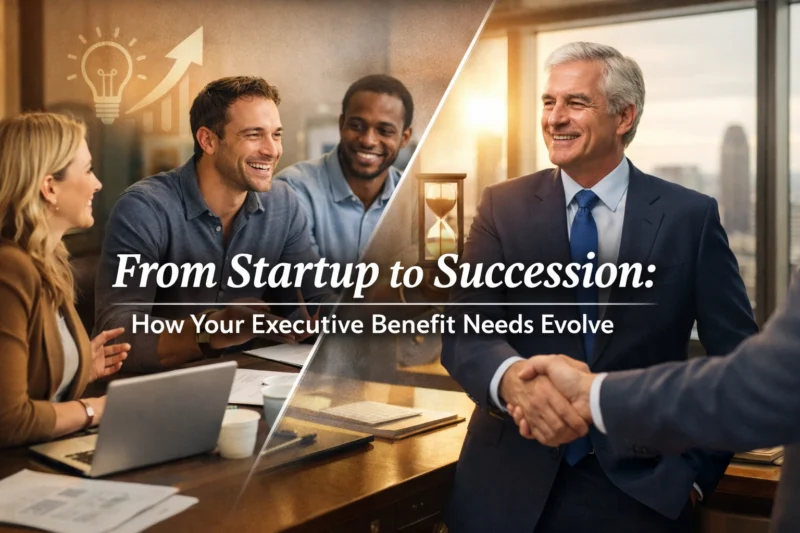
Every business follows a predictable path: Inception, Growth, Maturity, and eventually, Exit. The mistake most owners make is using a "Stage 1" plan to solve a "Stage 3" problem.


Think about your time allocation. When you started, you were probably 90% "doer" and 10% "leader." As you scale, that ratio has to flip. If it doesn't, you become the bottleneck. The same logic applies to your financial planning. A simple life insurance policy might have covered your debt in the startup phase, but does it solve the problem of a $20 million buy-sell triggered by an unexpected disability in the growth phase?


Probably not.


Stage 1: The Foundation and the First Big Question


In the beginning, it’s all about the "What if I die too soon?" stage. Your family is likely your primary concern. If you aren't there to drive the engine, the engine stops.


At this stage, we focus on 100% protection for the family. This isn't just about a death benefit; it's about liquidity. It's about ensuring that your spouse isn't forced to become an accidental business partner with your co-founder. We look at the first of our core five "What Ifs": What happens if your partner ends up in business with your widow?


Executive Retirement Planning Stages
(Technical visual: A flowchart mapping the flow of assets in a sudden succession event versus a structured buy-sell agreement, styled with clean, IRS-technical lines.)


Stage 2: The Scaling Phase and the Talent War


Once the business finds its footing and starts to scale, the "What Ifs" shift toward your people. You’ve hired "Rockstars." They are the reason you can finally take a vacation. But that creates a new anxiety: What if my top talent leaves?


This is where specialized executive benefits come into play. Standard 401(k) plans are great for the rank-and-file, but they are often "reverse-discriminatory" toward your highest earners due to IRS contribution limits. If your key execs can't save enough for their own retirement, they are going to look for a platform that allows them to do so.


We use strategies like Corporate Owned Life Insurance (COLI) to fund nonqualified deferred compensation plans. This allows you to offer "Golden Handcuffs": incentives that make it mathematically painful for a competitor to poach your best people. By using COLI, the business can recover the cost of these benefits, essentially creating a self-funding retention machine.


Executive Retirement Planning Stages


Reverse-Engineering Your "Perfect Plan"


Most financial planning is reactive. You have a windfall, so you look for a tax shelter. You have a heart scare, so you look for insurance. We believe in a proactive, goal-oriented approach we call The Perfect Plan®.


The philosophy of The Perfect Plan® is simple: Start with the end in mind.


When we sit down with a business owner, we ask: "In your ideal world, what does 100% income in retirement look like?" Most owners are surprised to find that their current trajectory only covers 40% or 50% of their current lifestyle once they exit. We identify that gap and then reverse-engineer a solution to fill it using the most tax-efficient vehicles allowed by the IRS.


Addressing the 5 Core "What Ifs"


To build a truly resilient business, you have to have a documented answer for these five questions:


  1. Business with a Widow: If you passed away tomorrow, would your spouse have the liquid cash to live, or would they have a pile of illiquid stock in a company they can't run?

  2. Business Buy-Out: Is your buy-sell agreement funded? A legal document without a funding mechanism (like COLI or disability buy-out insurance) is just a piece of paper that guarantees a lawsuit.

  3. Top Talent Leaving: If your #2 person left for your biggest competitor on Monday, what would it cost you in lost revenue and replacement time?

  4. Senior Exec Retirement: Are you prepared for the cost of replacing your aging leadership team? How do you transition them out with dignity while keeping the business's balance sheet healthy?

  5. Running Out of Money: This is the ultimate fear. After 30 years of building a legacy, will you have to downgrade your lifestyle because of taxes, inflation, or poor planning?


Executive Retirement Planning Stages
(Technical visual: A bar chart comparing "Traditional Retirement Savings" vs. "The Perfect Plan® Approach," showing 100% income replacement levels and the impact of tax-deferred growth.)


The Technical Edge: Why COLI Matters


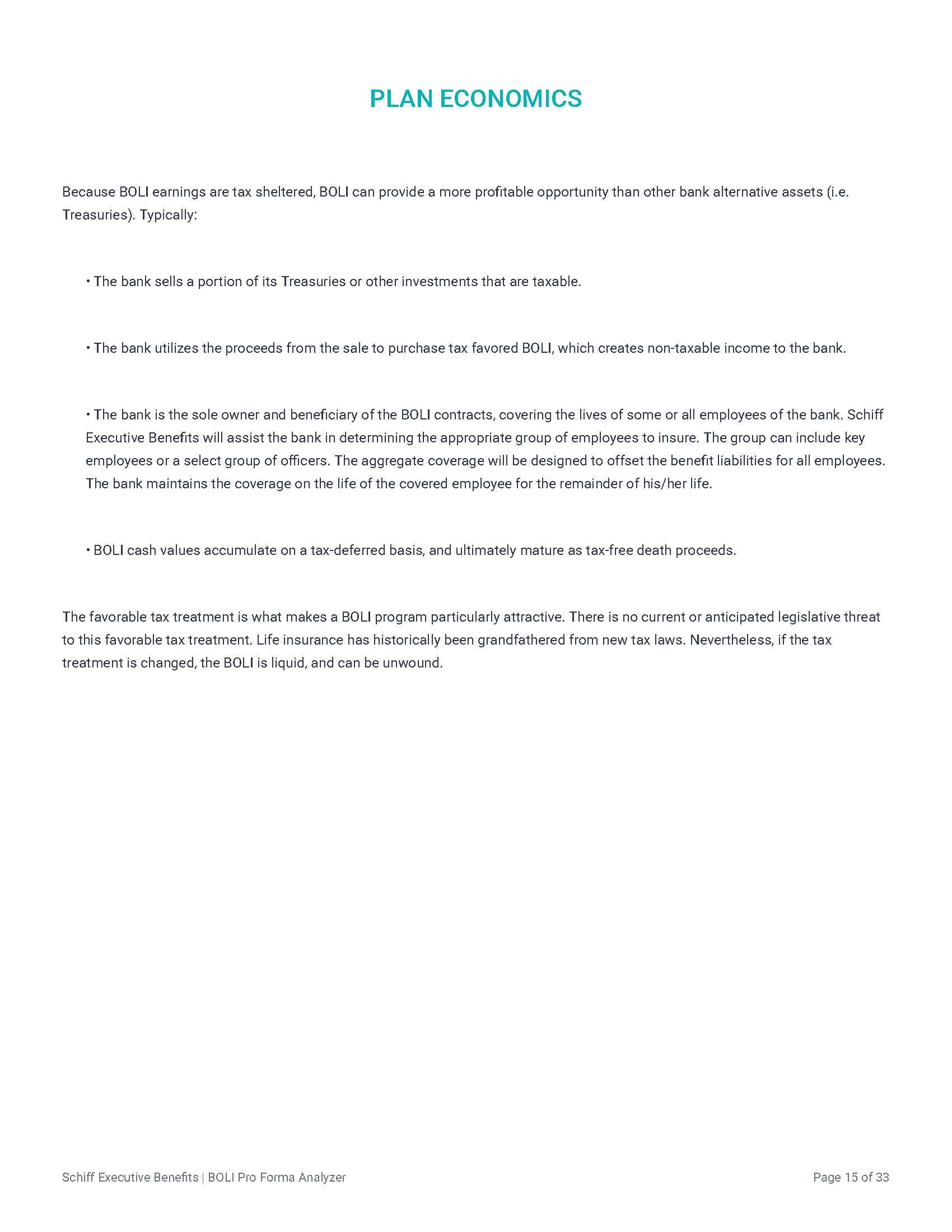
For corporations and partnerships, Corporate Owned Life Insurance (COLI) is often the "Swiss Army Knife" of the balance sheet. It isn't just about a death benefit; it's an institutional asset.


COLI allows a company to:


  • Offset the liabilities of executive retirement plans.

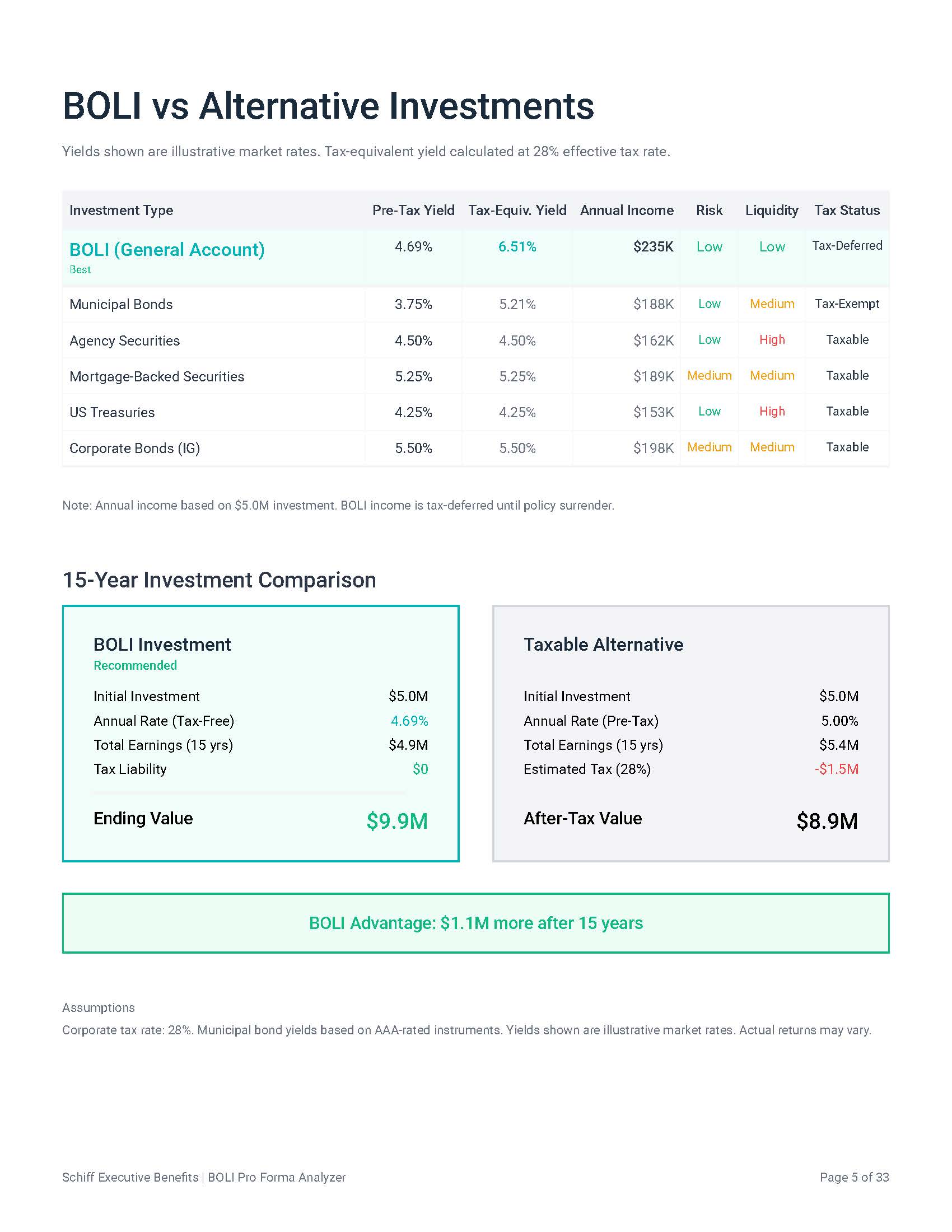
  • Accumulate cash value on a tax-deferred basis.

  • Receive tax-free death benefits to help transition the business or buy out a partner's interest.


When you look at the technical pro-formas of these plans, the math becomes undeniable. It’s about moving money from a taxable "bucket" on your balance sheet to a tax-advantaged "bucket" that performs a specific job: protecting the business while growing an asset that can eventually fund your own exit.


Executive Retirement Planning Stages


Transitioning to the Exit


The final stage of the journey is the exit. Whether you are passing the business to your children, selling to an ESOP, or looking for a third-party buyer, your "What Ifs" are now about the "Point of No Return."


Have you maximized the value of the business? Is the culture stable enough to survive your departure? (Hint: The "Top Talent" retention strategies we mentioned in Stage 2 are what make your business attractive to a buyer in Stage 3).


We help owners realize their "dream value" by ensuring the business isn't just a job they created for themselves, but a self-sustaining entity. By addressing the "What Ifs" early, you aren't just buying insurance; you are building a fortified legacy.


You’ve Built the Business. Now, Secure the Life.


You’ve spent years, maybe decades, navigating the unstable waters of entrepreneurship. You’ve survived the market crashes, the hiring headaches, and the late-night "What Ifs." You deserve a plan that is as robust as the company you built.


Our job at Schiff Executive Benefits is to be your guide through these technical and often overwhelming financial environments. We don’t just want to talk about products; we want to talk about your mission. We want to help you realize that 100% protection for your family and 100% income in retirement isn't a pipe dream: it’s a matter of engineering.


If you’re wondering where your business stands in this lifecycle, or if one of those five "What Ifs" is currently keeping you up at 2:00 AM, let’s talk.


Sit back, grab your coffee, and let’s look at the roadmap together. Come join us at Schiff Executive Benefits to see how we can start reverse-engineering your version of The Perfect Plan®.


You can learn more about our process on The Perfect Plan® Podcast or reach out to us directly through our contact page.


Let’s turn those "What Ifs" into "I’m Covered."


They say that “what gets measured gets managed.” And in executive benefits, what gets aligned gets retained. You spend years building a team, finding those rare people who drive revenue, protect relationships, and carry culture. Then you face the question that keeps owners, CFOs, and board members up at night: How do you keep them without creating a benefit that feels like an entitlement… or an expense you’ll regret?

What if you could design a benefit that:


  • Rewards a key employee in a way they actually value

  • Creates a real golden handcuff (without the awkwardness)

  • Aligns the executive’s mindset with company performance and culture

  • And gives the employer a current tax deduction


That’s where The Perfect Plan® mindset changes the conversation. We’re still talking about Split Dollar Life Insurance—but not as a “secret,” and definitely not as a cost recovery story. We’re talking about how a Restricted Executive Bonus Arrangement (REBA)—when paired with a Split Dollar Endorsement—can become a clean, practical retention engine that creates a true win-win.

If you’ve been losing sleep over executive retention, rising compensation pressure, or how to keep your best people rowing in the same direction, pull up a chair. Let’s demystify this.

What Is Split Dollar, Really?


First things first: Split Dollar isn’t a type of insurance policy. You can’t go out and "buy a Split Dollar." Instead, it is a method of sharing the costs and benefits of a life insurance policy between two parties: usually an employer and an employee.

Think of it like a partnership. The company has the capital; the executive has the need for high-limit life insurance and tax-advantaged retirement income. Split Dollar is the bridge that connects the two.

We typically see this structured in two ways:

  1. The Endorsement Method: The employer owns the policy and "endorses" a portion of the death benefit to the employee’s beneficiaries. This is often used when the primary goal is providing a death benefit.

  2. The Collateral Assignment (Loan Regime) Method: The employee owns the policy, and the employer pays the premiums. These payments are treated as a series of loans to the employee, secured by the policy’s cash value and death benefit. This is the heavy hitter for executive retention because it can build significant cash value for the executive's retirement.


Trusted advisors discussing split dollar life insurance and executive retention strategies in a professional office.

The Perfect Plan® Move: REBA + Split Dollar Endorsement (Deduction + Golden Handcuff)


Here’s the anxiety we hear all the time—from corporations, partnerships, and banks alike: “If I pay them more, it’s just more comp… and they can still leave.” A traditional bonus is appreciated, then forgotten. A retirement plan contribution is valuable, but it doesn’t always feel tied to performance or culture. And in uncertain markets, you want a strategy that creates commitment, not just compensation.

This is where The Perfect Plan® approach shines: you reverse-engineer a benefit that matches the intent of the business.

A common structure we use is a Restricted Executive Bonus Arrangement (REBA) funded with life insurance, paired with a Split Dollar Endorsement arrangement. In plain English:

  • The employer pays a “restricted bonus” to the key employee.

  • The employer takes a current tax deduction for that compensation expense (assuming it meets normal deductibility rules and is reasonable compensation).

  • The bonus dollars fund a life insurance policy designed around the executive’s goals (family protection now and supplemental income later).

  • Restrictions are added (the golden handcuff) so the executive earns access over time—typically through a vesting schedule tied to tenure, performance, or key milestones.

  • The employer-owned endorsement structure allows the employer to own/control key policy rights while endorsing benefits to the employee’s beneficiaries—helping keep the program consistent with the company’s culture and intent.


One of my favorite “real world” moments is when a founder says, “I don’t want handcuffs. I want alignment.” Then we show them how restrictions can be framed as earned ownership feel—a benefit that grows as the executive helps grow the company. That’s not punitive. That’s fair.

This is the win-win:

  • You get retention by design (not by hope).

  • They get a benefit that feels permanent and personal (not like another line item on payroll).

  • Your culture stays intact because the rules are clear, consistent, and tied to what your business actually values.


In other words: it’s not about “buying loyalty.” It’s about creating earned alignment—so your best people think twice before taking that headhunter call, because the arrangement is tied to the company’s performance, expectations, and culture.

The Technical Minefield: Why Expertise Matters


Now, here is the part the "experts" don't always explain clearly: Split Dollar is a technical minefield. If you don't have an advisor who lives and breathes this stuff, you can end up in a world of tax pain.

Take IRC Section 101(j), for example. This is a big one. It requires very specific notice and consent requirements for employer-owned life insurance. If you miss a signature or fail to file the right paperwork before the policy is issued, the death benefit: which is normally tax-free: could become taxable. Can you imagine explaining that to a grieving family or your board of directors?

Then there’s Section 409A. If your Split Dollar arrangement is deemed a "nonqualified deferred compensation" arrangement and it isn't compliant, your executive could face immediate taxation and a 20% penalty.

This is why we focus so heavily on the "Goal-Oriented Reverse Engineering" I mentioned in our previous post. We don't just pick a product; we design the compliance framework first. We ensure every "i" is dotted and every "t" is crossed so your legacy: and your company’s capital: is protected.


The Broker Advantage: Why We Don't Have a "Favorite" Carrier


One of the biggest secrets in this industry is that many firms are "captive" or heavily incentivized to push one or two specific insurance carriers. They’ll tell you that Carrier A has the best Split Dollar product because Carrier A is the only one they really sell.

At Schiff Executive Benefits, we take a different approach. We are independent brokers. We work with the giants: John Hancock, Lincoln, MetLife, Prudential, Pacific Life, and many more.

Why does this matter to you? Because every company is different. A law firm in New York has different needs than a manufacturing plant in the Midwest or a community bank in the South. One carrier might have better pricing for older executives, while another might offer superior cash-value growth for a younger team.

Our "Broker Advantage" means we shop the entire market to find the carrier that fits your arrangement, rather than forcing your arrangement into a carrier’s box. We aren't looking for the easiest sale; we’re looking for the most efficient engine to power your executive retention strategies.

Schiff Executive Benefits Carrier List

Is The Perfect Plan® Version of Split Dollar Right for You?


You’ve built something incredible. Whether it’s a corporation, a partnership, or a financial institution, your success is built on the backs of your key people. But the world is uncertain. Taxes may rise, markets will fluctuate, and the war for talent isn’t slowing down.

Ask yourself:

  • Are my top people truly aligned with our performance and culture—or are they one headhunter call away from leaving?

  • If I increase comp, will it actually change behavior and commitment—or just increase payroll?

  • Do we have a benefit that feels meaningful to the executive and disciplined to the business?


When REBA is designed with the right restrictions—and paired with a Split Dollar Endorsement—it becomes more than “a benefit.” It becomes a retention agreement with a heartbeat. It tells a key executive: we’re investing in you, and we want you here when the next chapter of this company gets written.

Building It Your Way


At the end of the day, you want to realize your dream value for your business. You want to know that the team you’ve assembled will stay together to cross the finish line.

We don't believe in one-size-fits-all "products." We believe in The Perfect Plan®. It’s about starting with your goals—retention, a current employer tax deduction, and a benefit that actually changes behavior—and reverse-engineering a solution that works.

Whether you are looking into COLI for a large corporation or a NQDC plan for a growing partnership, the strategy needs to be as unique as your thumbprint.

If you’re curious about how these "secrets" can be put to work for your firm, let’s talk. No high-pressure sales pitch, just a conversation between professionals.

Sit back, grab your coffee, and when you’re ready to see how the math works for your specific situation, come join us. We’re here to help you navigate the unstable waters of executive benefits with a steady hand and a clear map.

To your success,

Matt Schiff
President, Schiff Executive Benefits


They say that the only constant in life is change, and in the world of business ownership, that isn’t just an aphorism, it’s a daily reality. You start with a vision, a laptop, and maybe a few key people who believe in the dream as much as you do. But as the years tick by, the "dream" gets a lot more complicated. The problems you faced on day one, like making rent or finding your first client, evolve into much heavier questions.


What if your top talent leaves for a competitor? What if you suddenly weren't there to run the shop? What if you want to retire, but all your wealth is tied up in the company?


At Schiff Executive Benefits, we’ve seen this movie before. We know that a business is a living, breathing entity. The benefits you offered when you were a three-person startup won't cut it when you’re a fifty-person powerhouse. Managing this evolution is about more than just "insurance" or "tax breaks", it's about Restoring Alignment and Retention.


The Early Growth Stage: Building the "Ownership Feel"


In the beginning, cash is king, and you probably don't have enough of it to pay Silicon Valley salaries. You’re looking for "believers", people who will work the long hours because they feel like they own a piece of the pie. But actually handing over equity? That’s a messy, expensive road that can lead to a crowded cap table and loss of control.


This is where the concept of the "ownership feel" without actual ownership comes into play. You want your key people to think like owners, act like owners, and stay like owners.


Phantom Stock: The Ultimate Alignment Tool


Phantom Stock is one of the most elegant solutions for the early growth phase. It’s exactly what it sounds like: a contractual agreement that gives an employee the right to receive a payment tied to the value of the company’s shares, without actually giving them a single share of voting stock.


When the company grows, their "phantom" value grows. It aligns their success directly with yours. It answers that nagging "What If": What if my top talent leaves? With a properly structured Phantom Stock plan, leaving means walking away from a significant future payout. It creates the "golden handcuffs" that keep your A-players focused on long-term growth.


Restricted Executive Bonus (Section 162)


Another heavy hitter for the early stages is the Restricted Executive Bonus. You want to reward a key executive, but you want to make sure they stick around to earn it. By using a life insurance policy (COLI) as the vehicle, the company pays the premium as a bonus to the executive.


However, you add a "restrictive covenant." If they leave before a certain date, they don't get full access to the policy’s cash value. It’s professional, it’s tax-efficient for the business, and it provides a real, tangible asset for the employee.


Professional team of executives collaborating on business growth strategies in a modern office.
Caption: A professional workspace featuring detailed compliance documents and structured financial planning tools, reflecting the technical precision required for executive benefit design.


The Scaling Phase: From Growth to Maturity


Once you’ve hit your stride, the risks change. Your business has a real valuation now. Your "What Ifs" become more about sustainability and replacement costs.


What if a senior executive retires? What will it cost to replace their institutional knowledge?


At this stage, you’re likely looking at more sophisticated structures like Nonqualified Deferred Compensation (NQDC) and the strategic use of Corporate Owned Life Insurance (COLI).


Shifting the Tax Burden


As a high-earning business owner or executive, you’re probably hitting the ceiling on what you can put into a 401(k). You’re paying the highest marginal tax rates, and you’re looking for a way to defer that income until retirement when you might be in a lower bracket.


NQDC plans allow your top people to defer a portion of their compensation, often without the low limits of a traditional 401(k). For the business, this is a powerful retention tool. For the executive, it’s a way to avoid running out of retirement money.


We often talk about The Perfect Plan®. It’s not a one-size-fits-all product; it’s a philosophy of reverse-engineering your goals. We look at the liabilities on your balance sheet, like the promise to pay out these deferred bits of compensation, and we find the most efficient way to fund them. Often, that involves COLI, which provides tax-deferred growth and a death benefit that can help the company recover the cost of the plan.


The Mature Stage: Succession and the "Point of No Return"


Eventually, every owner reaches the stage where they start looking at the exit. This is the most critical transition in the Business Owner Lifecycle. It’s where the "What Ifs" get very real, very fast.


  1. Business with a widow: What happens if your partner passes away? Are you suddenly in business with their spouse who knows nothing about the industry?

  2. Business buy-out: Do you have a funded Buy/Sell agreement? Or is your succession plan just a handshake and a prayer?


Buy/Sell Arrangements and 409A Compliance


In the mature stage, your executive benefits and your succession planning must be perfectly synchronized. If you have a Buy/Sell agreement, it needs to be funded. You don’t want the company’s cash flow crippled because you had to buy out a departing partner’s shares on short notice.


Furthermore, as your company grows, you fall under the watchful eye of the IRS and Section 409A. This is where the "IRS technical vibe" becomes a reality. 409A regulates how and when deferred compensation can be paid. Get it wrong, and your executives face immediate taxation and a 20% penalty. This is why you need a team of advisors who live and breathe compliance.


Financial compliance documents and reading glasses on a mahogany desk for executive succession planning.
Caption: A deep-dive look at financial spreadsheets and regulatory checklists, emphasizing the importance of compliance and precise data in succession planning.


Realizing Your Dream Value


I remember a client, let’s call him John. John had built a fantastic manufacturing business over thirty years. He had three key VPs who were essentially running the day-to-day. John wanted to retire, but he was terrified that the moment he announced his exit, those three VPs would look for more "stable" jobs elsewhere.


By implementing a tailored executive benefit strategy, incorporating a mix of NQDC and a transition-based bonus plan, we were able to show those VPs that their financial future was more secure if they stayed and helped transition the company to the new ownership. We turned a potential "talent drain" into a "stability anchor." John was able to sell the business for his dream value because he could prove the leadership team wasn't going anywhere.


That is what we mean by Restoring Alignment and Retention.


Why Expertise Matters


You wouldn't ask a general practitioner to perform heart surgery. So why would you ask a generalist insurance agent to design a 409A-compliant executive benefit plan? The stakes are too high.


Whether you are in the early stages of growth or you’re staring down the barrel of retirement, your needs are evolving. The plans we build at Schiff Executive Benefits are designed to grow with you. We help you navigate the complexity of:


  • Our Services

  • COLI (Corporate Owned Life Insurance) for cost recovery.

  • Split Dollar arrangements for tax-efficient death benefits.

  • Comprehensive Buy/Sell funding.


Success is a journey, not a destination. But if you don't have the right roadmap, you might find yourself at the "point of no return" without the resources you need to cross the finish line.


So, take a moment. Sit back, grab your coffee, and think about your own "What Ifs." Are you prepared for a business buy-out? Is your top talent truly locked in, or are they just passing through?


If you aren't sure, let’s have a conversation. We’re here to help you build it your way and protect your legacy every step of the way.


Feel free to check out our team or reach out to us directly. Your future self will thank you for the planning you do today.


Disclosure: For more information on our processes and compliance, please visit our disclosure page.


"Begin with the end in mind."


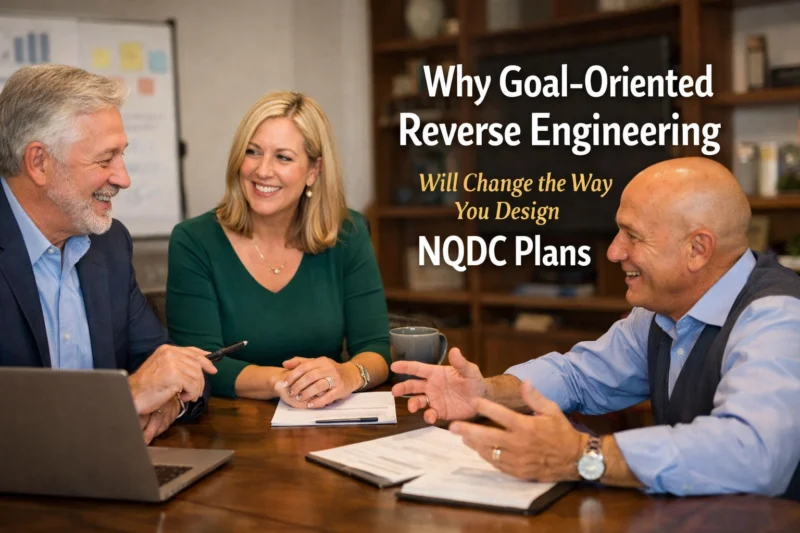
Stephen Covey made that phrase famous, but in the world of executive benefits, it’s more than a habit: it’s a necessity. Too often, I see business owners and HR directors approach an NQDC plan (nonqualified deferred compensation plan) by looking at what they think they can afford today, rather than what their key people actually need tomorrow.


They start with the "how" before they’ve even defined the "why."


At Schiff Executive Benefits, we flip the script. We use a methodology I call Goal-Oriented Reverse Engineering. It sounds technical, but it’s actually the most human way to design a plan. Instead of starting with contribution limits or vesting schedules, we start with the finish line: the lifestyle, the legacy, and the specific cash flow an executive needs to feel secure.


If you aren't designing your executive retention strategies this way, you’re likely leaving money on the table: for both the company and the individual.


The Problem with "Standard" Plan Design


Most nonqualified deferred compensation plans are built using a "box-ticking" approach. A consultant walks in, hands you a menu of options, and asks you to pick a vesting schedule and an investment lineup. It’s transactional. It’s cold. And frankly, it’s risky.


When you design a plan without reverse engineering the goal, you end up with "accidental" outcomes. You might find that after ten years of contributions, the executive’s account balance doesn’t actually move the needle for their retirement. Or worse, the tax impact of the payout creates a net result that feels more like a burden than a benefit.


Are you building a plan to simply "have one," or are you building it to solve a specific problem?


For most corporations and partnerships, the problem is simple but profound: How do we keep the people who make this company run? How do we ensure that our top talent doesn't look across the street to a competitor because they feel their long-term security isn't being addressed?


Financial blueprint analysis emphasizing plan design and data visuals


What is Goal-Oriented Reverse Engineering?


Reverse engineering starts with a conversation about the "What Ifs."


  • What if you wanted to retire at 60 with $250,000 in annual inflation-adjusted income?

  • What if the company grows by 15%: how does that change the executive’s "win"?

  • What if tax rates at the federal level spike in the next decade?


We work backward from the desired cash flow. If an executive knows they need $X per year to maintain their lifestyle, we calculate exactly what needs to happen today to make that a reality. We don't just guess at contribution levels; we math it out.


This approach changes the psychology of the plan. It moves the NQDC plan from being a "nice-to-have" perk to being a critical component of the executive’s personal financial success. When an executive sees a direct line between their performance today and their specific lifestyle goals tomorrow, your executive retention strategies become bulletproof.


A diverse team of executives collaborating on goal-oriented NQDC plan design and retention strategies.


The Perfect Plan® Framework


When we reverse engineer these outcomes, we always aim for what I call The Perfect Plan®. Whether we are working with a bank, a law firm partnership, or a manufacturing corporation, the framework remains the same.


The Perfect Plan® is built on three pillars:


  1. Pre-tax contributions: Every dollar goes to work before the IRS takes a bite.

  2. Tax-deferred growth: Let the power of compounding work without the annual drag of taxes.

  3. Tax-free benefits: Using the right funding vehicles: like Corporate Owned Life Insurance (COLI): to ensure that when the money comes out, it’s as efficient as possible.


This isn't just about 409A plans and compliance (though that’s the foundation). It’s about creating a mathematical advantage. By using this framework, we can often show an employer how they can provide a more robust benefit than a traditional 401(k) mirror plan, often with a neutral or even positive impact on the company’s balance sheet.


Retirement Made Simple: The Four Fixed Pillars


One of the biggest anxieties executives face is the "moving target" of retirement. Will the market stay up? Will the company’s stock fluctuate? To combat this, our reverse engineering focuses on four simple factors:


  • Fixed Dollar: Knowing exactly what the payout will be.

  • Fixed Period: Knowing exactly when and for how long the income lasts.

  • Fixed Rate: Removing the volatility of the market where appropriate.

  • Fixed Cash Flow: Designing the plan so it acts as a reliable "pension-style" stream of income.


When you simplify the outcome, you increase the perceived value of the benefit. Executives don't want to spend their weekends worrying about their deferred compensation volatility. They want to know that their work is building a stable future.


The Perfect Plan® Podcast banner featuring Matthew E. Schiff


Addressing the "What Ifs" for Business Owners


It’s not just about the executive; it’s about the entity. Whether you’re a partnership or a corporation, you have your own "What Ifs."


  • What if the executive leaves early? We design vesting schedules and "Golden Handcuffs" that protect the company’s investment.

  • What if we want to recover the cost of the plan? This is where COLI and other funding strategies come into play.


Through Employer Cost Recovery, we can structure plans where the company eventually gets back every dollar it paid out in benefits, plus the cost of money. It sounds too good to be true, but it’s simply the result of smart math and the right insurance-based funding vehicles. By using the tax advantages of life insurance within the corporate structure, we can offset the liabilities of the NQDC plan.


Culture, Intent, and the Human Element


Technical expertise is table stakes. You can find a dozen firms that understand the nuances of 409A plans. What’s harder to find is a partner who understands your company’s culture and intent.


Are you trying to reward a "lifer" who has been with you since the garage days? Are you trying to lure a high-level CEO away from a Fortune 500 company? Or are you looking to create a succession bridge via an ESOP or a Buy/Sell arrangement?


The intent drives the design.


In partnerships, for example, the goal is often about equalizing the "buy-in" and "buy-out" for senior partners. Reverse engineering allows us to see how an NQDC plan can act as a bridge, providing the departing partner with the income they need without crippling the cash flow of the junior partners taking over.


Economic advantages of BOLI and COLI for cost recovery


The Point of No Return


We are living in an era of massive economic shifts. Tax rates are at historical lows, but the national debt suggests that won't last forever. Inflation is a constant shadow. If you are waiting until "next year" to look at your executive benefit structure, you are missing the window to lock in current advantages.


Designing an NQDC plan isn't a "set it and forget it" task. It’s a dynamic process that requires a team of advisors who are looking at the horizon, not just the feet.


At Schiff Executive Benefits, we don't just sell plans; we build security. We act as your guide through the unstable landscape of modern finance, ensuring that your professional legacy and your personal lifestyle goals are perfectly aligned.


Let’s Sit Down and Do the Math


If your current plan feels like a generic template, or if you’ve never actually run the numbers to see if it will meet your executives' end goals, it’s time for a change.


Let's grab a coffee: virtually or in person: and talk about your "What Ifs." We’ll start with the end goal and work our way back. You might be surprised at how much more powerful your benefits can be when they are engineered with a purpose.


Come join us at Schiff Executive Benefits. Let’s build something your way.


Category: Deferred Compensation

In the world of business, what you don’t know can’t just hurt you: it can cost you a fortune. There is an old military adage that "amateurs study tactics, while professionals study logistics." When it comes to executive benefits, the "logistics" are the compliance filings that keep your plan from turning into a liability.

We often talk to business owners who have spent months designing the perfect NQDC plan (Non-Qualified Deferred Compensation) to keep their top talent from jumping ship. They’ve crunched the numbers, selected the right COLI (Corporate Owned Life Insurance) funding vehicles, and signed the documents. But then, a silent clock starts ticking. If you miss a simple administrative step within the first 120 days, that specialized plan you built for your "Top Hat" group could be treated like a standard 401(k), bringing with it a mountain of paperwork and potentially devastating daily fines.

At Schiff Executive Benefits, we believe in Restoring Alignment and Retention. That begins with making sure your plan is legally "invisible" to the more cumbersome parts of ERISA.

What Exactly is a "Top Hat" Plan?


Before we dive into the deadlines, let’s clarify what we’re talking about. In the industry, we use the term "Top Hat plan" to describe a non-qualified deferred compensation plan that is unfunded and maintained by an employer primarily for the purpose of providing deferred compensation for a "select group of management or highly compensated employees."

These are the core of most executive retention strategies. Why? Because they allow your key players to defer income far beyond the limits of a traditional 401(k). However, because these plans are technically "pension plans" under ERISA, they are subject to strict reporting and disclosure requirements unless they meet a specific exemption.

To get that exemption, you have to tell the Department of Labor (DOL) that the plan exists. This is not a complex filing, but it is a mandatory one.

Executive Confidence

The 120-Day Rule: Your Line in the Sand


The Department of Labor is very clear on the timing. You must file a Top Hat plan statement within 120 days of the plan's effective date.

Think of this as the "honeymoon phase" of your new executive benefit. You’re excited about the new structure, your executives are feeling valued, and the 409A plans are set up. But if that 120th day passes and you haven't filed, the DOL no longer views your plan as an exempt executive benefit. Instead, they view it as a non-compliant pension plan.

The filing itself is done electronically. You can access the portal here: https://www.askebsa.dol.gov/efile/Home/tophat.

It requires basic information: the name and address of the employer, the employer identification number (EIN), a declaration that the employer maintains the plan primarily for a select group of management or highly compensated employees, and the number of plans and employees covered.

When Does the Clock Actually Start?


This is where many businesses trip up. Does the clock start when you sign the document? When the first contribution is made? Generally, the clock starts on the effective date of the plan. If you backdate a plan's effective date for accounting reasons, you might accidentally shorten your filing window without realizing it. We always recommend filing as soon as the plan is implemented to avoid any "calendar math" errors.

Business executive tracking the 120-day deadline for Top Hat Plan compliance in a professional office setting.

The "What If" Scenario: The Cost of Missing the Window


We often ask our clients five core "What If" questions to help frame their risk. One of the most overlooked is: What if your senior executive retirement plan suddenly becomes a massive tax and regulatory burden?

If you miss that 120-day window, your Top Hat plan becomes subject to the full reporting and disclosure requirements of ERISA Part 1. This means you are now required to file an annual Form 5500 for the plan.

Most employers intentionally set up NQDC plans to avoid the 5500 filing process because it’s a public disclosure and an administrative headache. But the real sting comes from the penalties. If the DOL initiates an enforcement action because you failed to file, the penalties can be astronomical:

  • Daily Fines: The DOL can assess penalties of up to $2,739 per day for failure to file a Form 5500.

  • No "Statute of Limitations": If you’ve had a plan for ten years and never filed the Top Hat letter or a 5500, those daily fines can technically be backdated.


How would that impact your business buy-out or your succession planning? Imagine trying to sell your company, only for the buyer’s due diligence team to discover a decade of unfiled ERISA reports and millions in potential contingent liabilities. It’s a deal-killer.

How to Fix a Mistake: The DFVC Program


If you are reading this and realizing your 120-day window closed months (or years) ago, don’t panic: but do act.

The DOL offers a "get out of jail" card called the Delinquent Filer Voluntary Compliance (DFVC) program. This is designed for plan sponsors who realize they’ve missed a filing and want to come clean before the DOL finds them first.

Here is the silver lining: For Top Hat plans, the DFVC program is incredibly reasonable if you use it proactively.

  1. The Flat Fee: Instead of thousands of dollars in daily fines, the penalty for a Top Hat plan is a flat $750 fee, regardless of how many years the filing is late or how many participants are in the plan.

  2. The New Payment Method: As of late 2025, the process has been streamlined. The DOL has shifted away from older check-based systems to direct gov.pay payments. This makes the correction process faster and provides an immediate digital paper trail of your compliance.


By paying the $750 and filing the statement through the DFVC portal, you essentially "reset" your compliance status and gain the same exemptions you would have had if you filed on day one.

Business partners discussing the DFVC program to correct delinquent Top Hat Plan filings and restore compliance.

Why Compliance is Part of the "Perfect Plan®"


You didn’t build your business to become an expert in ERISA filing software. You built it to create value, provide for your family, and leave a legacy. At Schiff Executive Benefits, we specialize in what we call "Reverse Engineering."

When we look at executive retention strategies, we don't just look at the investment side. We look at the finish line first. We ask: What is the ultimate goal for this executive, and what are the regulatory hurdles between here and there?

Whether you are implementing 409A plans, exploring Split Dollar arrangements, or managing a complex COLI portfolio, compliance must be baked into the design. We help ensure that your plan meets the rigorous standards of Internal Revenue Code Section 409A (to avoid 20% excise taxes for your executives) and Section 101(j) (to ensure the death benefits of your COLI policies remain tax-free).

Managing "Double Duty Dollars": where your corporate cash works twice as hard by funding a benefit while remaining an asset on the balance sheet: is only effective if the legal structure is sound.

Taking the Next Step


Is your current Top Hat plan statement filed? Are you sure?

If you aren't 100% certain, or if you are in the process of designing a new executive benefit package, let’s make sure your "logistics" are as strong as your "tactics." Missing a deadline shouldn't be the reason you lose your alignment with your top talent.

The team at Schiff Executive Benefits is here to act as your guide through these unstable regulatory environments. We work alongside your existing team of advisors to ensure that your executive benefits are a source of security, not a source of stress.

Contact Schiff Executive Benefits

Sit back, grab your coffee, and let’s take a look at your current structure. Whether it’s succession planning, business buy-outs, or simply making sure your 409A plans are bulletproof, we’re here to help you build it your way.

Come join us. Let’s make sure your "What If" questions are answered before they become "What Now" problems.

Learn more about our Executive Benefit Consulting or explore our Deferred Compensation expertise.


A business partnership is a lot like a marriage, but with more paperwork and significantly higher financial stakes. You spend more time with your partners than your family. you build a legacy together, and you trust each other with your professional lives. But there is a universal truth that every business owner eventually has to face: every partnership will end.


The question isn’t if it will end, but how. Will it end with a smooth transition and a handshake, or will it end in a tax-fueled legal nightmare that leaves your family: and your partner’s family: scrambling for liquidity?


Most business owners have a Buy/Sell agreement tucked away in a dusty drawer. They signed it years ago, checked the box, and moved on. But the world has changed. Tax laws have shifted. Court cases have redefined how the IRS looks at your business value. If your agreement hasn’t been touched in three years, it’s not just outdated: it’s a ticking time bomb.


The Problem: When Protection Becomes a Tax Trap


For decades, the standard play was the "Entity Purchase" or "Redemption" agreement. The business owns a life insurance policy on each owner. If an owner passes away, the business gets the cash and uses it to buy back the shares from the deceased owner's estate. Simple, right?


Not anymore.


A recent, massive shift in the tax landscape: specifically the Connelly v. United States decision: has turned this "simple" strategy into a potential catastrophe. The Supreme Court essentially ruled that if the company receives life insurance proceeds to fund a buyout, those proceeds can be included in the company’s total valuation for estate tax purposes.


Imagine this: Your business is worth $10 million. You have a $5 million life insurance policy to buy out your partner. If you pass away, the IRS could argue the business is now worth $15 million because of that insurance cash. Your estate is taxed on a $7.5 million valuation (your half), but your family only receives the $5 million you originally agreed upon.


You’re paying taxes on money your family never sees. Does that sound like "protection" to you?


100% Protection for the Families Who Built the Business


When we talk about Buy/Sell agreements at Schiff Executive Benefits, we focus on the human element. Your spouse and your children shouldn't have to become "accidental business partners" with your co-founder. Likewise, your surviving partner shouldn't have to report to your heirs who might not know the difference between a P&L and a balance sheet.


The goal is 100% Protection.


This means the family of the deceased receives the full, fair market value of the business interest immediately, in cash, with zero tax friction. It also means the surviving owner gets 100% control of the company without taking on massive debt or draining the corporate coffers.


Financial Blueprint Analysis


The Solution: Modernizing via the Cross-Purchase Strategy


To avoid the "Connelly Trap," many savvy owners are moving toward a Cross-Purchase or a Trusteed Cross-Purchase structure.


In a traditional cross-purchase, the owners own policies on each other. Because the business doesn't own the money, it doesn't inflate the business's value in the eyes of the IRS. But the real magic happens with something called the "step-up in basis."


When you use insurance proceeds to buy your partner’s shares personally, your tax basis in the company increases. If you ever decide to sell the business later, that "step-up" could save you millions in capital gains taxes. It is the definition of tax efficiency.


However, if you have three or four partners, owning individual policies on everyone gets messy. That’s where we modernize. We often implement an LLC Insurance Ownership structure. You create a separate entity (taxed as a partnership) specifically to hold the life insurance. It provides the creditor protection of a corporation, the tax benefits of a cross-purchase, and the administrative ease of a single plan.


Golden tree inside a secure glass case representing protected business growth and executive legacy planning.


Is Your Agreement Part of The Perfect Plan®?


At Schiff Executive Benefits, we don't look at insurance in a vacuum. We look at how it fits into your broader financial legacy: what we call The Perfect Plan®.


A modern Buy/Sell agreement isn't just a legal document; it’s a wealth-transfer vehicle. It’s part of a strategy that uses corporate dollars tax-efficiently to build personal security.


Ask yourself these three questions:


  1. How is the value determined? If your agreement uses a "fixed price" from five years ago, you are either overpaying or cheating a family out of their legacy.

  2. Where does the tax go? If your plan triggers a massive estate tax bill or a capital gains nightmare, it’s a failure.

  3. Is it funded? A legal obligation to buy shares is worthless if the company doesn't have the liquidity to write the check.


If you can’t answer these with 100% certainty, you are leaving your business and your family's future to chance.


The ROI of Getting it Right


We often hear owners say, "I'll get to it next year." But the cost of waiting is higher than you think. A well-structured, modern agreement doesn't just protect you upon death; it sets the stage for a healthy exit, a smooth retirement transition, and even better terms with lenders who want to see a solid succession plan.


Think of it as the ultimate insurance for your life's work. You’ve spent decades building this company. You’ve survived market crashes, hiring woes, and global shifts. Why let a preventable tax headache dismantle it all at the finish line?


Executive Expertise in Action


Stop Worrying and Start Planning


You shouldn't have to stay up at night wondering if your partner’s spouse will end up sitting in your boardroom or if the IRS will take a 40% bite out of your family’s inheritance.


Modernizing your Buy/Sell agreement is about more than just "insurance." It’s about clarity. It’s about ensuring that the value you’ve built stays where it belongs: with the people who built it and the families who supported them.


We help business owners navigate these complexities every day. We coordinate with your legal team and your CPA to ensure the math, the law, and the logic all point in the same direction: your success.


Let’s get your plan off the "to-do" list and into the "done" column.


Grab a coffee, take a breath, and let’s look at the numbers together. You can visit our website to learn more about our approach or schedule a quick discovery call via my Calendly to see if your current agreement is helping you or hurting you.


Your legacy is too important to leave to an outdated contract. Let's make sure it's protected: 100%.


Perfect Plan Podcast Banner


At the end of the day, people don’t just work for a paycheck; they work for a future they can actually envision. It’s an undeniable truth in the world of executive leadership: if your top talent doesn't feel their long-term security is inextricably linked to your company’s success, they will eventually look for a door that offers a clearer view of the finish line.


You’ve likely implemented a Nonqualified Deferred Compensation (NQDC) plan with the best of intentions. You wanted to provide a "golden handcuff" to keep your key players in their seats. But what happens when those handcuffs feel more like a nuisance than a reward? Or worse, what happens when your competitors are offering a set of keys that look a lot more inviting?


At Schiff Executive Benefits, we often see companies that have the right tools but the wrong blueprints. We believe in reverse-engineering solutions to match your specific company culture, rather than forcing a generic plan into a unique environment. If your NQDC plan isn't doing the heavy lifting of retention, it’s time to look under the hood.


Here are 10 reasons your NQDC plan might be underperforming: and how we can work together to fix it.


1. The "Black Box" Problem: Lack of Education


If an executive doesn't understand the internal mechanics of their plan, they won't value it. We’ve sat down with brilliant CFOs and COOs who view their NQDC plan as a "black box": money goes in, something happens, and eventually, money comes out. Without a clear understanding of the tax-advantaged growth and the compounding power of the plan, it’s just numbers on a screen.


The Fix: Enhance participant education. This isn’t about a one-time HR meeting; it’s about ongoing, consultative engagement. We help participants see the "why" behind the plan, aligning it with their personal retirement goals.


executive-consultant-modern-office-microphone.webp


2. The Gold is Too Far Away: Rigid Vesting Schedules


Vesting is the heart of retention, but if the schedule is too aggressive or too distant, it loses its "pull." A 10-year cliff vesting schedule might seem like a great way to ensure long-term loyalty, but in today’s fast-paced market, it can feel like an impossible mountain to climb.


The Fix: Consider "rolling vesting" or milestone-based triggers. By rewarding longevity in digestible increments, you create a continuous incentive to stay for "just one more year," which eventually turns into a career.


3. The "Generic Trap": Lack of Customization


One of the biggest mistakes we see is a "one-size-fits-all" approach. Your VP of Sales has different financial anxieties than your Head of R&D. If the plan doesn't reflect the culture of your leadership team, it will never feel like a personal benefit.


The Fix: This is where we excel. We reverse-engineer your executive retention strategies to match your culture. Does your team value aggressive growth, or are they more concerned with downside protection? Build the plan around their needs, not the provider’s template.


4. Inflexible Distribution Options


Life happens. Children go to college, houses are bought, and tax laws change. If your NQDC plan only allows for a lump-sum payment at age 65, you are ignoring the reality of your executives' lives.


The Fix: Modernize your distribution schedules. Allow for scheduled in-service distributions for specific life events. When an executive can see their NQDC plan helping pay for their daughter’s Ivy League tuition, the plan becomes "real" and the loyalty becomes personal.


5. Security Concerns and the "Creditor" Fear


Because NQDC plans are technically "unfunded" and subject to the claims of the company’s general creditors, there is always a lingering whisper of doubt: Will the money actually be there when I need it? In an unstable economic environment, this anxiety can outweigh the potential tax benefits.


The Fix: Use sophisticated funding strategies. While the plan remains technically unfunded for tax purposes, informal funding through vehicles like Corporate-Owned Life Insurance (COLI) can provide the informal "reserve" that gives executives peace of mind. We often discuss these strategies on The Perfect Plan® Podcast.


financial-blueprint-analysis.webp


6. Poor Performance Benchmarking


Is your plan’s crediting rate competitive? If your participants feel they could get a better return by simply taking the cash, paying the taxes, and investing in a standard brokerage account, your retention tool has lost its edge.


The Fix: Regularly review and benchmark your plan against industry standards. Ensure the investment options or crediting rates are attractive enough to justify the deferral. You want your team to feel they have an "unfair advantage" by being part of your organization.


7. The Complexity of Section 409A


Nothing kills the "warmth" of a benefit plan like the cold hand of IRS penalties. Many executives are terrified of the complex rules surrounding Section 409A. If they feel the plan is a tax trap waiting to spring, they will stop contributing.


The Fix: Provide expert guidance and clear communication regarding compliance. At Schiff Executive Benefits, we act as the guide through these "unstable" environments, ensuring that both the company and the executive are protected and confident.


8. Missing the "Personal Legacy" Connection


Executives at the top of their game aren't just thinking about their next vacation; they are thinking about their legacy. Does your plan allow for meaningful beneficiary designations or coordinate with their estate plan?


The Fix: Integrate the NQDC plan into a broader conversation about wealth transfer and The Perfect Plan®. When the benefit extends to their family’s future, it’s no longer just a business arrangement; it’s a life-changing foundation.


cheerful-couple-marina-dock-yachts-sailboats-retirement.webp


9. Administrative Friction


If the portal is hard to use, the statements are confusing, or it’s a hassle to change a deferral election, the participant’s experience is tarnished. Executives have zero patience for administrative friction.


The Fix: Partner with providers who offer a high-touch, "white-glove" experience. The technology should be seamless, but the human support should be even better. We pride ourselves on being the team you can call when you need an answer right now.


10. The "Set It and Forget It" Mentality


The world changes. Your company grows. Tax brackets shift. If you haven't reviewed your NQDC plan in three years, it is likely obsolete. A static plan is a dying plan.


The Fix: Conduct annual reviews. We work with our clients to ensure their plans stay relevant to the current economic landscape and the evolving goals of their leadership team.


Business leaders collaborating on NQDC plan designs to boost executive retention in a warm, professional office setting.


Realizing Your Dream Value


I remember working with a CEO who was frustrated because his top three executives were all being recruited by a larger firm. He had a deferred comp plan in place, but when we looked at it, the executives didn't even know how much was in their accounts. They didn't feel the "weight" of what they would be leaving behind.


We sat down, reverse-engineered the plan to include more flexible distributions and a better crediting rate, and then we communicated it. We showed them how staying for five more years would change their lives: not just their bank accounts. They stayed. Not because they were trapped, but because they finally saw how the company was building their dream alongside them.


Your Next Step


Does your current plan feel like a burden or a benefit? Are you worried that your "golden handcuffs" are starting to rust?


What keeps you up at night regarding your leadership team? If it's the fear of losing the talent you’ve spent years cultivating, it’s time to take a breath and take a look at the blueprint.


Sit back, grab your coffee, and let's have a conversation. We’re here to help you navigate these uncertain waters and build something that lasts. You’ve built an incredible company; let’s make sure your team feels the same passion for its future that you do.


Come join us at Schiff Executive Benefits, where we don't just design plans: we build security and legacy.


Ready to see if your plan is performing?
Contact us today to schedule a warm, low-pressure review of your executive benefits strategy. We’d love to welcome you to the family.


The hardest thing to find in business isn’t capital; it’s the right people to run it. In the competitive landscape of the modern economy, talent is the only currency that truly matters. You’ve likely spent years, if not decades, building a team that operates with precision, but as your leaders grow in success, they often hit a wall: a financial ceiling that threatens their long-term loyalty and your company’s stability.


If you are a business owner or a high-level executive, you are intimately familiar with the limitations of the traditional 401(k). You contribute the maximum, your company provides a match, and yet, for someone in your tax bracket, it’s a drop in the bucket. It simply isn’t enough to maintain your lifestyle in retirement. This is where everyone starts talking about nonqualified deferred compensation plans, more commonly known as NQDC plans or the "401k Mirror" plan.


But what exactly is an NQDC plan, and why is it suddenly the talk of every C-suite and boardroom across the country?


The "401k Mirror" Plan: A Quick Overview


Think of your standard 401(k) as a small glass. For most employees, that glass is plenty big enough to hold their retirement savings. But for you and your key executives, that glass overflows almost immediately. An NQDC plan acts as a much larger vessel: essentially a mirror of your 401(k) but without the restrictive IRS contribution limits.


In its simplest form, a nonqualified deferred compensation plan is a contractual agreement between an employer and an employee to defer a portion of their compensation until a future date. Because these plans are "nonqualified," they don't have to follow the same stringent participation rules as a 401(k). You can pick and choose who participates. You can decide exactly how much they can defer. Most importantly, you can provide a vehicle for your top talent to save significantly more for their future while deferring the tax burden today.


Financial blueprint analysis emphasizing plan design and regulatory compliance


Why 409A Plans Require Expert Hands


When you step into the world of NQDC plans, you are stepping into the territory of Internal Revenue Code Section 409A. If that sounds intimidating, it’s because it is. Section 409A dictates exactly how these plans must be structured, when elections must be made, and how distributions can be paid out. If you get it wrong, the penalties are draconian: immediate taxation plus a 20% excise tax.


This is why experience matters. At Schiff Executive Benefits, we don’t just read the rules; we helped write them. Our President, Matt Schiff, was actually in the room helping to draft the 409A regulations. When you work with us, you aren’t just getting a "product" off a shelf. You are getting a plan built on the bedrock of the very regulations that govern the industry. We understand the nuances of IRS guidance regarding Section 4960 and the intricacies of plan design because we’ve been at the forefront of this space for years.


The Problem: The High-Earner Tax Trap


What keeps you up at night? For many of our clients, it’s the realization that their current retirement strategy is failing their most valuable assets. If an executive is earning $400,000 a year but is limited to a $23,000 contribution in a 401(k), they are effectively being penalized for their success. Their "replacement ratio": the percentage of their working income they can expect in retirement: is abysmally low.


An NQDC plan solves this by allowing for "unlimited" contributions (subject to the terms of the plan). It allows your key people to take a portion of their salary or bonus, move it into a tax-deferred account, and let it grow. They don’t pay taxes on that money until they actually receive it, usually at retirement when they might be in a lower tax bracket.


Business professionals at a conference discussing strategy and executive benefits


The Employer’s Advantage: Retention and Cost Recovery


While the executive sees a powerful wealth-building tool, what do you, the business owner, see? You see a "Golden Handshake" that turns into a "Golden Handcuff."


By implementing a 401k mirror plan, you are creating a massive incentive for your key people to stay. If they leave prematurely, they may forfeit company contributions or vesting amounts. It’s one of the most effective ways to retain your key people with ownership-like benefits without actually giving up equity in your company.


Furthermore, many companies utilize "informal funding" strategies to offset the future liability of these plans. This is where the concept of cost recovery comes in. Through strategic use of Corporate Owned Life Insurance (COLI) or other assets, a company can actually recover the cost of the benefit over time. It’s a win-win: the executive gets the security they crave, and the company protects its balance sheet.


Integrating The Perfect Plan® Philosophy


At Schiff Executive Benefits, we don’t look at NQDC plans in a vacuum. We look at them through the lens of The Perfect Plan®.


What is The Perfect Plan®? It is our proprietary philosophy that ensures every benefit, every insurance policy, and every compensation structure works in harmony. It’s about building a financial foundation that is as robust as the business you’ve spent your life creating. Whether we are discussing annuities and income for life or the future of life insurance, the goal is always the same: clarity, security, and results.


We believe that your executive benefits should be as sophisticated as your business strategy. You wouldn't settle for a "standard" approach to your supply chain or your marketing, so why settle for a "standard" approach to your executive retention?


Mature executive in a blue suit reflecting trust and advisory credibility


Is an NQDC Plan Right for You?


Ask yourself a few hard questions:


  • If your top three executives walked out tomorrow, what would happen to your stock price or your client base?

  • Are you currently able to save enough to maintain your current lifestyle once you step away from the daily grind?

  • Is your company taking full advantage of the tax-efficient strategies allowed under 409A?


If the answer to any of these makes you uneasy, it’s time to take a closer look at nonqualified deferred compensation plans. These aren't just for the Fortune 500 anymore. Mid-market companies are increasingly using NQDC plans to compete for the same talent pool, and the use of NQDC plans is at an all-time high.


Building Your Legacy


Business is often an unstable environment. Markets shift, regulations change, and competitors emerge. Amidst that uncertainty, your executive benefits should be the one thing that remains fixed and predictable. Our goal is to provide that guaranteed lifetime income foundation that allows you and your team to focus on what you do best: growing the business.


When Matt Schiff was named to the American College Alumni Board of Directors, it was a recognition of a career dedicated to these very principles. We bring that same level of commitment to every client engagement. We aren't just consultants; we are your partners in design, implementation, and long-term management.


Next Steps: Grab a Coffee and Let’s Talk


Two professionals partnering in a warm office setting, emphasizing a consultative relationship


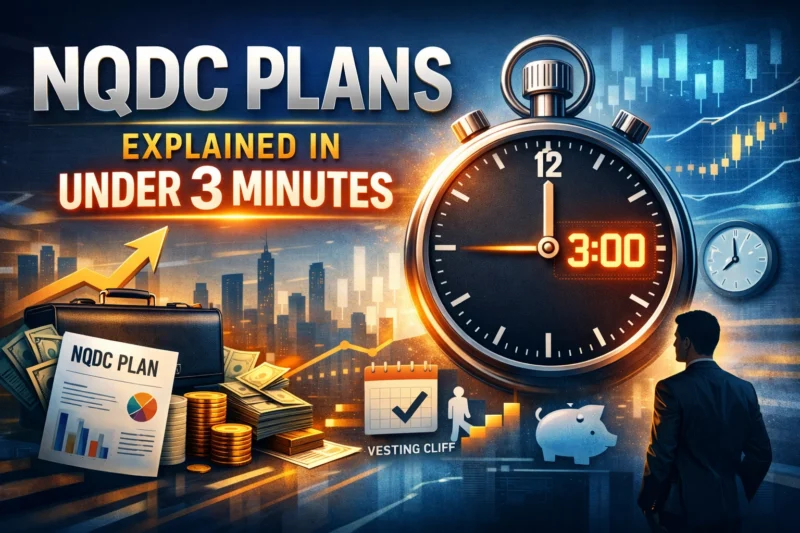
Understanding NQDC plans doesn't have to be a multi-day seminar. In just under three minutes, you now know that these plans offer a way to bypass 401(k) limits, provide powerful tax deferral for your best people, and offer a strategic retention tool for your company: all while staying within the guardrails of 409A.


The real magic, however, happens in the customization. No two companies are the same, and no two "Perfect Plans" look identical.


Are you ready to realize your dream value? Are you ready to build it your way?


I invite you to sit back, grab your coffee, and join us for a conversation. We can dive into the specifics of your situation, look at your current plan design, and see if a 401k mirror plan is the missing piece of your executive puzzle. You’ve worked hard to build your team; let’s work together to make sure they: and you: are protected for the long haul.


The Perfect Plan® Podcast Banner


Feel free to explore our blog for more insights, or reach out to us directly. We look forward to helping you navigate the complexities of executive benefits with the confidence that only comes from true expertise.


A company’s greatest asset isn’t found on the balance sheet; it’s the talent that walks out the door every evening. In the modern business landscape, the "war for talent" is no longer a catchy buzzword: it is a daily reality. As a business owner or executive, you know that losing a key player doesn’t just cost you a salary; it costs you institutional knowledge, client relationships, and momentum.


The fundamental truth is that traditional benefit packages are often insufficient for your highest earners. When 401(k) contributions are capped and tax brackets are climbing, how do you provide a meaningful incentive that actually moves the needle for a top-tier executive?


This is why everyone is talking about split dollar life insurance. It is one of the most powerful, flexible, and cost-effective executive retention strategies available today. But what is it, exactly? And more importantly, how can it fit into your broader financial strategy?


What is Split Dollar Life Insurance?


At its core, split dollar life insurance is not a specific type of insurance policy. Rather, it is a method of sharing the costs and benefits of a permanent life insurance policy between two parties: typically an employer and an employee.


Think of it as a financial partnership. The employer helps the employee secure a high-value permanent life insurance policy that provides both a death benefit and a growing cash value. In exchange, the employer is eventually reimbursed for the premiums they paid. It is a "split" because the two parties divide the policy's benefits: the death proceeds, the cash value, and the premium costs.


Symbolic pillars representing the collaborative partnership between an employer and executive in a split dollar plan.


The Two Main Strategies: Endorsement vs. Collateral Assignment


When we sit down with clients at Schiff Executive Benefits, we often start by determining which "regime" of split dollar fits their goals. These plans are generally divided into two categories:


1. The Endorsement Split Dollar Plan


In this arrangement, the employer is the owner of the policy. The employer "endorses" a portion of the death benefit to the employee’s designated beneficiaries. The employer typically pays the premiums and retains ownership of the policy’s cash value.


  • Who it’s for: Companies looking to maintain maximum control over the asset.

  • The Benefit: The employee gets significant life insurance coverage at a very low cost (only paying tax on the "economic benefit" of the insurance protection).


2. The Collateral Assignment Split Dollar Plan (The Loan Regime)


This is currently the most popular variation for high-level executive benefits. Under this structure, the employee owns the policy, and the employer "loans" the employee the funds to pay the premiums. The loan is secured by a collateral assignment of the policy back to the employer.


  • Who it’s for: Executives looking for long-term wealth accumulation and supplemental retirement income.

  • The Benefit: The employee can eventually access the policy’s cash value via tax-free loans and withdrawals. The employer is repaid their loan (often plus interest) when the employee dies or when the plan is terminated.


Financial Analysis


Why This Matters Now: The Problem with Traditional Plans


Are you tired of telling your top producers that they’ve "hit the limit" on their 401(k)? Are you concerned about the impact of future tax hikes on your executive team's retirement readiness?


Standard qualified plans are essential, but they are often highly restrictive for "Highly Compensated Employees" (HCEs). This creates a "reverse-discrimination" effect where your most valuable people are actually the ones least able to save a representative percentage of their income for the future.


This is where a split dollar life insurance plan: often used in conjunction with a NQDC plan (Non-Qualified Deferred Compensation): changes the game. It allows for:


  • Unlimited Contributions: There are no government-mandated caps on how much can be shifted into these plans.

  • Tax Efficiency: In a loan regime setup, the growth of the cash value is tax-deferred, and the eventual death benefit is generally income tax-free.

  • Selective Participation: Unlike 401(k) plans, you don’t have to offer this to everyone. You can hand-pick the key individuals who are vital to your company’s success.


The Perfect Plan® Philosophy: Reverse Engineering Success


At Schiff Executive Benefits, we don't believe in "off-the-shelf" products. Our approach is governed by The Perfect Plan® philosophy. We begin by asking: What keeps you up at night?


Is it the fear of your VP of Sales being recruited by a competitor? Is it the need to fund a future buy-sell agreement? Or is it your own desire to exit the business with a secure, tax-advantaged income stream?


By reverse engineering your specific goals, we can determine if a split dollar arrangement is the right tool for the job. We look at the "math" first: analyzing the Applicable Federal Rate (AFR), the projected policy performance, and the long-term impact on your company's P&L.


Executive Speaking


The "Holy Grail": Full Cost Recovery for the Employer


One of the most compelling reasons business owners choose split dollar is the concept of cost recovery.


In a traditional bonus or salary increase, that money is "gone" once it’s paid out. With a split dollar plan, the employer's outlay is structured as a secured interest. When the executive eventually retires or passes away, the company is made whole. They receive their premium payments back, dollar-for-dollar.


In many cases, the company can even charge a modest interest rate on the premium loans, turning an executive benefit into a neutral or even slightly positive move for the company's long-term balance sheet.


A continuous water loop in a corporate atrium symbolizing full cost recovery for employer-paid premiums.


A Poignant Example: The "Golden Handcuffs"


Consider the story of a mid-sized manufacturing firm we recently worked with. The CEO was concerned about his COO: a brilliant leader who had been approached by a private equity-backed firm with a massive signing bonus.


Instead of just offering a raise (which would be taxed heavily), the firm implemented a Collateral Assignment Split Dollar plan. The company agreed to pay $100,000 in annual premiums for seven years. If the COO stayed for ten years, he would have access to a policy with significant cash value for retirement. If he left early, the company would immediately recoup its premiums, and the COO would walk away with nothing.


The COO stayed. He saw the value of a multi-million dollar tax-free death benefit for his family and a massive supplemental retirement fund that wasn't subject to market volatility or 401(k) limits. The CEO kept his right-hand man, knowing that every penny the company "spent" on the premiums would eventually come back to the firm.


Technical Considerations: Don't Go It Alone


While the benefits are clear, the execution is technical. Between 409A compliance, IRS "economic benefit" rates, and the intricacies of the loan regime, these plans require expert oversight. This isn't just about buying a policy; it's about designing a legal and financial framework that stands up to scrutiny and delivers on its promises.


This is why we focus so heavily on the technical details and regulatory compliance. We work alongside your existing team of advisors: your CPAs and attorneys: to ensure the plan integrates seamlessly with your corporate structure.


Building Your Legacy


What do you want your professional legacy to be? Do you want to be the leader who built a revolving door of talent, or the one who built a loyal, high-performing team that feels truly valued and secure?


Split dollar life insurance is more than just a financial tool; it’s a statement of value. It tells your key people that you are invested in their long-term success as much as they are invested in yours.


If you’re ready to see how these strategies can work for your specific situation, I invite you to explore more of our resources. You can listen to deeper dives into these topics on The Perfect Plan® Podcast, where we break down the complexities of executive compensation in plain English.


Podcast Banner


The economic environment is shifting, and the "point of no return" for retaining your best people might be closer than you think. Don't wait for a resignation letter to start thinking about your benefits strategy.


Sit back, grab your coffee, and let's have a conversation about how we can help you protect what you've built. Contact us today to start designing your version of The Perfect Plan®.