


They say that “what gets measured gets managed.” And in executive benefits, what gets aligned gets retained. You spend years building a team, finding those rare people who drive revenue, protect relationships, and carry culture. Then you face the question that keeps owners, CFOs, and board members up at night: How do you keep them without creating a benefit that feels like an entitlement… or an expense you’ll regret?
What if you could design a benefit that:
- Rewards a key employee in a way they actually value
- Creates a real golden handcuff (without the awkwardness)
- Aligns the executive’s mindset with company performance and culture
- And gives the employer a current tax deduction
That’s where The Perfect Plan® mindset changes the conversation. We’re still talking about Split Dollar Life Insurance—but not as a “secret,” and definitely not as a cost recovery story. We’re talking about how a Restricted Executive Bonus Arrangement (REBA)—when paired with a Split Dollar Endorsement—can become a clean, practical retention engine that creates a true win-win.
If you’ve been losing sleep over executive retention, rising compensation pressure, or how to keep your best people rowing in the same direction, pull up a chair. Let’s demystify this.
What Is Split Dollar, Really?
First things first: Split Dollar isn’t a type of insurance policy. You can’t go out and "buy a Split Dollar." Instead, it is a method of sharing the costs and benefits of a life insurance policy between two parties: usually an employer and an employee.
Think of it like a partnership. The company has the capital; the executive has the need for high-limit life insurance and tax-advantaged retirement income. Split Dollar is the bridge that connects the two.
We typically see this structured in two ways:
- The Endorsement Method: The employer owns the policy and "endorses" a portion of the death benefit to the employee’s beneficiaries. This is often used when the primary goal is providing a death benefit.
- The Collateral Assignment (Loan Regime) Method: The employee owns the policy, and the employer pays the premiums. These payments are treated as a series of loans to the employee, secured by the policy’s cash value and death benefit. This is the heavy hitter for executive retention because it can build significant cash value for the executive's retirement.

The Perfect Plan® Move: REBA + Split Dollar Endorsement (Deduction + Golden Handcuff)
Here’s the anxiety we hear all the time—from corporations, partnerships, and banks alike: “If I pay them more, it’s just more comp… and they can still leave.” A traditional bonus is appreciated, then forgotten. A retirement plan contribution is valuable, but it doesn’t always feel tied to performance or culture. And in uncertain markets, you want a strategy that creates commitment, not just compensation.
This is where The Perfect Plan® approach shines: you reverse-engineer a benefit that matches the intent of the business.
A common structure we use is a Restricted Executive Bonus Arrangement (REBA) funded with life insurance, paired with a Split Dollar Endorsement arrangement. In plain English:
- The employer pays a “restricted bonus” to the key employee.
- The employer takes a current tax deduction for that compensation expense (assuming it meets normal deductibility rules and is reasonable compensation).
- The bonus dollars fund a life insurance policy designed around the executive’s goals (family protection now and supplemental income later).
- Restrictions are added (the golden handcuff) so the executive earns access over time—typically through a vesting schedule tied to tenure, performance, or key milestones.
- The employer-owned endorsement structure allows the employer to own/control key policy rights while endorsing benefits to the employee’s beneficiaries—helping keep the program consistent with the company’s culture and intent.
One of my favorite “real world” moments is when a founder says, “I don’t want handcuffs. I want alignment.” Then we show them how restrictions can be framed as earned ownership feel—a benefit that grows as the executive helps grow the company. That’s not punitive. That’s fair.
This is the win-win:
- You get retention by design (not by hope).
- They get a benefit that feels permanent and personal (not like another line item on payroll).
- Your culture stays intact because the rules are clear, consistent, and tied to what your business actually values.
In other words: it’s not about “buying loyalty.” It’s about creating earned alignment—so your best people think twice before taking that headhunter call, because the arrangement is tied to the company’s performance, expectations, and culture.
The Technical Minefield: Why Expertise Matters
Now, here is the part the "experts" don't always explain clearly: Split Dollar is a technical minefield. If you don't have an advisor who lives and breathes this stuff, you can end up in a world of tax pain.
Take IRC Section 101(j), for example. This is a big one. It requires very specific notice and consent requirements for employer-owned life insurance. If you miss a signature or fail to file the right paperwork before the policy is issued, the death benefit: which is normally tax-free: could become taxable. Can you imagine explaining that to a grieving family or your board of directors?
Then there’s Section 409A. If your Split Dollar arrangement is deemed a "nonqualified deferred compensation" arrangement and it isn't compliant, your executive could face immediate taxation and a 20% penalty.
This is why we focus so heavily on the "Goal-Oriented Reverse Engineering" I mentioned in our previous post. We don't just pick a product; we design the compliance framework first. We ensure every "i" is dotted and every "t" is crossed so your legacy: and your company’s capital: is protected.
The Broker Advantage: Why We Don't Have a "Favorite" Carrier
One of the biggest secrets in this industry is that many firms are "captive" or heavily incentivized to push one or two specific insurance carriers. They’ll tell you that Carrier A has the best Split Dollar product because Carrier A is the only one they really sell.
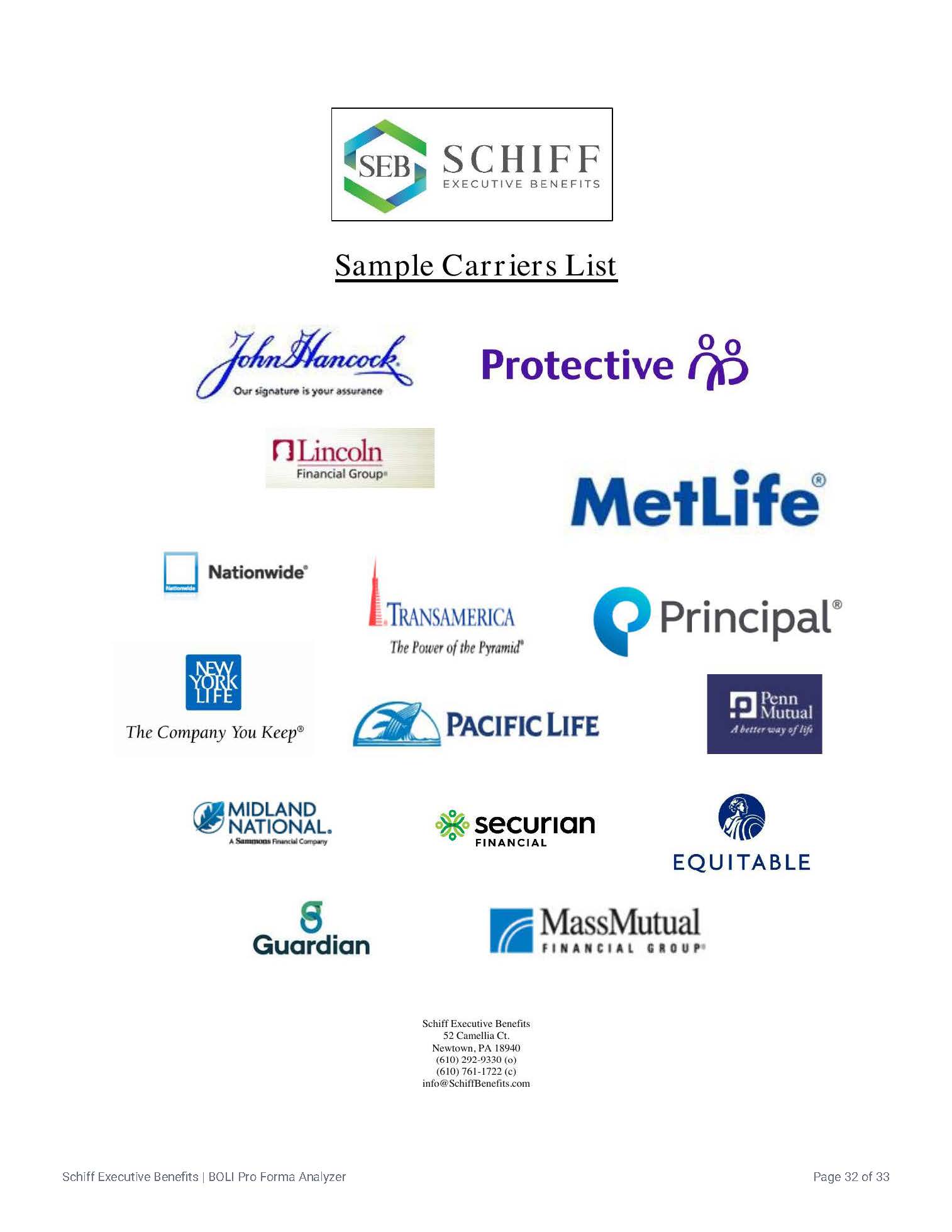
At Schiff Executive Benefits, we take a different approach. We are independent brokers. We work with the giants: John Hancock, Lincoln, MetLife, Prudential, Pacific Life, and many more.
Why does this matter to you? Because every company is different. A law firm in New York has different needs than a manufacturing plant in the Midwest or a community bank in the South. One carrier might have better pricing for older executives, while another might offer superior cash-value growth for a younger team.
Our "Broker Advantage" means we shop the entire market to find the carrier that fits your arrangement, rather than forcing your arrangement into a carrier’s box. We aren't looking for the easiest sale; we’re looking for the most efficient engine to power your executive retention strategies.
Is The Perfect Plan® Version of Split Dollar Right for You?
You’ve built something incredible. Whether it’s a corporation, a partnership, or a financial institution, your success is built on the backs of your key people. But the world is uncertain. Taxes may rise, markets will fluctuate, and the war for talent isn’t slowing down.
Ask yourself:
- Are my top people truly aligned with our performance and culture—or are they one headhunter call away from leaving?
- If I increase comp, will it actually change behavior and commitment—or just increase payroll?
- Do we have a benefit that feels meaningful to the executive and disciplined to the business?
When REBA is designed with the right restrictions—and paired with a Split Dollar Endorsement—it becomes more than “a benefit.” It becomes a retention agreement with a heartbeat. It tells a key executive: we’re investing in you, and we want you here when the next chapter of this company gets written.
Building It Your Way
At the end of the day, you want to realize your dream value for your business. You want to know that the team you’ve assembled will stay together to cross the finish line.
We don't believe in one-size-fits-all "products." We believe in The Perfect Plan®. It’s about starting with your goals—retention, a current employer tax deduction, and a benefit that actually changes behavior—and reverse-engineering a solution that works.
Whether you are looking into COLI for a large corporation or a NQDC plan for a growing partnership, the strategy needs to be as unique as your thumbprint.
If you’re curious about how these "secrets" can be put to work for your firm, let’s talk. No high-pressure sales pitch, just a conversation between professionals.
Sit back, grab your coffee, and when you’re ready to see how the math works for your specific situation, come join us. We’re here to help you navigate the unstable waters of executive benefits with a steady hand and a clear map.
To your success,
Matt Schiff
President, Schiff Executive Benefits