

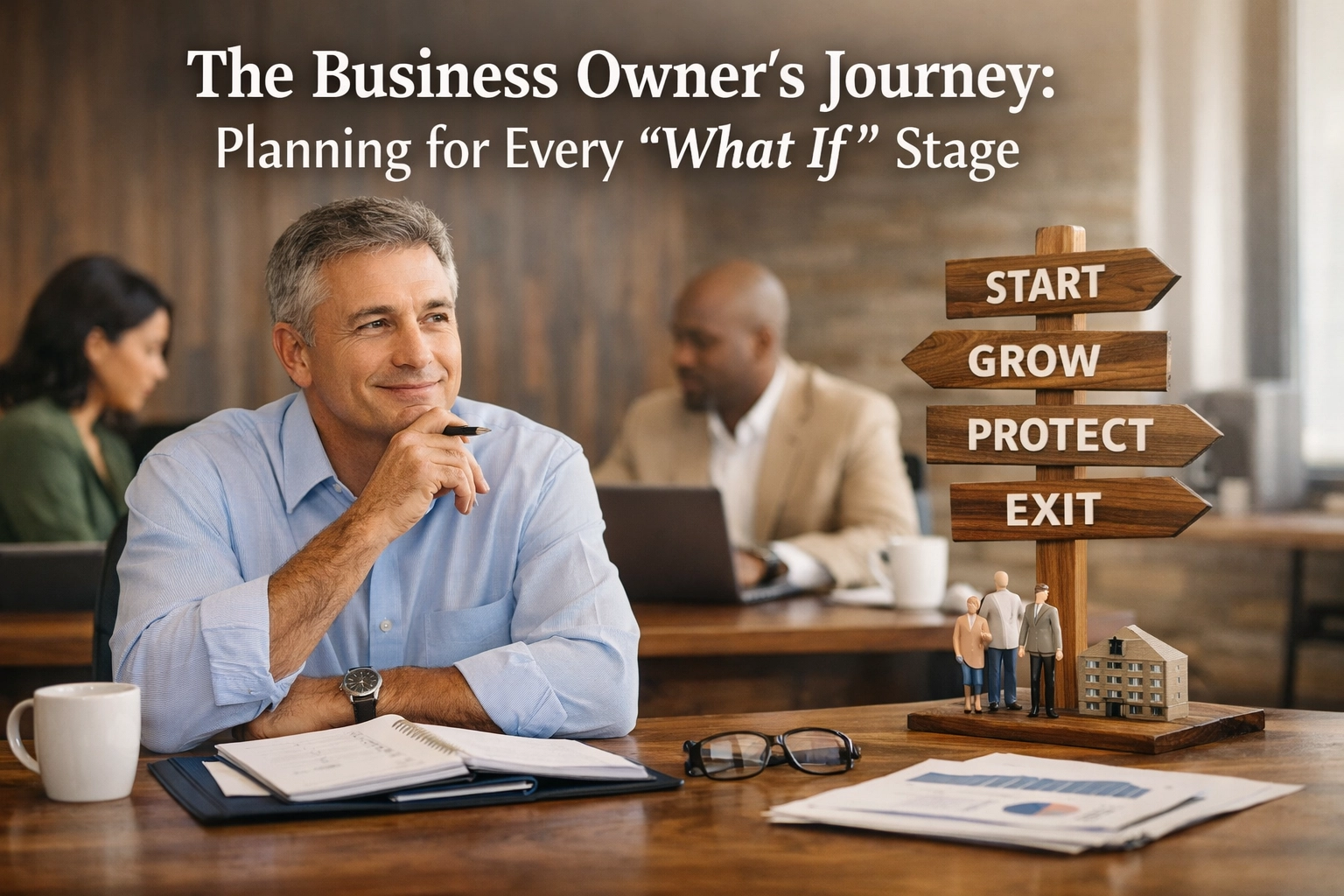
They say the only constant in life is change, but for a business owner, the only constant is the "What If."
In the early days, the "What If" is usually about survival: What if we don't get this client? What if the payroll check bounces? But as you move through the stages of the business lifecycle, those questions don't disappear: they just get more expensive. They shift from tactical anxieties to legacy-defining concerns.
At Schiff Executive Benefits, we spend a lot of time talking about "Restoring Alignment and Retention." But before we can align your benefits or retain your people, we have to look at the roadmap of your journey as an owner. Most advisors want to sell you a product to fix a specific symptom. We prefer to reverse-engineer your entire trajectory. We start at the finish line: where you want your family to be, how much income you want in retirement, and who should be running the shop: and then we build the bridge to get you there.
The Evolution of the "What If"
Every business follows a predictable path: Inception, Growth, Maturity, and eventually, Exit. The mistake most owners make is using a "Stage 1" plan to solve a "Stage 3" problem.
Think about your time allocation. When you started, you were probably 90% "doer" and 10% "leader." As you scale, that ratio has to flip. If it doesn't, you become the bottleneck. The same logic applies to your financial planning. A simple life insurance policy might have covered your debt in the startup phase, but does it solve the problem of a $20 million buy-sell triggered by an unexpected disability in the growth phase?
Probably not.
Stage 1: The Foundation and the First Big Question
In the beginning, it’s all about the "What if I die too soon?" stage. Your family is likely your primary concern. If you aren't there to drive the engine, the engine stops.
At this stage, we focus on 100% protection for the family. This isn't just about a death benefit; it's about liquidity. It's about ensuring that your spouse isn't forced to become an accidental business partner with your co-founder. We look at the first of our core five "What Ifs": What happens if your partner ends up in business with your widow?

(Technical visual: A flowchart mapping the flow of assets in a sudden succession event versus a structured buy-sell agreement, styled with clean, IRS-technical lines.)
Stage 2: The Scaling Phase and the Talent War
Once the business finds its footing and starts to scale, the "What Ifs" shift toward your people. You’ve hired "Rockstars." They are the reason you can finally take a vacation. But that creates a new anxiety: What if my top talent leaves?
This is where specialized executive benefits come into play. Standard 401(k) plans are great for the rank-and-file, but they are often "reverse-discriminatory" toward your highest earners due to IRS contribution limits. If your key execs can't save enough for their own retirement, they are going to look for a platform that allows them to do so.
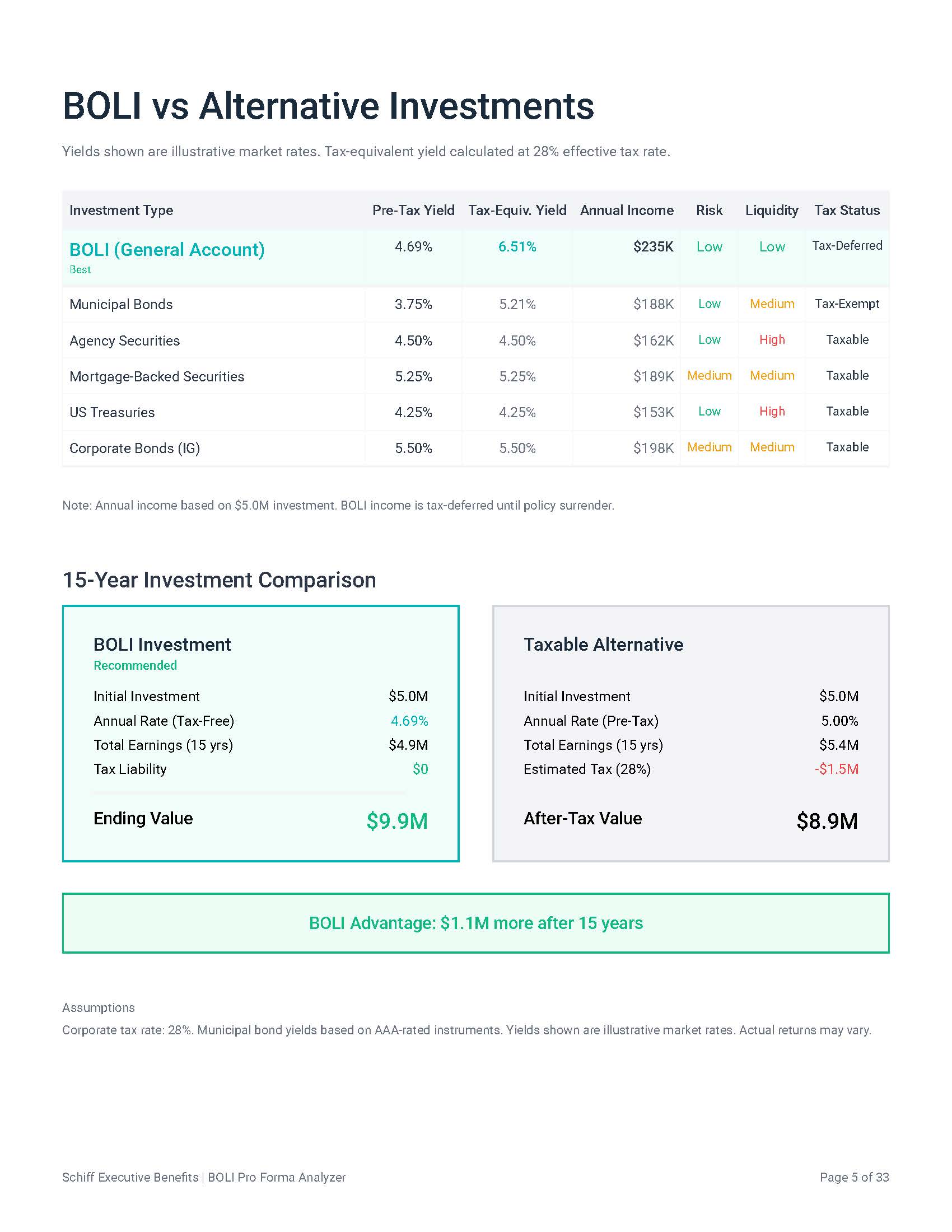
We use strategies like Corporate Owned Life Insurance (COLI) to fund nonqualified deferred compensation plans. This allows you to offer "Golden Handcuffs": incentives that make it mathematically painful for a competitor to poach your best people. By using COLI, the business can recover the cost of these benefits, essentially creating a self-funding retention machine.
Reverse-Engineering Your "Perfect Plan"
Most financial planning is reactive. You have a windfall, so you look for a tax shelter. You have a heart scare, so you look for insurance. We believe in a proactive, goal-oriented approach we call The Perfect Plan®.
The philosophy of The Perfect Plan® is simple: Start with the end in mind.
When we sit down with a business owner, we ask: "In your ideal world, what does 100% income in retirement look like?" Most owners are surprised to find that their current trajectory only covers 40% or 50% of their current lifestyle once they exit. We identify that gap and then reverse-engineer a solution to fill it using the most tax-efficient vehicles allowed by the IRS.
Addressing the 5 Core "What Ifs"
To build a truly resilient business, you have to have a documented answer for these five questions:
- Business with a Widow: If you passed away tomorrow, would your spouse have the liquid cash to live, or would they have a pile of illiquid stock in a company they can't run?
- Business Buy-Out: Is your buy-sell agreement funded? A legal document without a funding mechanism (like COLI or disability buy-out insurance) is just a piece of paper that guarantees a lawsuit.
- Top Talent Leaving: If your #2 person left for your biggest competitor on Monday, what would it cost you in lost revenue and replacement time?
- Senior Exec Retirement: Are you prepared for the cost of replacing your aging leadership team? How do you transition them out with dignity while keeping the business's balance sheet healthy?
- Running Out of Money: This is the ultimate fear. After 30 years of building a legacy, will you have to downgrade your lifestyle because of taxes, inflation, or poor planning?

(Technical visual: A bar chart comparing "Traditional Retirement Savings" vs. "The Perfect Plan® Approach," showing 100% income replacement levels and the impact of tax-deferred growth.)
The Technical Edge: Why COLI Matters
For corporations and partnerships, Corporate Owned Life Insurance (COLI) is often the "Swiss Army Knife" of the balance sheet. It isn't just about a death benefit; it's an institutional asset.
COLI allows a company to:
- Offset the liabilities of executive retirement plans.
- Accumulate cash value on a tax-deferred basis.
- Receive tax-free death benefits to help transition the business or buy out a partner's interest.
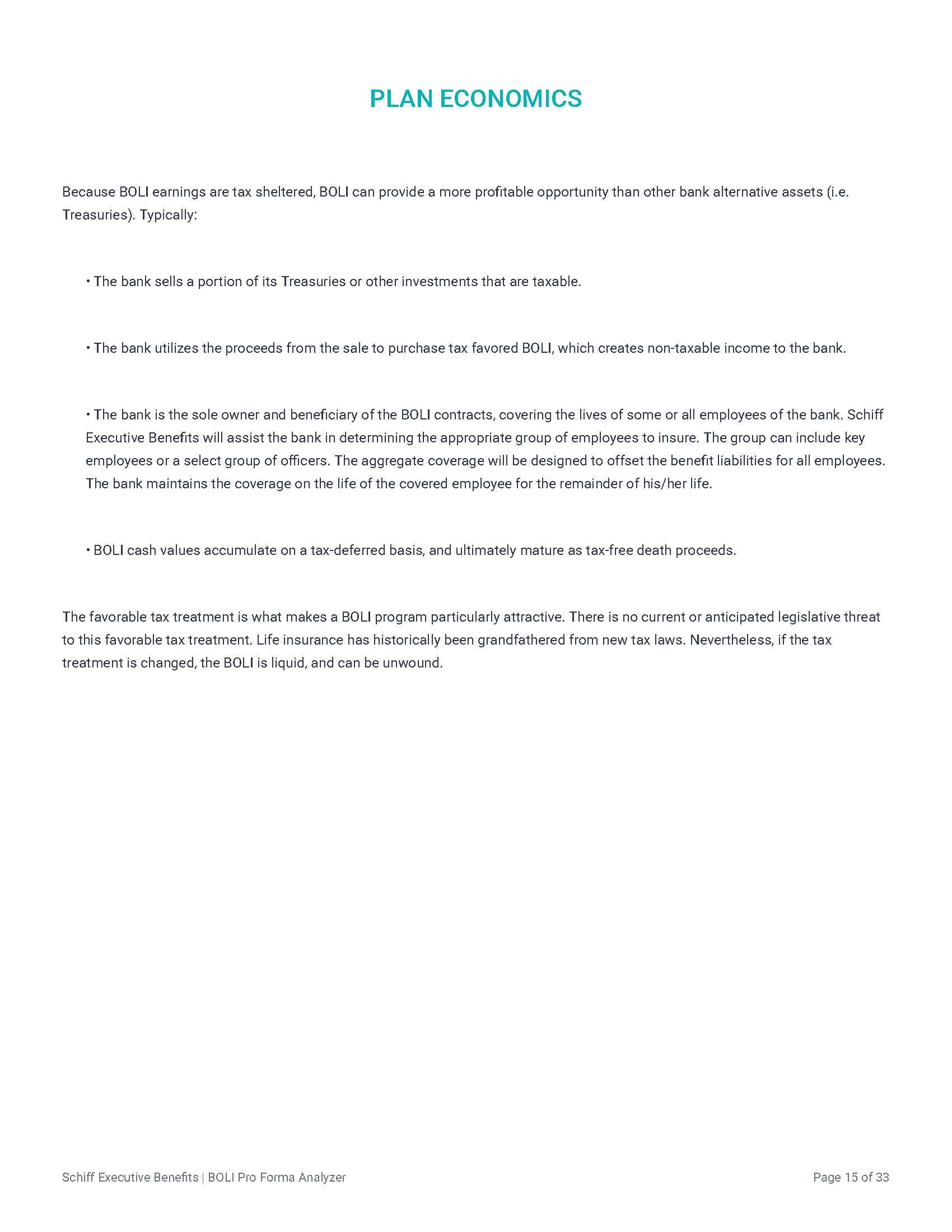
When you look at the technical pro-formas of these plans, the math becomes undeniable. It’s about moving money from a taxable "bucket" on your balance sheet to a tax-advantaged "bucket" that performs a specific job: protecting the business while growing an asset that can eventually fund your own exit.
Transitioning to the Exit
The final stage of the journey is the exit. Whether you are passing the business to your children, selling to an ESOP, or looking for a third-party buyer, your "What Ifs" are now about the "Point of No Return."
Have you maximized the value of the business? Is the culture stable enough to survive your departure? (Hint: The "Top Talent" retention strategies we mentioned in Stage 2 are what make your business attractive to a buyer in Stage 3).
We help owners realize their "dream value" by ensuring the business isn't just a job they created for themselves, but a self-sustaining entity. By addressing the "What Ifs" early, you aren't just buying insurance; you are building a fortified legacy.
You’ve Built the Business. Now, Secure the Life.
You’ve spent years, maybe decades, navigating the unstable waters of entrepreneurship. You’ve survived the market crashes, the hiring headaches, and the late-night "What Ifs." You deserve a plan that is as robust as the company you built.
Our job at Schiff Executive Benefits is to be your guide through these technical and often overwhelming financial environments. We don’t just want to talk about products; we want to talk about your mission. We want to help you realize that 100% protection for your family and 100% income in retirement isn't a pipe dream: it’s a matter of engineering.
If you’re wondering where your business stands in this lifecycle, or if one of those five "What Ifs" is currently keeping you up at 2:00 AM, let’s talk.
Sit back, grab your coffee, and let’s look at the roadmap together. Come join us at Schiff Executive Benefits to see how we can start reverse-engineering your version of The Perfect Plan®.
You can learn more about our process on The Perfect Plan® Podcast or reach out to us directly through our contact page.
Let’s turn those "What Ifs" into "I’m Covered."